Artwork
Design for a stage set for Arsinoe, Queen of Cyprus at the Theatre Royal, London for Act I, scene 1, Arsinoe sleeping in a garden at night
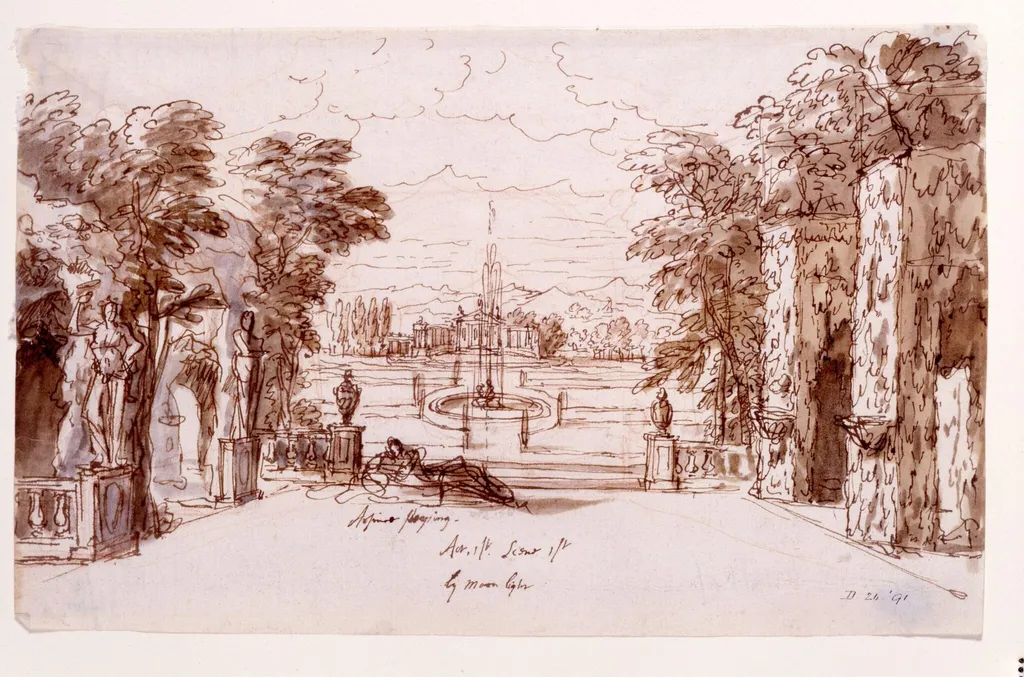
Design for a stage set for Arsinoe, Queen of Cyprus at the Theatre Royal, London for Act I, scene 1, Arsinoe sleeping in a garden at night is a drawing by the Baroque artist James Thornhill. It dates from 1705 and is held in the collection of the Victoria and Albert Museum.
About this work
James Thornhill drew this stage design in 1705 for a play called Arsinoe, Queen of Cyprus. It shows the queen asleep in a garden at night. The drawing is small, made with red chalk, then ink and wash for darker areas.
Thornhill didn’t finish every detail. He left parts loose and suggestive. This lets the eye fill in the rest.
Look up James Thornhill next.
Overview
This 1705 drawing by James Thornhill served as a stage design for the opening scene of 'Arsinoe, Queen of Cyprus' at London's Theatre Royal.
This 1705 drawing by James Thornhill served as a stage design for the opening scene of 'Arsinoe, Queen of Cyprus' at London's Theatre Royal. Executed in red chalk with pen and ink and subtle wash, it captures the moment the titular queen sleeps in a moonlit garden. The work is modest in scale and intentionally incomplete, prioritizing atmospheric suggestion over precise detail to guide scenic execution rather than serve as a finished artwork.
Subject & Meaning
The scene depicts Arsinoe, the play’s central figure, reclining in repose amid an idealized nocturnal garden. Her stillness contrasts with the implied drama of the surrounding narrative, establishing a mood of quiet vulnerability. The garden setting, though stylized, evokes a liminal space between reality and fantasy, aligning with the play’s themes of exile, identity, and hidden destiny.
Technique & Style
Thornhill began with loose red chalk outlines, then reinforced forms with precise pen lines and diluted ink washes to suggest shadow and depth. Areas remain deliberately unfinished—branches, foliage, and architectural elements are hinted rather than defined. This restrained approach reflects the practical needs of theatrical design: clarity for builders and flexibility for lighting effects under candlelight.
History & Provenance
Created for the 1705 premiere of Thomas d'Urfey’s opera, the drawing was part of Thornhill’s work as a stage designer before he became renowned for monumental murals. Its survival is rare; most theatrical designs of the period were discarded after use. The drawing entered institutional collections in the 19th century, preserved as an artifact of early 18th-century British stagecraft.
Context
In early 1700s London, theatrical productions demanded elaborate scenery to attract audiences, yet budgets and technical limits constrained detail. Thornhill’s design reflects this balance: evocative enough to inspire illusion, simple enough to be built swiftly. His approach influenced a generation of scene painters who valued suggestion over realism, adapting painterly techniques to the ephemeral nature of the stage.
Legacy
Though Thornhill later gained fame for his ceiling frescoes, this drawing reveals his early mastery of spatial composition and atmospheric tone. It stands as a rare surviving example of pre-Renaissance theatrical design in Britain, illustrating how visual storytelling in performance relied on skilled draftsmanship rather than mechanical innovation. The work remains a key reference for historians of British stage design.
Artist & collection
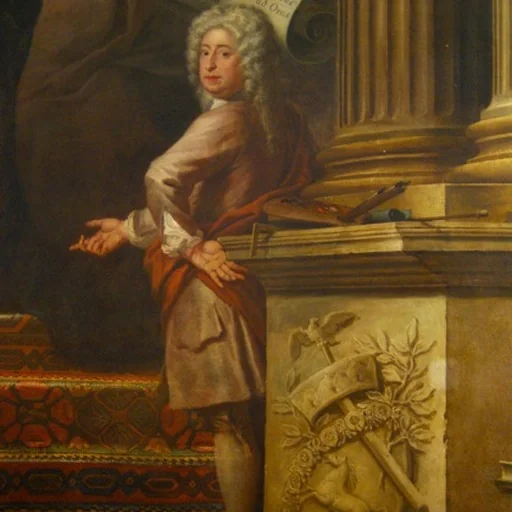
Artist
Sir James Thornhill was an English painter of historical subjects working in the Italian baroque tradition.

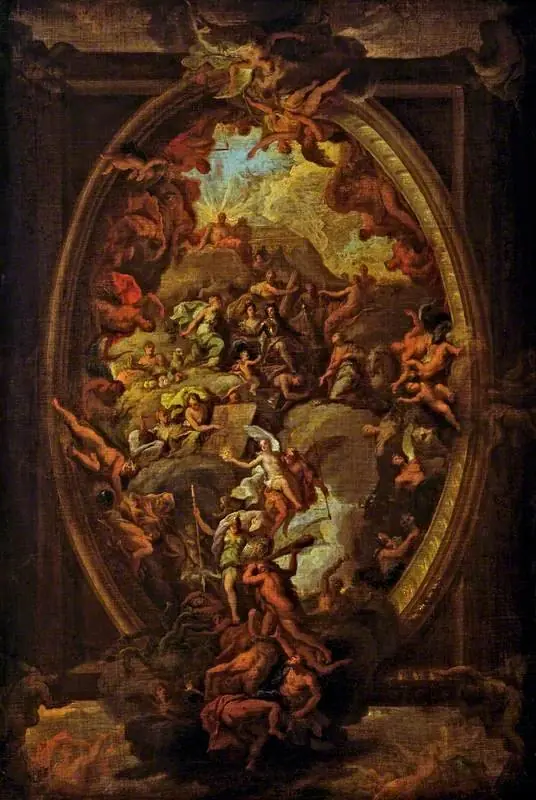 William and Mary Presenting the Cap of Liberty to Europe (sketch for the painted ceiling of the Great Hall, Greenwich Hospital)
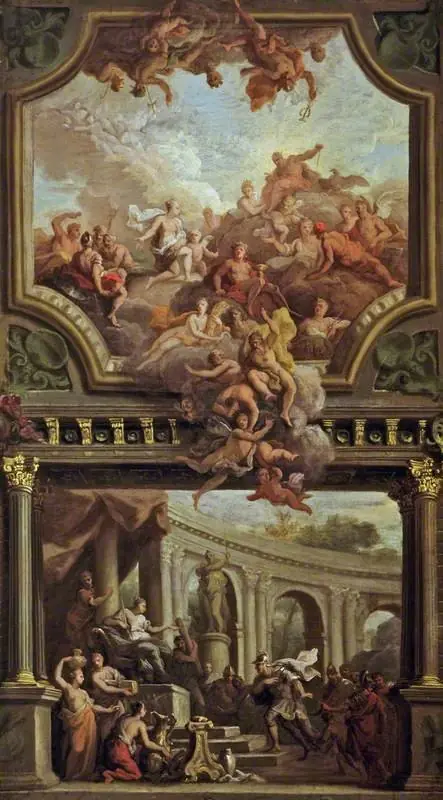 Aeneas before Dido, and Venus Supplicating Jupiter (sketch for a wall and ceiling decoration)
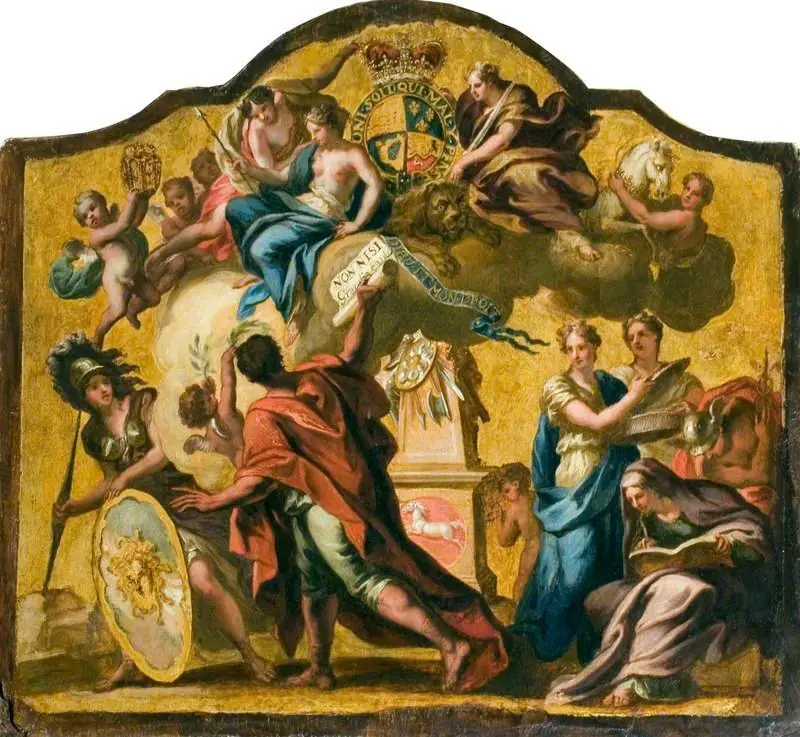 Allegorical Figures: Clemency, Prudence and Justice with Pallas, Heroic Poetry, Liberty, Discretion, History and Mercury (from the Royal State Coach for George I)
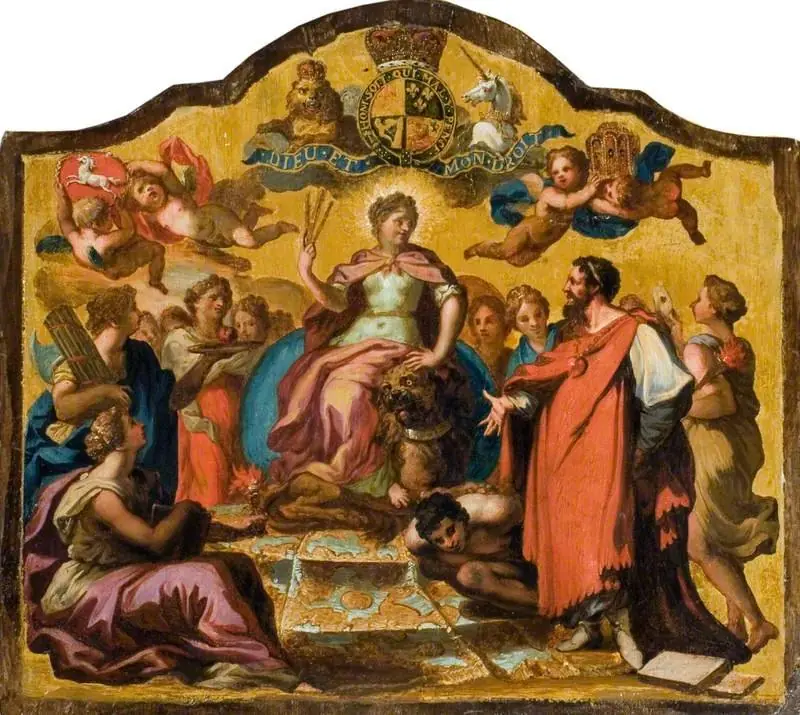 Allegorical Figures: Britannia Enthroned, Surrounded by Concord, Learning and Religion Overcoming Vice (from the Royal State Coach for George I)
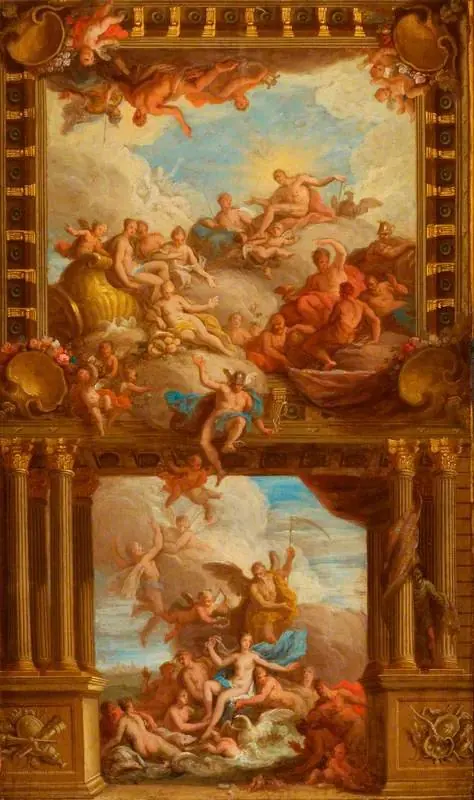 The Birth of Venus, and the Gods of Olympus (sketch for a wall and ceiling decoration)
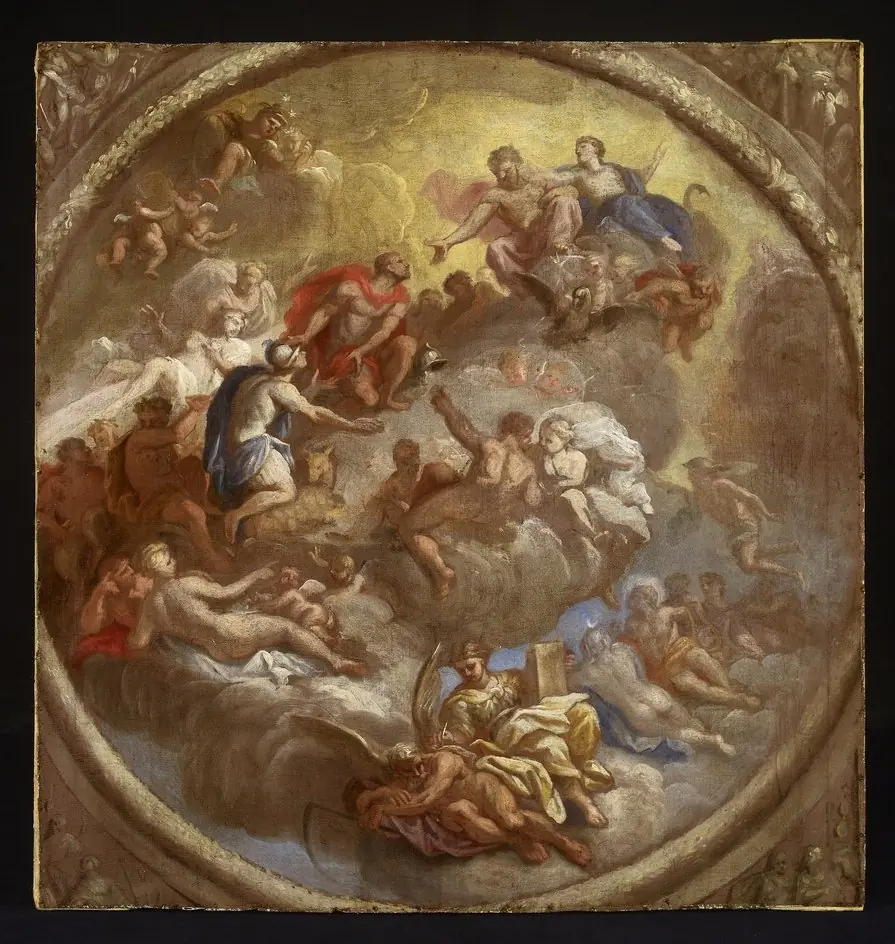 Sketch for a Ceiling Design
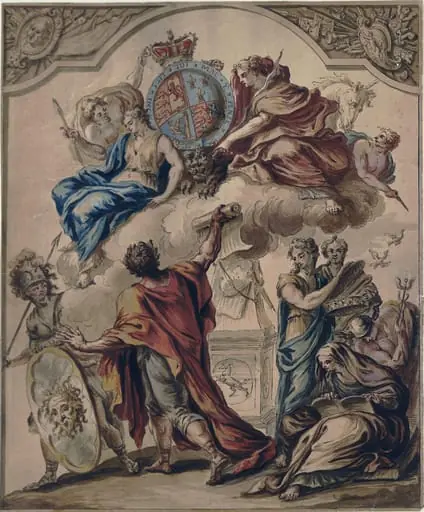 Allegorical design with figures: Clemency, Prudence and Justice with Pallas, Heroic Poetry, Liberty, Discretion, History and Mercury (preliminary design for a panel from Royal State Coach for George I)
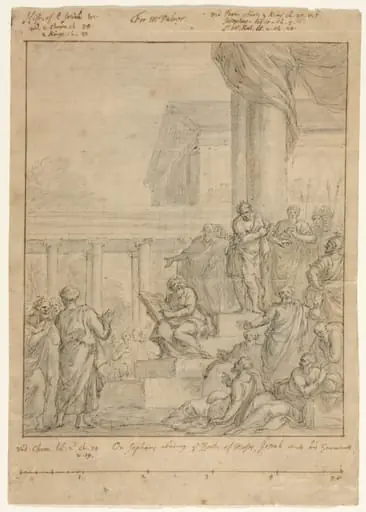 Study for King Josiah Rending his Garments
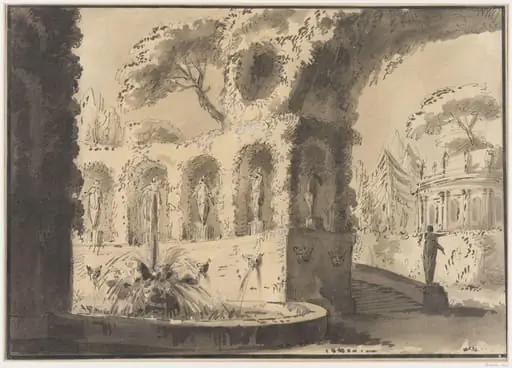 Landscape
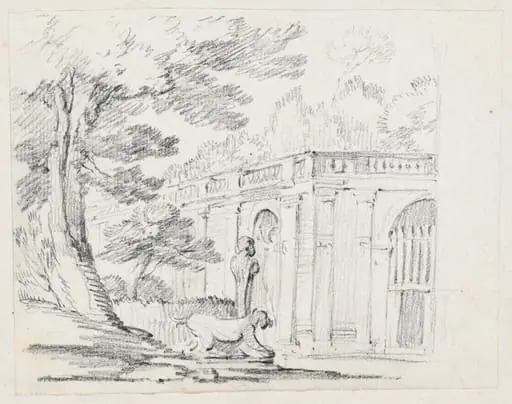 Loggia and Statuary in an Italian Garden
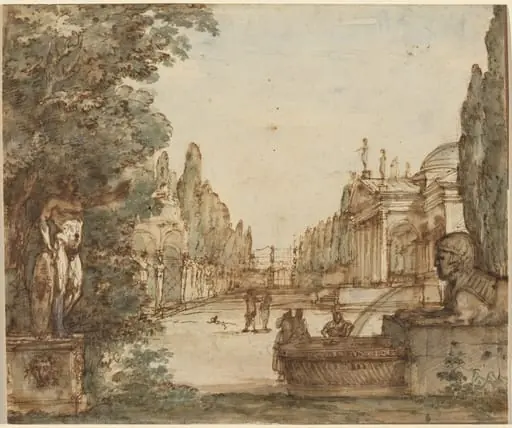 Capriccio with a Palladian Villa
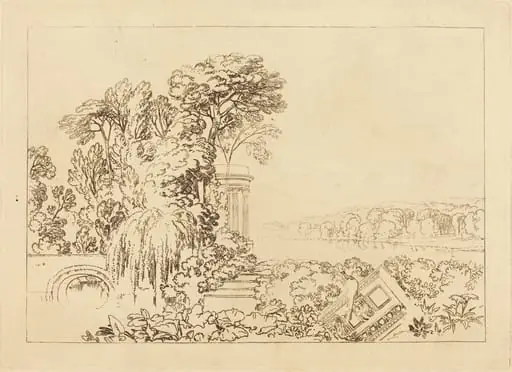 Isis
Isis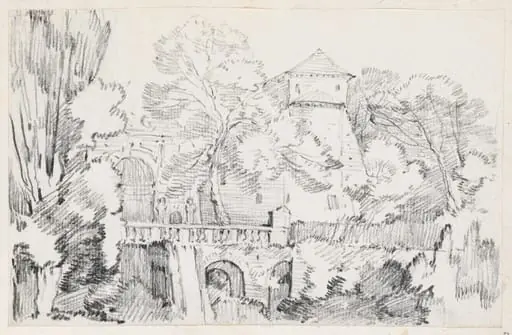 The Water Organ in the Gardens of the Villa d'Este, Tivoli
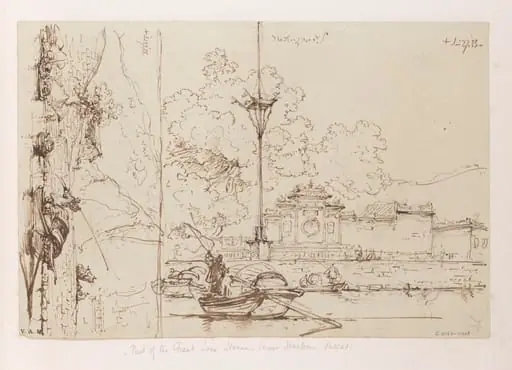 The A-Ma temple, Macau, and the nearby rocks, both seen from the bay
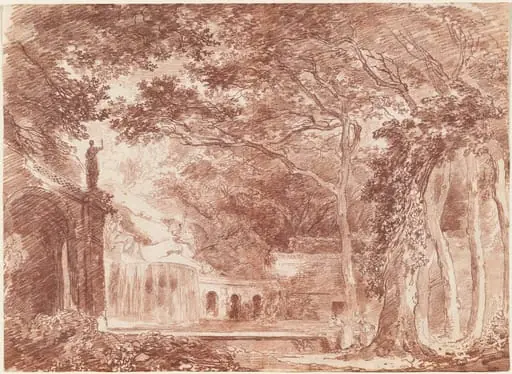 The Oval Fountain in the Gardens of the Villa d'Este, Tivoli
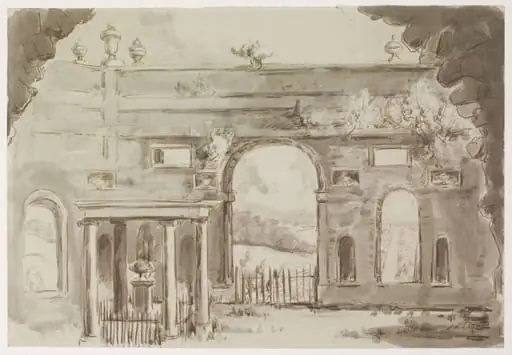 Dashwood Mausoleum West Wycombe, with road to High Wycombe
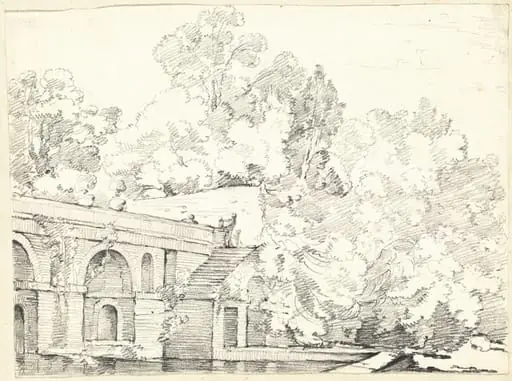 The Fishpond at Villa Madama
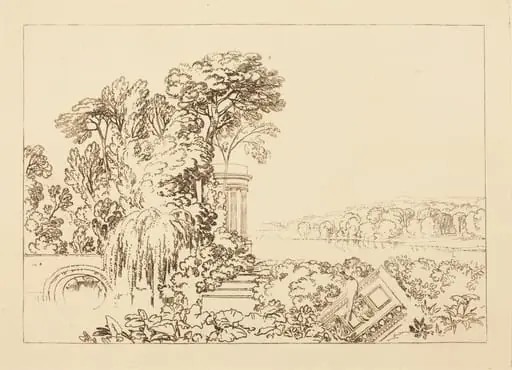 Isis
Isis River scene
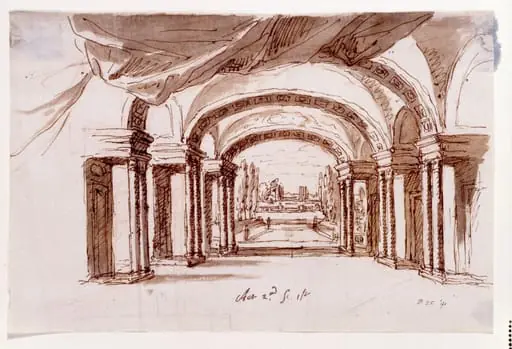 Drawing, Design for a stage set for Arsinoe, Queen of Cyprus at the Theatre Royal, London for Act II, scene 1, a great hall looking into a garden