Artwork
Scene from Macbeth, Act IV., Scene I.
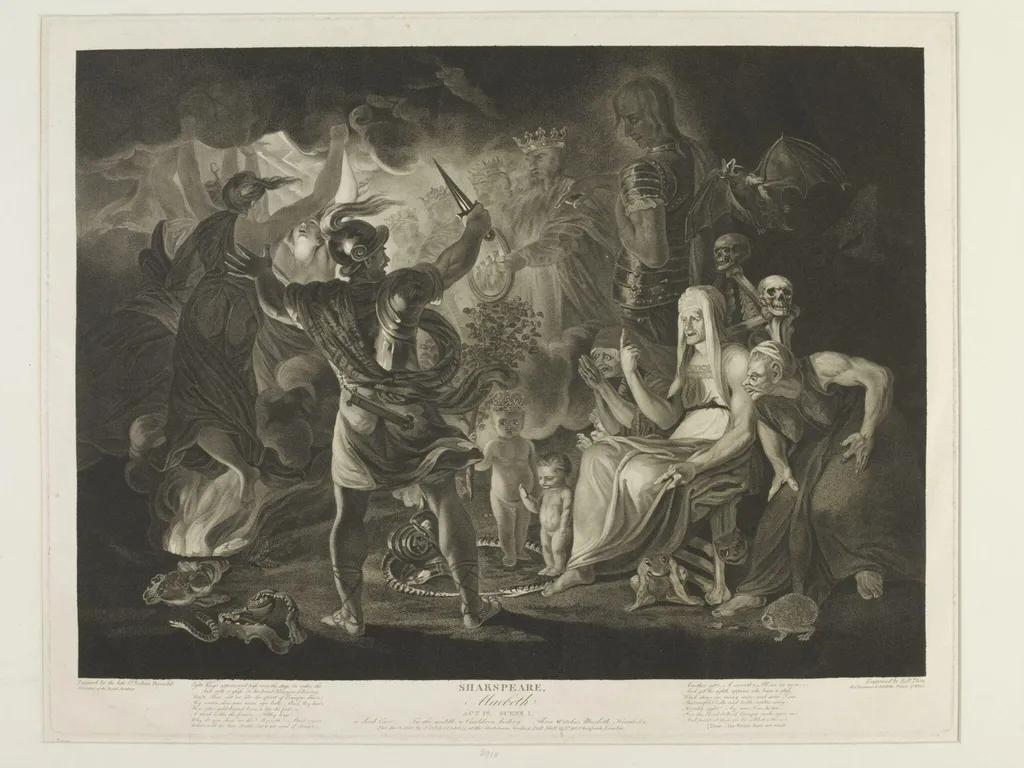
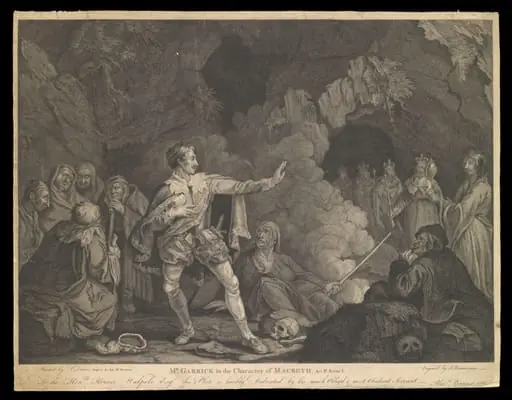
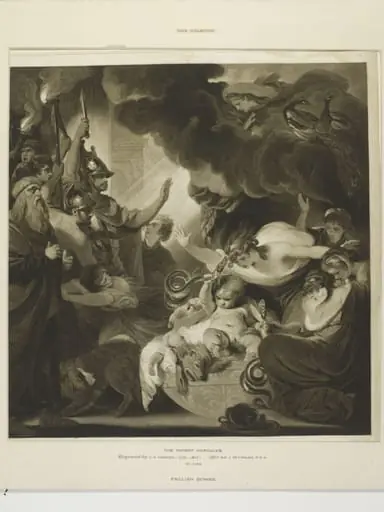
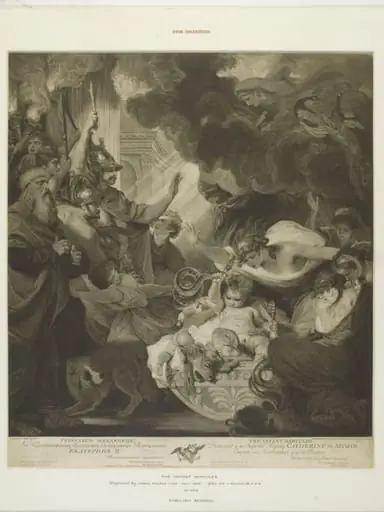
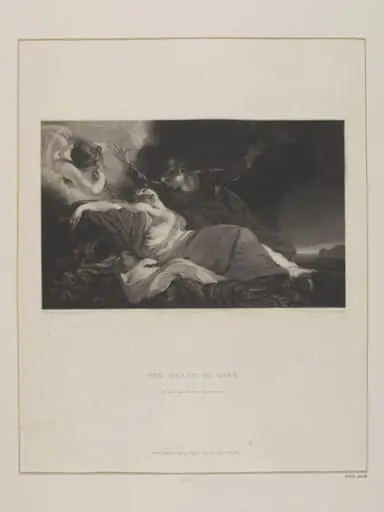
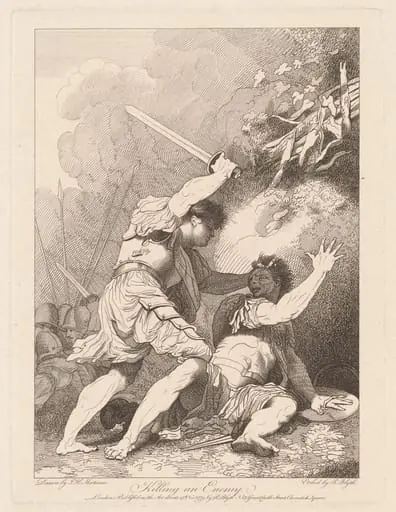
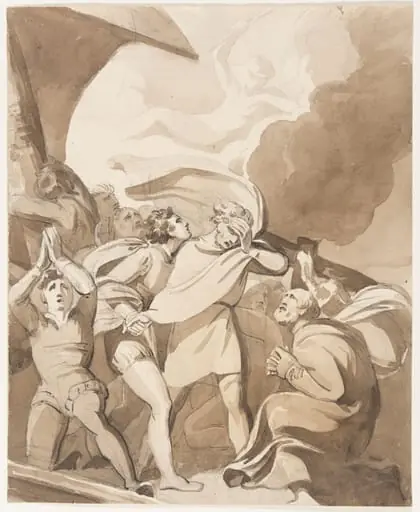
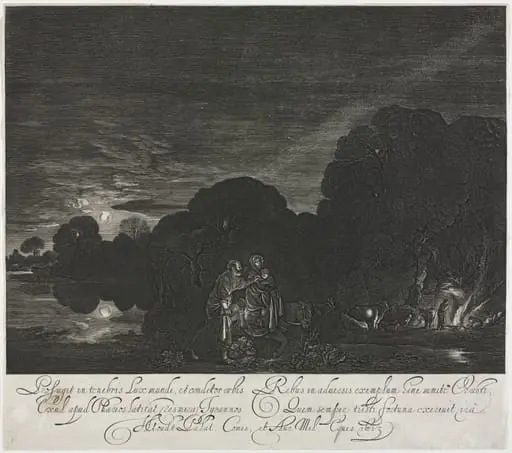
Scene from Macbeth, Act IV., Scene I. is a print by the Romanticist artist Robert Thew. It dates from 1786 and is held in the collection of the Victoria and Albert Museum. This print illustrates a moment from Act IV, Scene I of Shakespeare’s Macbeth, drawn from Sir Joshua Reynolds’ original painting.
About this work
Overview
Produced as part of John Boydell’s Shakespeare Gallery project initiated in 1786, it was reproduced as a commercial engraving for public distribution.
This print illustrates a moment from Act IV, Scene I of Shakespeare’s Macbeth, drawn from Sir Joshua Reynolds’ original painting. Produced as part of John Boydell’s Shakespeare Gallery project initiated in 1786, it was reproduced as a commercial engraving for public distribution. The composition captures a supernatural gathering in a cavernous space, emphasizing eerie atmosphere through dramatic contrasts of light and shadow.
Subject & Meaning
The scene centers on Macbeth’s encounter with the witches and Hecate, the queen of the supernatural, as they conjure visions to influence his fate. Figures surround a steaming cauldron, while a woman with children and spectral hands suggest impending doom. The armored figure of Macbeth, sword in hand, embodies his descent into violence and moral decay, reflecting the play’s themes of ambition and guilt.
Technique & Style
The print employs chiaroscuro to heighten emotional tension, with deep shadows swallowing the cave’s edges and stark light isolating key figures. Swirling, distorted forms and elongated silhouettes create a sense of unease. The engraving technique captures fine linear detail in the witches’ garments and the eerie, skeletal hands, enhancing the dreamlike, nightmarish quality of the scene.
History & Provenance
Created as part of John Boydell’s ambitious Shakespeare Gallery initiative, this print was one of many commissioned to visually interpret Shakespeare’s plays for an 18th-century audience. Based on Reynolds’ painting, it was engraved and published in the folio series around 1790. Its production reflected a growing cultural interest in literary illustration and the commercialization of high art.
Context
In late 18th-century Britain, Shakespeare was increasingly venerated as a national literary icon. Boydell’s project sought to elevate painting by aligning it with literary prestige. This print emerged during a period when visual art was used to mediate classical texts for the middle class, blending theatrical drama with moral and supernatural themes popular in Gothic aesthetics.
Legacy
The print contributed to the visual codification of Shakespearean scenes in popular culture, influencing later theatrical and cinematic depictions of the witches and Macbeth’s descent. Though Reynolds’ original painting is now less known, the engraving preserved the composition’s emotional intensity, embedding its dramatic language into the broader tradition of literary illustration.
Artist & collection