Artwork
Kaksi leikkivää poikaa
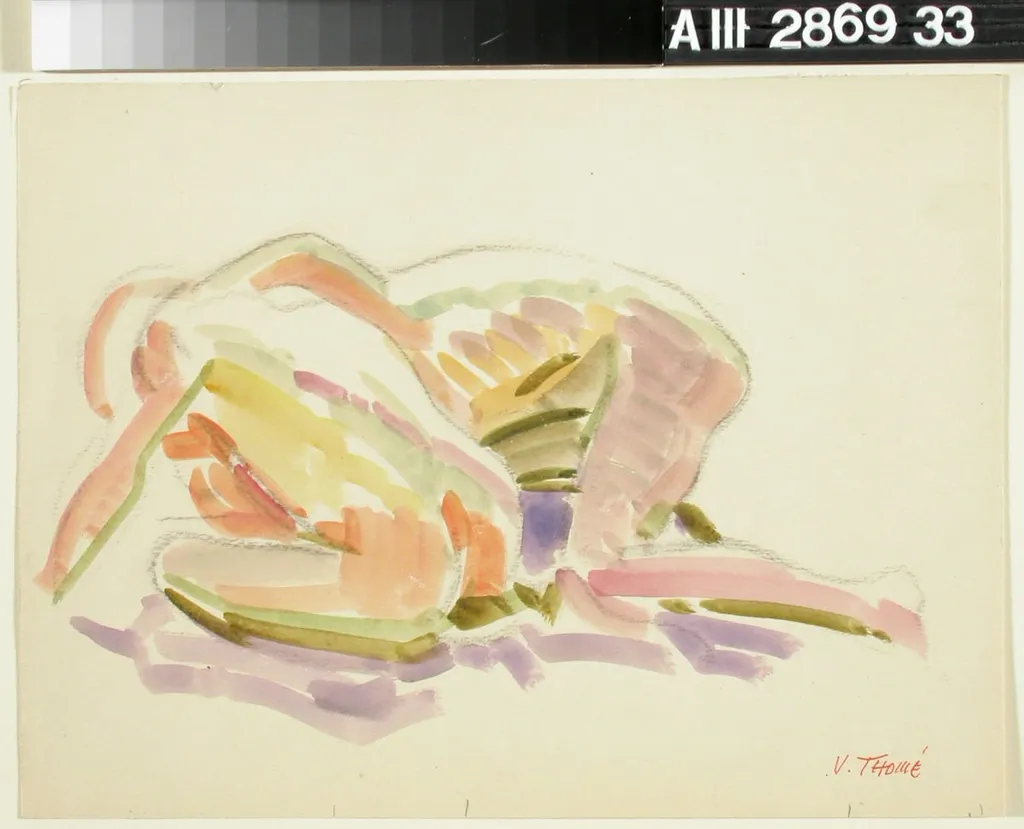
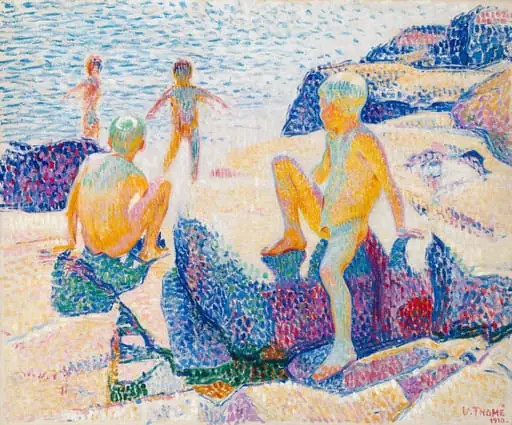
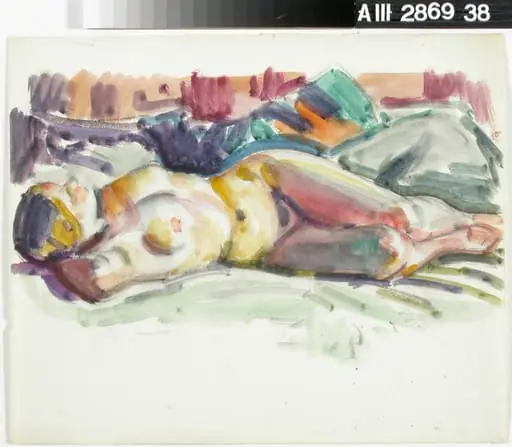
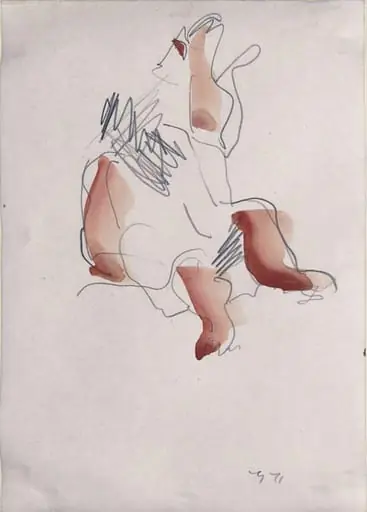
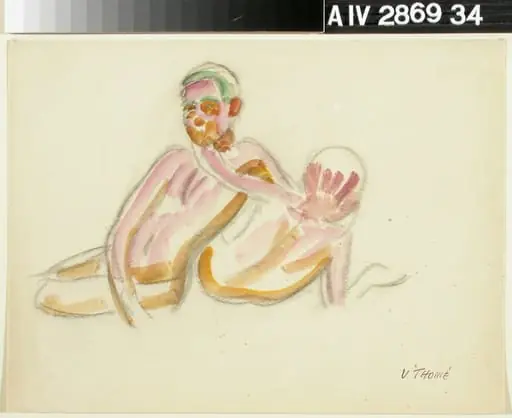
Kaksi leikkivää poikaa is an unspecified work on paper by Verner Thomé. It is held in the collection of the Finnish National Gallery. This small watercolor depicts two young boys engaged in playful motion, rendered with minimal detail and fluid brushwork.
About this work
Overview
The figures are simplified into soft, rounded forms, their limbs merging through translucent washes of pink, yellow, and green.
This small watercolor depicts two young boys engaged in playful motion, rendered with minimal detail and fluid brushwork. The figures are simplified into soft, rounded forms, their limbs merging through translucent washes of pink, yellow, and green. The loose handling suggests spontaneity, as if the artist captured a fleeting moment rather than a posed study. The signature 'V. Thomé' appears in the corner, anchoring the work to its creator without formal embellishment.
Subject & Meaning
The painting portrays an intimate, unguarded interaction between two children, their bodies entwined in a gesture of casual companionship. There is no narrative context or symbolic element—only the physical closeness and movement of play. The absence of facial features or environmental details shifts focus entirely to the rhythm of their interaction, emphasizing emotion through posture rather than expression.
Technique & Style
Executed in watercolor, the work relies on wet-on-wet application to create blurred edges and soft transitions between hues. The brushstrokes are rapid and unrefined, avoiding outlines or modeling in favor of suggestive forms. This technique allows the paper’s texture to show through, enhancing the sense of immediacy. The style reflects an interest in capturing motion and atmosphere over anatomical precision.
History & Provenance
The painting is attributed to Verner Thomé, a Finnish artist active in the late 19th and early 20th centuries. While little is documented about its early ownership, it aligns with Thomé’s known interest in informal, everyday scenes rendered with lyrical economy. Its survival as a standalone watercolor suggests it may have been a study or personal sketch rather than a commissioned work.
Context
Created during a period when Nordic artists were increasingly turning to intimate, domestic subjects, this work reflects a broader shift away from grand historical themes toward personal observation. Thomé’s approach echoes contemporary interest in Impressionist and Post-Impressionist methods, particularly in the use of light color and spontaneous brushwork to convey transient moments.
Legacy
Though not widely exhibited, the painting exemplifies a quiet tradition in Finnish art that values emotional resonance over technical finish. Its emphasis on gesture and color over detail influenced later generations of watercolorists in the region who sought to express movement and mood with minimal means. It remains a modest but telling example of early modernist experimentation in a small-scale medium.
Artist & collection
Artist
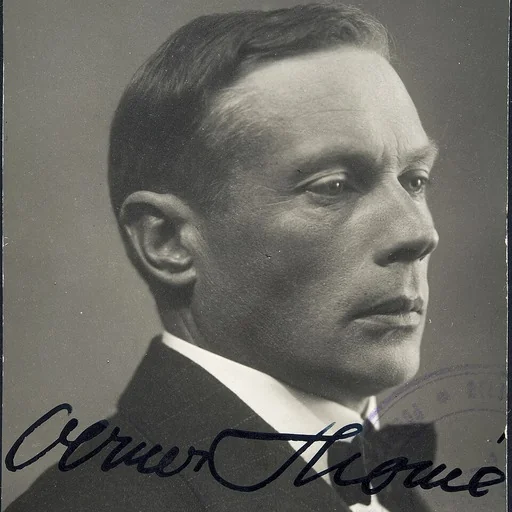
Verner Thomé (4 July 1878 – 1 June 1953) was a Finnish Post-Impressionist graphic artist. He was influenced by Vitalism a German-Scandinavian movement that incorporated Nietzsche's philosophy.