Artwork
Untitled
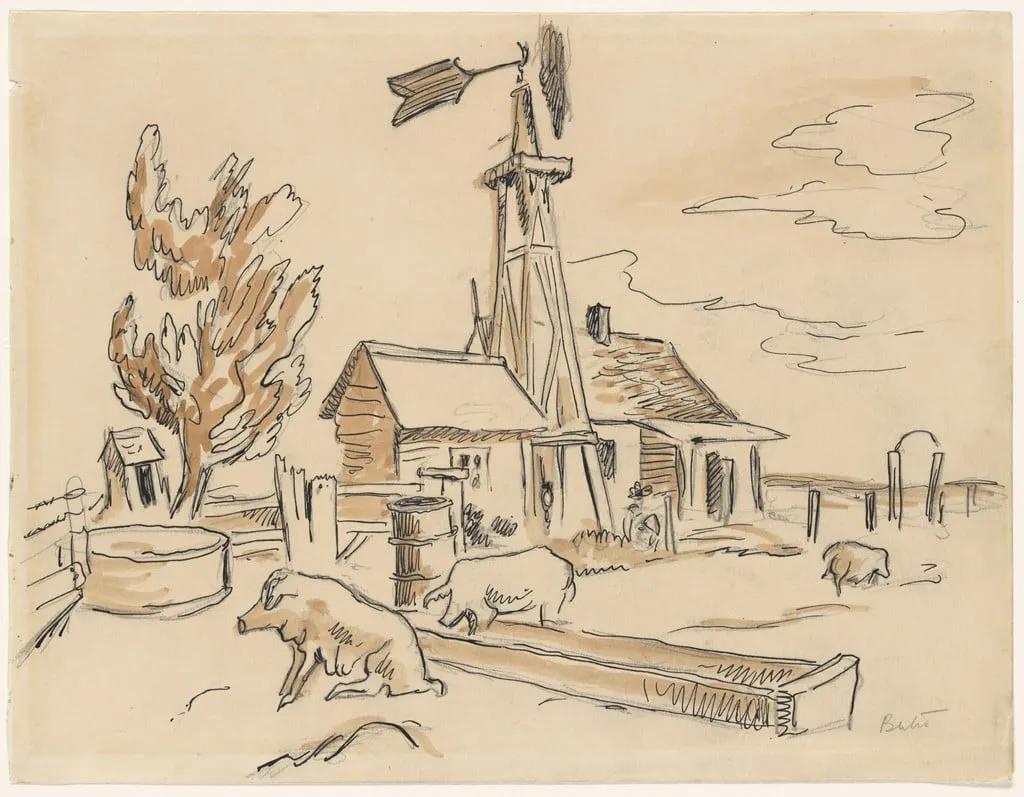
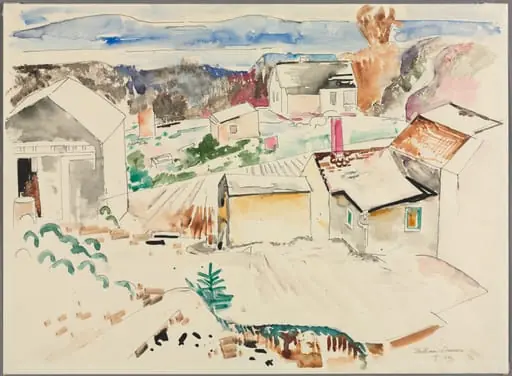
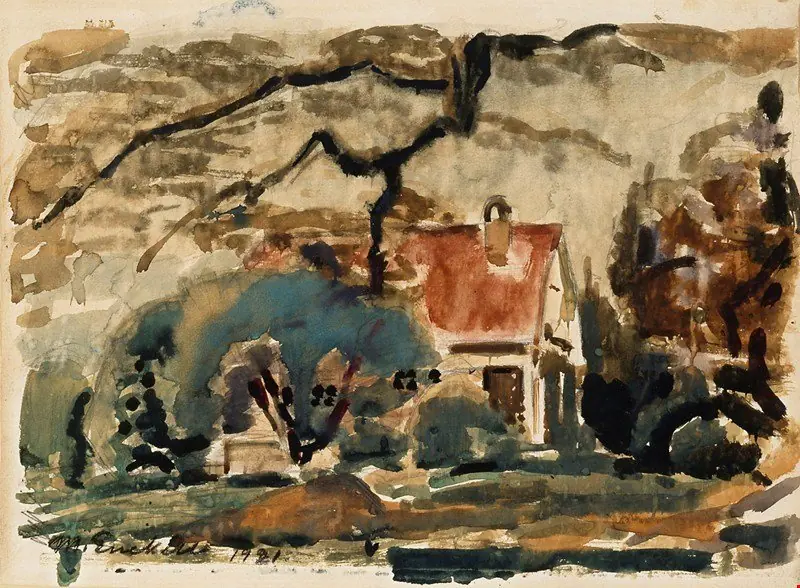
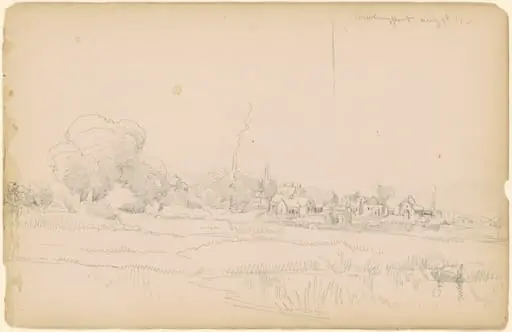
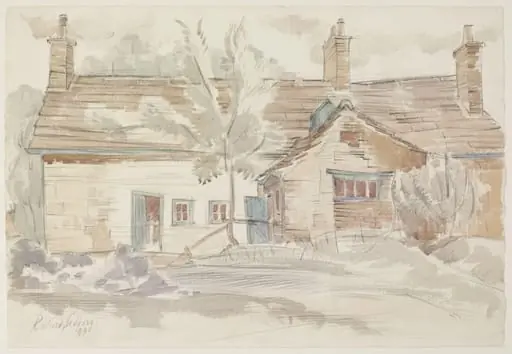
Untitled is a watercolor drawing by Thomas Hart Benton. It dates from 1929 and is held in the collection of the Museum of Modern Art.
About this work
Overview
Though untitled, its immediacy suggests a spontaneous record of the American countryside, likely made during one of his travels through the Midwest.
Created in 1929, this watercolor, pencil, and ink drawing by Thomas Hart Benton captures a quiet rural scene with minimal detail. Executed on paper, the work reflects Benton’s habit of sketching directly from observation. Though untitled, its immediacy suggests a spontaneous record of the American countryside, likely made during one of his travels through the Midwest. It resides in The Museum of Modern Art’s collection, part of a broader archive of his observational studies.
Subject & Meaning
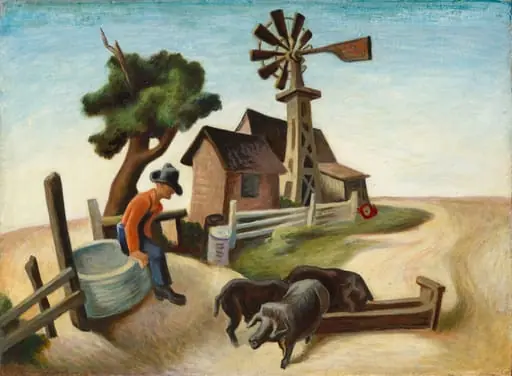
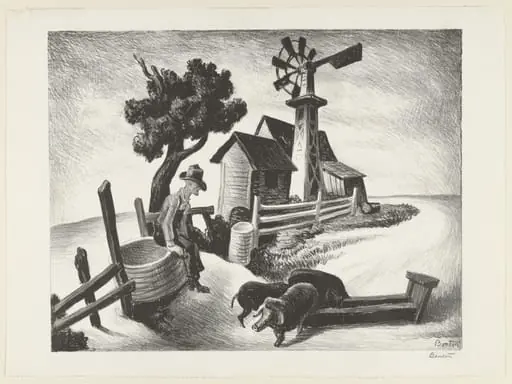
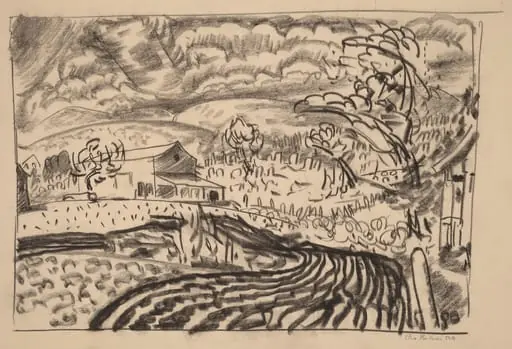
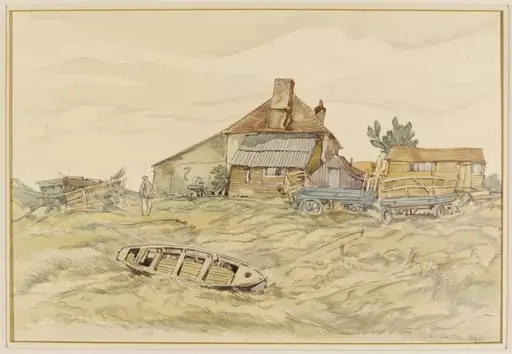
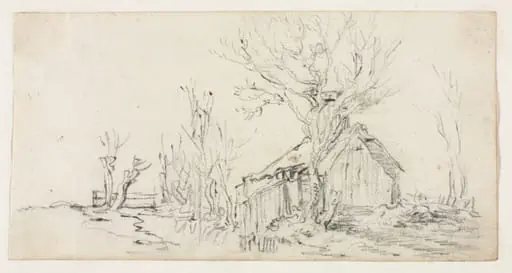
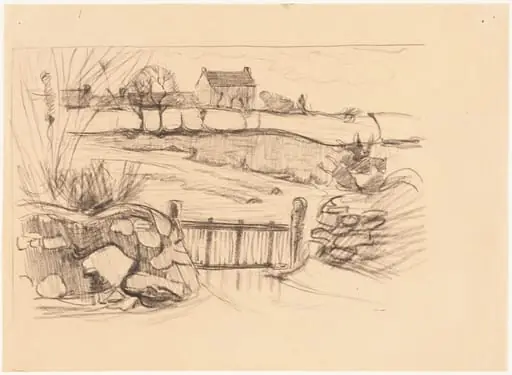
The drawing depicts a modest farmstead: a wooden house with a porch, a windmill, grazing livestock, and a resting dog. Bare trees and earth-toned hues emphasize the season and setting. There is no narrative or drama—only the quiet presence of daily rural existence. The scene carries no overt symbolism; its significance lies in its unembellished portrayal of ordinary life, a hallmark of Benton’s Regionalist approach to American subject matter.
Technique & Style
Benton employed loose, rapid pencil lines and diluted watercolor washes to suggest form without definition. The windmill’s blades, rendered with uneven strokes, and the soft, smudged contours of the animals convey movement and texture through suggestion rather than precision. Ink accents define key edges, while the paper’s texture remains visible, reinforcing the work’s sketchlike quality. The method prioritizes expressiveness over polish, aligning with his belief in art rooted in lived experience.
History & Provenance
Benton produced this work during a period of intense travel and sketching across the American heartland, following his return from New York and Paris. It entered The Museum of Modern Art’s collection in the 20th century as part of a larger acquisition of his drawings, which the institution recognized for their role in documenting regional American life. Its provenance reflects institutional interest in Benton’s preparatory work as much as his finished paintings.
Context
In the late 1920s, Benton was emerging as a central figure in the Regionalist movement, which rejected European modernism in favor of depictions of American rural and working-class life. This drawing aligns with his broader project of capturing the rhythms of Midwestern communities. While urban centers embraced abstraction, Benton turned to the land and labor of the interior, viewing these scenes as essential to a distinct national identity.
Legacy
Though modest in scale, this drawing exemplifies Benton’s enduring influence on American realism. His commitment to direct observation and vernacular subjects inspired later generations of artists to find dignity in everyday environments. The work remains a quiet testament to his belief that art should emerge from the soil and people of America, not from studio conventions or imported styles.
Artist & collection
Artist
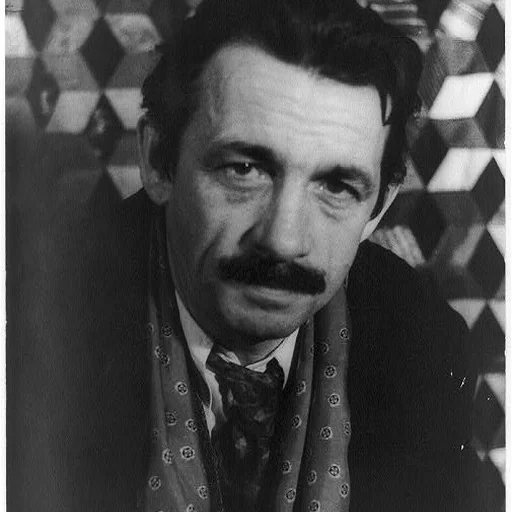
Thomas Hart Benton (April 15, 1889 – January 19, 1975) was an American painter, muralist, and printmaker.