Artwork
Capel Street, Dublin, with the Royal Exchange in the distance
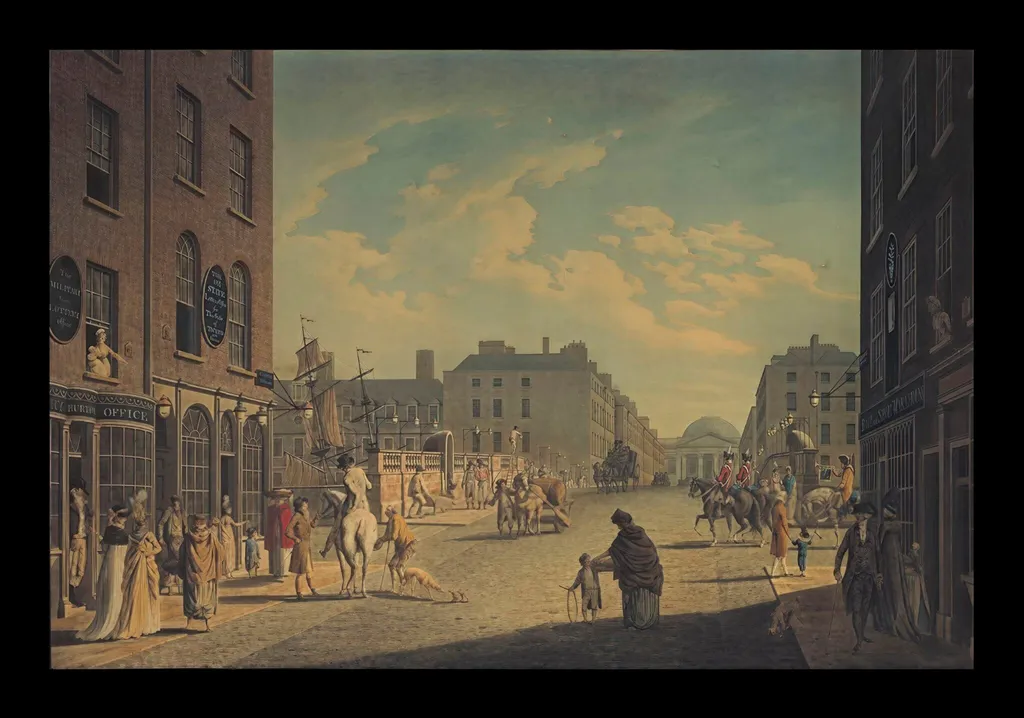
Capel Street, Dublin, with the Royal Exchange in the distance is a watercolor work on paper by the Romanticist artist Malton. It dates from 1800 and is held in the collection of the Victoria and Albert Museum.
About this work
Overview
The scene teems with pedestrian activity, from laborers to affluent patrons, all set against a backdrop of commercial buildings and a maritime horizon.
James Malton’s 1800 watercolour captures Capel Street in Dublin, framing the Royal Exchange as a distant architectural anchor. The scene teems with pedestrian activity, from laborers to affluent patrons, all set against a backdrop of commercial buildings and a maritime horizon. Signed and dated by the artist, the work functions as both a topographical record and a quiet chronicle of urban life in early 19th-century Ireland.
Subject & Meaning
The painting presents a cross-section of Dublin society: barefoot beggars, tradespeople at work, and well-dressed individuals with attendants coexist in a single frame. This juxtaposition suggests a city where social strata intersected in public space. The Royal Exchange, a symbol of commerce and civic pride, looms as a silent witness to daily routines, reinforcing the street’s role as a hub of economic and social exchange.
Technique & Style
Malton employs delicate watercolour washes to render architectural detail and atmospheric light. Soft gradients in the sky and building facades convey the time of day, while precise linework defines figures and signage. The subtle interplay of shadow and sunlight enhances depth, and the inclusion of fine details—like shop signs and carriage wheels—grounds the scene in observable reality without overt dramatization.
History & Provenance
Created in 1800, the work belongs to Malton’s series documenting Dublin’s urban landscape during a period of architectural expansion. It was likely produced for private patrons interested in civic identity. The piece retains its original signature and date, supporting its authenticity. Its survival reflects its value as a documentary record, though its early ownership remains undocumented.
Context
In the early 1800s, Dublin was a bustling provincial capital with growing commercial activity. Capel Street, near the River Liffey, connected residential quarters with the city’s financial center. The presence of a sailing vessel in the distance hints at Dublin’s maritime trade links. The Royal Exchange, completed in 1796, stood as a new symbol of civic ambition amid a city still shaped by colonial structures.
Legacy
Malton’s watercolour contributes to a broader tradition of topographical art in Ireland, offering a measured view of urban life before industrialization transformed cities. While not widely exhibited today, it remains a valuable resource for historians studying Dublin’s social geography. Its quiet realism distinguishes it from romanticized depictions, preserving an unembellished glimpse of everyday existence.
Artist & collection
Artist
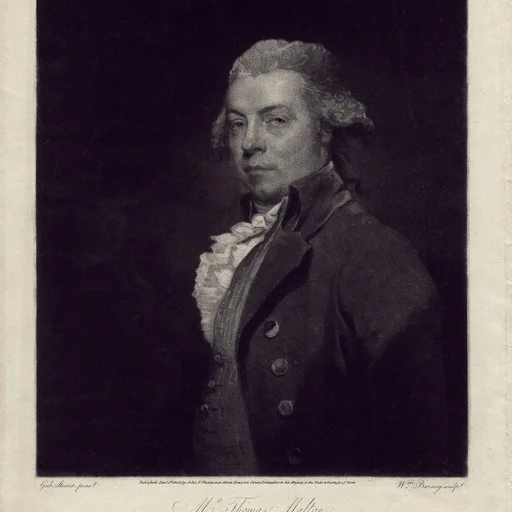
Thomas Malton (1748 – 7 March 1804; also known as Thomas Malton the Younger), was an English painter of topographical and architectural views, and an engraver.

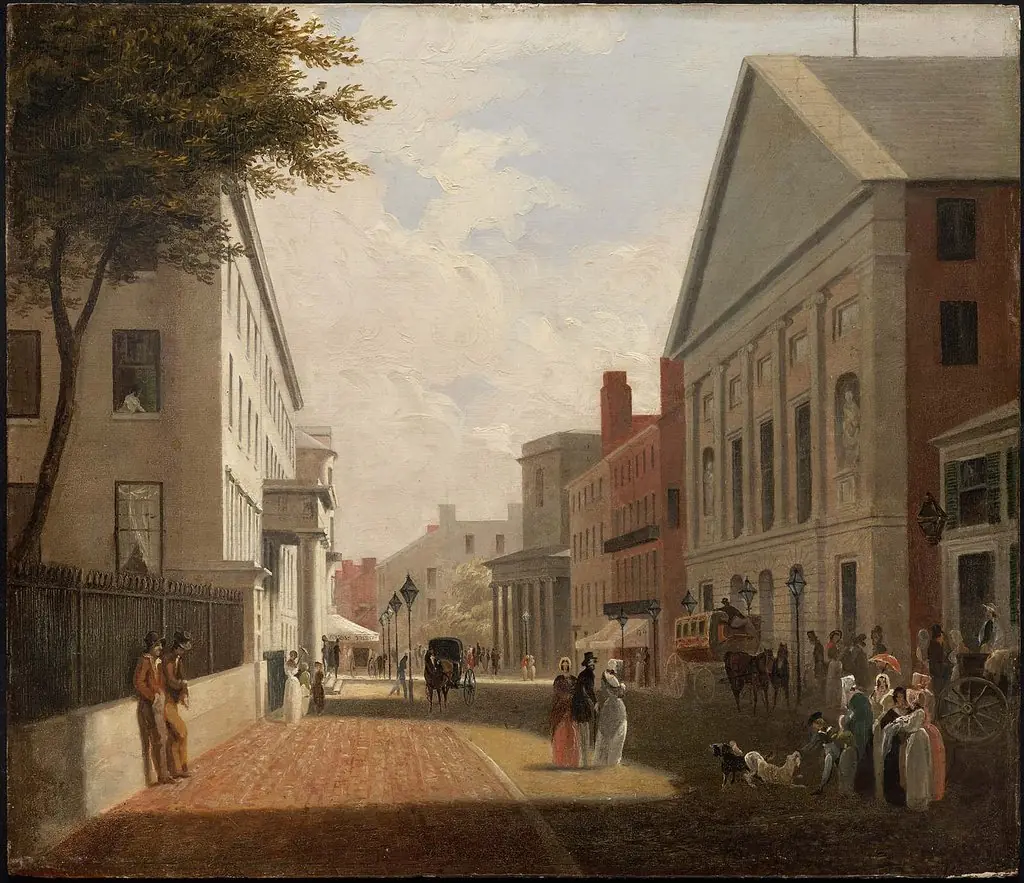 Tremont Street, Boston
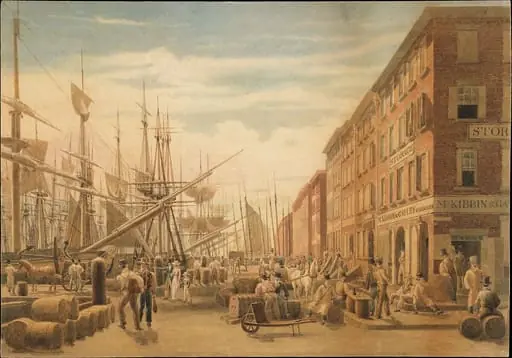 View of South Street, from Maiden Lane, New York City
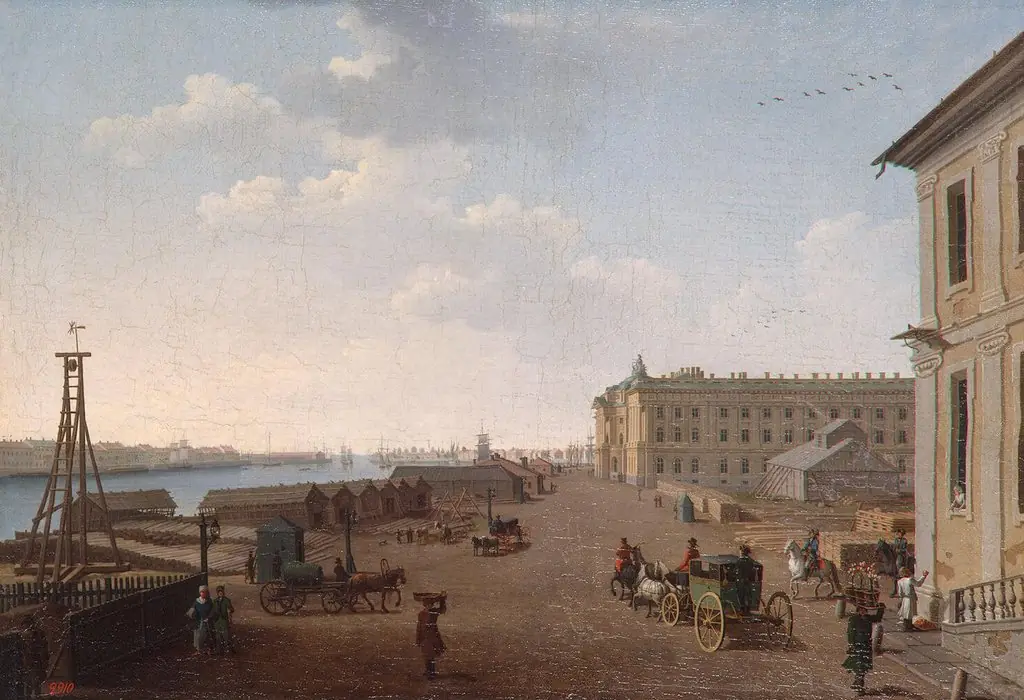 The View of the Embankment of Vasilyevsky Island near the Academy of Arts
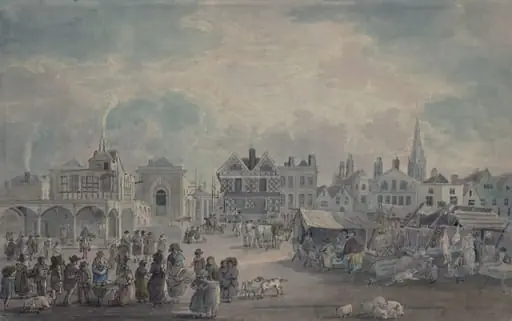 The Market Place, Salisbury
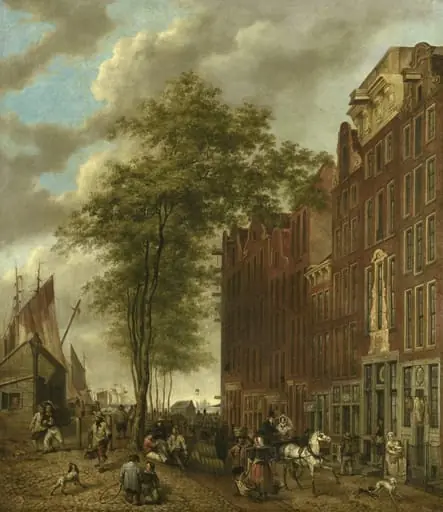 The Slijpsteenmarkt (Whetstone Market), Amsterdam
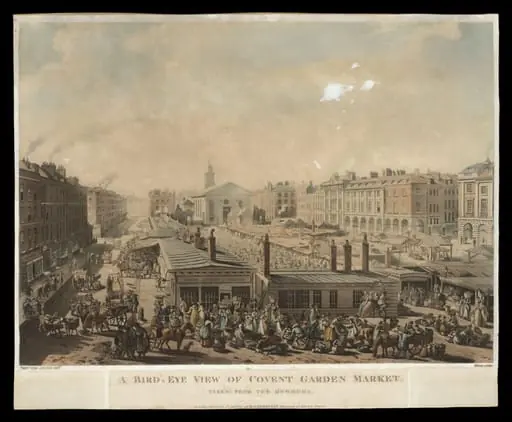 H Beard Print Collection
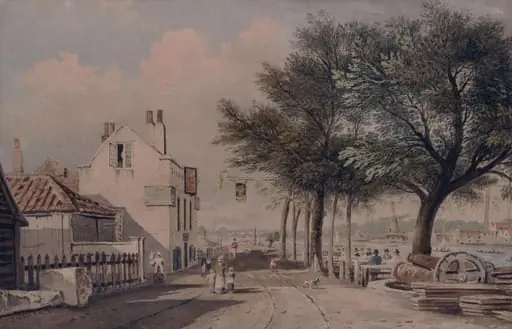 The Spread Eagle, Millbank
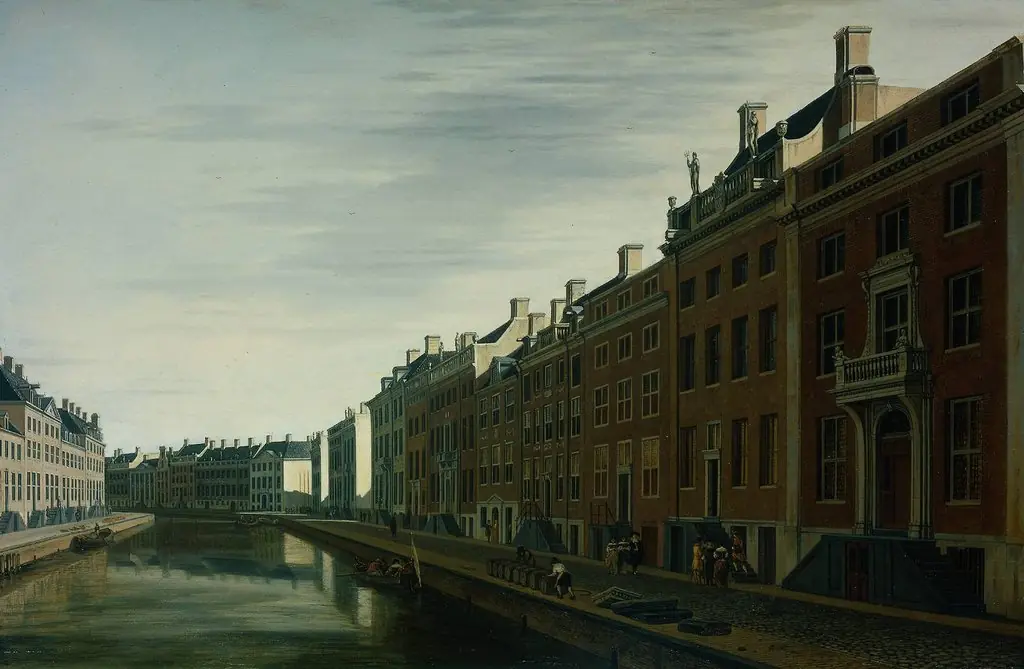 The ‘Golden Bend’ in the Herengracht, Amsterdam, Seen from the West