Artwork
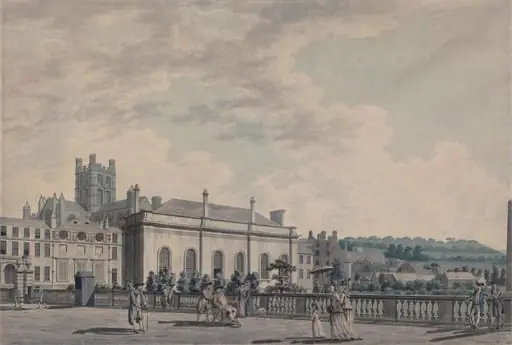
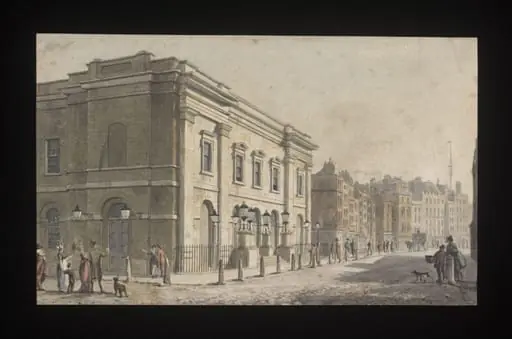
North Parade, Bath
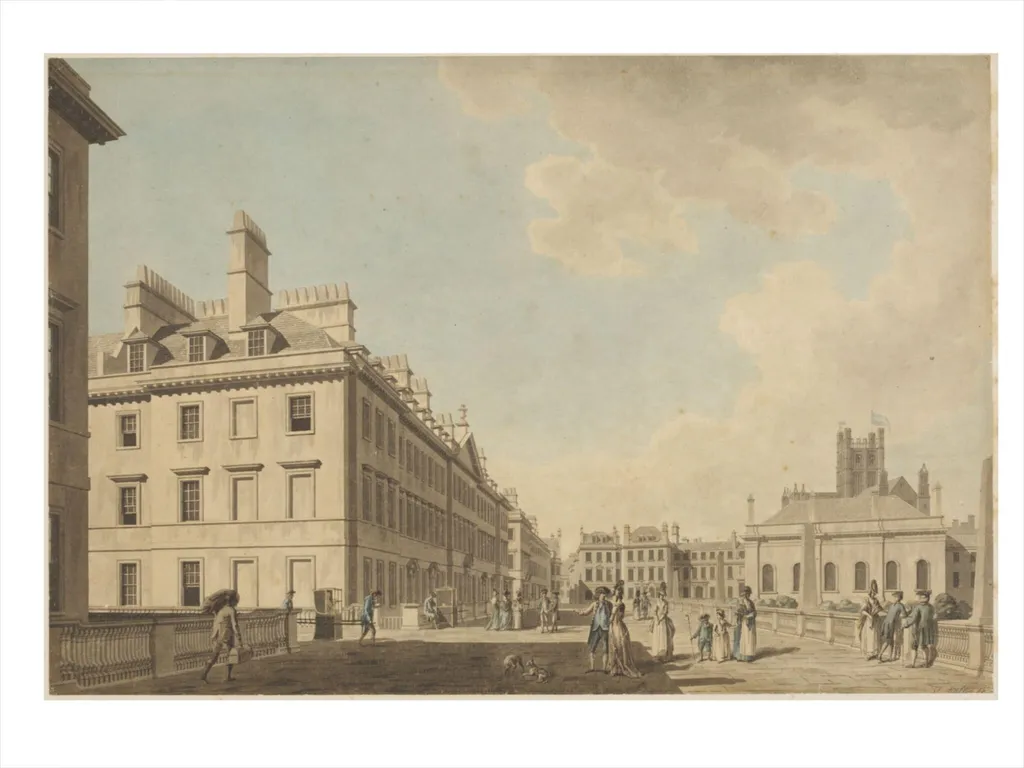
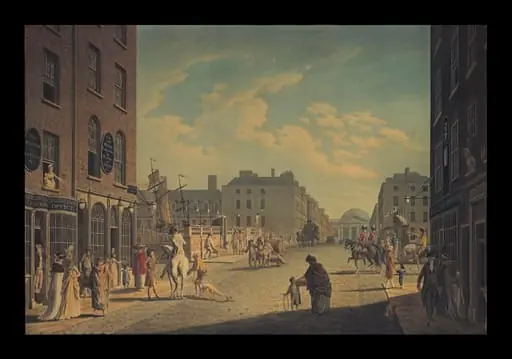
North Parade, Bath is a watercolor work on paper by the Rococo painting artist Malton. It dates from 1775 and is held in the collection of the Victoria and Albert Museum.
About this work
The scene appears to be set in a European city, possibly in the 18th century, given the style of the buildings and clothing.
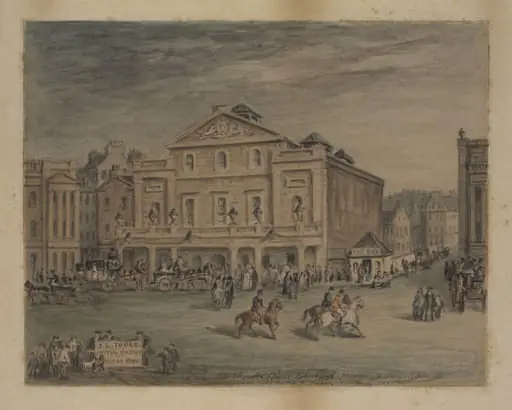
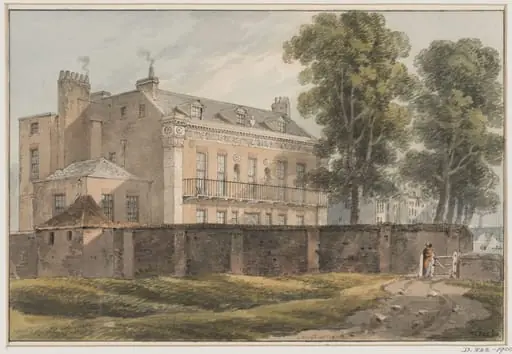
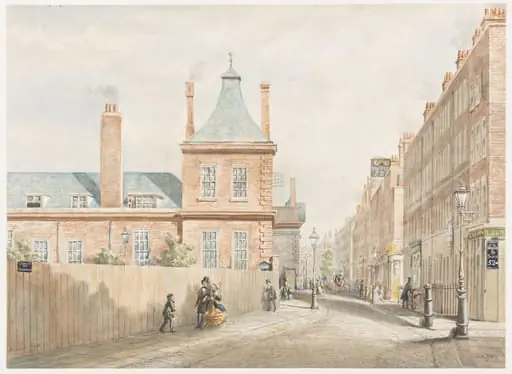
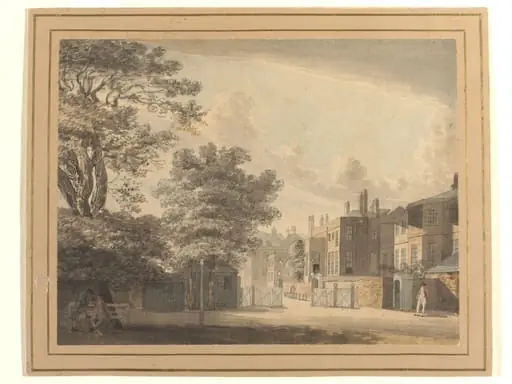
The painting depicts a street scene with a large, multi-story building on the left and a smaller structure on the right. In the foreground, people are walking, including a man with a dog and a woman in a long dress. The sky is light blue with clouds.
The scene appears to be set in a European city, possibly in the 18th century, given the style of the buildings and clothing. The artist's use of watercolor creates a soft, dreamy quality.
This painting is reminiscent of the work of other artists associated with the Romanticism movement.
Overview
John Malton’s 1775 watercolour presents a view of North Parade in Bath, capturing a bustling street framed by a light‑blue sky. The composition juxtaposes a dominant multi‑storey structure on the left with a smaller building on the right, while pedestrians—including a gentleman with a dog and a lady in a long dress—populate the foreground, conveying the city’s lively atmosphere.
Subject & Meaning
The work records a moment of eighteenth‑century urban life, highlighting Bath’s status as a fashionable resort. By placing the Gothic silhouette of Bath Abbey opposite the emerging Neoclassical terrace, Malton underscores the coexistence of historic and contemporary architectural trends, suggesting a dialogue between tradition and the new aesthetic preferences of the period.
Technique & Style
Executed in watercolour, the painting achieves a soft, atmospheric quality through delicate washes of sky and muted tones for the buildings. Malton’s handling of perspective is uneven, yet it serves to emphasize the depth of the street scene. The careful rendering of figures and attire reflects his topographical precision while allowing a slightly romanticized ambience.
History & Provenance
Signed and dated by the artist, the watercolour is a documented example of Malton’s prolific output of topographical views during the 1770s. It has remained in private collections before entering a public institution, where it is cited as evidence of Bath’s urban development and the artist’s role in documenting architectural change.
Context
Created during a period of rapid redevelopment in Bath, the painting captures the city’s transformation under the influence of Neoclassicism. The presence of well‑dressed figures illustrates the social milieu of a spa town attracting the elite, while the contrasting architectural styles reflect contemporary debates about heritage and modernity.
Artist & collection
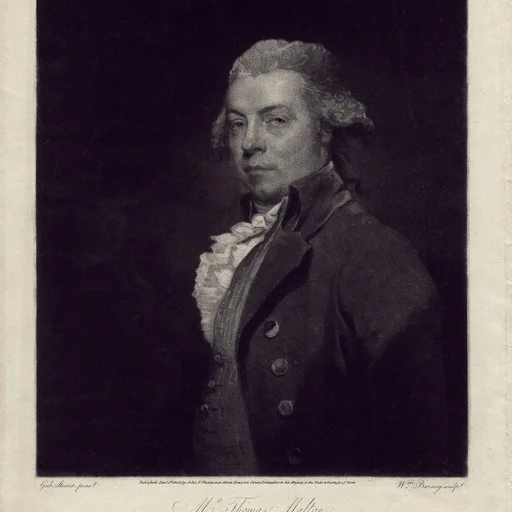
Artist
Thomas Malton (1748 – 7 March 1804; also known as Thomas Malton the Younger), was an English painter of topographical and architectural views, and an engraver.