Artwork
Stonehenge, Wiltshire
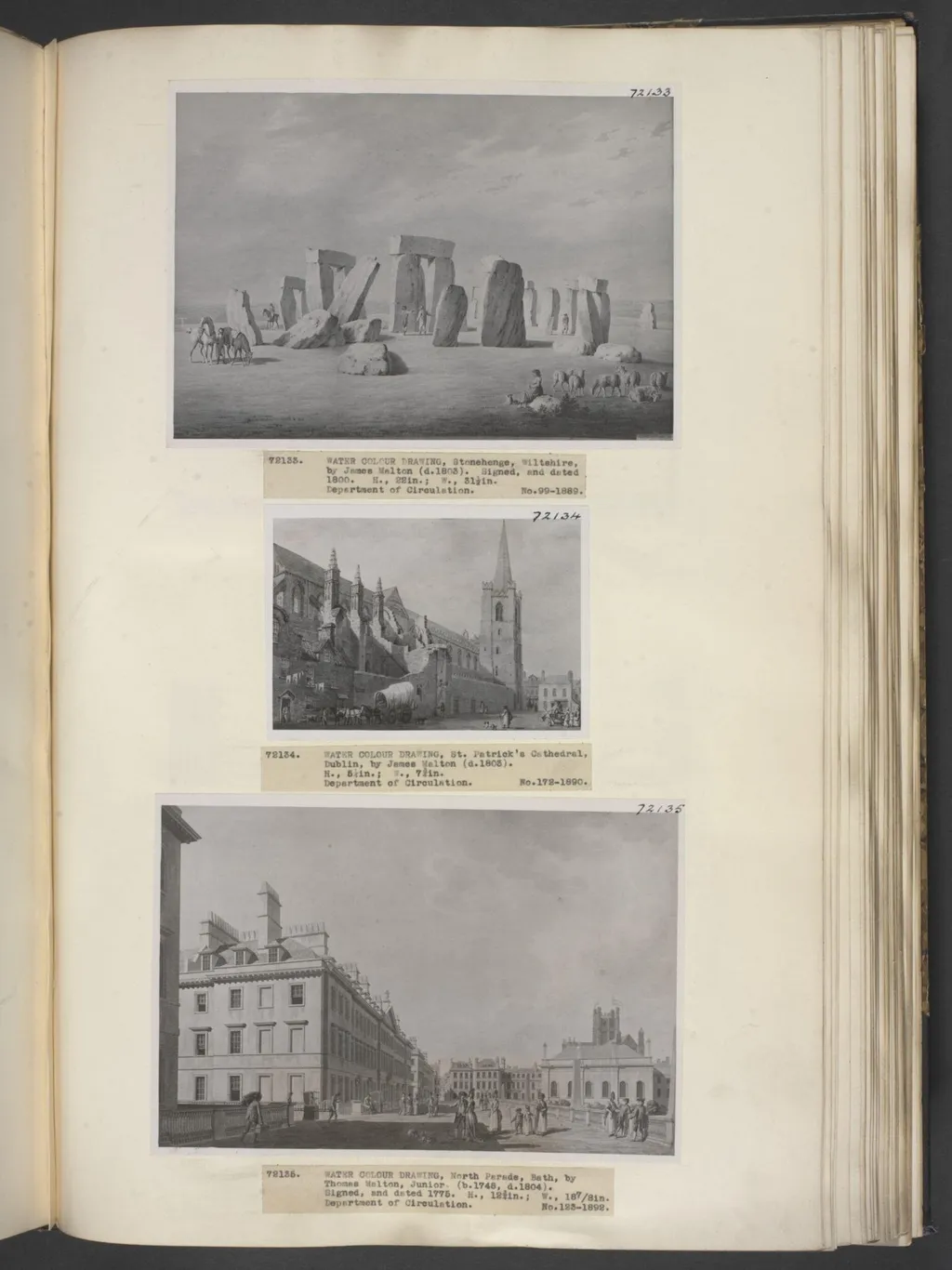
Stonehenge, Wiltshire is a watercolor work on paper by the British Romanticist artist Malton. It dates from 1800 and is held in the collection of the Victoria and Albert Museum. Created in 1800, this watercolour captures Stonehenge in Wiltshire with quiet precision.
About this work
In the background, the stones look ancient and weathered, while in the distance, a few small figures and horses add scale to the scene.
This drawing shows a flat landscape with huge standing stones arranged in a circle. In the background, the stones look ancient and weathered, while in the distance, a few small figures and horses add scale to the scene. The sky is pale, and the ground is mostly empty except for scattered rocks.
The artist focused on the mystery of the stones, making them look both grand and lonely. This was drawn in 1800 as part of a style that loved nature’s wild beauty.
Next, check out the Victoria and Albert Museum to see more works like this.
Overview
Created in 1800, this watercolour captures Stonehenge in Wiltshire with quiet precision. The artist rendered the monument in delicate washes, emphasizing its isolation against a broad, open landscape. Signed by the hand of its maker, the work reflects early 19th-century interest in antiquity and the sublime qualities of the natural world. Its modest scale and restrained palette invite contemplation rather than dramatic spectacle.
Subject & Meaning
The composition centers on the megalithic stones, arranged in their familiar circular formation, weathered and silent. Scattered figures and horses in the distance underscore the monument’s enduring presence against human transience. The empty ground and pale sky amplify a sense of solitude, suggesting the stones as relics of a forgotten past. The artist conveys awe not through grandeur, but through stillness and absence.
Technique & Style
Executed in watercolour, the piece employs thin, layered washes to suggest texture and atmosphere. The stones are rendered with soft edges and muted tones, contrasting with the faint, linear details of distant figures. The sky is left largely unmodulated, enhancing the sense of vastness. This approach aligns with contemporary topographical traditions that valued accuracy and mood over embellishment.
History & Provenance
The work dates from a period when antiquarian interest in prehistoric sites was growing in Britain. Though its early ownership is unrecorded, its creation in 1800 places it within a wave of artistic documentation of ancient monuments. The signature confirms its origin as a deliberate, personal record rather than a commercial print. It remains a quiet example of early Romantic-era observation.
Context
In the early 1800s, artists and scholars increasingly turned to Britain’s prehistoric landscapes as subjects worthy of study. Stonehenge, long shrouded in myth, became a symbol of national antiquity. This watercolour reflects a broader cultural shift toward valuing ruins not as curiosities, but as evocative remnants of lost civilizations, viewed through a lens of naturalism and reverence.
Legacy
Though not widely exhibited in its time, the work contributes to a quiet lineage of British watercolours that documented ancient sites with sensitivity. It exemplifies how artists of the period used understated technique to convey historical weight. Its preservation offers insight into how early 19th-century viewers perceived and emotionally responded to prehistoric monuments.
Artist & collection
Artist
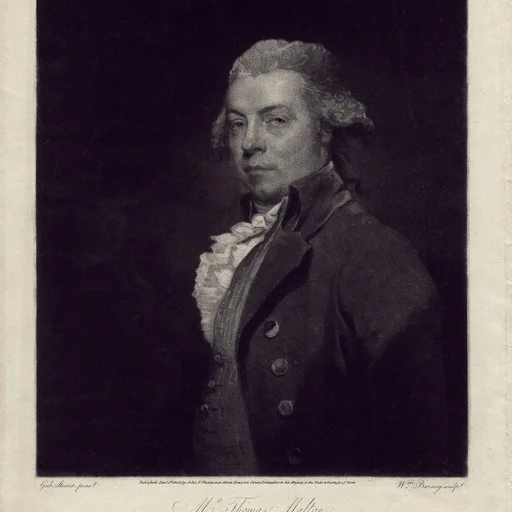
Thomas Malton (1748 – 7 March 1804; also known as Thomas Malton the Younger), was an English painter of topographical and architectural views, and an engraver.