Artwork
Comparative Anatomy Study
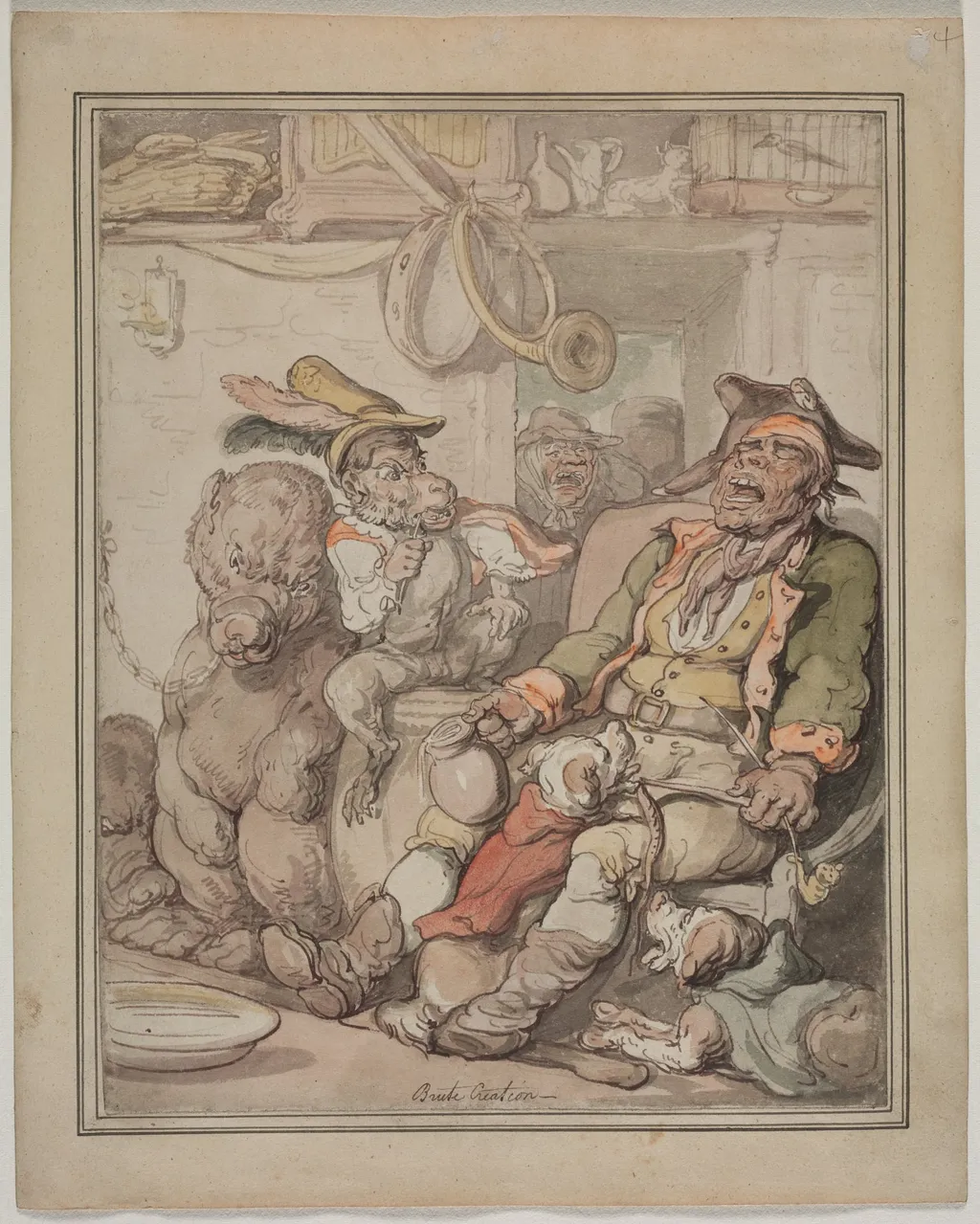
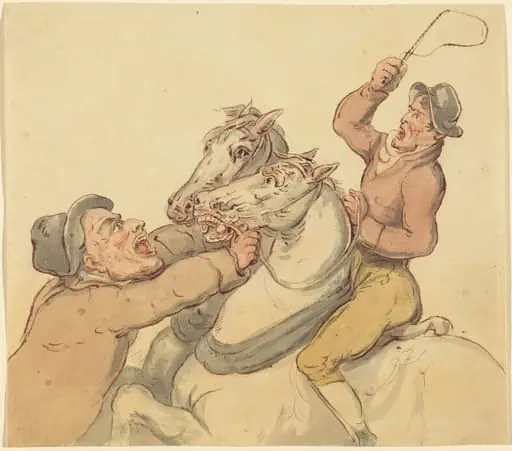
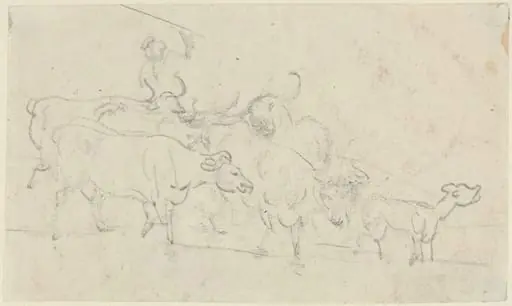
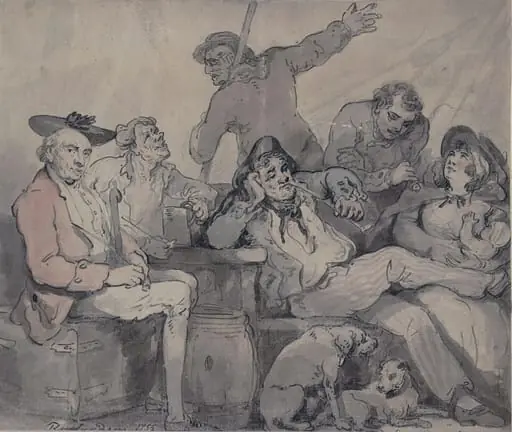
Comparative Anatomy Study is a drawing by the Romanticist artist Thomas Rowlandson. It dates from 1815 and is held in the collection of the Cleveland Museum of Art.
About this work
Overview
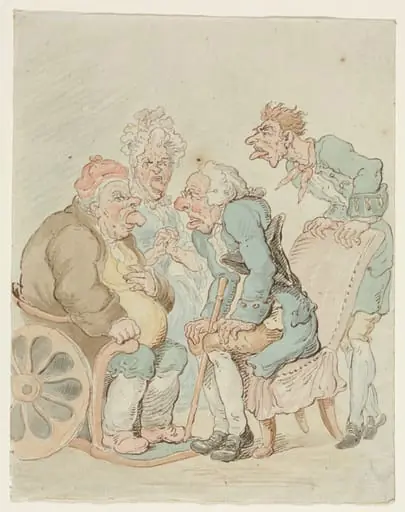
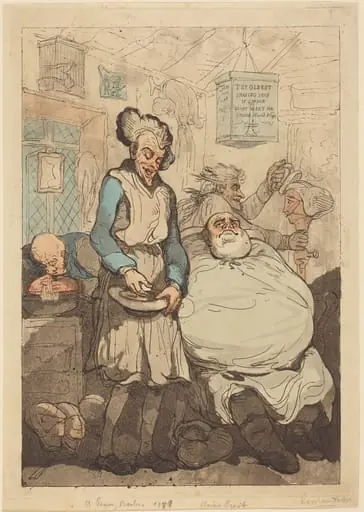
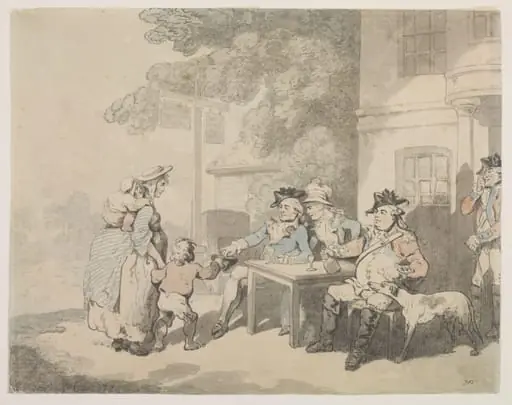
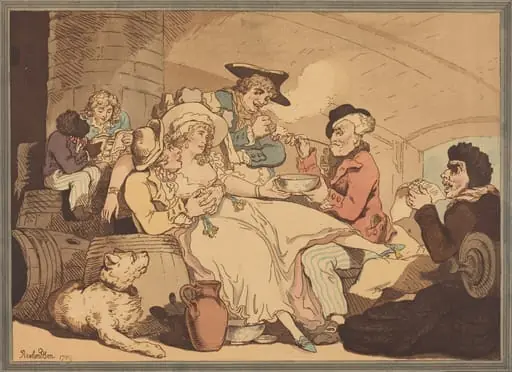
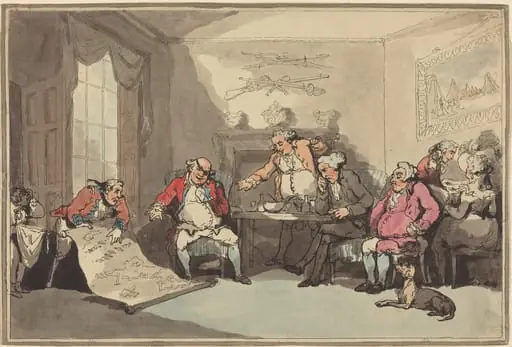
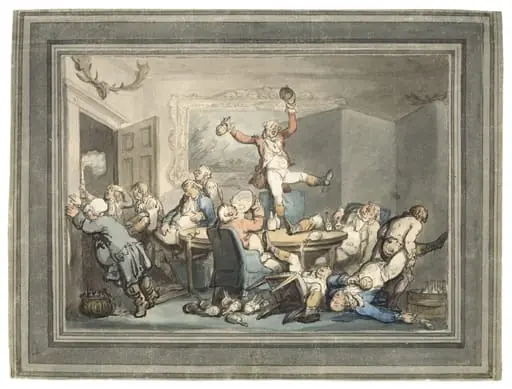
Created around 1815 by British artist Thomas Rowlandson, this drawing is a satirical exploration of anatomical study, blending scientific inquiry with humorous observation. Unlike formal academic illustrations, it presents a chaotic scene where human and animal forms are examined side by side, reflecting Rowlandson’s interest in the absurdities of institutional practices during the Georgian era.
Subject & Meaning
The scene depicts a group of men, likely medical students or practitioners, observing a pig and a dog amid scattered tools and books.
The scene depicts a group of men, likely medical students or practitioners, observing a pig and a dog amid scattered tools and books. Their postures and expressions suggest both curiosity and farce, undermining the solemnity of anatomical science. The inclusion of animals alongside humans critiques the era’s tendency to draw rigid distinctions between species, subtly questioning the authority of medical knowledge.
Technique & Style
Rowlandson employs ink and wash to render soft, muted tones on the figures’ clothing and animal fur, creating a sense of organic texture. In contrast, objects like the horn, bowl, and book are rendered with sharper lines and brighter accents, drawing attention to their presence. The layered composition and varied line weight guide the viewer’s eye through the cluttered space, enhancing the scene’s theatricality.
History & Provenance
The drawing entered the collection of The Cleveland Museum of Art as part of its holdings of 18th- and 19th-century British graphic art. Its origins lie in Rowlandson’s broader output of satirical illustrations, though this piece stands apart as a less overtly political work. It was likely produced for private circulation or as a study for broader thematic projects, rather than for public publication.
Context
During the early 19th century, public interest in anatomy surged due to advances in medical education and the controversial practice of body snatching. Rowlandson’s depiction reflects this cultural moment, using humor to expose the contradictions between scientific ambition and human folly. His work resonates with broader satirical traditions in British art, aligning with contemporaries like William Hogarth.
Legacy
Though not widely exhibited, the drawing contributes to understanding Rowlandson’s range beyond political caricature. It reveals his ability to engage with scientific themes through irony, influencing later illustrators who blended humor with institutional critique. The work remains a quiet but pointed commentary on the performative nature of knowledge in an age of emerging empirical authority.
Artist & collection
Artist
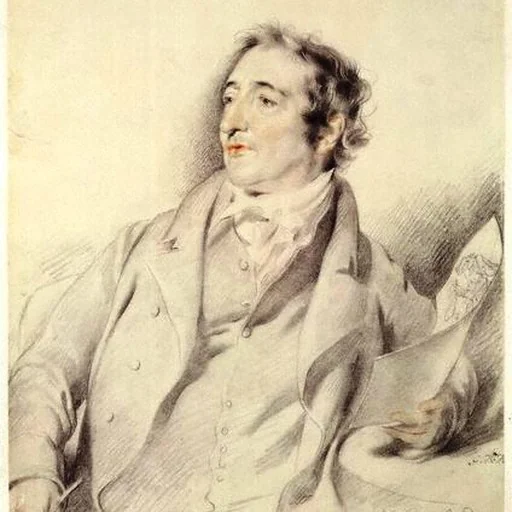
Thomas Rowlandson (; 13 July 1757 – 21 April 1827) was an English artist and caricaturist of the Georgian Era, noted for his political satire and social observation.