Artwork
Postboys and Posthorses at the White Hart Inn
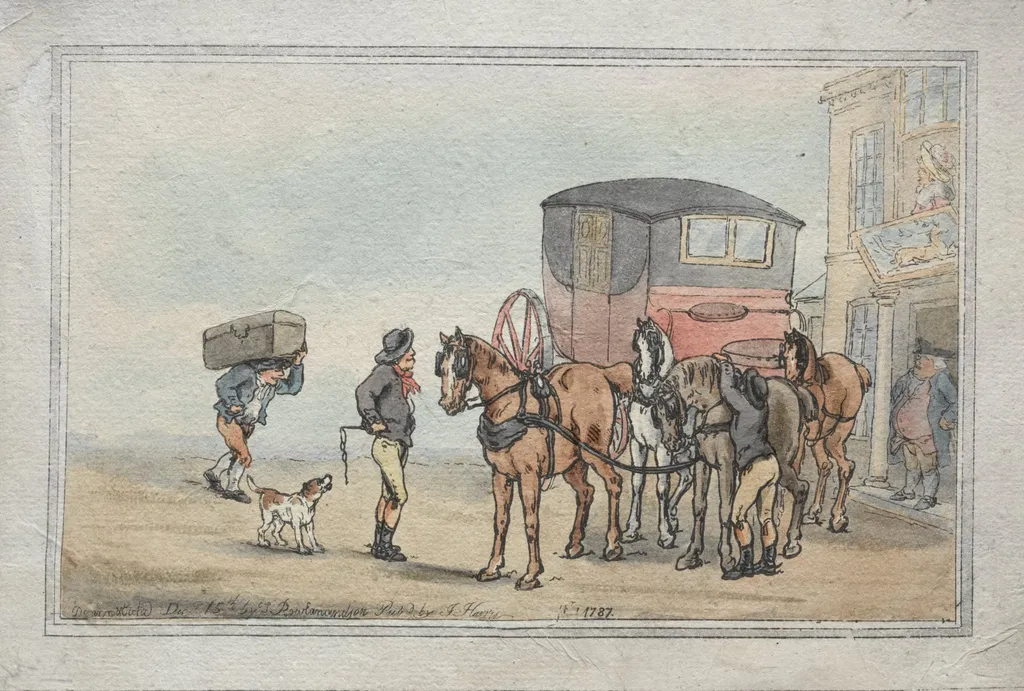
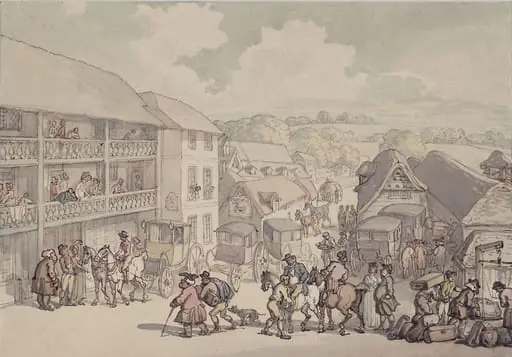
Postboys and Posthorses at the White Hart Inn is a print by the Romanticist artist Thomas Rowlandson. It dates from 1787 and is held in the collection of the Cleveland Museum of Art.
About this work
This painting is called Postboys and Posthorses at the White Hart Inn.
It was made in 1787 by Thomas Rowlandson.
The artist was part of the Romanticism movement, which often focused on everyday life and scenes, and this painting is a genre scene, which means it shows a common, everyday scene.
You can learn more about this type of scene at the museum where it's held, The Cleveland Museum of Art.
Overview
Created in 1787, Thomas Rowlandson’s print captures a bustling moment at the White Hart Inn, a common stopping point for stagecoach travelers.
Created in 1787, Thomas Rowlandson’s print captures a bustling moment at the White Hart Inn, a common stopping point for stagecoach travelers. The scene centers on postboys and their horses, engaged in the routine exchange of mail and passengers. Rowlandson, known for his sharp social observations, rendered this moment with lively detail, reflecting the rhythms of 18th-century British travel and communication networks.
Subject & Meaning
The print portrays the working class figures essential to England’s postal system—postboys, innkeepers, and stable hands—going about their duties amid the chaos of travel. Rather than idealizing the scene, Rowlandson highlights the physical labor and disorder inherent in the system. His focus on ordinary people, not elites, underscores the infrastructure underpinning daily life in Georgian England.
Technique & Style
Rowlandson employed etching and hand-coloring to achieve a dynamic, almost theatrical effect. His loose, expressive lines convey movement and personality, while subtle washes of color enliven the figures and architecture. The composition is crowded yet carefully balanced, guiding the viewer’s eye through the activity without overwhelming it, a hallmark of his narrative approach to printmaking.
History & Provenance
The print was produced during Rowlandson’s most active period as a satirical artist, when he contributed illustrations to popular publications and standalone prints. It entered the collection of the Cleveland Museum of Art in the 20th century, where it remains part of a broader holding of British graphic art from the late 1700s. Its survival reflects its value as a document of social history.
Context
In the 1780s, the British postal system relied on horse-drawn coaches and a network of inns like the White Hart to relay mail and passengers across the country. Rowlandson’s depiction aligns with a growing public interest in the mechanics of daily life, as well as the rise of print culture that made such scenes accessible to a wider audience beyond the elite.
Legacy
Rowlandson’s work helped define the genre of social observation in British printmaking. While not overtly political, his scenes of common life provided a visual record of class, labor, and transportation that influenced later artists and historians. This print endures as a quiet but precise testament to the everyday rhythms of an era defined by motion and connection.
Artist & collection
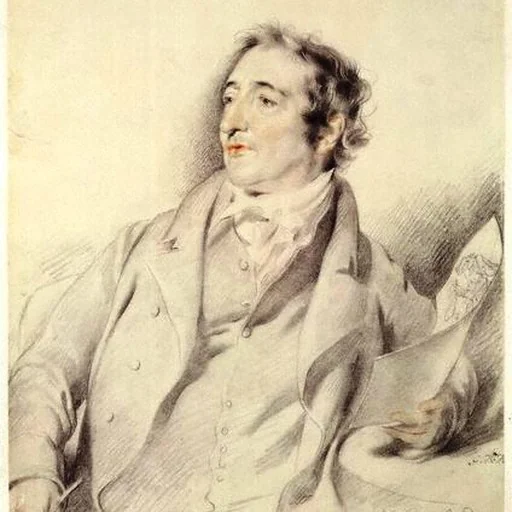
Artist
Thomas Rowlandson (; 13 July 1757 – 21 April 1827) was an English artist and caricaturist of the Georgian Era, noted for his political satire and social observation.

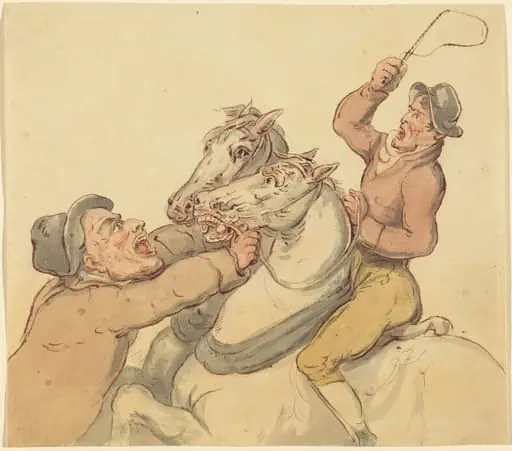
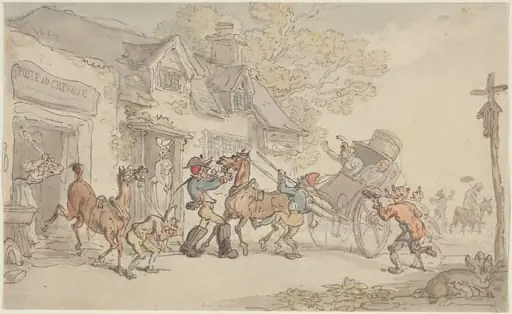 Changing Horses at a Post House in France
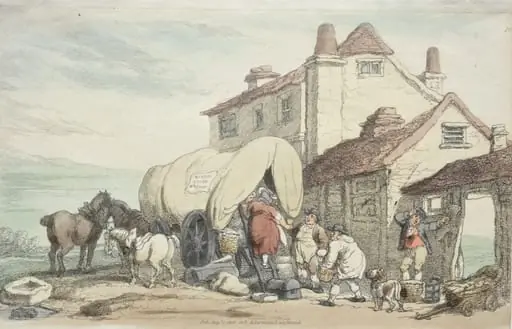 Richardson's Show: A Flying Wagon
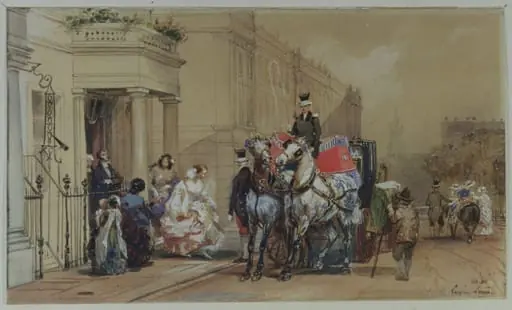 Scene in Belgrave Square
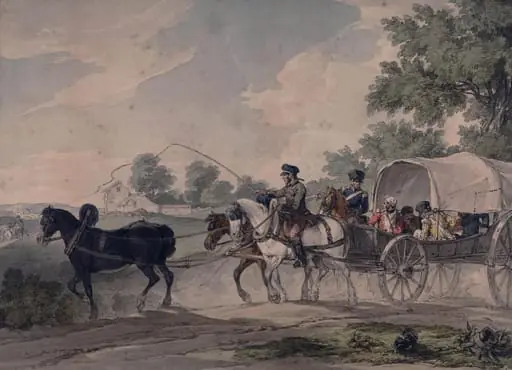 A Belgian Waggon Conveying Wounded from the Field after the Battle of Waterloo
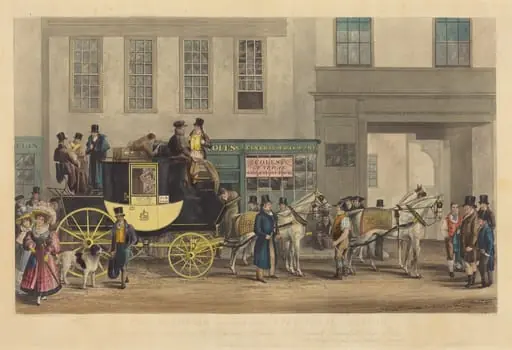 The Blenheim, Leaving the Star Hotel, Oxford
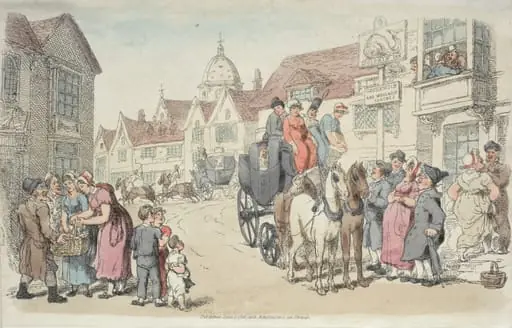 Dolphins Inn: Greenwich and Woolwich Coaches
 Carriage with Driver and Groom: Spring
 Horses and Carts on a Country Road
 The Turnpike Gate
 The Strawberry Roans
 Araba or carriage, and a small araba for children
 The White Hart Inn, Windsor