Artwork
The late Mr Lovegrove as Captain Rattan
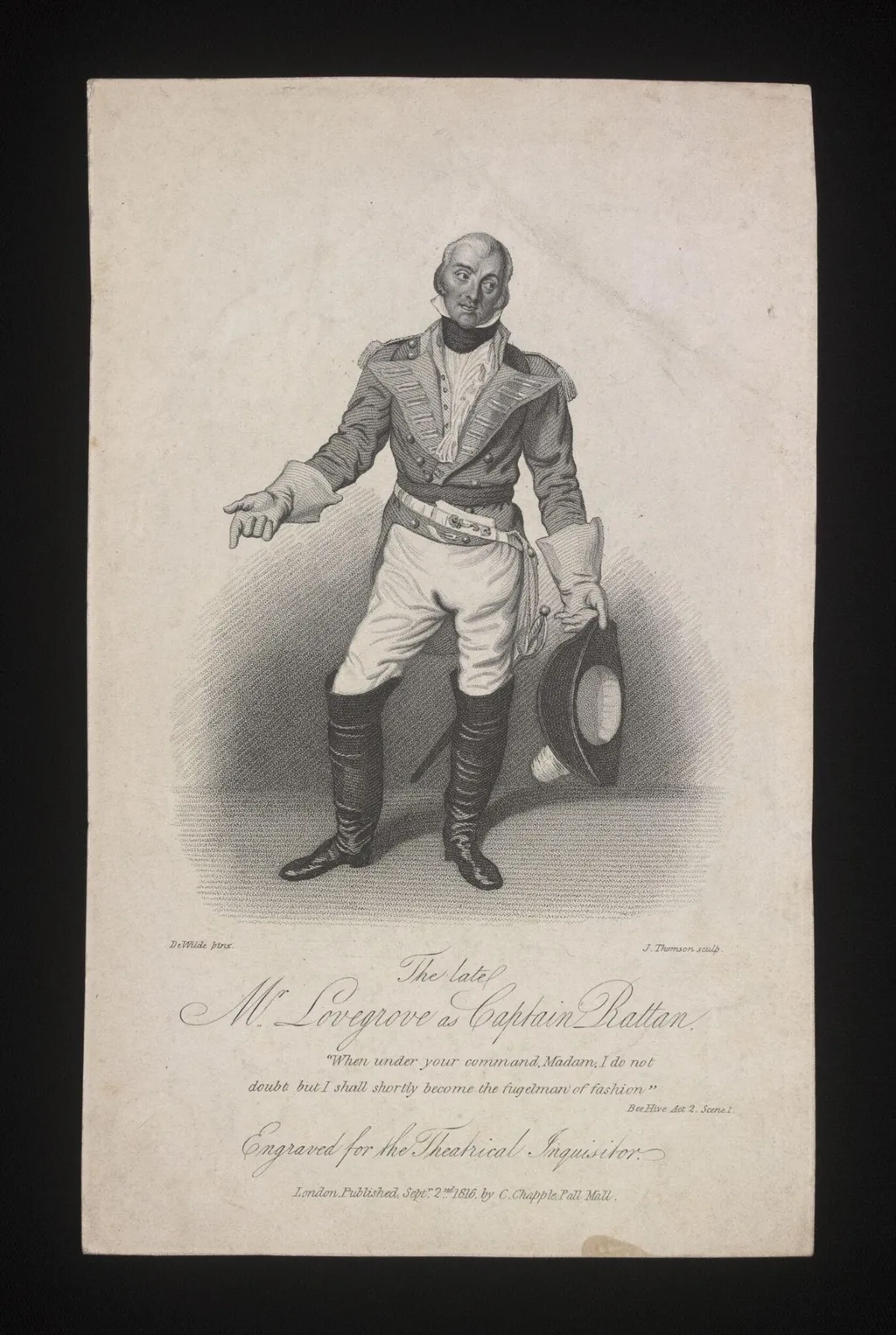
The late Mr Lovegrove as Captain Rattan is a print by the Romanticist artist James Thomson. It dates from 2 and is held in the collection of the Victoria and Albert Museum. This print, published in London on 2 September 1816 by C.
About this work
Overview
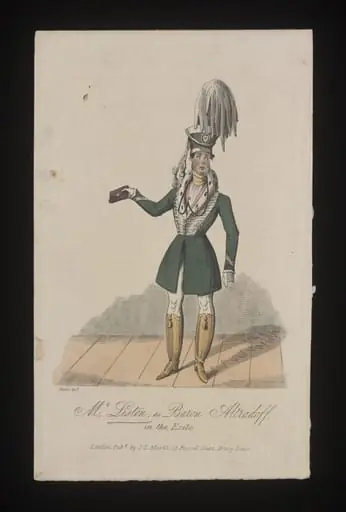
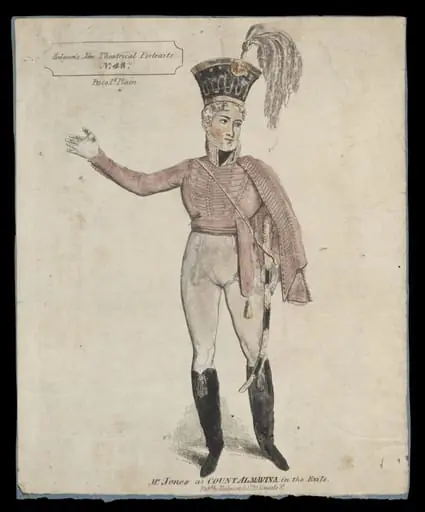
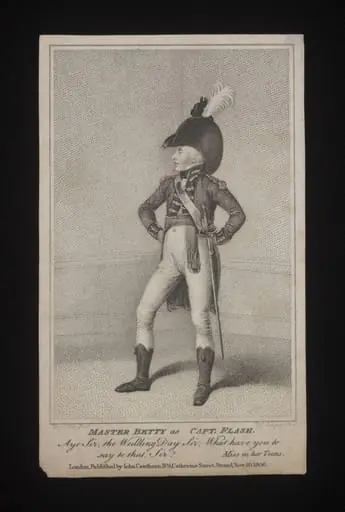
This print, published in London on 2 September 1816 by C. Chapple, portrays Mr. Lovegrove in the role of Captain Rattan. It belongs to the Harry Beard Collection and is an example of 19th-century theatrical portraiture. The image captures a specific performance moment, likely tied to a contemporary stage production, and was produced for public distribution as a keepsake or promotional item.
Subject & Meaning
The image functions as both a tribute to the actor’s performance and a commentary on the performative nature of social roles in Regency-era Britain.
Mr. Lovegrove is depicted as Captain Rattan, a character from a theatrical piece, possibly a comedy or military farce popular in early 1800s London. The formal uniform and solemn expression suggest a satirical or exaggerated portrayal of military authority. The image functions as both a tribute to the actor’s performance and a commentary on the performative nature of social roles in Regency-era Britain.
Technique & Style
The print employs fine line work and detailed shading to render the uniform’s textures and the sitter’s facial features. While not using chiaroscuro in the Renaissance sense, it relies on controlled contrasts of light and dark to model form and suggest depth. The precision of the engraving indicates skilled craftsmanship, typical of commercial print studios catering to theater audiences seeking visual mementos.
History & Provenance
Produced shortly after its subject’s performance, the print was likely sold at the theater or through print dealers in London. It entered the Harry Beard Collection, a significant archive of theatrical ephemera assembled in the late 19th and early 20th centuries. The print’s survival reflects its value as a record of transient stage culture and the growing market for celebrity imagery in the Romantic period.
Context
In 1816, London’s theater scene thrived with melodramas and comedies featuring exaggerated military figures. Captain Rattan was one such character, embodying the public’s fascination with both heroism and absurdity in wartime roles. Prints like this served as affordable entertainment souvenirs, bridging the gap between live performance and domestic culture, and reflecting the era’s growing interest in celebrity and visual media.
Legacy
This print contributes to the historical record of British theatrical life, illustrating how actors were memorialized through print before photography. It exemplifies the commercialization of performance and the role of visual culture in shaping public perception of stage personas. Today, it remains a valuable artifact for scholars studying Regency-era theater, identity, and print distribution networks.
Artist & collection