Artwork
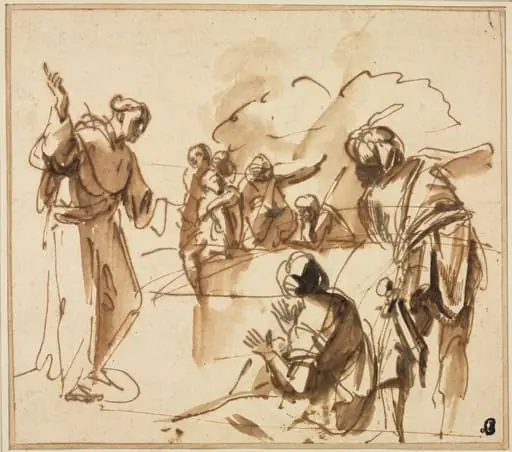
Two Monks with a Prostrate Man
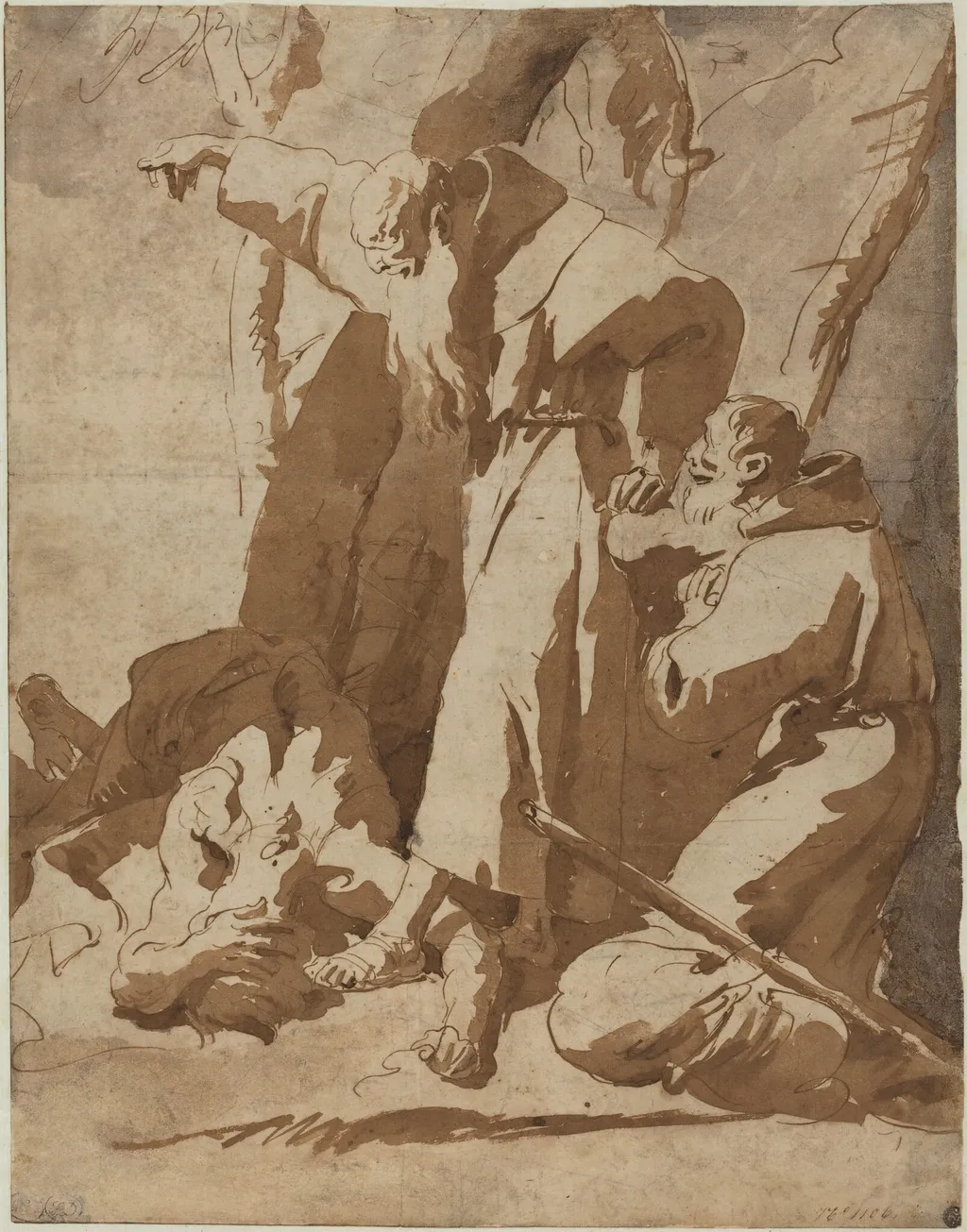
Two Monks with a Prostrate Man is an ink drawing by the Baroque artist Giovanni Battista Tiepolo. It dates from 1725 and is held in the collection of the National Gallery of Art.
About this work
Overview
Two Monks with a Prostrate Man is a drawing by Giovanni Battista Tiepolo, created around 1725. It is executed in pen and brown ink with brown and gray wash over black chalk on laid paper.
Subject & Meaning
The drawing depicts a poignant scene: two monks attend to a prone figure, their expressions calm in contrast to the man's evident distress. One monk gestures towards the fallen individual, while the other looks on with concern, adding depth to the scene.
Technique & Style
Tiepolo employed delicate ink and wash techniques on prepared paper to render the figures. The use of brown and gray wash over black chalk creates a nuanced, expressive representation of the scene, characteristic of the Rococo style.
Context
Tiepolo was a prominent figure in the Venetian school, known for his prolific output across Italy, Germany, and Spain. This drawing reflects his skill in capturing emotionally charged moments with restraint and subtlety.
Artist & collection

Artist
Giovanni Battista Tiepolo, also known as Giambattista Tiepolo, was an Italian painter and printmaker from the Republic of Venice who painted in the Rococo style, considered an important member of the 18th-century Venetian school.

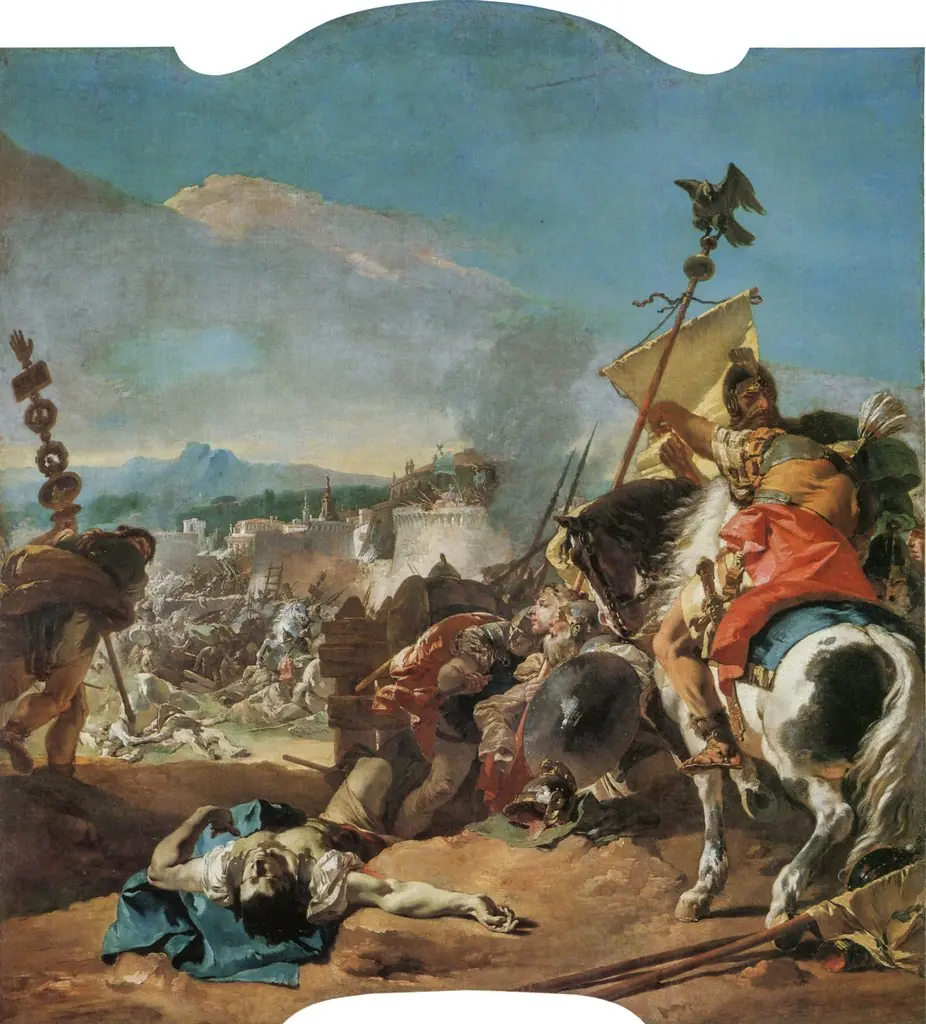
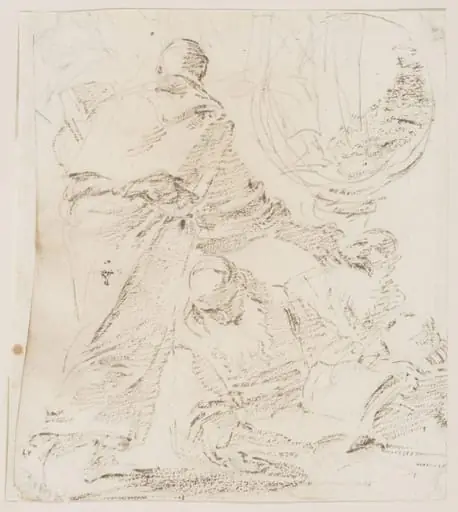 Recto: Three monks; verso: Slight sketch of a woman reclining, above: The lower portion of another figure
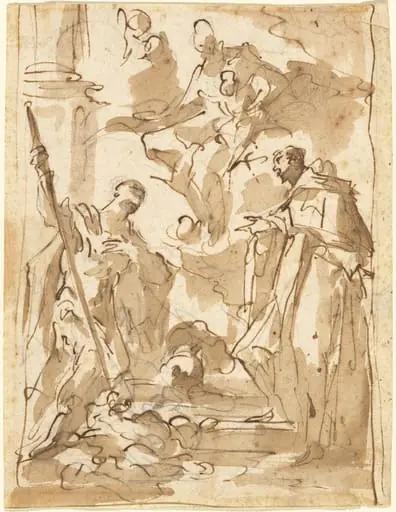 The Madonna and Child in Glory with Saint Theodore and a Monastic Saint
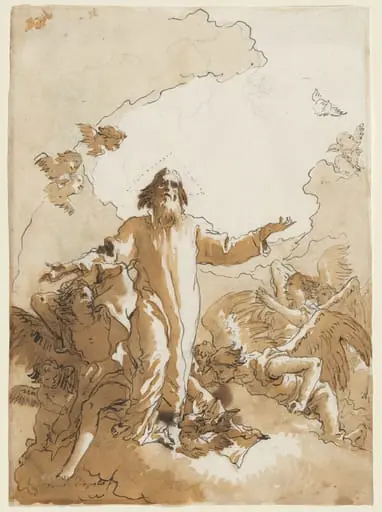 God the Father Standing in Clouds Surrounded by Angels and Putti
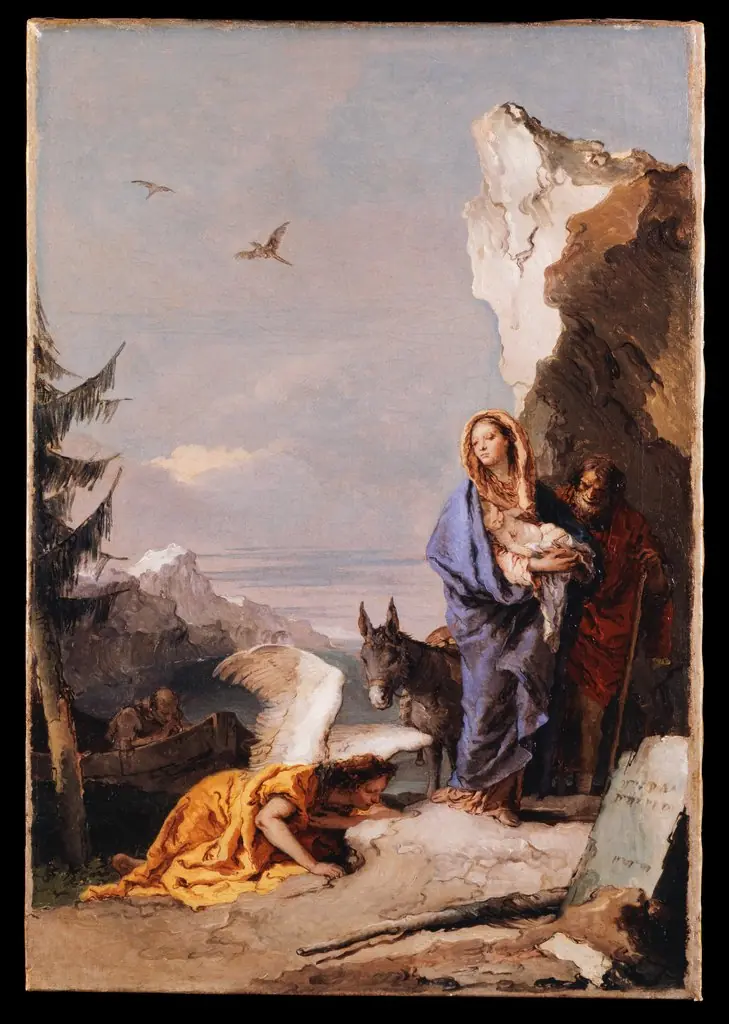
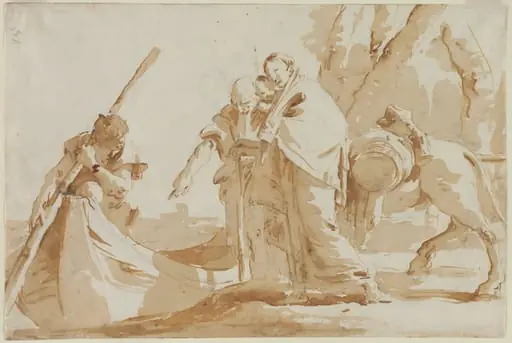 Flight into Egypt: The Embarkment of the Holy Family
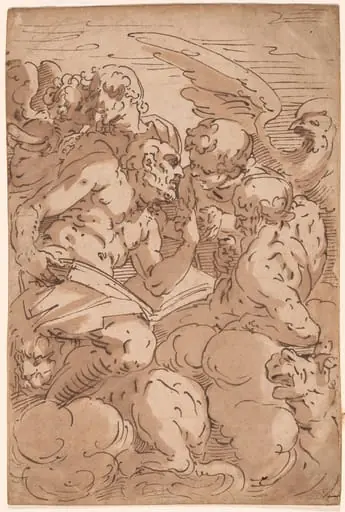 The Four Evangelists
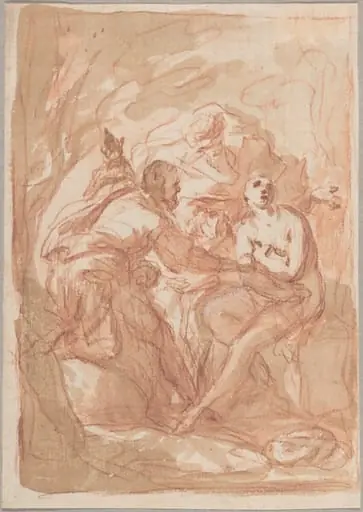 Susanna and the Elders
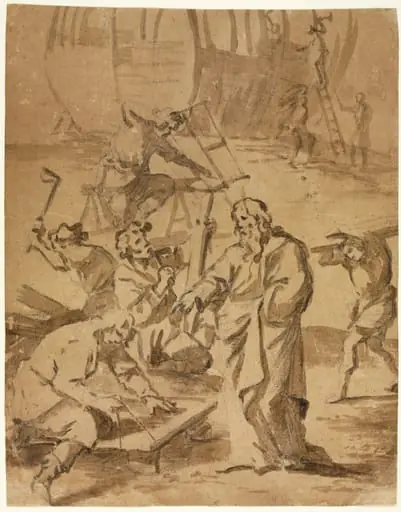 Building of the Ark
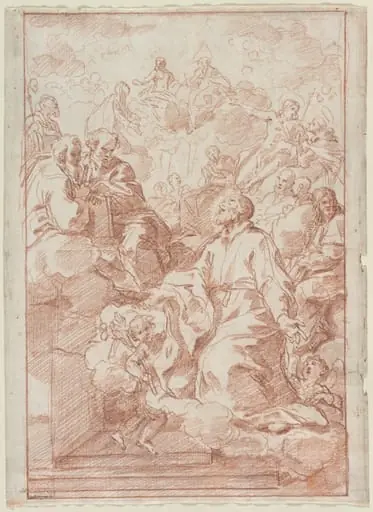 Vision of St. Philip Neri
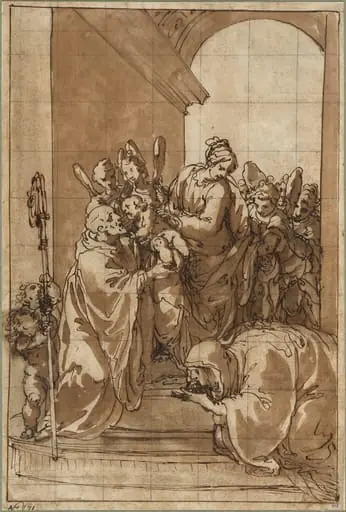 Madonna and Child with Angels, Saint Benedict, and Saint Scholastica
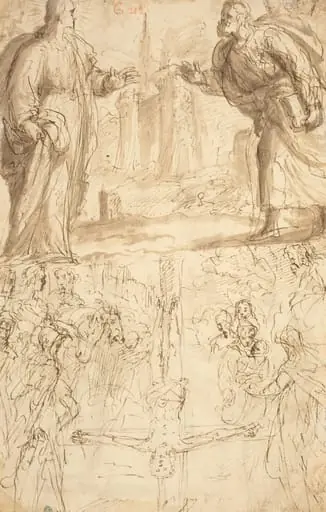 Crucifixion of Saint Peter
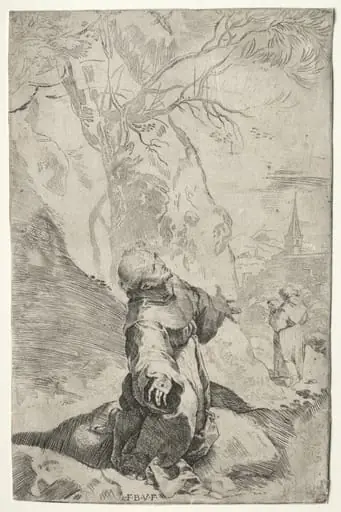 St. Francis Receiving the Stigmata
 A Monk Preaching