Artwork
God the Father and Angels Adoring the Madonna and Child [recto]
![God the Father and Angels Adoring the Madonna and Child [recto], by Giovanni Domenico Tiepolo, chalk, 1753](https://artifactworldgallery.com/img/giovanni-domenico-tiepolo--god-the-father-and-angels-adoring-the-madonna-and-child-rect--594c8aeda933276d-w1024.webp)
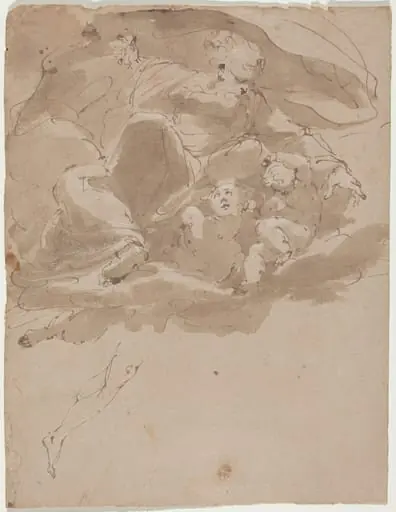
God the Father and Angels Adoring the Madonna and Child [recto] is a chalk drawing by the Baroque artist Giovanni Domenico Tiepolo. It dates from 1753 and is held in the collection of the National Gallery of Art.
About this work
Overview
The medium and paper suggest a preparatory or exploratory function, capturing a moment of spiritual intensity through rapid, expressive mark-making.
Created circa 1753, this drawing by Giovanni Domenico Tiepolo is a religious study executed in pen and brown ink with wash over black chalk on buff oatmeal paper. It reflects the artist’s engagement with sacred themes during his formative years, distinct from his father’s grand frescoes. The medium and paper suggest a preparatory or exploratory function, capturing a moment of spiritual intensity through rapid, expressive mark-making.
Subject & Meaning
The composition centers on the Virgin Mary holding the Christ Child, surrounded by a throng of angels in adoration. God the Father is implied above, though not fully rendered, reinforcing the theological hierarchy. The figures’ outstretched arms and upward gaze convey reverence, while the turbulent backdrop suggests divine presence emerging from chaos. The scene aligns with Counter-Reformation devotional imagery, emphasizing awe before the sacred.
Technique & Style
Tiepolo employed quick, fluid lines and layered brown washes to model form and depth, using black chalk for initial structure. Heavy cross-hatching builds shadow and movement, particularly in the swirling drapery and stormy sky. The sketchy, energetic handling contrasts with the calm center of the Madonna and Child, heightening emotional tension. The paper’s texture and aged tone contribute to the work’s intimate, unfinished quality.
History & Provenance
The drawing originates from Tiepolo’s early period in Venice, likely made as a study for a larger altarpiece or ceiling composition. Its survival suggests it was valued within the artist’s circle, though no documented commission is linked to it. The paper’s uneven edges and discoloration reflect centuries of handling and exposure, consistent with its status as a private working drawing rather than a finished piece.
Context
In mid-18th century Venice, religious drawing served as both spiritual exercise and technical training. Tiepolo operated within a tradition where preparatory sketches were essential for complex compositions, especially in ecclesiastical settings. While his father dominated monumental fresco cycles, Domenico’s smaller works reveal a more intimate, experimental approach to sacred subjects, balancing Baroque dynamism with emerging Rococo delicacy.
Legacy
This drawing exemplifies the role of sketching in Venetian artistic practice, preserving the immediacy of the artist’s thought process. Though not widely exhibited, it informs understanding of Tiepolo’s development and the broader use of ink and wash in religious studies. Its raw energy and compositional boldness influenced later generations of draftsmen interested in expressive line and emotional resonance over polish.
Artist & collection
Artist
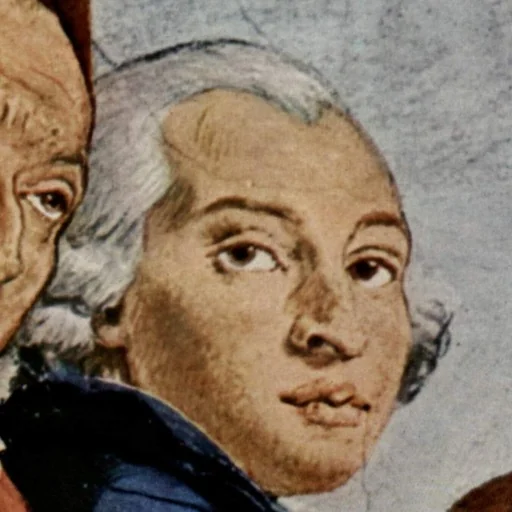
Giovanni Domenico Tiepolo (August 30, 1727 – March 3, 1804) was an Italian painter and printmaker in etching. He was the son of artist Giovanni Battista Tiepolo and elder brother of Lorenzo Baldissera Tiepolo.

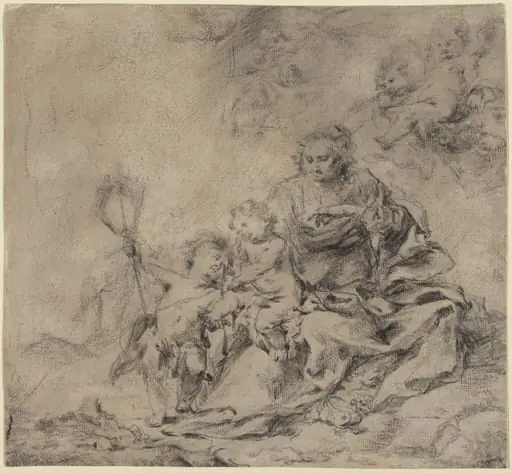 The Virgin and Child with John the Baptist
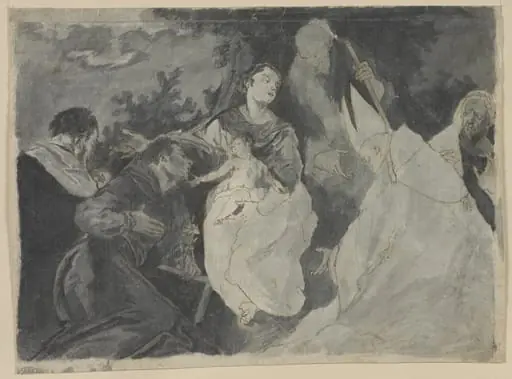 Madonna and Child with Saints
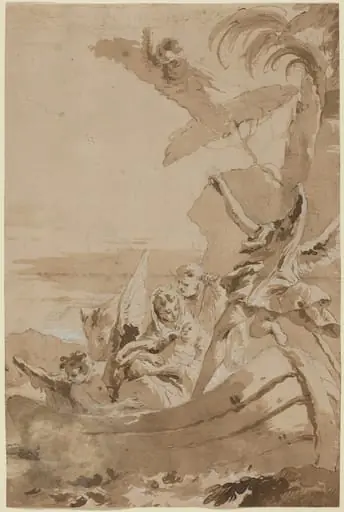 The Flight into Egypt with the Holy Family and Two Angels in a Skiff
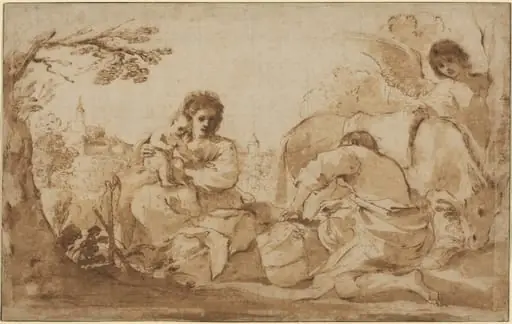 The Rest on the Flight into Egypt
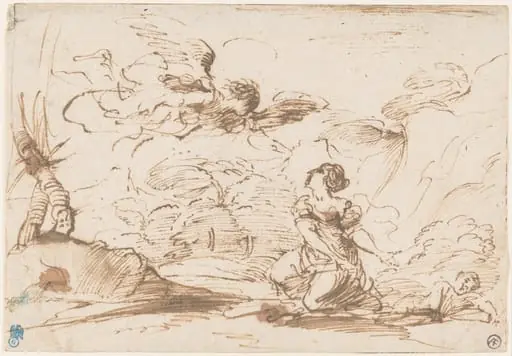 The Angel Appearing to Hagar and Ishmael in the Wilderness
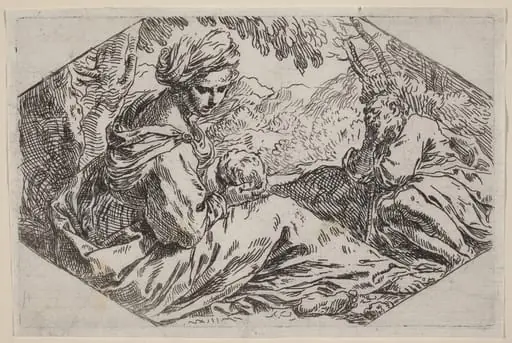 The Rest on the Flight into Egypt
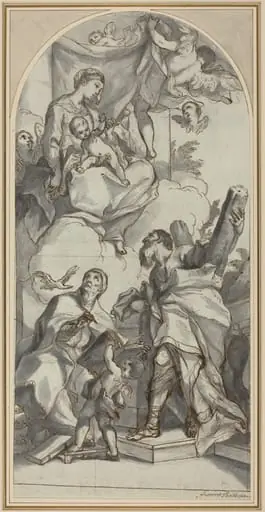 The Madonna and Child in Glory with Saints Gregory the Great and Andrew
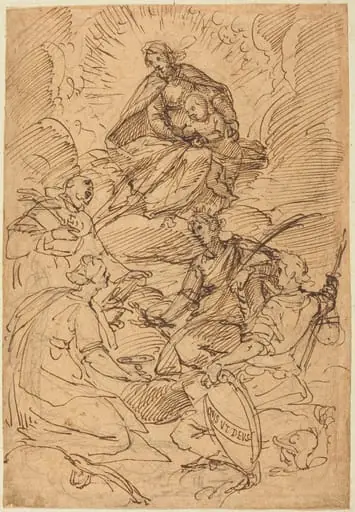 The Madonna and Child in Glory Adored by Saints
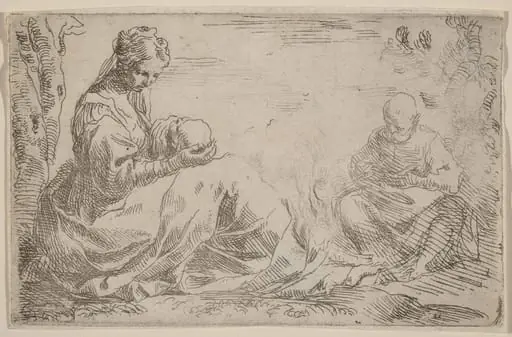 The Rest on the Flight into Egypt
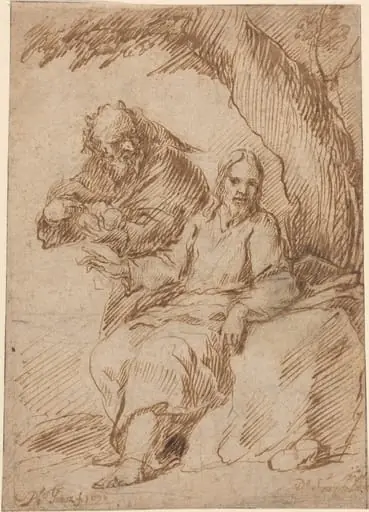 The Temptation of Christ in the Desert
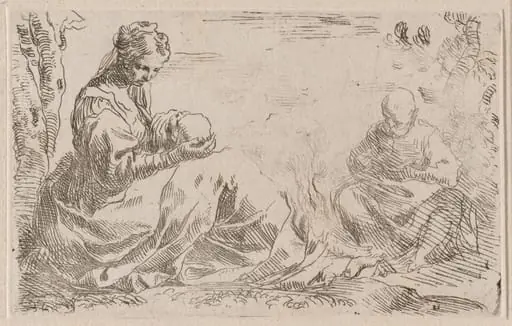 Rest on the Flight into Egypt
 God the Father with Angels