Artwork
Saint Gregoire I Delivering Souls from Purgatory
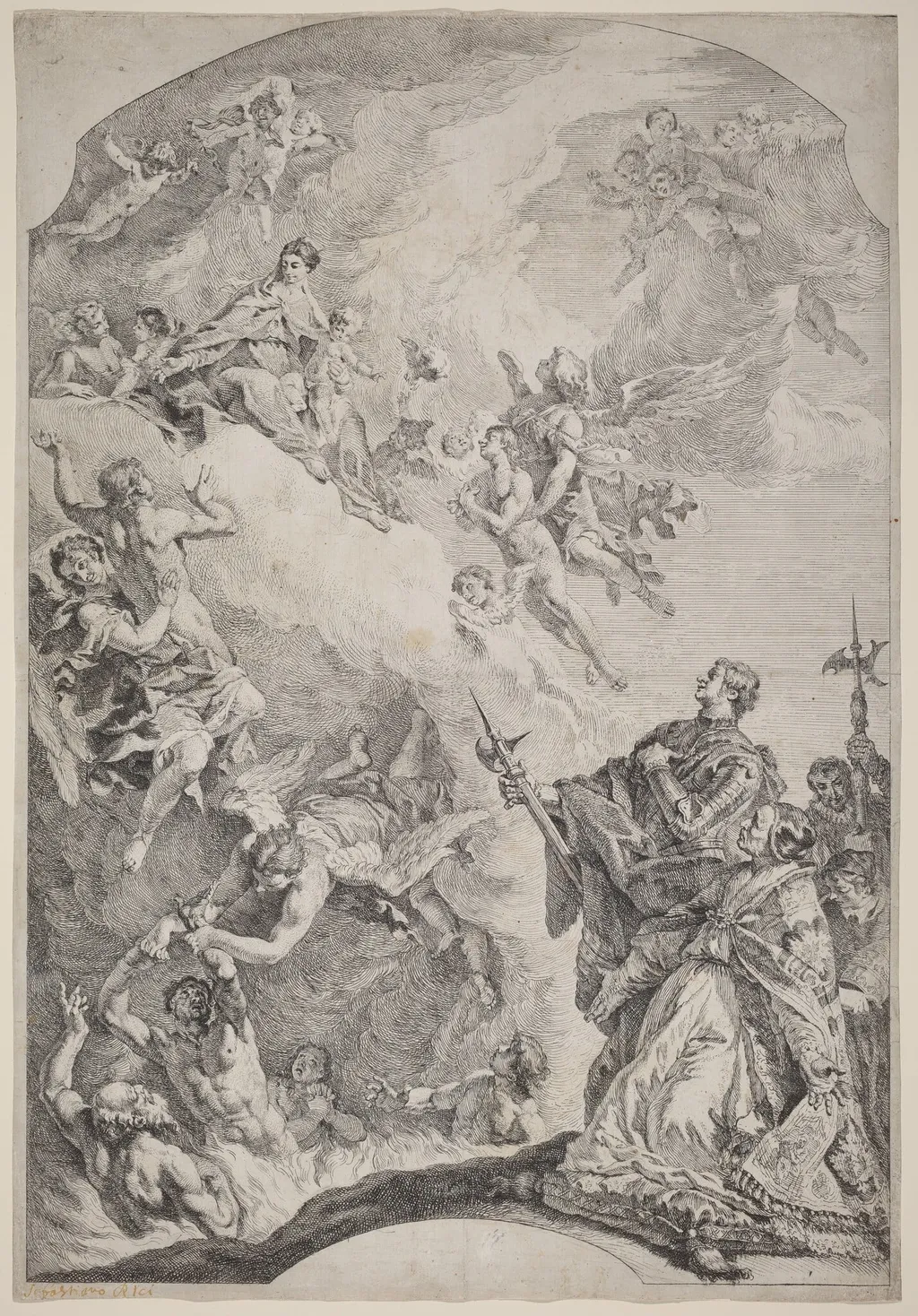
Saint Gregoire I Delivering Souls from Purgatory is an ink print by the Baroque artist Francesco Fontebasso. It dates from 1744 and is held in the collection of the National Gallery of Art.
About this work
Overview
Executed on laid paper, the work belongs to the printmaking tradition of 18th-century Venice.
Created in 1744, this etching by Francesco Fontebasso depicts a moment from Catholic tradition in which Pope Gregory I intervenes to liberate souls from Purgatory. Executed on laid paper, the work belongs to the printmaking tradition of 18th-century Venice. Fontebasso, trained under Sebastiano Ricci and influenced by Tiepolo, employed etching to translate grand religious narratives into intimate, detailed compositions suited for private devotion or scholarly circulation.
Subject & Meaning
The scene illustrates Pope Gregory I, depicted in papal robes and holding a sword, descending into Purgatory to rescue souls undergoing purification. Surrounding figures—some reaching upward, others in distress—embody the anguish and hope of the damned. Above, angels and ascending spirits suggest divine intervention. The composition visualizes the medieval belief in intercessory prayer and the pope’s spiritual authority to mitigate suffering in the afterlife.
Technique & Style
Fontebasso used fine, fluid lines in etching to convey motion and emotional intensity. Dramatic chiaroscuro enhances the spatial depth, with light isolating the central figures against darker, swirling masses of souls. The dense arrangement of bodies, layered vertically, creates a sense of chaotic ascent. His handling reflects Rococo dynamism, yet retains the gravity of religious subject matter, balancing theatricality with devotional clarity.
History & Provenance
The print was made during Fontebasso’s mature period, following his work on Venetian chapel decorations and commissions in Saint Petersburg. While the exact early ownership is undocumented, such prints were often circulated among clergy, monastic communities, and collectors interested in Counter-Reformation imagery. Its survival in institutional collections suggests continued scholarly and devotional interest into the 19th century.
Context
In mid-18th-century Venice, religious imagery remained vital despite growing secular trends. Fontebasso’s etching aligns with a broader Catholic emphasis on Purgatory as a doctrinal anchor, reinforced by the Jesuits and Counter-Reformation theology. The work responds to popular devotional practices, including prayers for the dead and the veneration of saints as mediators, offering visual reassurance of divine mercy amid spiritual uncertainty.
Legacy
Though less known than his frescoes, this etching exemplifies Fontebasso’s skill in translating monumental religious themes into the accessible medium of print. It contributed to the dissemination of Counter-Reformation iconography beyond church walls, influencing later printmakers in Italy and beyond. Its preservation in museum collections underscores its role as a document of both artistic technique and religious belief in Enlightenment-era Europe.
Own this work as a print
Artist & collection
Artist
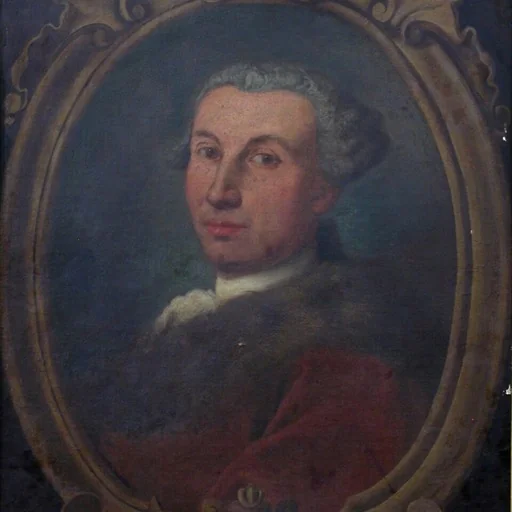
Francesco Fontebasso (4 October 1707 – 31 May 1769) was an Italian painter of the late-Baroque or Rococo period of Venice.

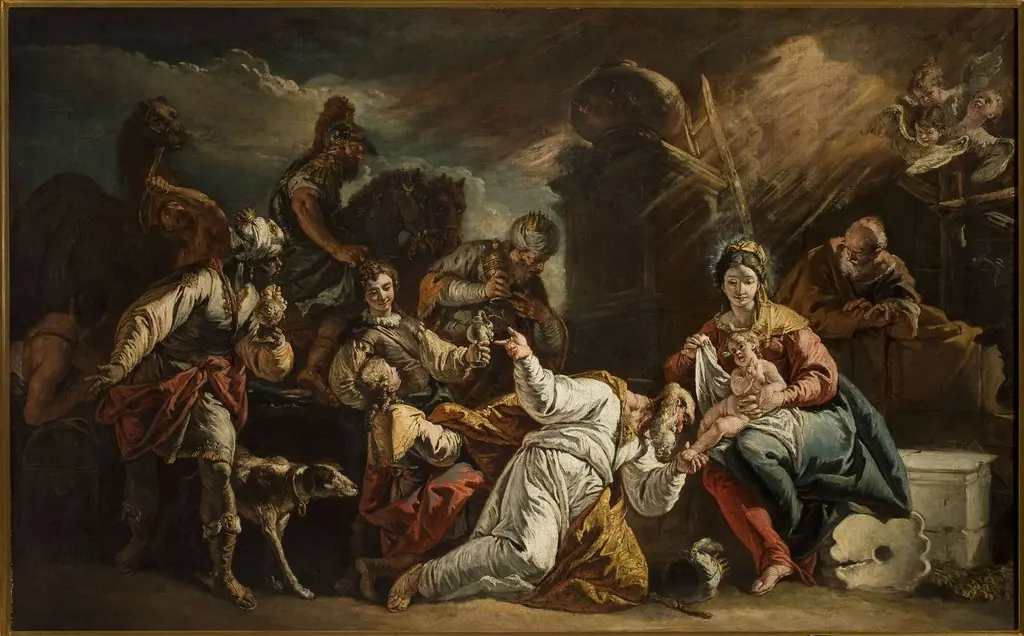 Adoration of the Magi
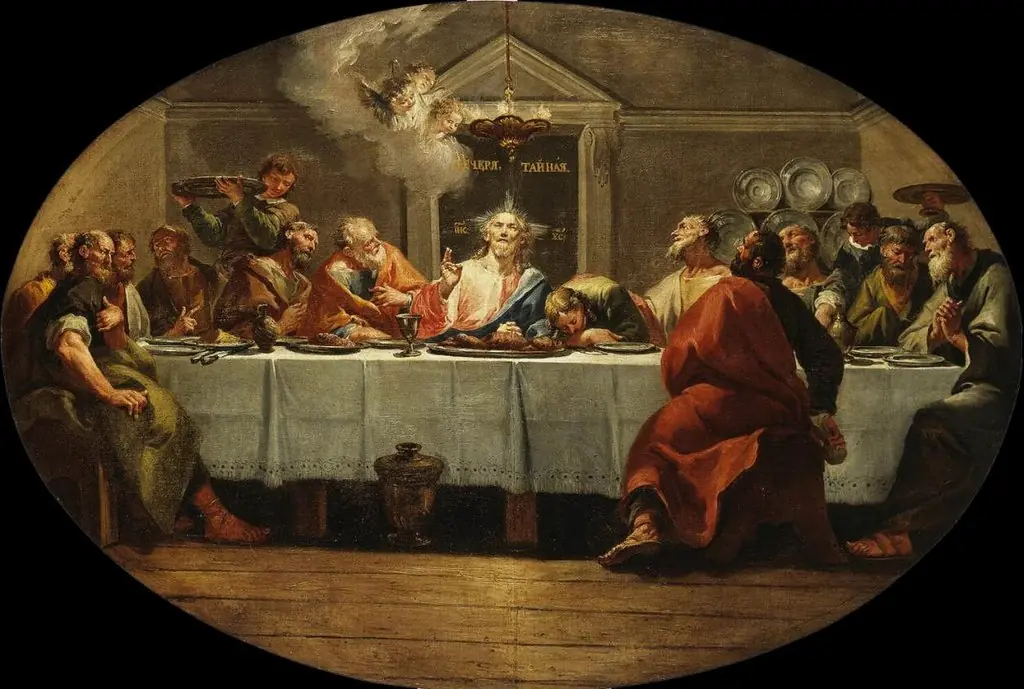 The Last Supper
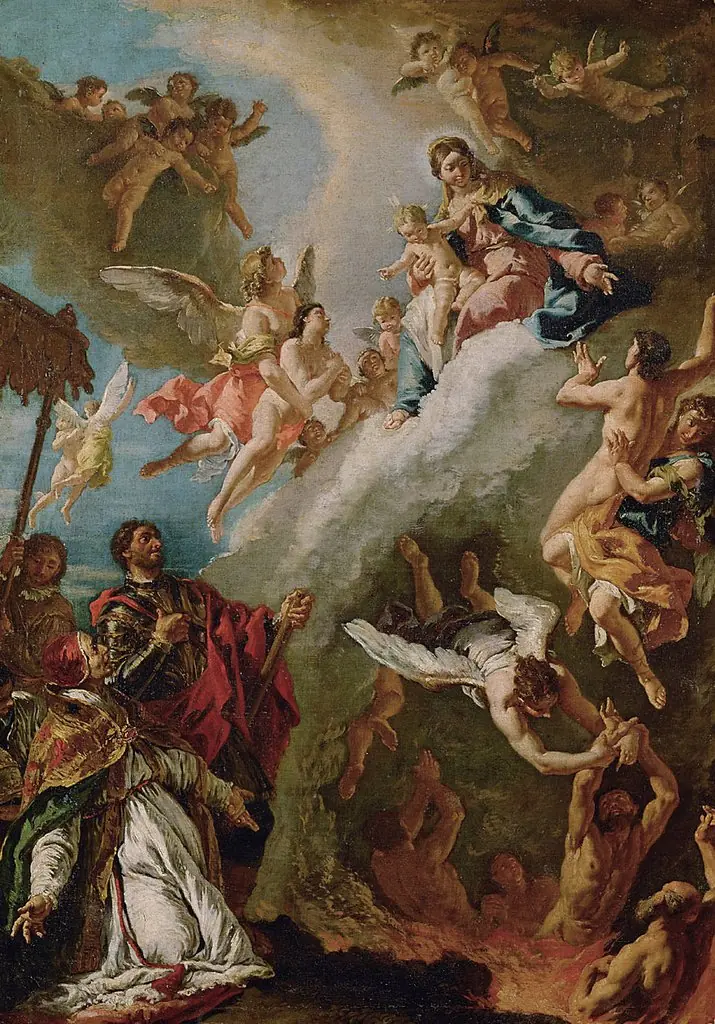 Papst Gregor I. und der Hl. Vitalis bitten die Madonna für die Seelen im Fegefeuer
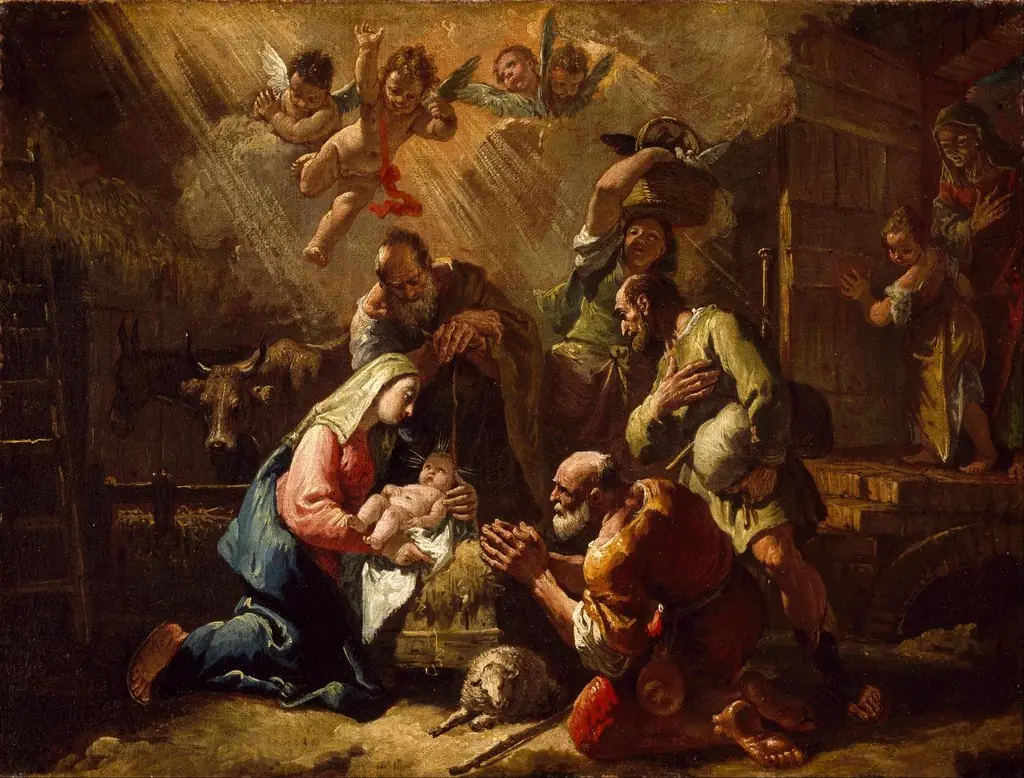 The Adoration of the Shepherds
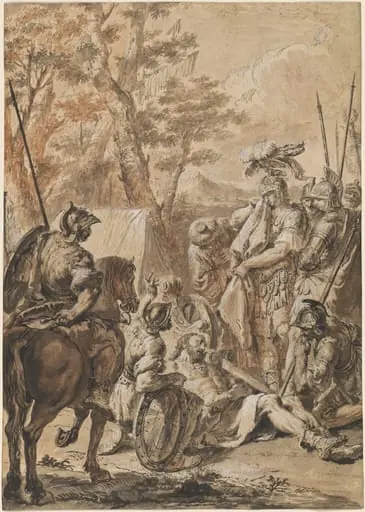 Alexander the Great before the Corpse of Darius
![Head of a Woman and Studies of a Male Nude [verso], by Francesco Fontebasso](https://artifactworldgallery.com/img/francesco-fontebasso--head-of-a-woman-and-studies-of-a-male-nude-verso--bba81b0c130c2863-w320.webp) Head of a Woman and Studies of a Male Nude [verso]
Head of a Woman and Studies of a Male Nude [verso]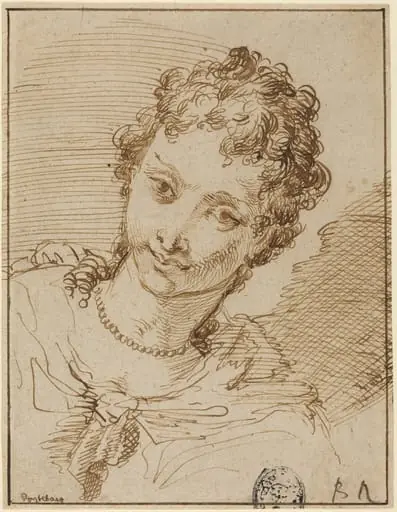 Elegant Young Woman with a Pearl Necklace
![Apollo and Studies of the Artist's Own Hand [recto], by Francesco Fontebasso](https://artifactworldgallery.com/img/francesco-fontebasso--apollo-and-studies-of-the-artist-s-own-hand-recto--ee93288e84456aea-w320.webp) Apollo and Studies of the Artist's Own Hand [recto]
Apollo and Studies of the Artist's Own Hand [recto]
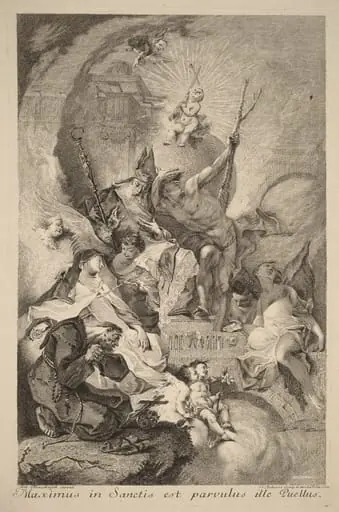 Four Saints
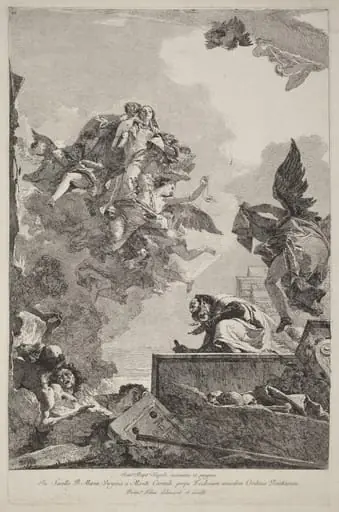 The Madonna del Carmelo Appearing to Saint Simon Stock
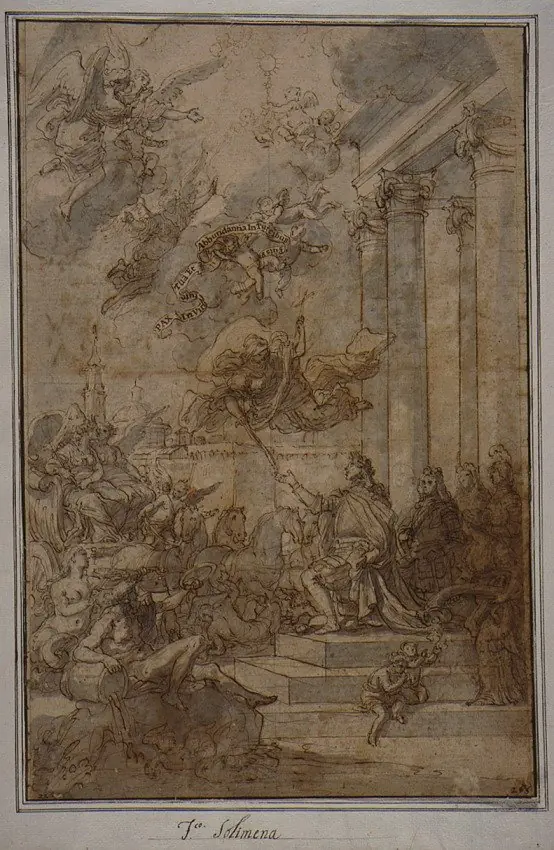 Allegory of the Entry of Charles Bourbon into Naples
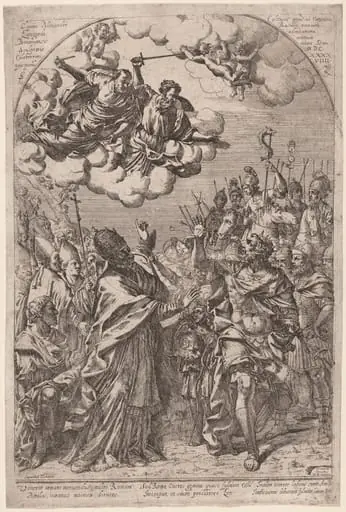 Attila at the Gates of Rome
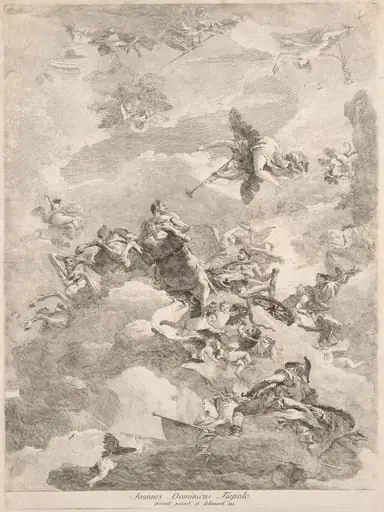 The Triumph of Hercules
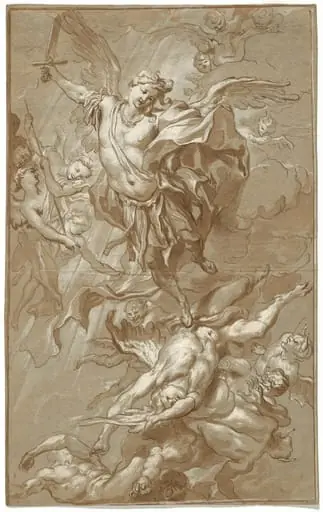 Saint Michael and the Rebel Angels
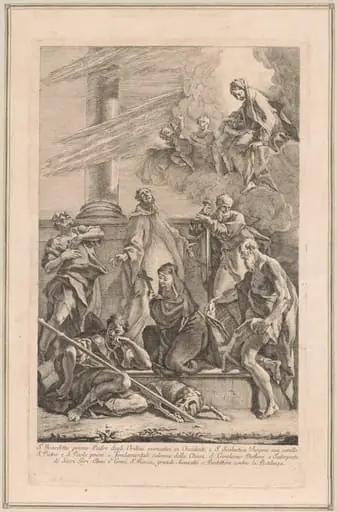 The Madonna and Child with Two Angels and Saints Scholastica, Benedict, Roch, Peter, Paul and Jerome
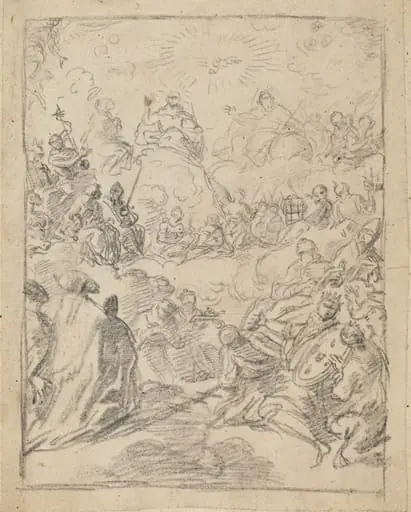 The Triumph of the Trinity (The Gloria)
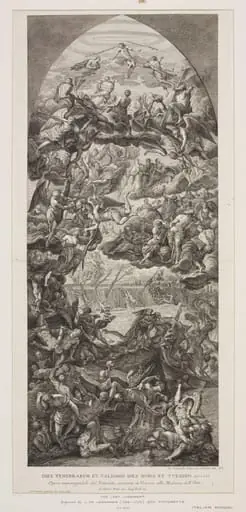 The Last Judgment
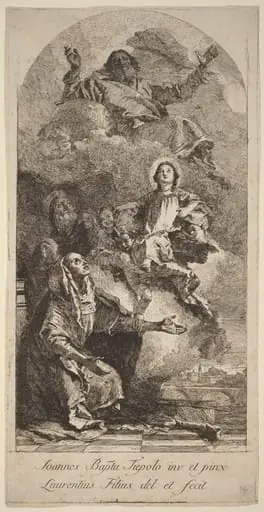 The Vision of Saint Anne
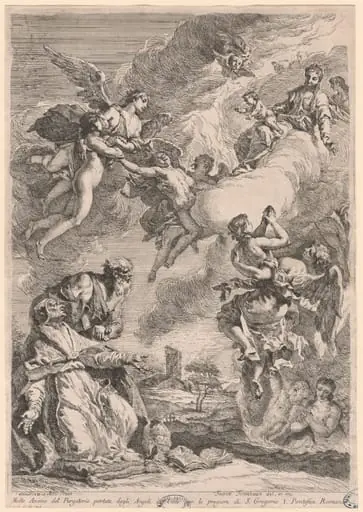 Pope Gregory the Great and Saint Vitale Interceding for the Souls in Purgatory
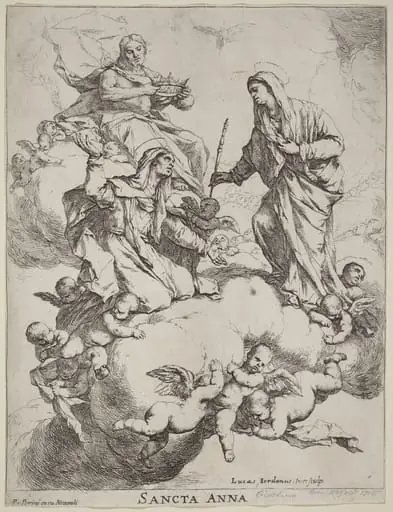 Saint Anne Received by the Virgin and Christ