Artwork
Portfolio XVII, Plate 608: A Load of Fuel - Zuñi
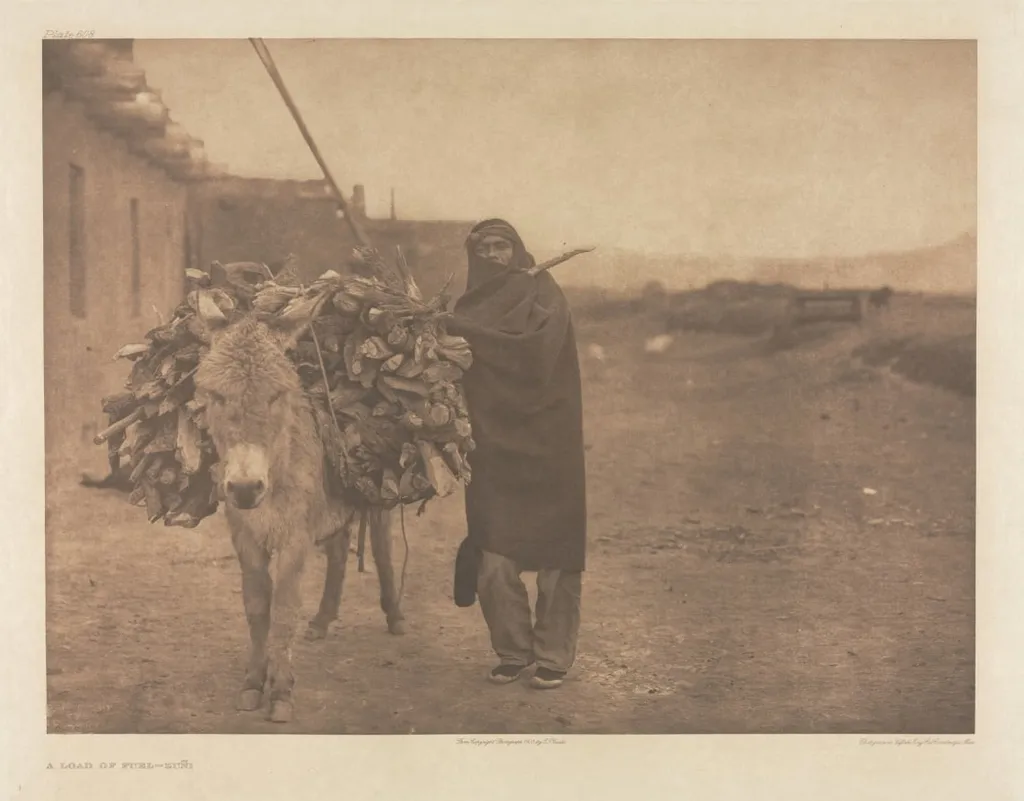
Portfolio XVII, Plate 608: A Load of Fuel - Zuñi is a work on paper by Edward S. Curtis. It dates from 1903 and is held in the collection of the Cleveland Museum of Art.
About this work
The donkey is carrying what looks like firewood, hinting at daily life in a rural area.
This photo shows a person walking beside a donkey loaded with sticks and branches. The person wears a long coat, head covering, and holds a stick. The background has a simple building and a hazy landscape. The ground looks dry and dusty.
The donkey is carrying what looks like firewood, hinting at daily life in a rural area. The photo’s title, *A Load of Fuel - Zuñi*, suggests it was taken near the Zuñi Pueblo.
Next, check out the work of Edward S. Curtis (American, 1868–1952).
Overview
Portfolio XVII, Plate 608: A Load of Fuel - Zuñi is a photographic print from Edward S. Curtis’s larger project documenting Indigenous communities of the American West. Created in 1903, it is one of many images intended to record daily life among the Zuñi people. The work is part of a bound portfolio held by The Cleveland Museum of Art, reflecting Curtis’s systematic approach to visual ethnography during this period.
Subject & Meaning
The image captures a Zuñi individual walking beside a donkey burdened with firewood, likely gathered for domestic use. The figure, dressed in a long coat and head covering, carries a walking stick, suggesting a routine chore. The scene emphasizes labor and subsistence, offering a quiet glimpse into the material rhythms of life near the Zuñi Pueblo. The title explicitly ties the act to its cultural context, framing it as an everyday practice rather than a staged performance.
Technique & Style
Curtis employed large-format plate photography, using natural light and careful composition to render fine detail. The dry, dusty ground and hazy background are rendered with soft focus, drawing attention to the figures and their burden. The tonal range is subtle, with muted grays and browns reinforcing the arid environment. His method prioritizes clarity and dignity, avoiding overt sentimentality while maintaining a documentary tone.
History & Provenance
This photograph was produced during Curtis’s decade-long expedition to document Native American life, funded by J.P. Morgan. It was originally published in his multi-volume work The North American Indian. The Cleveland Museum of Art acquired the print as part of a complete portfolio set, preserving it as a key artifact of early 20th-century ethnographic photography and American visual history.
Context
Curtis’s work emerged amid growing federal assimilation policies and romanticized notions of the vanishing Indian. While his images were intended as records of cultural practices, they often omitted contemporary change and modern influences. This photograph, like others in the series, reflects a selective vision—capturing tradition without acknowledging the evolving realities of Zuñi life under colonial pressures.
Legacy
Curtis’s photographs remain widely referenced in discussions of Indigenous representation, though their historical value is now critically examined. A Load of Fuel - Zuñi contributes to a visual archive that shaped public perception of Native Americans, even as scholars debate its accuracy and ethical implications. The image endures as both a document of labor and a product of its time’s complex cultural frameworks.
Artist & collection

 Portfolio XVI, Plate 573: Acoma Water Girls
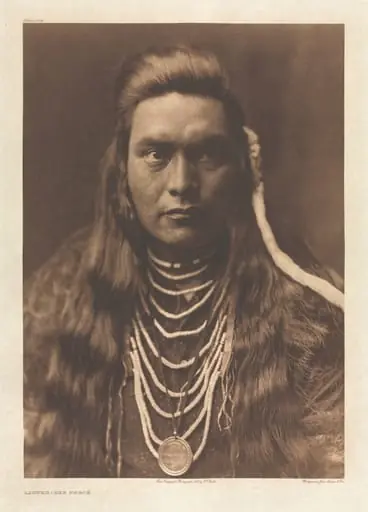 Portfolio VIII, Plate 264: Lawyer - Nez Percé
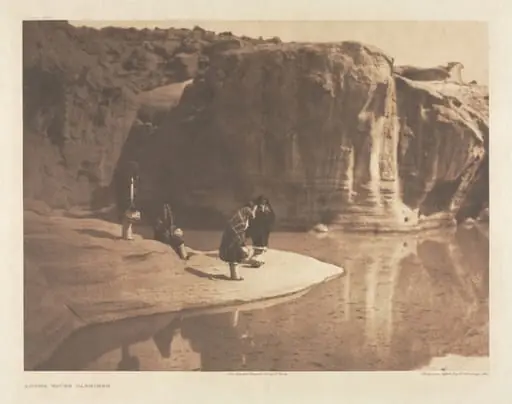 Portfolio XVI, Plate 568: Acoma Water Carriers
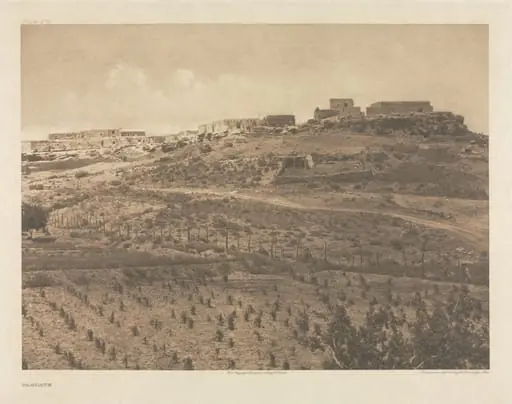 Portfolio XVI, Plate 574: Paguate
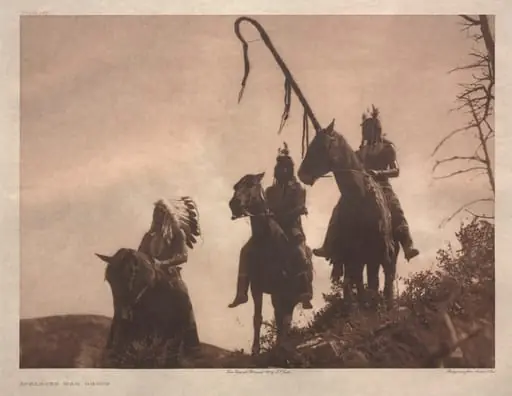 Portfolio IV, Plate 147: Apsaroke War Group
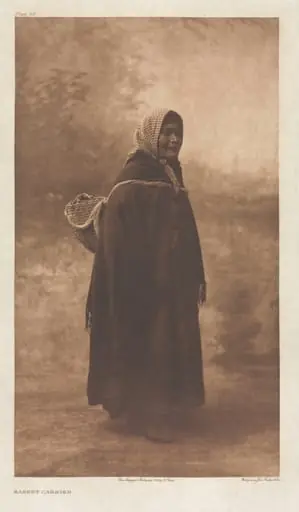 Portfolio IX, Plate 311: Basket Carrier
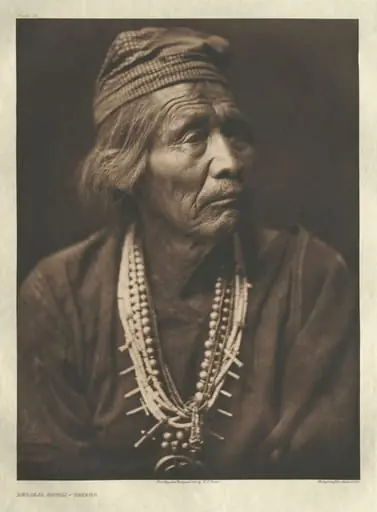 Portfolio I, Plate 31: Nesjája Hatáli-Navaho
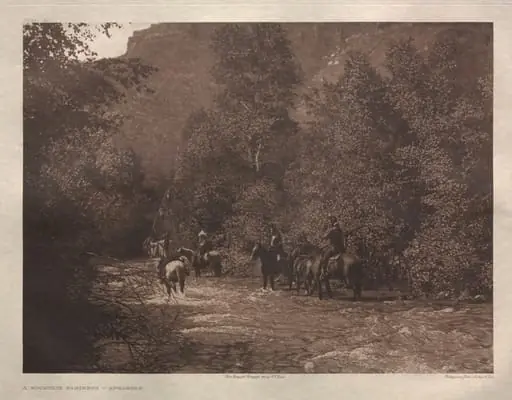 Portfolio IV, Plate 140: A Mountain Fastness--Apsaroke