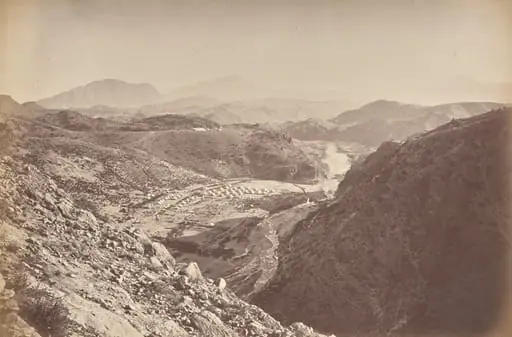
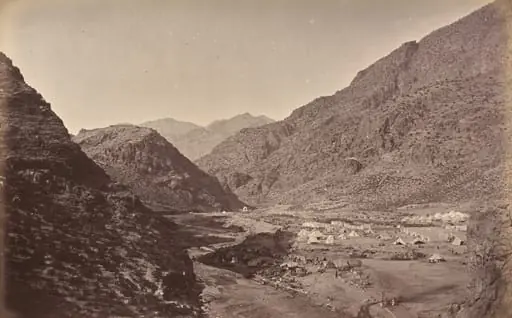
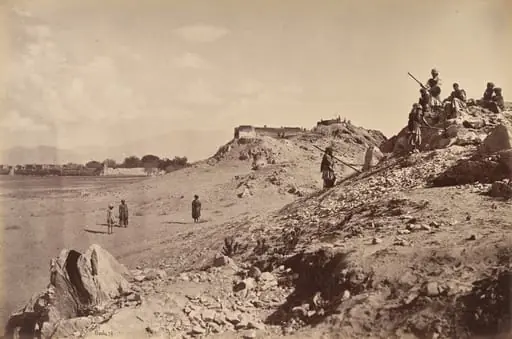
Artwork
Shadi Bagiar, Entrance to Khyber Pass
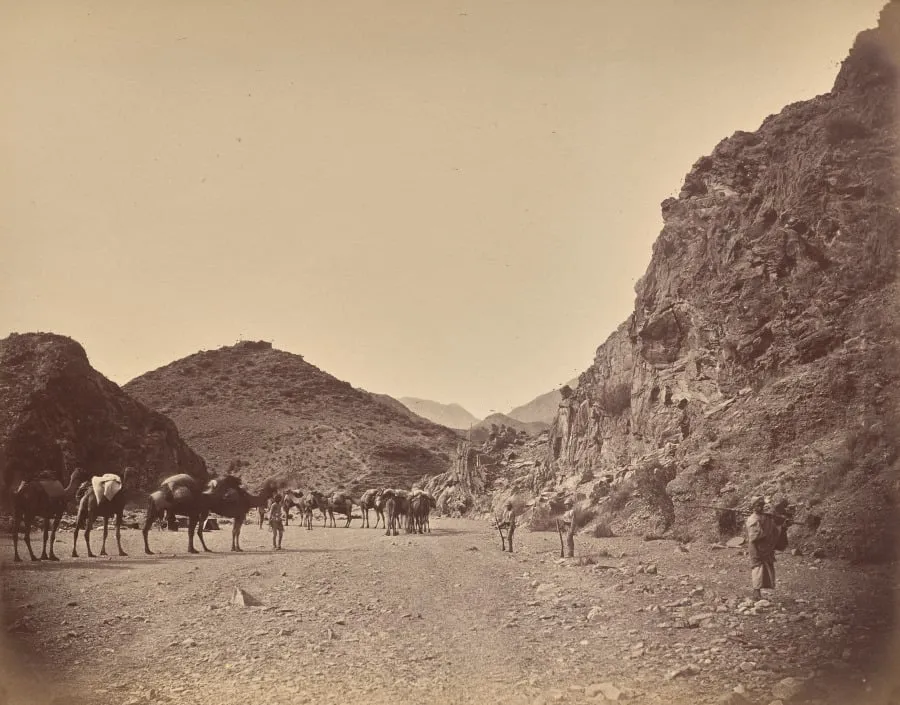
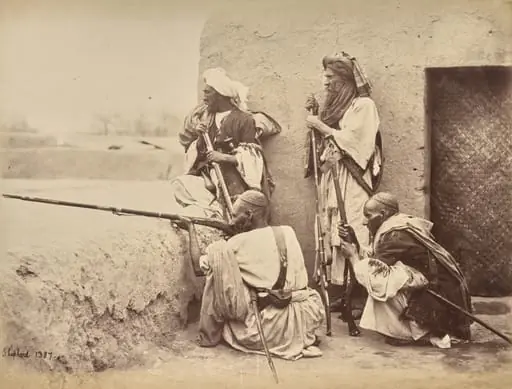
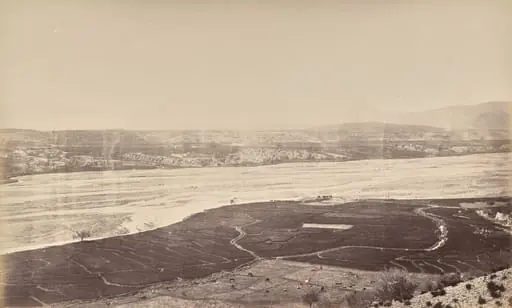
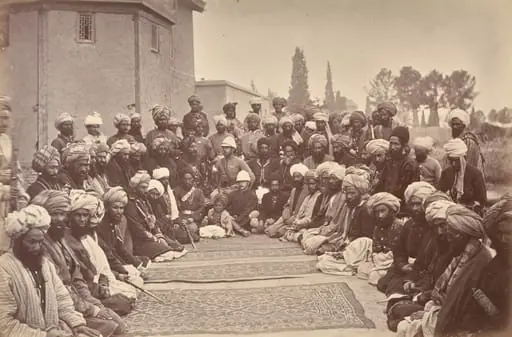
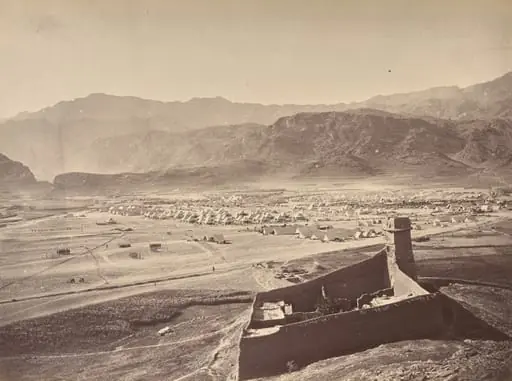
Shadi Bagiar, Entrance to Khyber Pass is a photography by the Impressionist artist John Burke. It dates from 1879 and is held in the collection of the Cleveland Museum of Art.
About this work
Overview
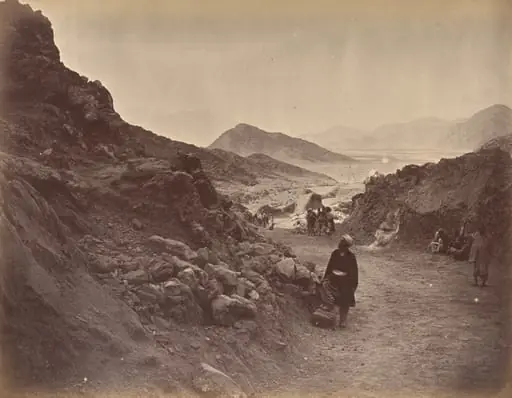
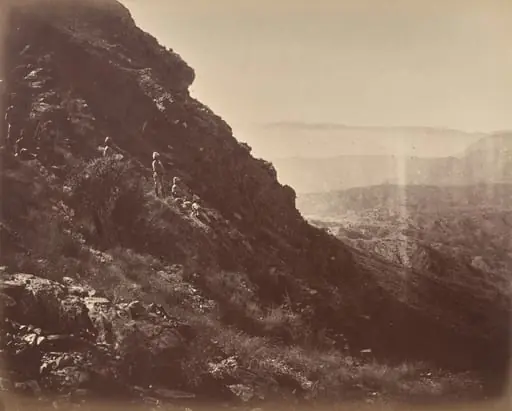
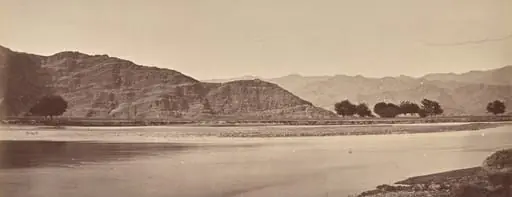
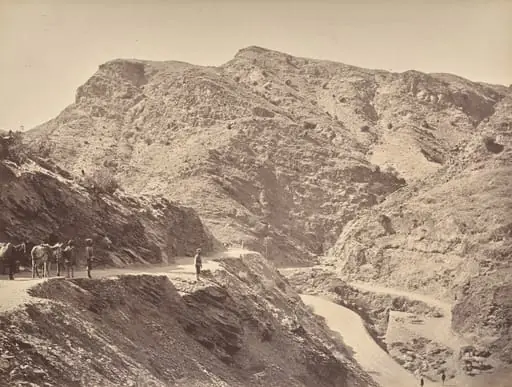
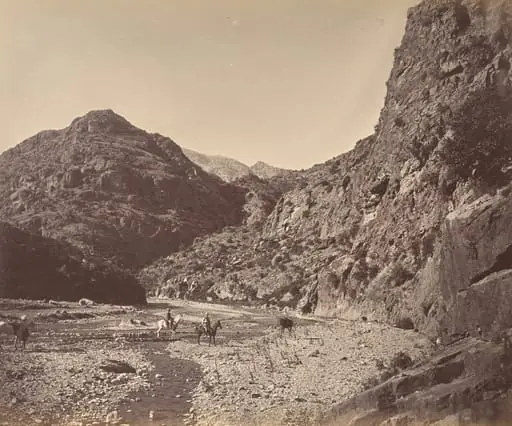
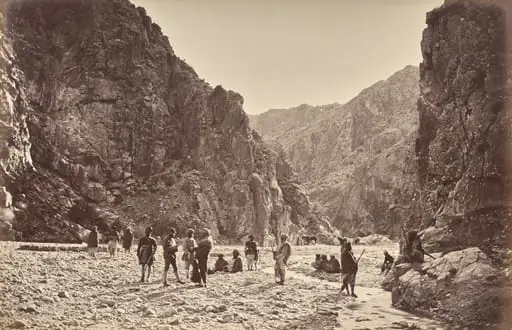
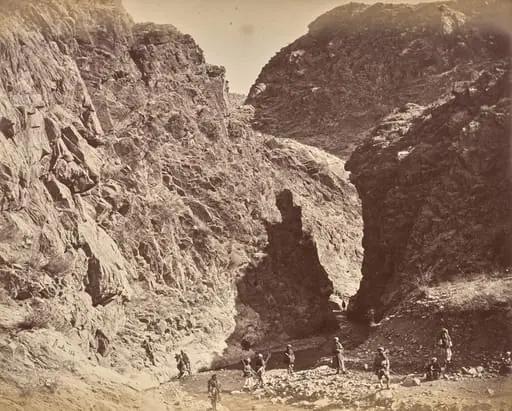
This photograph, taken by John Burke during the Second Anglo-Afghan War (1878–1880), captures a section of the Khyber Pass, a strategic mountain route.
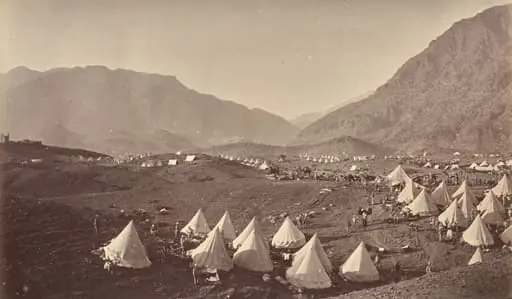
This photograph, taken by John Burke during the Second Anglo-Afghan War (1878–1880), captures a section of the Khyber Pass, a strategic mountain route. Burke, among the earliest photographers to document the conflict, used the limitations of 19th-century equipment to record the terrain and logistical movements rather than combat. The image reflects the slow, arduous nature of military operations in rugged highland regions.
Subject & Meaning
The scene depicts a narrow rocky trail with soldiers on horseback and a line of pack camels, suggesting the movement of supplies and personnel. Rather than depicting battle, the photograph emphasizes the quiet endurance required in wartime logistics. It conveys the isolation and physical demands of campaigning in Afghanistan’s mountainous terrain, offering a glimpse into the daily reality beyond frontline engagements.
Technique & Style
Burke employed large-format plate cameras and wet-plate collodion processes, which required long exposure times and careful preparation. These technical constraints prevented action photography, leading him to focus on static compositions: landscapes, encampments, and figures in transit. The resulting images are detailed, tonally rich, and deliberately composed to convey scale and atmosphere rather than drama.
History & Provenance
John Burke accompanied British forces during the Second Anglo-Afghan War, producing one of the most extensive photographic records of the campaign. His images were later compiled into albums and distributed as visual documentation for military and public audiences. This photograph likely originated from one of those collections, preserved as part of colonial-era archival material.
Context
The Khyber Pass was a critical corridor for British military advances into Afghanistan. Control of such routes determined the success of campaigns in the region. Burke’s photographs, including this one, served both strategic and propagandistic purposes, illustrating the logistical challenges faced by imperial forces in a hostile, unfamiliar landscape.
Legacy
Burke’s work remains a primary visual record of British military activity in Afghanistan during the late 19th century. His images, though static, provide insight into the human and environmental dimensions of colonial warfare. They continue to inform historical understanding, offering a counterpoint to the more dramatic, often fictionalized narratives of imperial conflict.
Artist & collection