Artwork
Fort Battye and Plains of Futtiabad
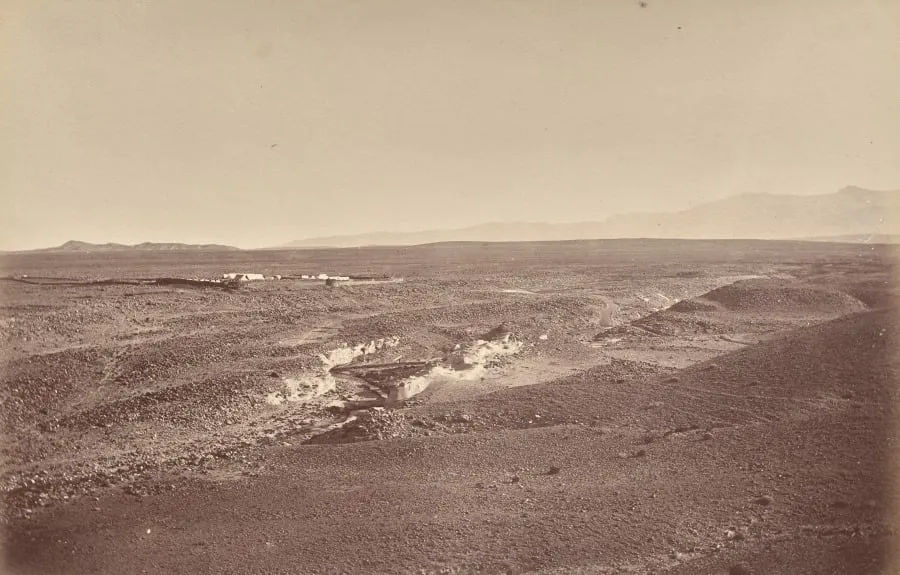
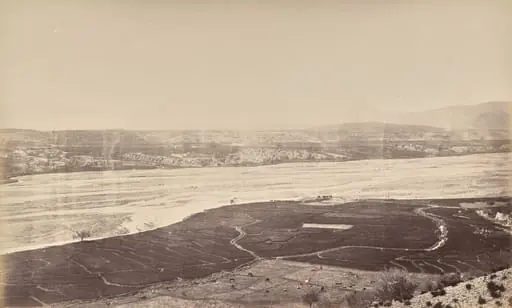
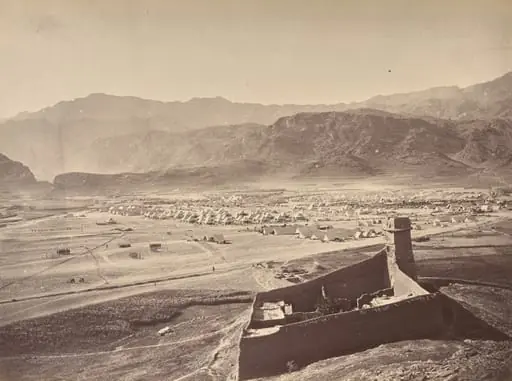
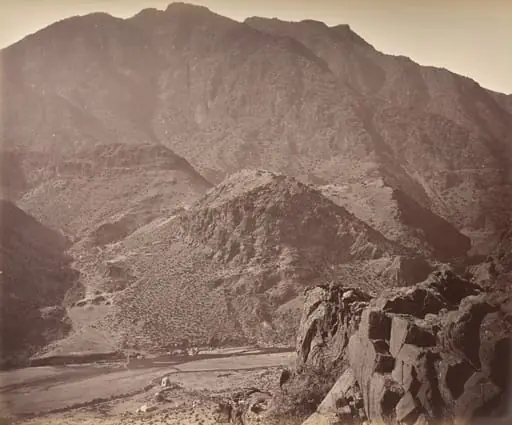
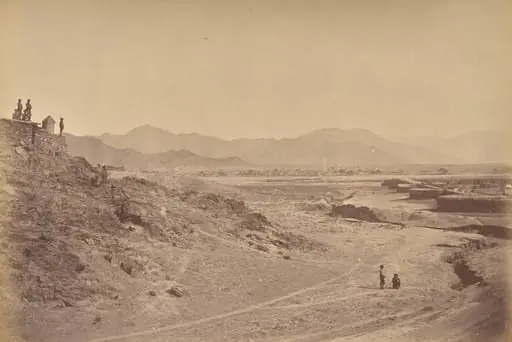
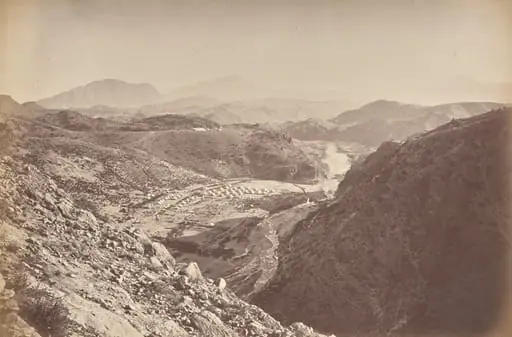
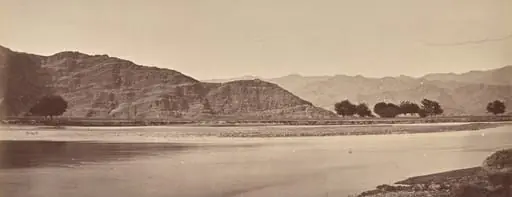
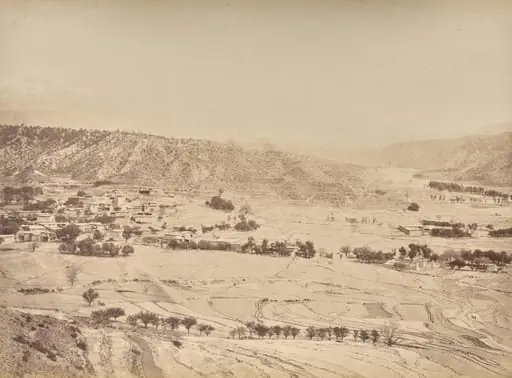
Fort Battye and Plains of Futtiabad is a photography by the Impressionist artist John Burke. It dates from 1879 and is held in the collection of the Cleveland Museum of Art. This photograph, taken during the Second Anglo-Afghan War (1878–1880), captures Fort Battye and the surrounding plains of Futtiabad.
About this work
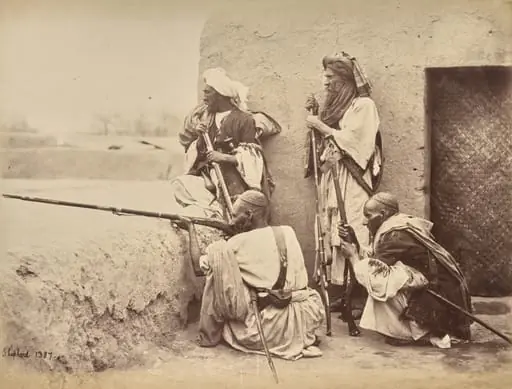
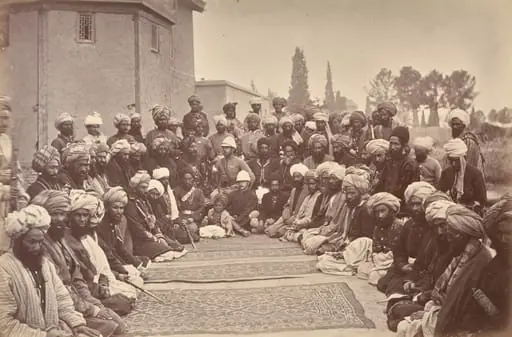
No action shots were possible then, so he focused on still moments: forts, camps, and the faces of men who fought there.
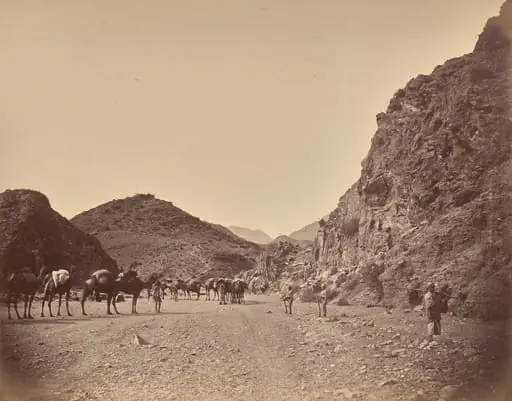
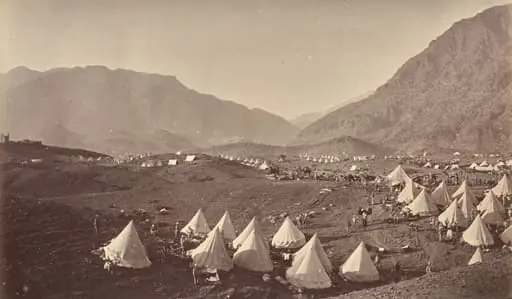
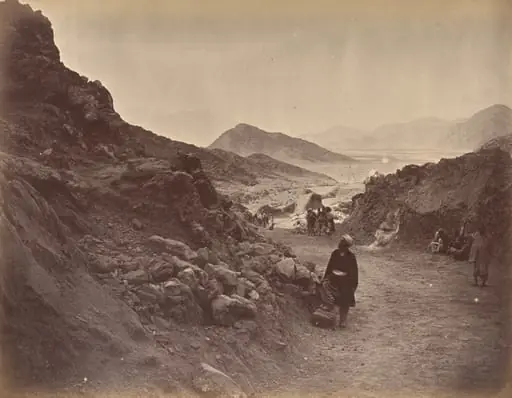
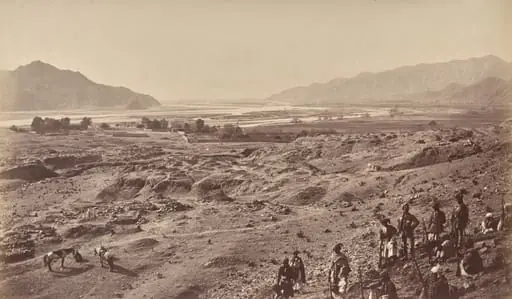
You see a quiet fort on a dusty plain, soldiers standing in neat rows, and hills stretching far away. The sky is bright, almost white.
This isn’t a painting—it’s one of the first photographs ever taken in Afghanistan. John Burke lugged heavy glass plates and a bulky camera across war zones to document the Second Anglo-Afghan War. No action shots were possible then, so he focused on still moments: forts, camps, and the faces of men who fought there.
To see more of Burke’s war photos, look up John Burke (Irish, 1845–1915).
Overview
This photograph, taken during the Second Anglo-Afghan War (1878–1880), captures Fort Battye and the surrounding plains of Futtiabad. It is one of the earliest photographic records made in Afghanistan, produced by Irish photographer John Burke, who traveled extensively through the region with heavy, cumbersome equipment. The image reflects the limitations of 19th-century photographic technology, which could not capture motion, leading to a focus on static scenes of military presence.
Subject & Meaning
The image depicts a quiet military outpost on an arid plain, with soldiers arranged in orderly rows and distant hills under a pale sky. Rather than depicting combat, it conveys the scale and isolation of British military operations. The fort and its garrison serve as symbols of imperial control in a contested landscape, while the stillness of the scene underscores the tension between occupation and the vast, unyielding terrain.
Technique & Style
Burke used glass plate negatives and a bulky camera, requiring long exposure times and careful setup. The resulting image is sharply detailed but devoid of movement, typical of early war photography. Composition emphasizes horizontal lines—the horizon, the fort’s walls, the soldiers’ ranks—creating a sense of order amid chaos. The bright, washed-out sky suggests harsh sunlight, a common condition in the region that affected exposure and tonal range.
History & Provenance
John Burke, commissioned by the British military and private patrons, documented the war between 1878 and 1880, producing one of the most comprehensive photographic records of the conflict. His images were circulated in albums and publications across Britain and India. This particular photograph likely originated from a bound collection of his work, preserved in institutional or private archives, and remains a primary visual source for the war’s logistical and spatial dimensions.
Context
The Second Anglo-Afghan War arose from British fears of Russian influence in Central Asia. Military campaigns relied on securing strategic outposts like Fort Battye, which controlled key routes. Photography served both documentary and propagandistic aims, offering the British public a tangible connection to distant campaigns. Burke’s work, though technically restrained, provided unprecedented visual access to a region largely unknown to Western audiences.
Legacy
Burke’s photographs established a visual archive of Afghanistan during a pivotal moment of imperial intervention. His images remain critical for historians studying colonial warfare, military architecture, and early photojournalism. Though not dramatic in action, they preserve the material reality of occupation—forts, uniforms, terrain—and continue to inform modern understandings of how war was perceived and recorded in the 19th century.
Artist & collection