Artwork
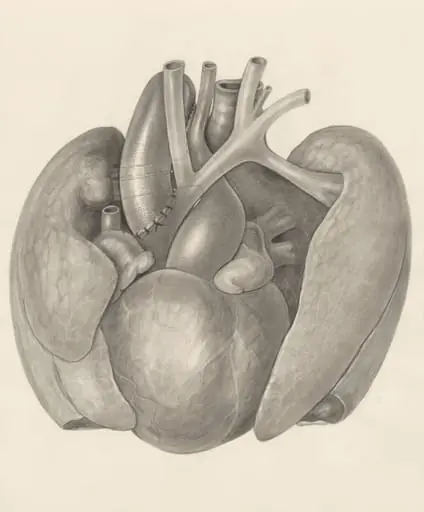
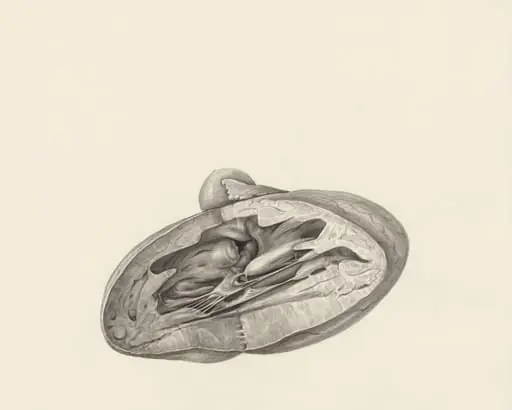
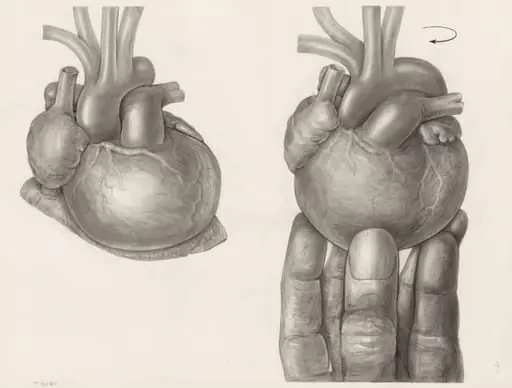
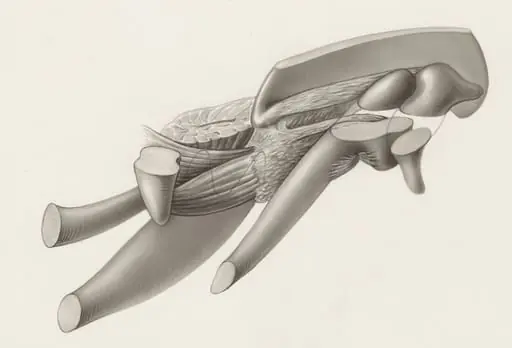
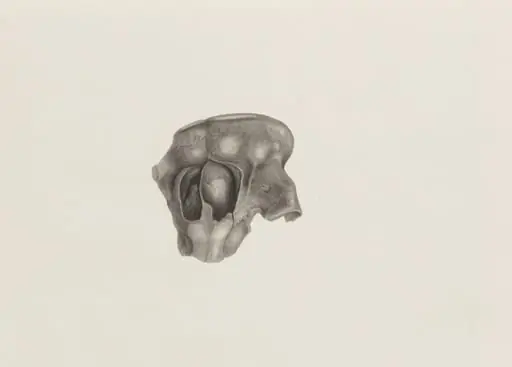
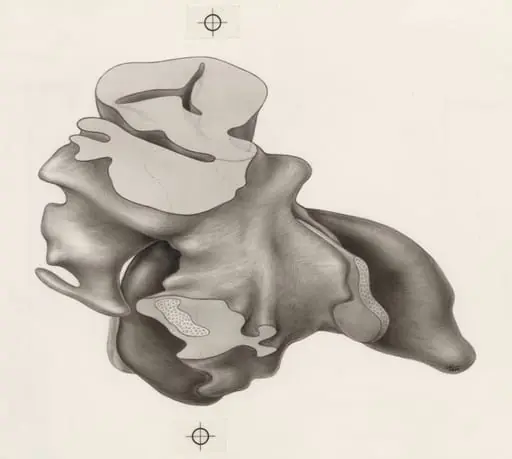
Heart of a human embryo
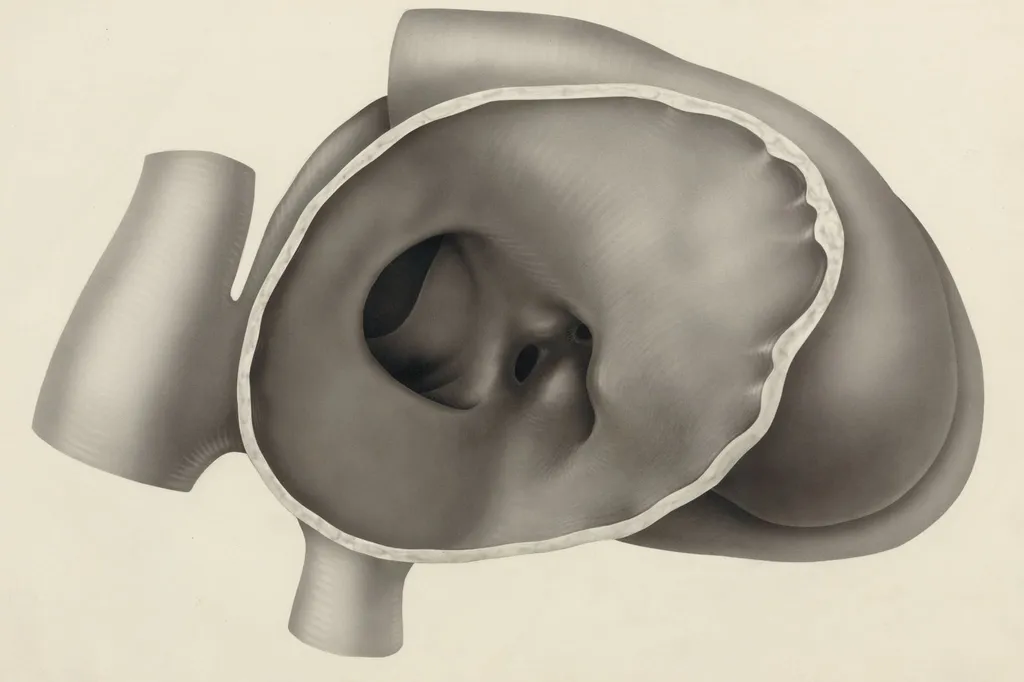
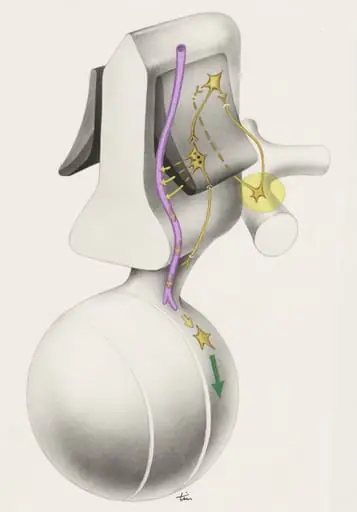
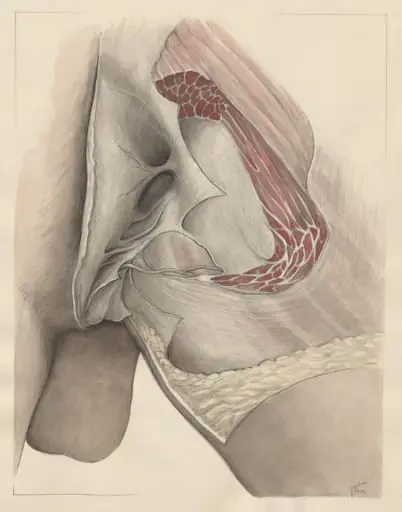
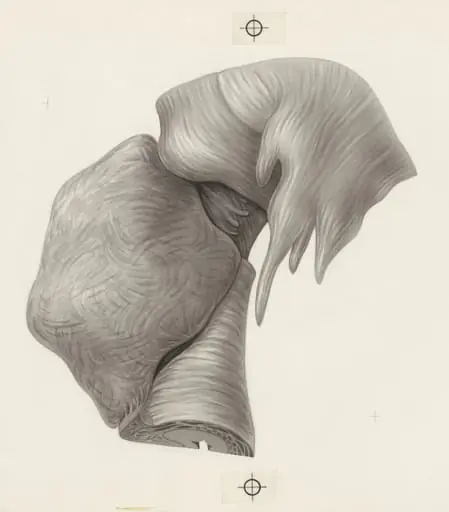
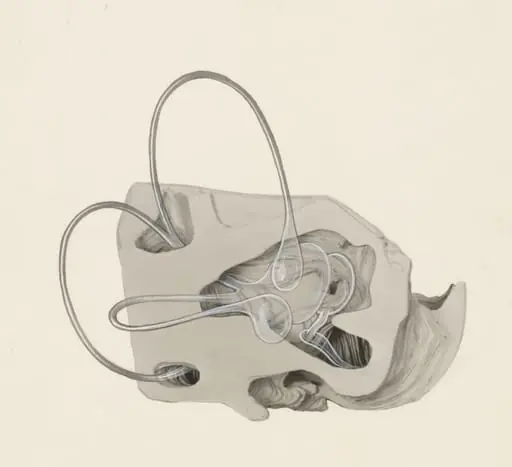
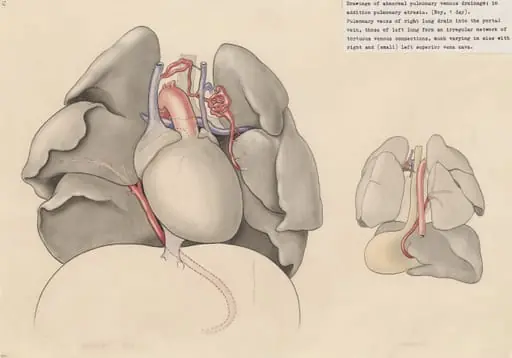
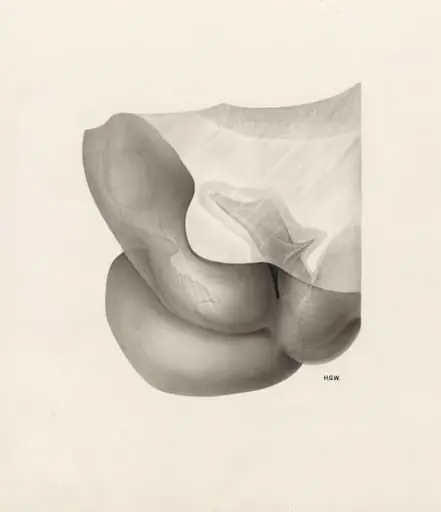
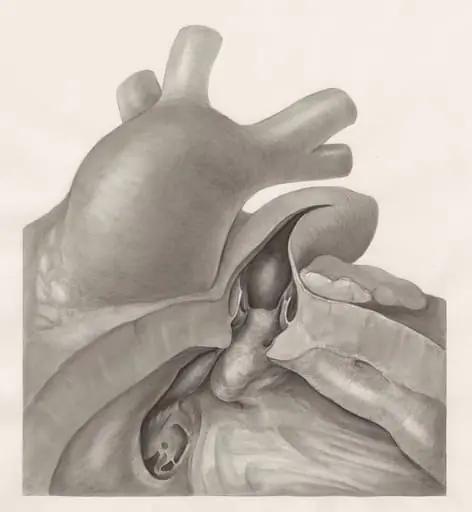
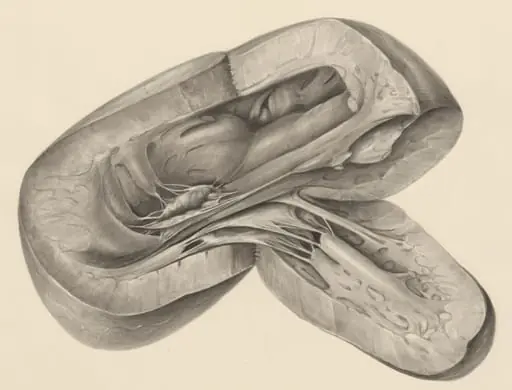
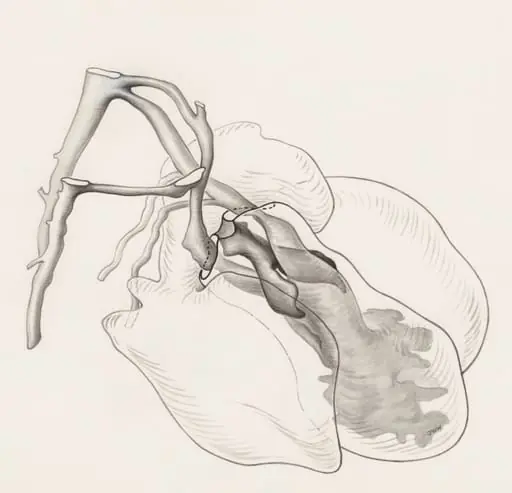
Heart of a human embryo is a drawing by J Tinkelenberg. It dates from 1963 and is held in the collection of the Leiden University Libraries. Created in 1963 by J.
About this work
Overview
Rendered with precise, unadorned lines, the image emphasizes structural form over anatomical detail.
Created in 1963 by J. Tinkelenberg, this black-and-white drawing depicts the interior of a human embryo’s heart. Rendered with precise, unadorned lines, the image emphasizes structural form over anatomical detail. It is held in the collection of the Museum of Ethnography, where it functions as a scientific illustration rather than an artistic statement, reflecting mid-20th century approaches to biological documentation.
Subject & Meaning
The drawing isolates the embryonic heart’s internal chamber and outflow tracts, presenting it as a simplified, almost abstract form. By omitting vessels, valves, and color, the artist directs attention to the organ’s fundamental geometry. This reduction suggests an educational intent—to clarify the heart’s early architecture before complex development, aligning with embryological study practices of the time.
Technique & Style
Executed in pencil or ink, the drawing uses clean contours and graded shading to suggest volume without texture or ornamentation. The walls of the heart are rendered with uniform thickness, while the central cavity is darkened to indicate depth. The absence of fine detail and the deliberate lack of finish give the image the character of a working sketch, prioritizing clarity over aesthetic polish.
History & Provenance
The work entered the Museum of Ethnography’s collection shortly after its creation, likely as part of a broader archive of biological studies. Its provenance is tied to academic or medical research contexts of the early 1960s, when visual documentation of embryonic development was gaining institutional support. No record of public exhibition or commercial use exists prior to its archival placement.
Context
In the 1960s, scientific illustration was a vital tool in medicine and biology, especially in embryology, where photography was limited by resolution and specimen preparation. Tinkelenberg’s drawing reflects this era’s reliance on hand-drawn renderings to convey structural knowledge. Its starkness mirrors contemporaneous textbooks that favored schematic accuracy over artistic expression.
Legacy
The drawing remains a quiet example of mid-century scientific visualization, preserved for its pedagogical value rather than artistic merit. It contributes to the Museum of Ethnography’s collection of material documenting the history of biological representation. While not widely known, it stands as a testament to the discipline of clinical observation before digital imaging became standard.
Artist & collection
Artist
This artist carved and painted the hidden systems we carry inside. Their sculptures trace the bend and flow of joints and veins in delicate wire or clay, while watercolors map the first threads of life in an embryo.…