Artwork
Part of a deformed fetal head
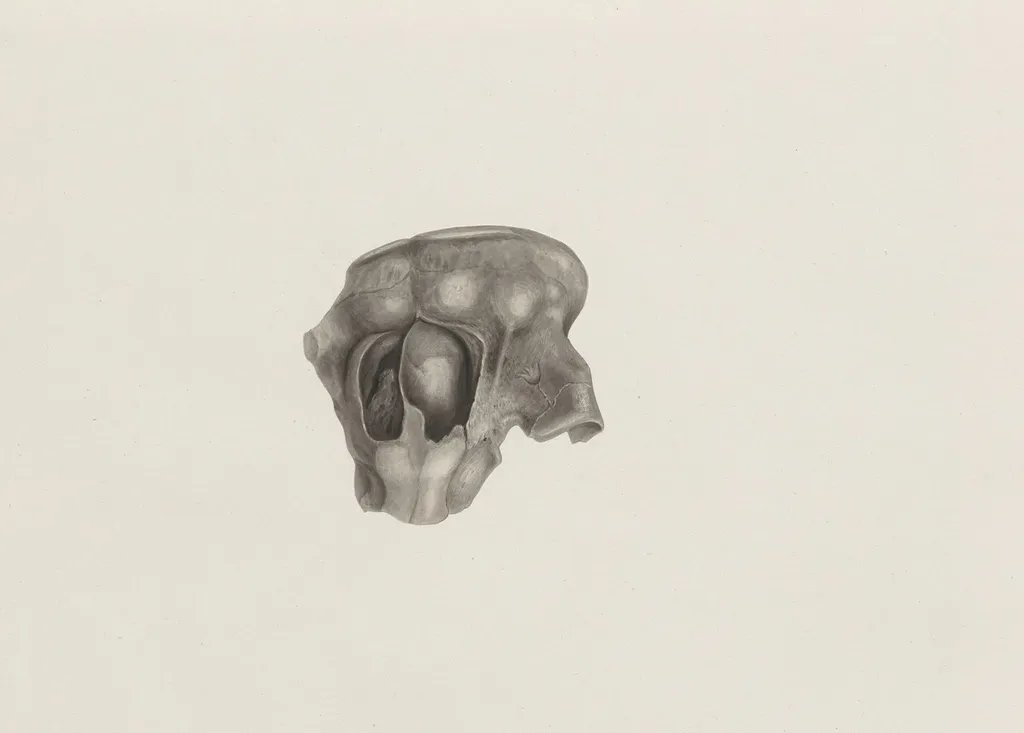
Part of a deformed fetal head is a drawing by H.G, Wetselaar. It dates from 1970 and is held in the collection of the Leiden University Libraries. Created around 1970 by H.
About this work
Overview
The work resides in the collection of the Museum of Ethnography, where it functions as a study in human variation rather than a clinical illustration.
Created around 1970 by H.G. Wetselaar, this drawing depicts a fragment of a deformed fetal skull. Rendered in precise draftsmanship, it isolates the cranial structure against a blank background, eliminating contextual elements to emphasize anatomical irregularity. The work resides in the collection of the Museum of Ethnography, where it functions as a study in human variation rather than a clinical illustration.
Subject & Meaning
The image presents a side profile of a fetal skull with a missing mandible and irregular bone surfaces. It does not seek to evoke emotion or narrative but instead documents a rare developmental anomaly with clinical detachment. The absence of soft tissue and the stark composition direct attention to structural deviation, inviting observation over interpretation.
Technique & Style
Wetselaar employed fine-line drawing with controlled shading to model the skull’s contours. Cross-hatching and tonal gradations define the uneven bone texture without embellishment. The white background isolates the form, enhancing its sculptural presence. The technique reflects a tradition of anatomical drawing that prioritizes accuracy over aesthetic refinement.
History & Provenance
The drawing entered the Museum of Ethnography’s collection in the late 20th century as part of a broader archive of anthropological studies. Its origin as a preparatory sketch suggests use in academic or medical training. No record of public exhibition prior to its acquisition exists, indicating its primary function was pedagogical rather than artistic.
Context
In the 1970s, ethnographic institutions increasingly collected anatomical studies to document biological diversity. This drawing aligns with efforts to visually catalog human variation, often in collaboration with medical professionals. Its unembellished style reflects a scientific ethos, contrasting with idealized representations common in earlier anatomical atlases.
Legacy
The work endures as a quiet example of how visual documentation can preserve rare anatomical conditions. It contributes to the historical record of how medical and anthropological knowledge was visually transmitted. Though not widely known, it remains a reference point for those studying the intersection of art, science, and human morphology.
Artist & collection
Artist
H.G. Wetselaar spent his days hunched over microscopes in a quiet Leiden lab, sketching what most people ignore. His pencil caught the raw architecture of bodies we pretend are smooth—like the knotted muscles of a…
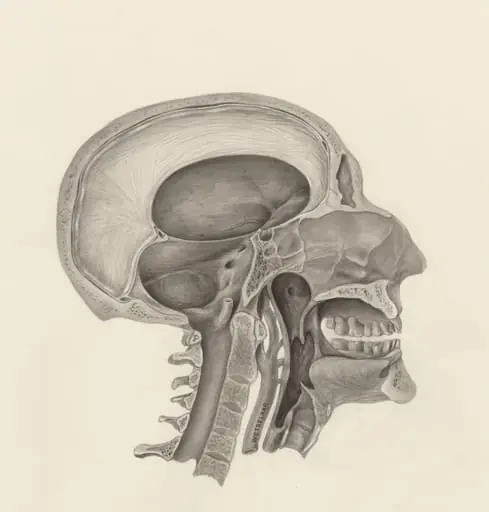 Cross section of the human head
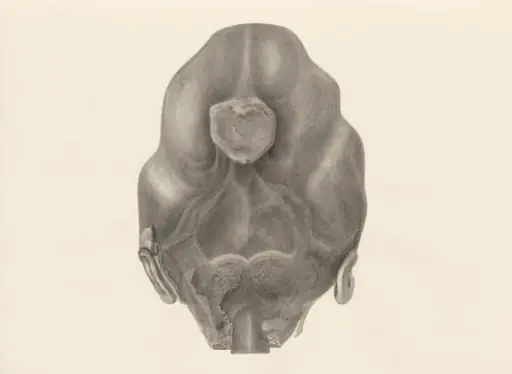 Deformed fetal head, seen from the back
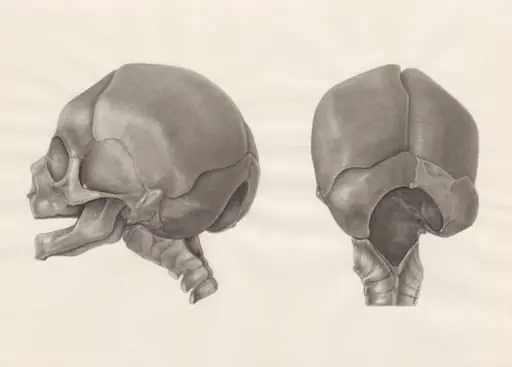 Deformed fetal skull, with part of the spinal cord
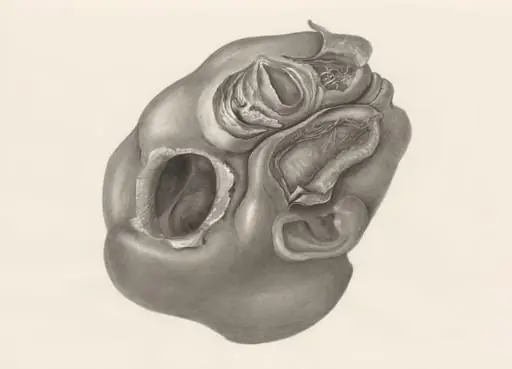 Deformed fetal head, lateral view
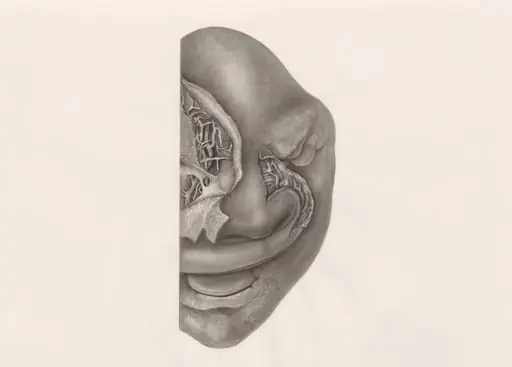 Deformed fetal head, partly seen from the front
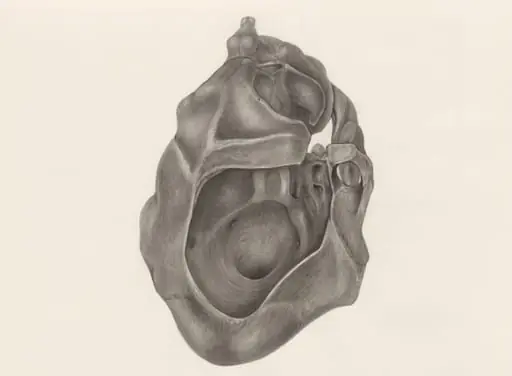 Deformed skull, seen from below
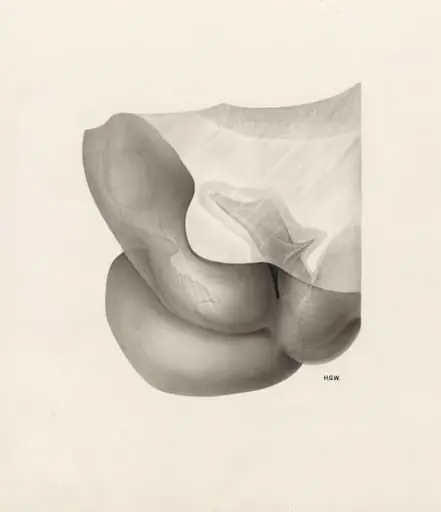 Embryonic tissue
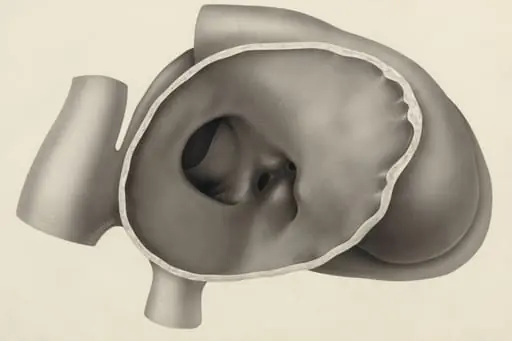 Heart of a human embryo
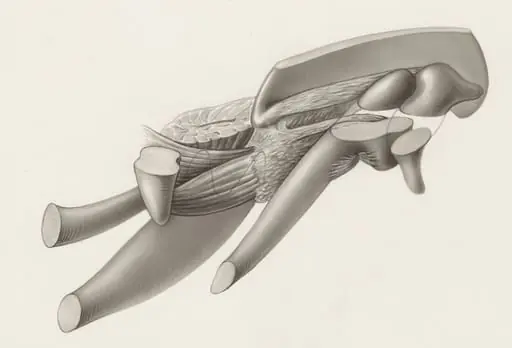 Musculoskeletal system of an embryo