Artwork
Tissue of the human embryo
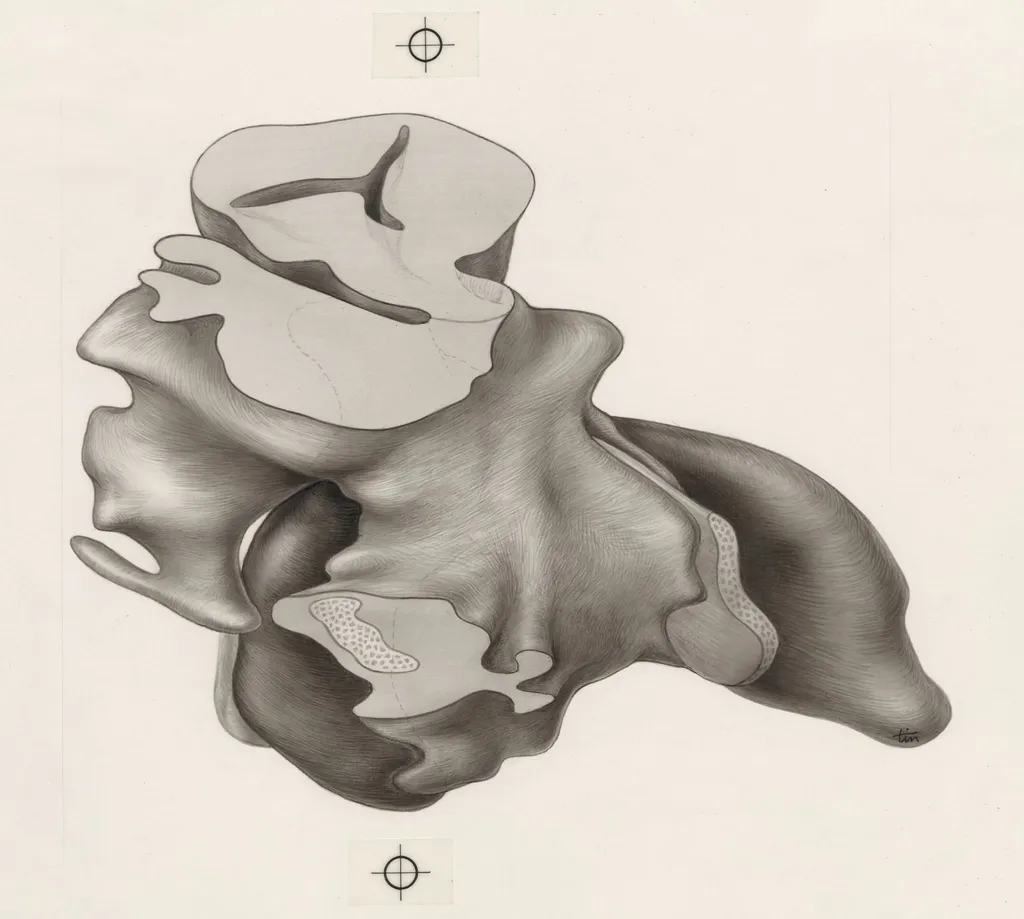
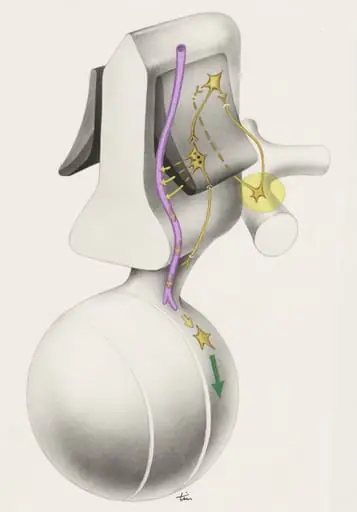
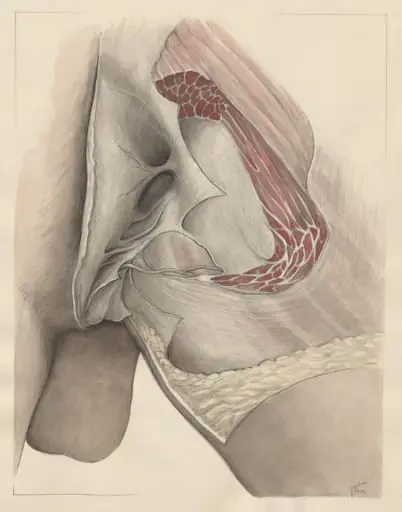
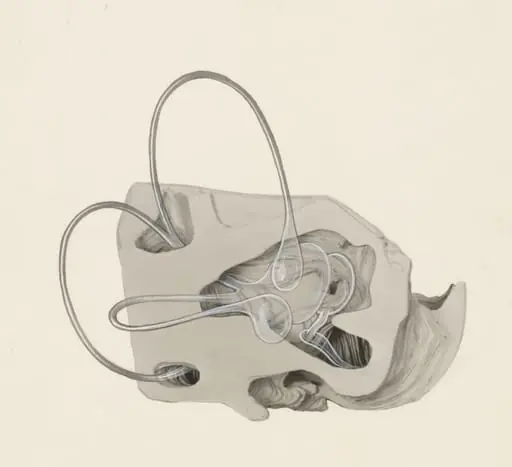
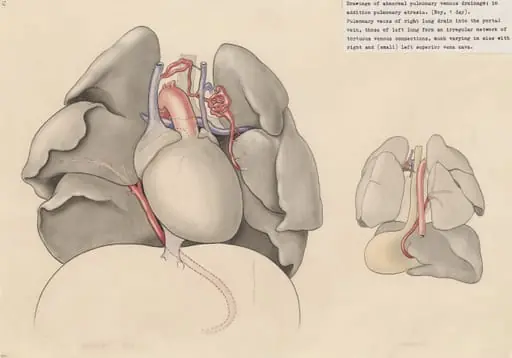
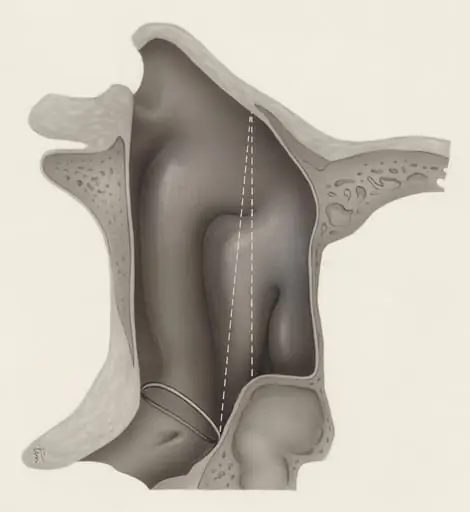
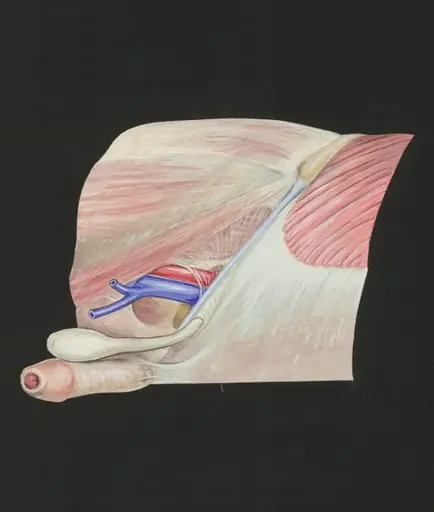
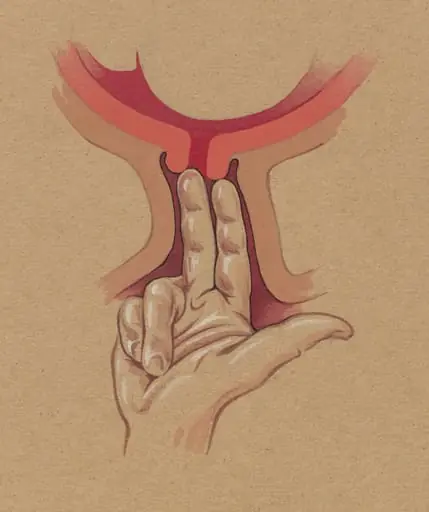
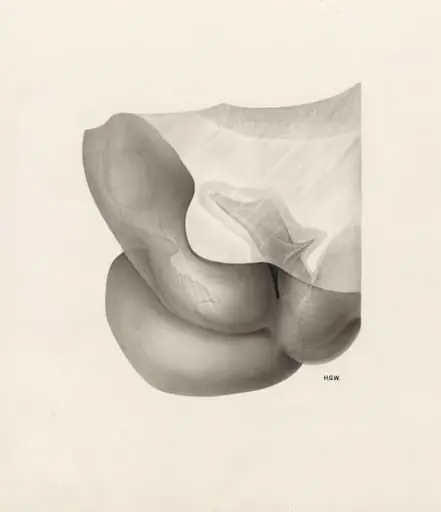
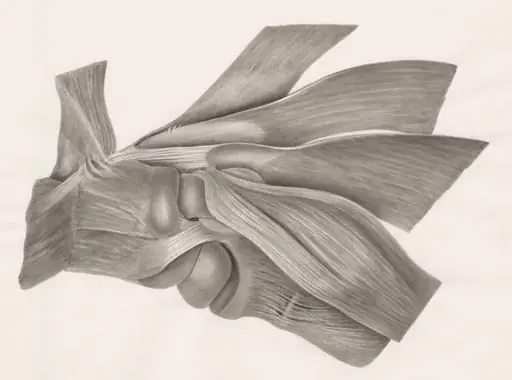
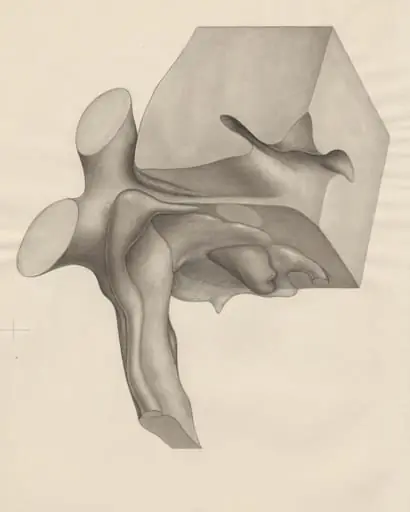
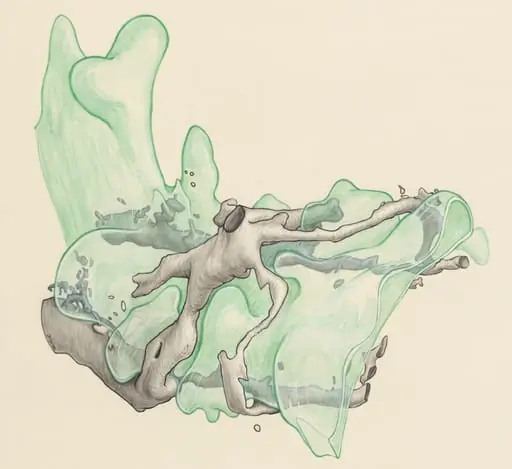
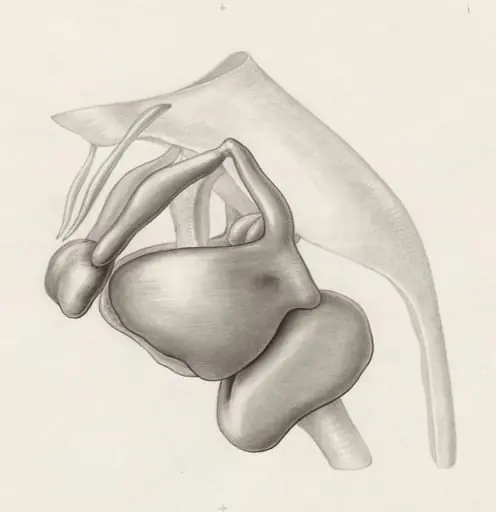
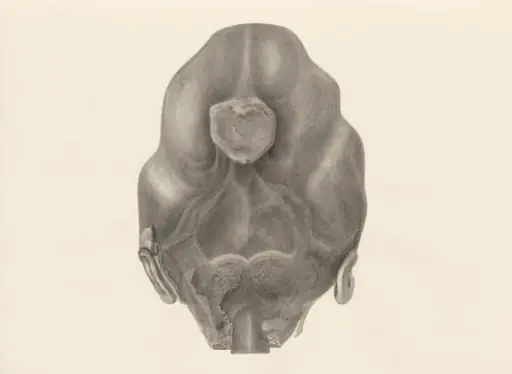
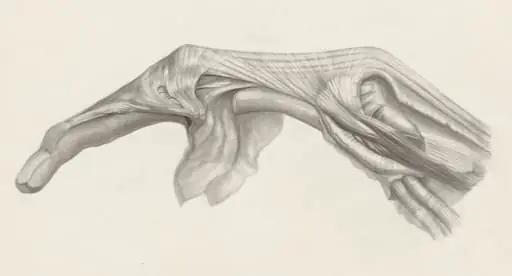
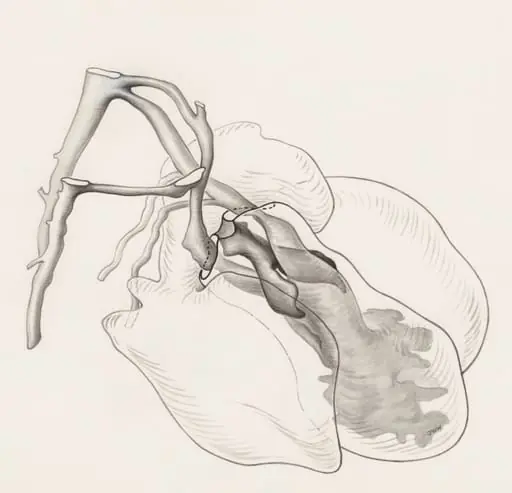
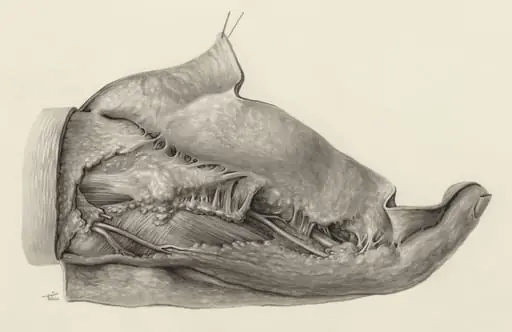
Tissue of the human embryo is a drawing by J Tinkelenberg. It dates from 1970 and is held in the collection of the Leiden University Libraries. Created in 1970 by J.
About this work
Overview
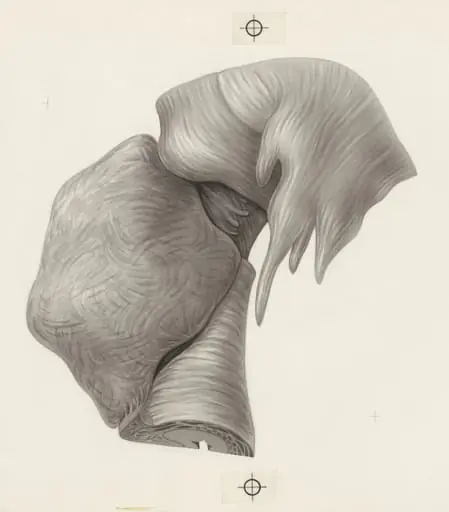
Created in 1970 by J. Tinkelenberg, “Tissue of the Human Embryo” is a monochrome drawing held in the collection of the Museum of Ethnography. The work presents an abstracted anatomical form rendered in shades of gray, emphasizing texture and spatial depth through line work.
Subject & Meaning
The composition depicts an abstracted embryonic tissue, suggested by its wavy perimeter and central void. While the image does not illustrate a literal anatomical scene, the hollow centre and undulating edges evoke notions of growth, fragility, and the hidden structures that underlie human development.
Technique & Style
Executed in a realistic manner, the drawing relies on cross‑hatching and stippling to generate tonal variation. Darker lines and clusters of dots build a sense of volume, while the gradations of gray convey three‑dimensionality despite the flat surface. The careful modulation of texture reflects a disciplined hand.
History & Provenance
Since its completion in 1970, the piece has remained within the Museum of Ethnography’s holdings. No record of prior private ownership or exhibition history is noted, indicating that the museum acquired the work shortly after its creation, likely as part of its broader collection of scientific or anatomical illustrations.
Context
The early 1970s saw increased interdisciplinary interest between art and the biological sciences, with artists exploring anatomical subjects through abstracted visual languages. Tinkelenberg’s drawing aligns with this trend, employing scientific imagery while maintaining a focus on formal qualities such as line, texture, and tonal balance.
Artist & collection
Artist
This artist carved and painted the hidden systems we carry inside. Their sculptures trace the bend and flow of joints and veins in delicate wire or clay, while watercolors map the first threads of life in an embryo.…