Artwork
Cap de tătăroaică
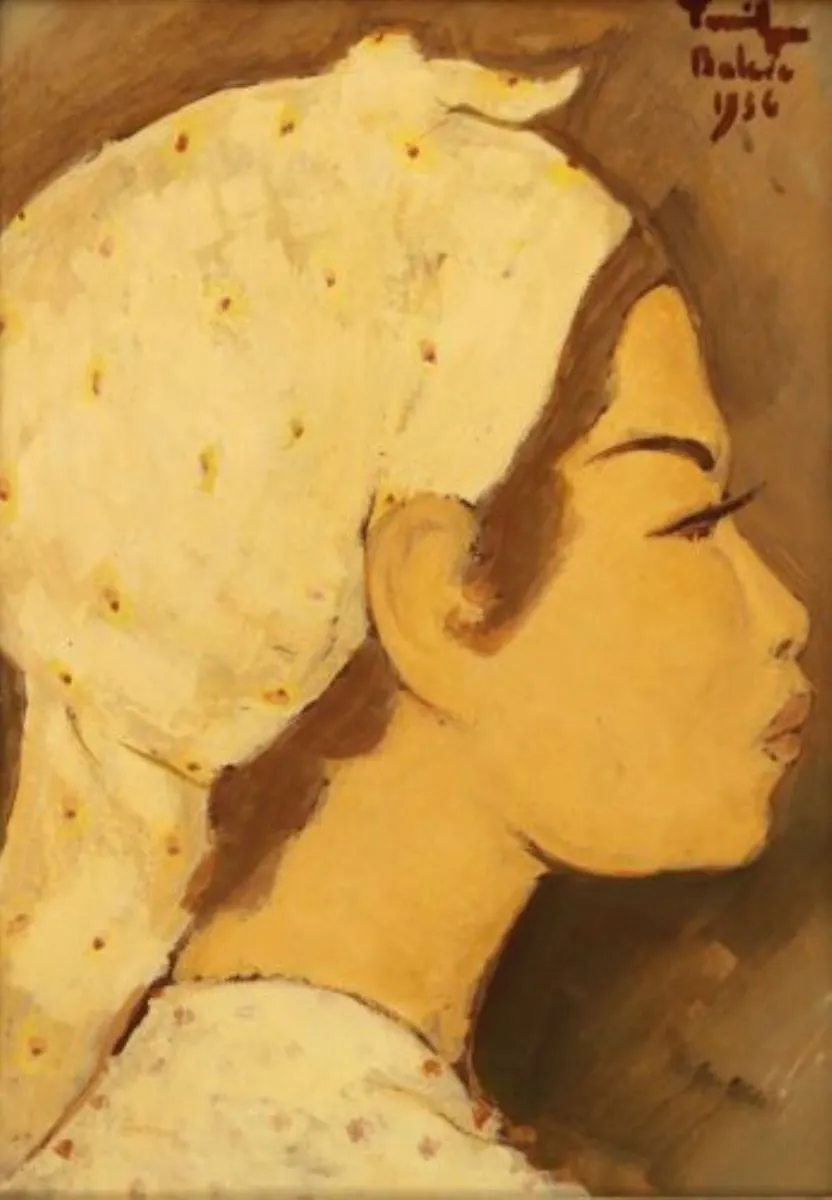
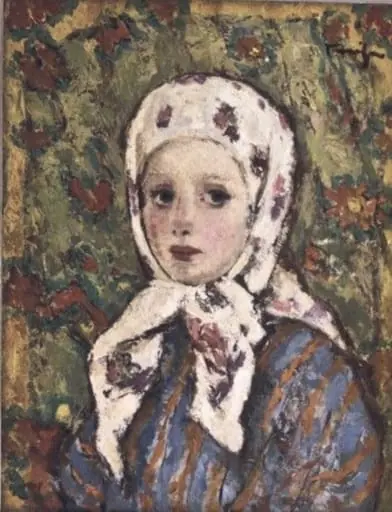
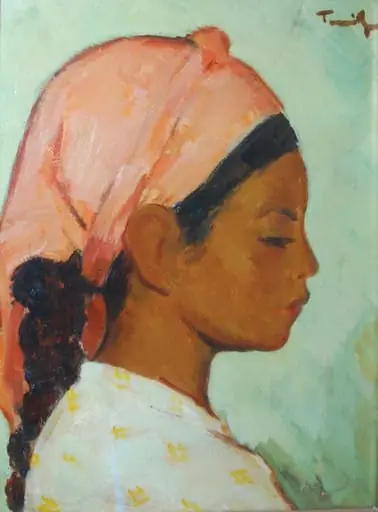
Cap de tătăroaică is an unspecified painting by Nicolae Tonitza. It dates from 1936 and is held in the collection of the Art Museum of Constanta.
About this work
Overview
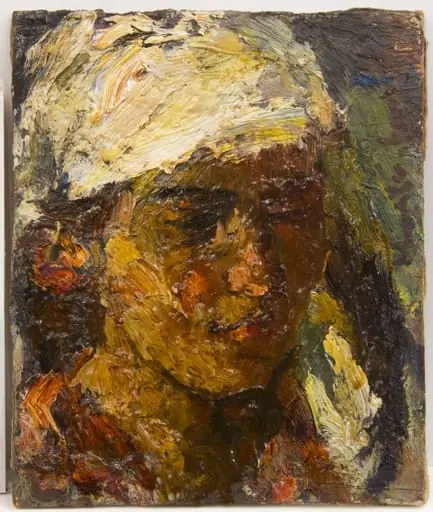
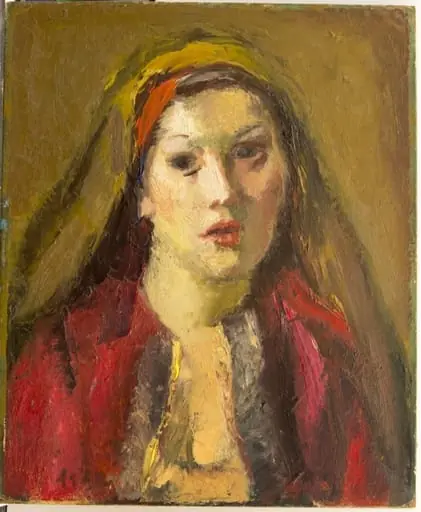
The work presents a close-up of a woman’s face, rendered with a restrained palette and deliberate brushwork that emphasizes texture over detail.
Painted in 1936 by Romanian artist Nicolae Tonitza, Cap de tătăroaică is a portrait rendered in oil on canvas. It resides in the collection of the Museum of Ethnography in Bucharest. The work presents a close-up of a woman’s face, rendered with a restrained palette and deliberate brushwork that emphasizes texture over detail. The composition isolates the subject against a neutral background, drawing attention to subtle shifts in light and surface.
Subject & Meaning
The subject is a woman wearing a white headscarf, likely representing a member of a rural or ethnic community in Romania. Her identity is not named, but her attire and the quiet dignity of her gaze suggest a connection to traditional life. Tonitza avoids idealization; instead, he captures a moment of stillness, inviting contemplation of individual presence within a broader cultural context.
Technique & Style
Tonitza employs thick, layered brushstrokes—characteristic of impasto—to model the woman’s skin, creating a tactile, uneven surface that responds to directional light. Warm ochres and soft pinks dominate, while the white headscarf contrasts gently against the muted background. The blurred edges and minimal background detail focus the viewer’s attention on the texture and warmth of the face, avoiding narrative embellishment.
History & Provenance
The painting was completed in 1936 during a period when Tonitza was deeply engaged with Romanian folk themes. It entered the Museum of Ethnography’s collection shortly after its creation, likely through direct acquisition or donation. Its preservation within an ethnographic institution reflects its role as both artistic expression and cultural documentation of early 20th-century rural life.
Context
In the 1930s, Romanian artists increasingly turned to local subjects as part of a broader national cultural movement. Tonitza, influenced by Post-Impressionism and Expressionism, sought to convey emotional depth through simplified forms and textured surfaces. This work aligns with his interest in portraying ordinary people with psychological nuance, distinct from academic realism or romanticized folklore.
Legacy
Cap de tătăroaică remains a representative example of Tonitza’s mature style, where emotional resonance arises from restraint rather than detail. It has been referenced in studies of Romanian modernism and ethnographic art, valued for its quiet humanity and technical sensitivity. The painting continues to be exhibited as a bridge between portraiture and cultural record in interwar Romanian art.
Artist & collection

Artist
Nicolae Tonitza was a Romanian painter, engraver, lithographer, journalist and art critic. Drawing inspiration from Post-Impressionism and Expressionism, he had a major role in introducing modernist guidelines to local art.

![Afizé [Tătăroiacă citind], by Nicolae Tonitza](https://artifactworldgallery.com/img/nicolae-tonitza--afize-tataroiaca-citind--5a964d3315fa8d88-w320.webp)