Artwork
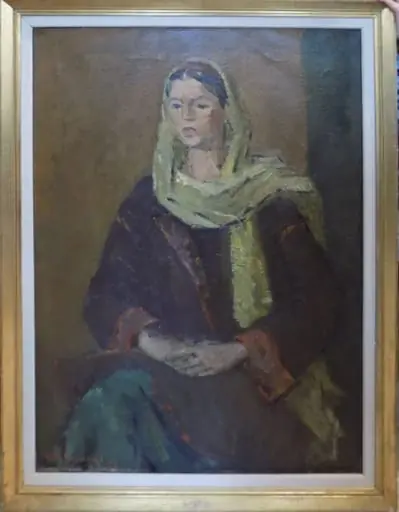
Portret de balerină
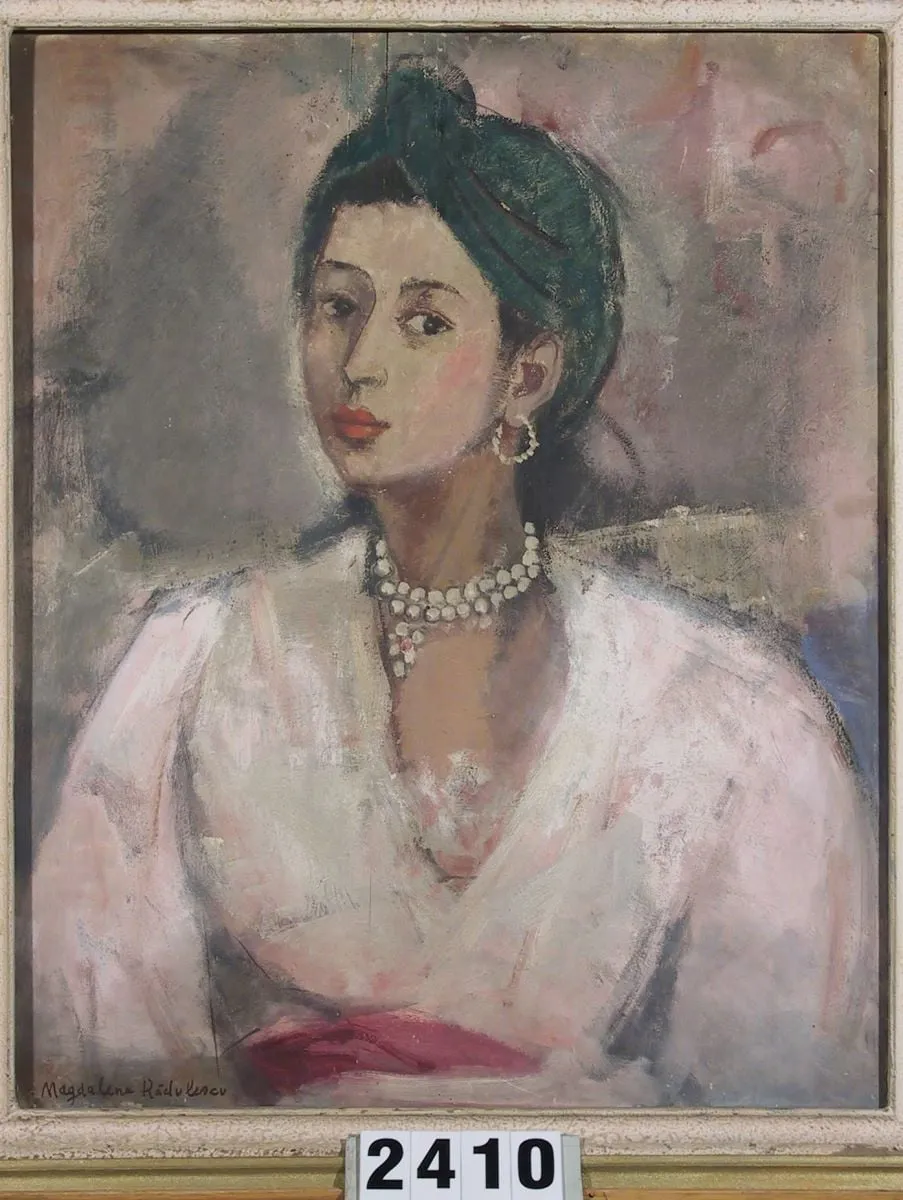
Portret de balerină is a print by Magdalena Rădulescu. It dates from 1952 and is held in the collection of the Brukenthal National Museum.
About this work
Overview
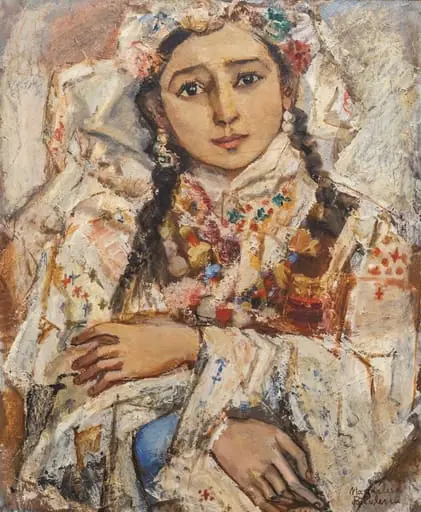
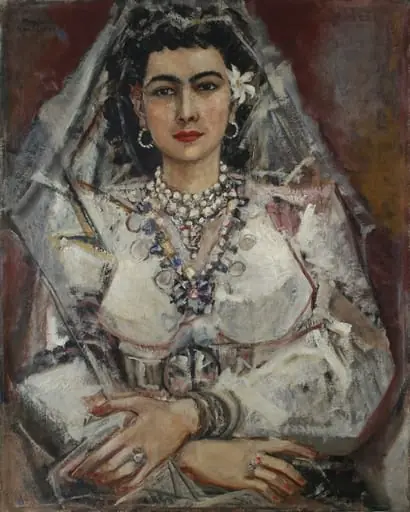
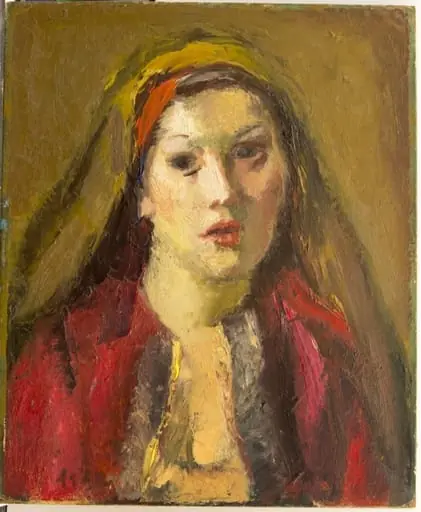
Painted around 1952 by Magdalena Rădulescu, this portrait captures a woman in quiet poise. The composition centers on her stillness, framed by soft, cool tones in the background that contrast subtly with the brightness of her clothing. Her attire and adornments suggest a deliberate presentation of grace, neither theatrical nor ordinary, but grounded in personal dignity.
Subject & Meaning
The subject, likely a dancer, is depicted not in motion but in repose, her identity hinted at through symbolic elements: the red sash, pearl jewelry, and green headscarf. These details evoke cultural specificity without overt narrative. The portrait emphasizes presence over performance, suggesting an inner composure that transcends the role of performer.
Technique & Style
Rădulescu employs chiaroscuro to model the figure with subtle gradations of light and shadow, lending volume to the face and torso. The brushwork is restrained, avoiding overt detail in favor of atmospheric harmony. The muted pink-and-gray background recedes gently, ensuring focus remains on the subject’s calm expression and the textures of fabric and skin.
History & Provenance
The painting originates from early 1950s Romania, a period when artistic expression was navigating state-prescribed themes. Rădulescu’s choice to depict an individual with quiet elegance, rather than a propagandistic figure, reflects a personal commitment to intimate portraiture. Its survival suggests it remained in private hands, away from institutional collections.
Context
In postwar Romania, public art often served ideological aims, yet private works like this one preserved space for individual expression. The headscarf and jewelry may reference regional dress or personal taste, offering a quiet resistance to homogenized aesthetics. Rădulescu’s focus on a solitary woman aligns with broader interwar traditions of introspective portraiture.
Legacy
Though not widely exhibited, the portrait stands as an example of Romanian figurative painting that prioritized psychological nuance over political messaging. It reflects Rădulescu’s consistent interest in capturing the quiet dignity of women, contributing to a lesser-known but persistent current in mid-century Romanian art that valued subtlety over spectacle.
Artist & collection

Artist
Magdalena Rădulescu was a Romanian modernist painter and illustrator. She was known for her symbolist and expressionist paintings, inspired by Romanian traditions and folklore. Rădulescu lived most of her life in…