Artwork
Untitled
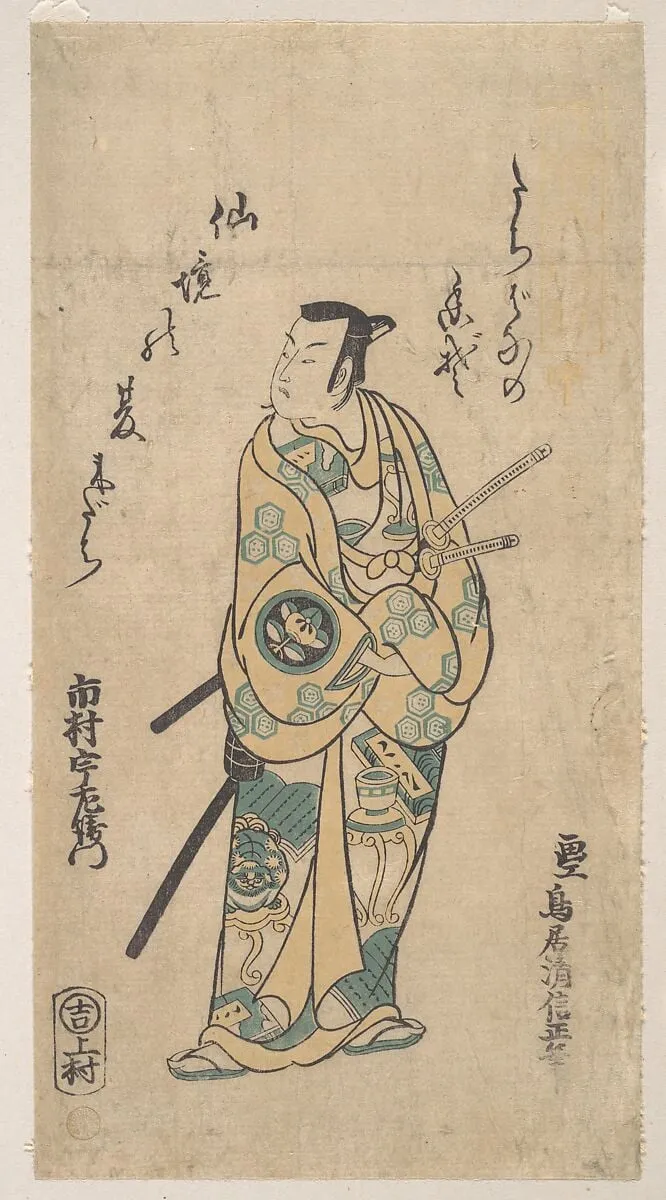
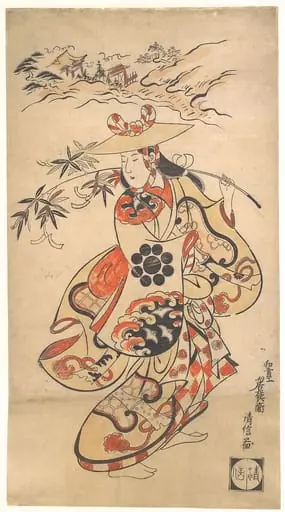
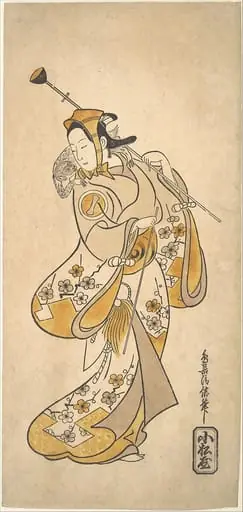
Untitled is an ink print by the Baroque artist Torii Kiyonobu. It is held in the collection of the Metropolitan Museum of Art.
About this work
Overview
Executed in ink and color on paper, it exemplifies the Edo-period printmaking techniques developed for mass production yet executed with refined detail.
This woodblock print, dated around 1742, is attributed to Torii Kiyonobu I, an early master of the ukiyo-e tradition. Executed in ink and color on paper, it exemplifies the Edo-period printmaking techniques developed for mass production yet executed with refined detail. The work resides in the collection of The Metropolitan Museum of Art, where it is cataloged as an untitled piece, reflecting its origins as part of a larger series or publication now lost.
Subject & Meaning
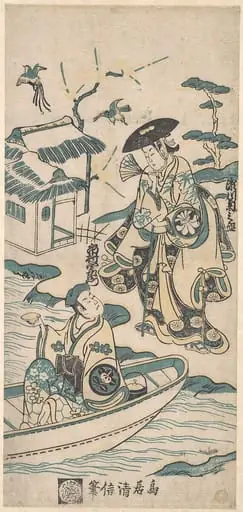
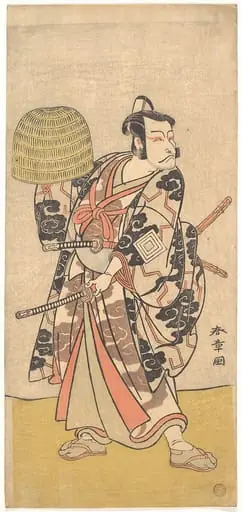
The figure depicted is a man dressed in an elaborate, patterned robe, holding a long sword in one hand and a fan in the other. His posture is composed, his expression stern, suggesting a warrior or official of high status. The combination of weapon and ceremonial object implies a duality of authority and refinement, common in depictions of samurai or courtly figures of the period. The surrounding Japanese script likely identifies the subject or a poetic inscription, though its precise meaning remains unverified.
Technique & Style
The robe’s intricate green and gold patterns are rendered with fine brushwork, mimicking the texture of embroidered fabric rather than printed motifs. This suggests the artist adapted painting techniques to the woodblock medium, enhancing visual richness. Lines are crisp, colors layered with precision, and the figure is framed against a plain background to emphasize form and attire. The stylized hair and facial features align with Torii school conventions, favoring bold outlines and expressive stillness over naturalism.
History & Provenance
Created during the early 18th century, the print likely originated as a single sheet within a larger publication, possibly a theatrical poster or illustrated text. Its survival is uncommon, as such prints were often discarded after use. It entered the Metropolitan Museum of Art’s collection through documented acquisitions of Japanese prints in the late 19th or early 20th century, though its specific provenance prior to that remains undocumented.
Context
Torii Kiyonobu I was instrumental in shaping the visual language of ukiyo-e during the early Edo period, particularly in depictions of kabuki actors and warrior figures. This print reflects the Torii school’s dominance in theatrical imagery and its fusion of dramatic pose with decorative detail. The work aligns with contemporary trends that elevated actor portraits and historical figures into popular visual culture, bridging elite and merchant audiences in Edo’s urban centers.
Legacy
Though unsigned and untitled, the print exemplifies the Torii school’s influence on later ukiyo-e artists. Its emphasis on stylized form and decorative patterning became foundational for generations of printmakers. While not widely reproduced in modern scholarship, it remains a representative example of early 18th-century printmaking, illustrating the technical and aesthetic priorities of its time.
Artist & collection
Artist
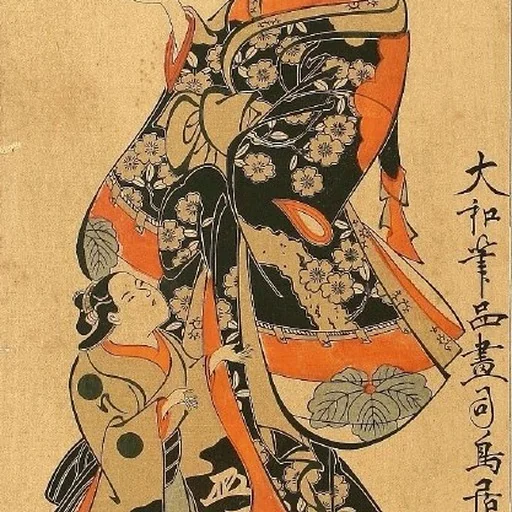
Torii Kiyonobu I (Japanese: 鳥居 清信; c. 1664 – 22 August 1729) was a Japanese painter and printmaker in the ukiyo-e style, who is renowned for his work on kabuki signboards and related materials. Along with his father…

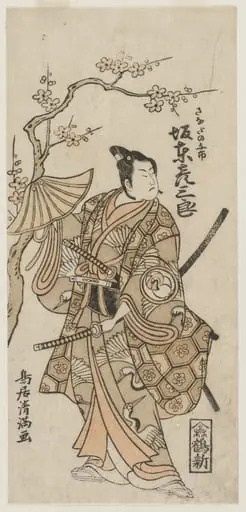 Bando Hikosaburo II as Sanada no Yoichi
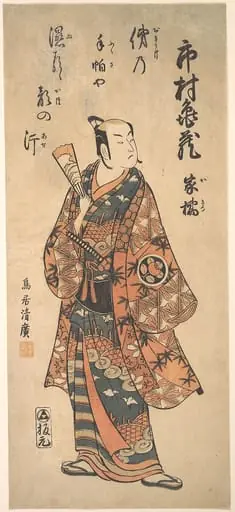 Untitled
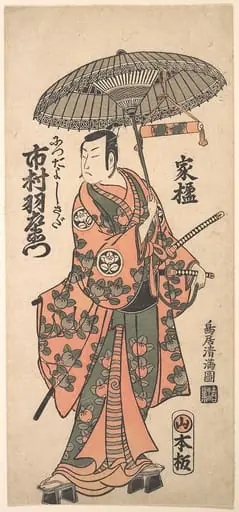 鳥居清満画 九代目市村羽左衛門|Kabuki Actor Ichimura Uzaemon IX
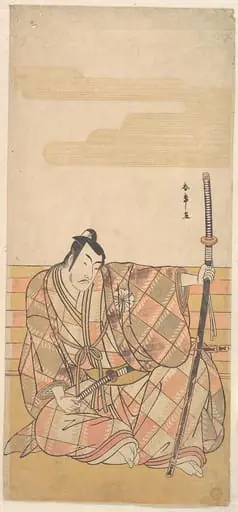 Untitled
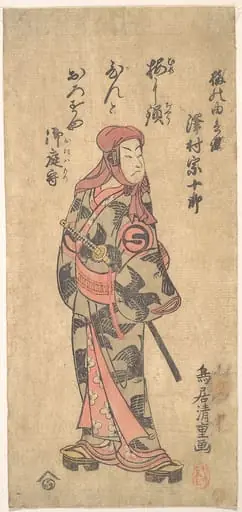 Untitled
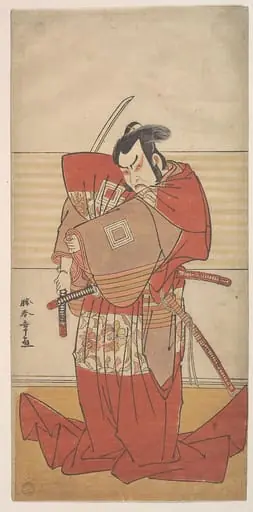 Untitled
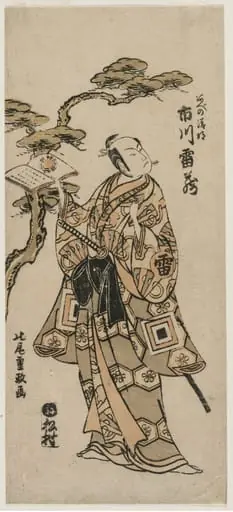 Ichikawa Raizo as Abe no Seimei
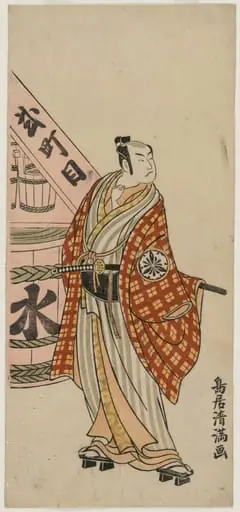 Matsumoto Koshiro IV as a Townsman Standing Beside a Water Barrel
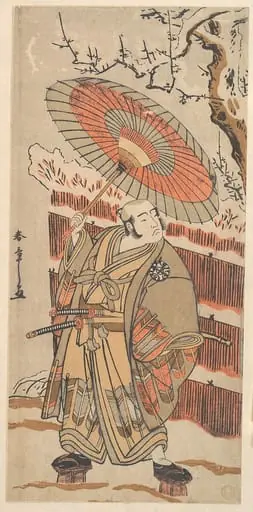 勝川春章画 二代目中村傳九郎|Kabuki Actor Nakamura Denkurō II
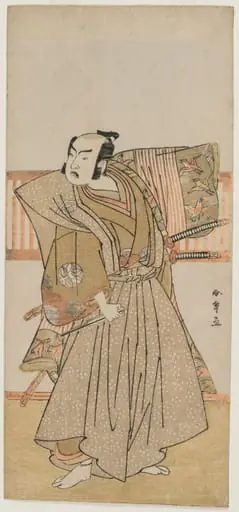 Ichimura Uzaemon IX as Soga no Juro
 勝川春章画 五代目市川團十郎|Kabuki Actor Ichikawa Danjūrō V
 Untitled