Artwork
Untitled
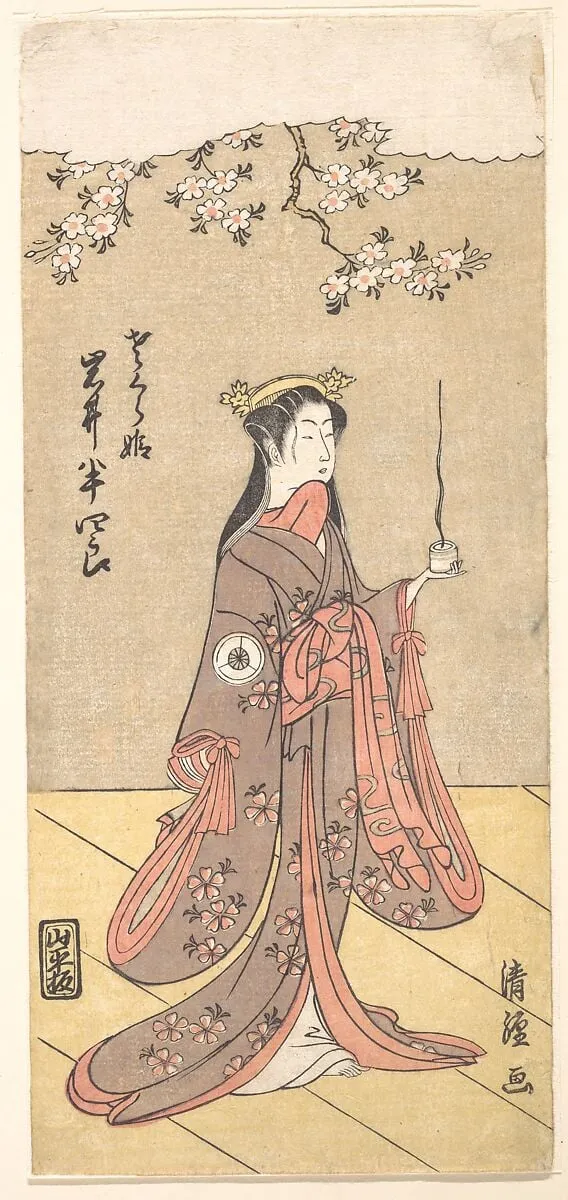
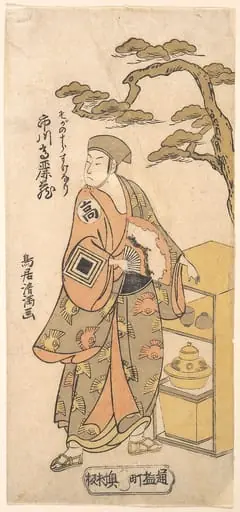
Untitled is an ink print by the Romanticist artist Torii Kiyotsune. It dates from 1767 and is held in the collection of the Metropolitan Museum of Art.
About this work
Overview
Executed in ink and color on paper, it exemplifies the Edo-period ukiyo-e tradition, emphasizing quiet elegance over dramatic narrative.
This woodblock print, dated 1767, is attributed to Torii Kiyotsune and belongs to the Metropolitan Museum of Art’s collection. Executed in ink and color on paper, it exemplifies the Edo-period ukiyo-e tradition, emphasizing quiet elegance over dramatic narrative. The composition centers on a solitary figure, rendered with restrained detail and a muted palette of pink and gray tones, suggesting intimacy rather than spectacle.
Subject & Meaning
The figure is a woman standing on a wooden platform, holding a small cup and a slender stick—likely a tea whisk—suggesting a moment of private ritual. Her flowing robe, adorned with subtle floral motifs, and the blossoming branch above imply seasonal transition and contemplative grace. The scene evokes a fleeting, tranquil pause, characteristic of aesthetic ideals that valued stillness and refined daily practice in late 18th-century Japan.
Technique & Style
Kiyotsune employed fine-line woodblock carving to capture the soft folds of the robe and the delicate texture of blossoms. Color was applied with precision, using pale washes to suggest lightness and airiness. The background is minimized to a few suggestive lines, directing focus to the figure’s posture and the quiet interplay between garment, object, and environment. This economy of form reflects the artist’s mastery of understated composition.
History & Provenance
The print was produced during the late Edo period, a time when ukiyo-e prints flourished as affordable art for urban audiences. While Kiyotsune’s output is less documented than his contemporaries, this work aligns with the Torii school’s tradition of depicting courtesans and refined women. It entered the Metropolitan Museum of Art’s collection through established acquisition channels, preserving its historical continuity.
Context
Created in the 1760s, the print reflects the growing interest in domestic and intimate scenes within ukiyo-e, moving beyond theatrical subjects toward quieter moments of daily life. The emphasis on seasonal motifs, such as cherry blossoms, and the focus on personal ritual align with broader cultural values of mono no aware—the awareness of impermanence. Such prints were often collected by merchants and literati seeking aesthetic refinement.
Legacy
Though Kiyotsune remains a lesser-known figure among ukiyo-e artists, this work contributes to the understanding of how printmakers cultivated subtlety in an era dominated by bold imagery. Its preservation in a major museum underscores its significance as an example of refined, non-theatrical ukiyo-e. The print continues to inform scholarly study of gender, aesthetics, and the evolution of Japanese printmaking beyond its most famous practitioners.
Artist & collection


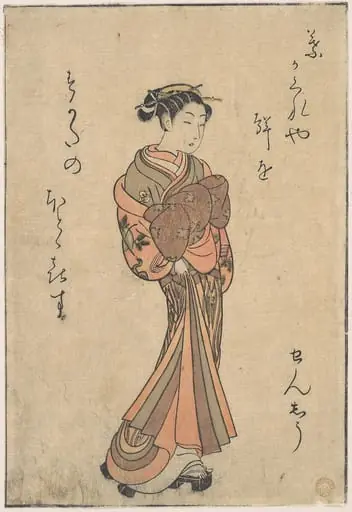 青楼美人合|The Courtesans, from the Series, "Seiro Bijin Awase Carver End Shigoro" (sic.)
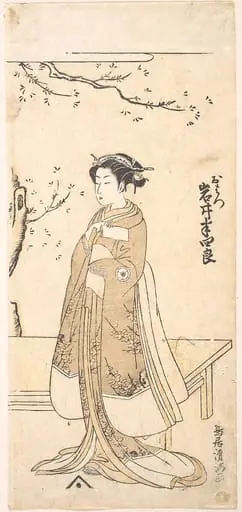 Untitled
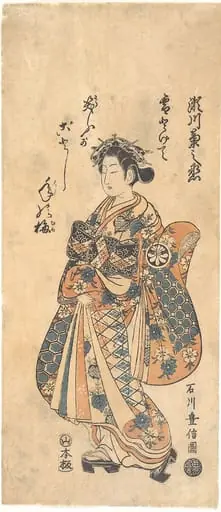 Untitled
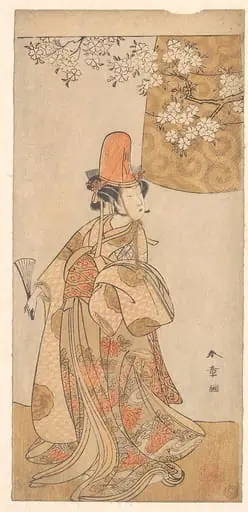 花形見風折烏帽子瀬川富三郎の娘道成寺|Segawa Tomisaburo in the Role of Musume Dojoji in "Hanagatami Kazaori Eboshi"
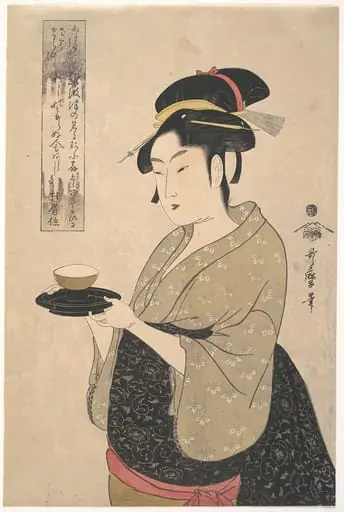 難波屋おきた|Okita of the Naniwa-ya Tea-house
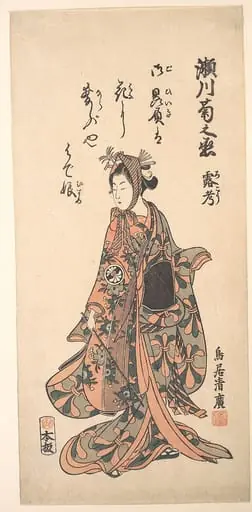 Untitled
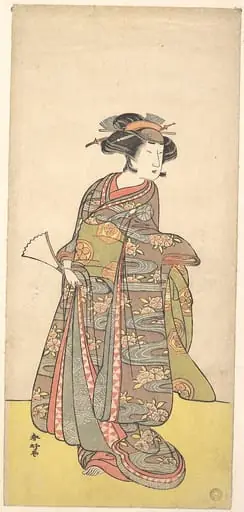 Untitled
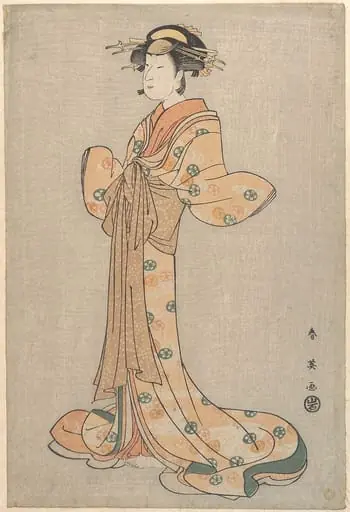 二代目中村二代目中村野塩のお軽|The Actor Nakamura Noshio II as the Courtesan Okaru
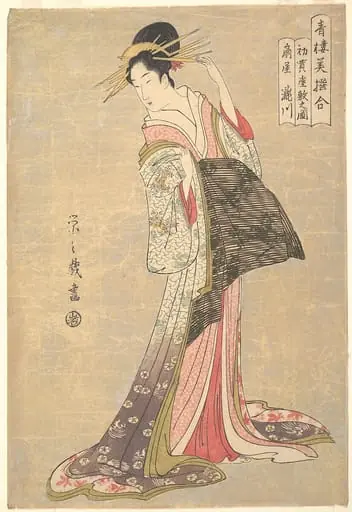 鳥文斎栄之画 「青楼美撰合 初売座敷之図 扇屋滝川」|Takigawa of the Ōgiya Brothel: The First Reception Room Appointment of the New Year (Hatsu-uri zashiki no zu: Ōgiya Takigawa), from the series A Comparison of Selected Beauties of the Pleasure Quarters (Seirō bisen awase)
 Untitled