Artwork
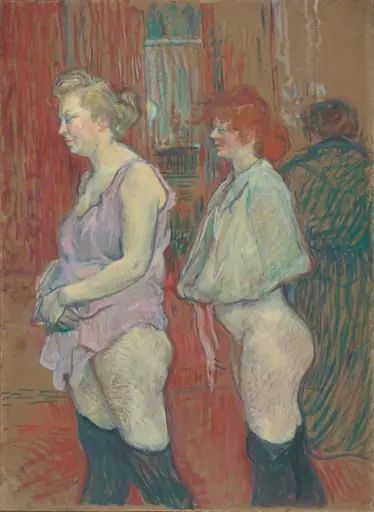
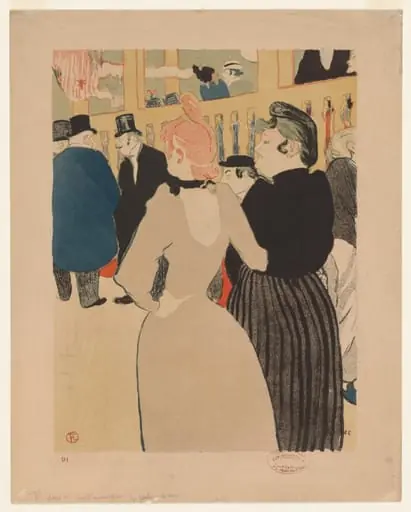
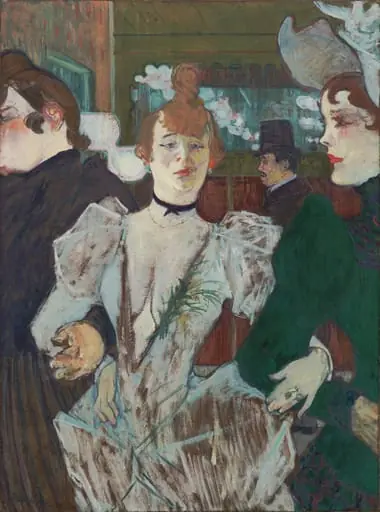
At the Moulin Rouge, la Goulue and Her Sister (Au Moulin Rouge, la Goulue et sa soeur))
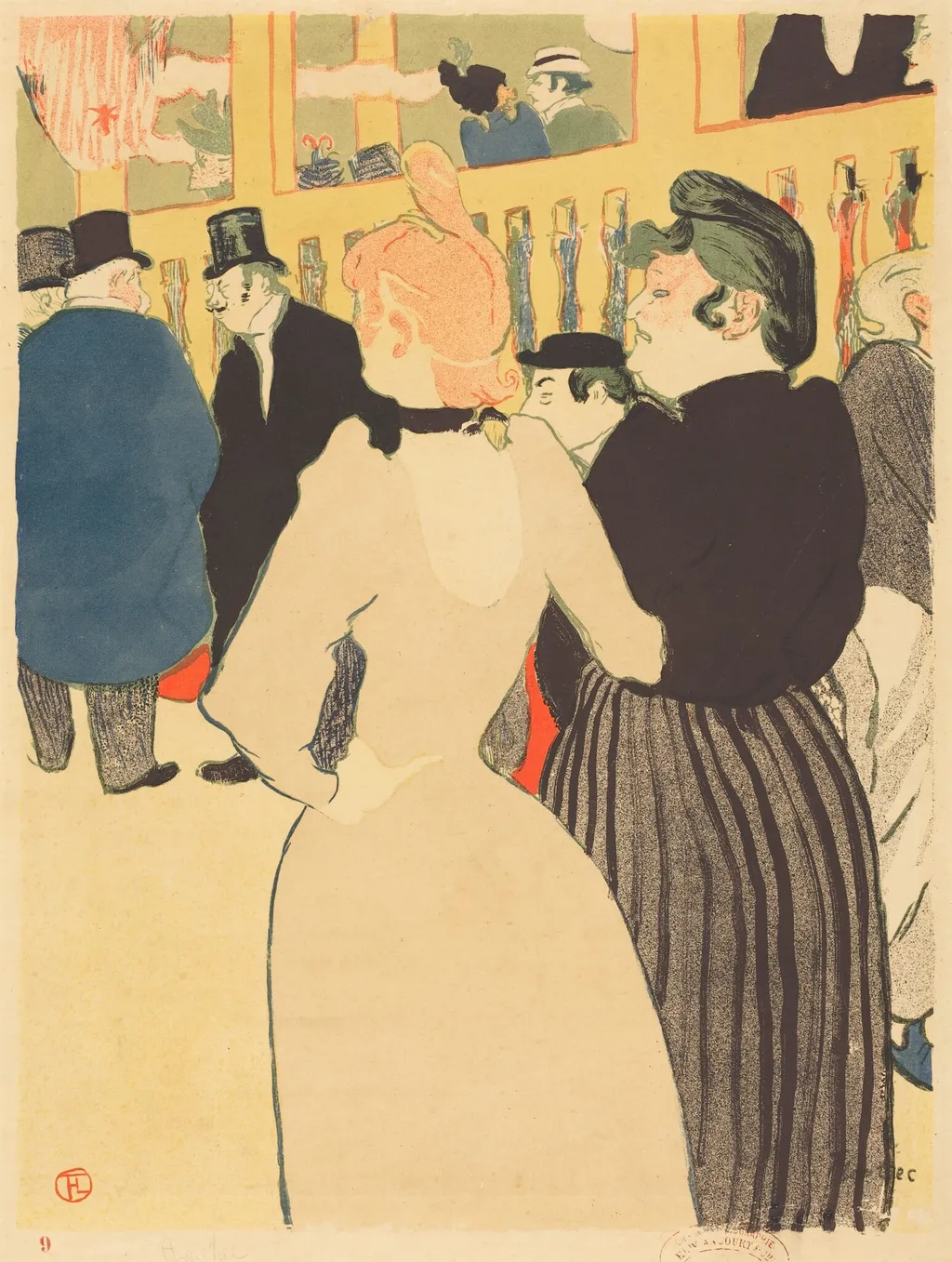
At the Moulin Rouge, la Goulue and Her Sister (Au Moulin Rouge, la Goulue et sa soeur)) is an ink print by the Impressionist artist Henri de Toulouse-Lautrec. It dates from 1892 and is held in the collection of the National Gallery of Art.
About this work
Overview
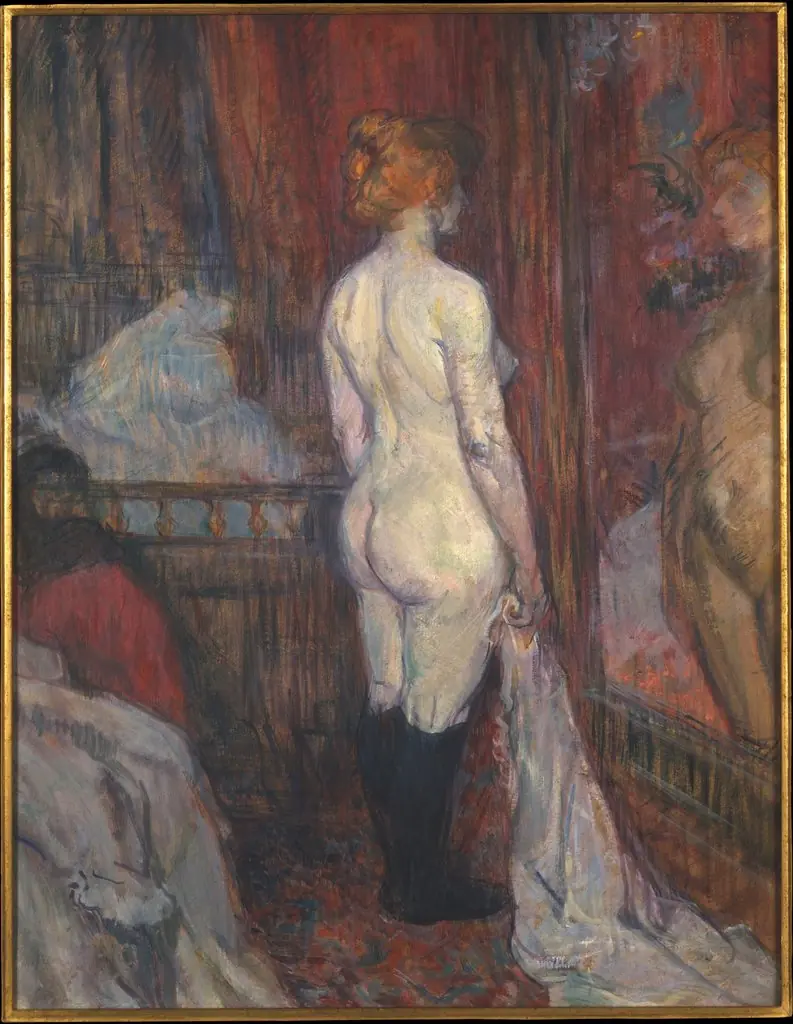
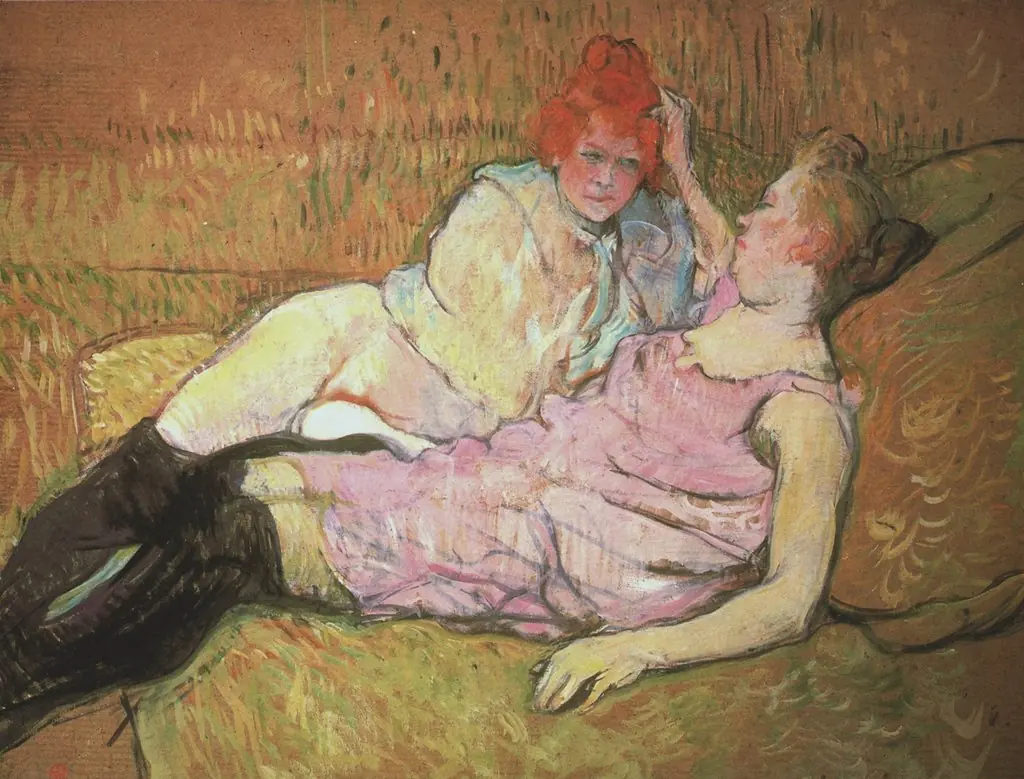
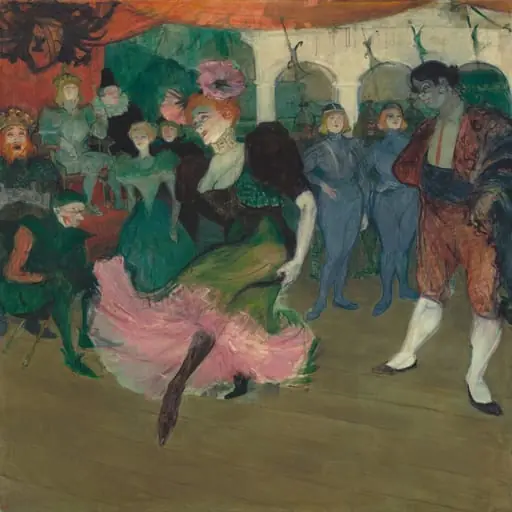
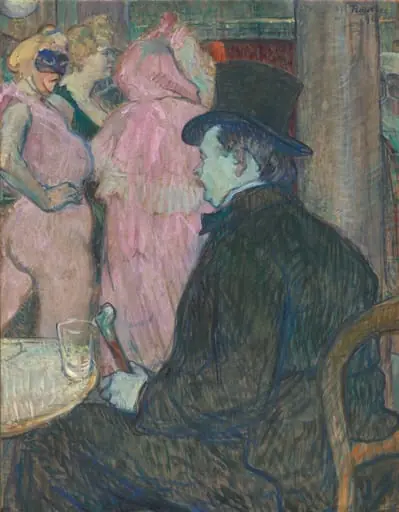
Henri de Toulouse-Lautrec’s 1892 colour lithograph *At the Moulin Rouge, la Goulou and Her Sister* depicts a bustling interior of the famed Parisian cabaret.
Henri de Toulouse-Lautrec’s 1892 colour lithograph *At the Moulin Rouge, la Goulou and Her Sister* depicts a bustling interior of the famed Parisian cabaret. The print presents a crowded dance floor where a woman in a black dress with red trim holds the hand of a pale‑clad companion, while suited men circulate amid walls lined with framed artworks. Bright, flat colours and bold, sketch‑like lines convey the scene’s kinetic energy.
Subject & Meaning
The central figures are the celebrated dancer La Goulue and her sister, both emblematic of the Moulin Rouge’s flamboyant entertainment. By placing them amid a lively crowd, Toulouse‑Lautrec highlights the social vibrancy of Paris’s nightlife while subtly foregrounding the performers as both spectacle and participants in a broader, marginalised urban culture.
Technique & Style
Executed as a colour lithograph, the work employs multiple stone plates to layer vivid hues, producing flat yet striking tones. Toulouse‑Lautrec’s line work is deliberately loose and gestural, prioritising movement over precise detail. This approach, typical of his poster designs, captures the immediacy of the scene and reinforces the commercial purpose of the image.
History & Provenance
Created for promotional use by the Moulin Rouge, the lithograph functioned as a poster rather than a gallery piece. Since its original circulation, it has entered museum collections and private holdings, illustrating the artist’s role in shaping visual advertising for Parisian nightlife during the late nineteenth century.
Context
Toulouse‑Lautrec, born into French aristocracy in 1864, turned his attention to the city’s nocturnal venues after a childhood injury left him with a shortened stature. His outsider status informed a sympathetic yet unvarnished portrayal of the cabaret world, positioning him as a chronicler of a social sphere that lay beyond conventional bourgeois respectability.
Artist & collection
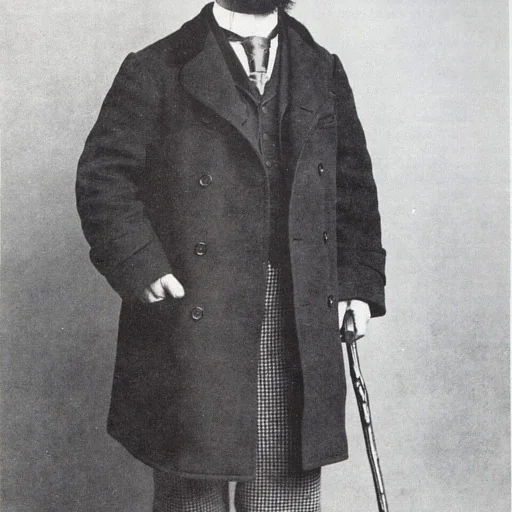
Artist
Comte Henri Marie Raymond de Toulouse-Lautrec-Montfa (24 November 1864 – 9 September 1901), known as Toulouse-Lautrec (French: ), was a French painter, printmaker, draughtsman, caricaturist, and illustrator.