Artwork
Cléo de Mérode
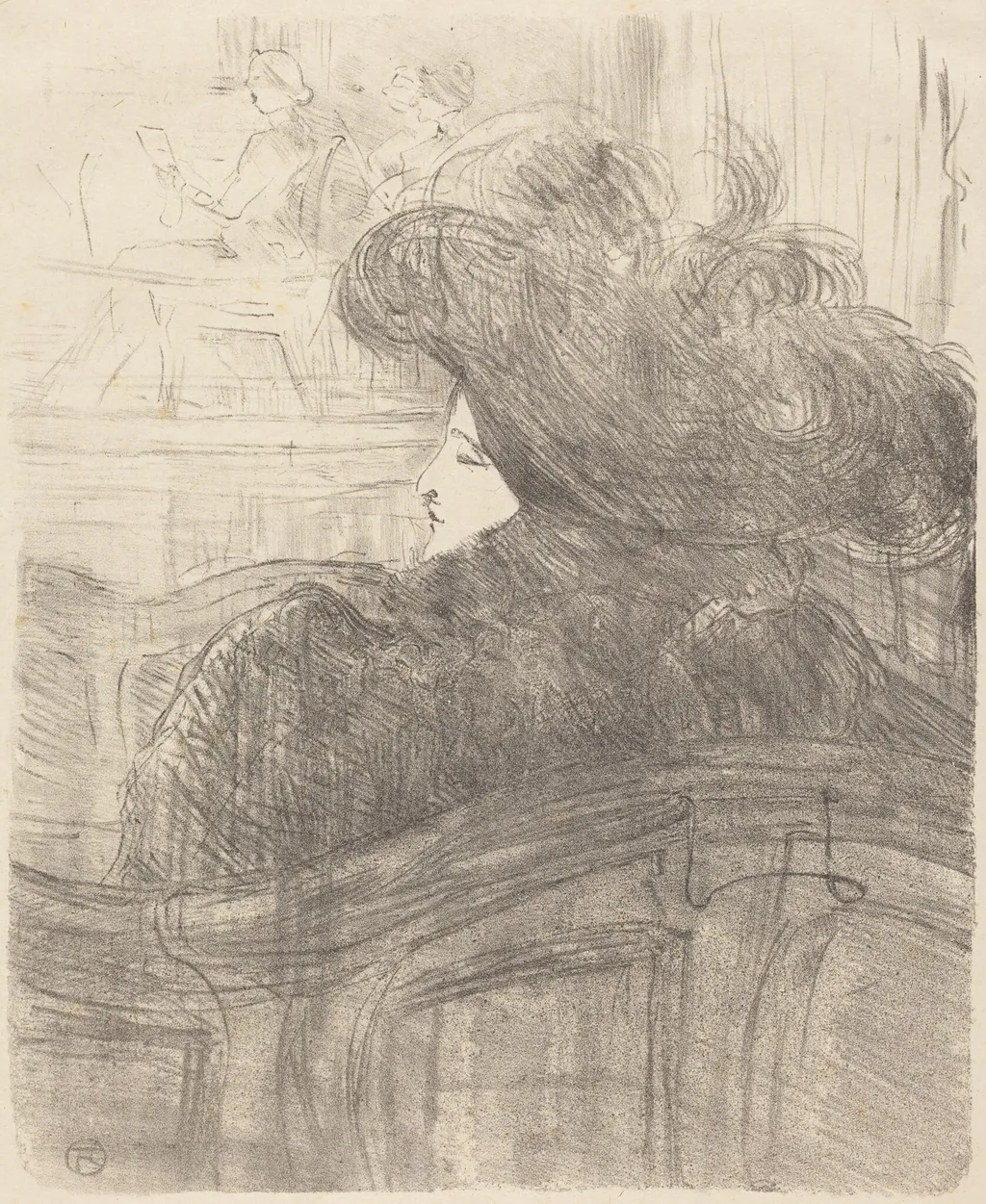
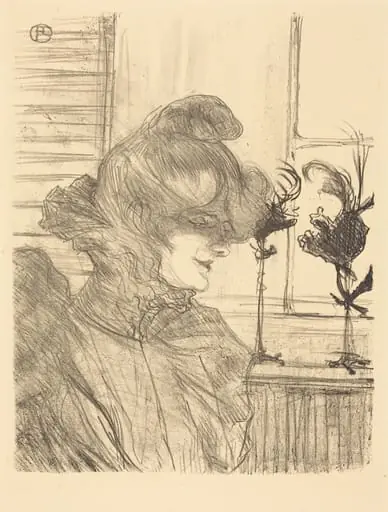
Cléo de Mérode is an ink print by the Impressionist artist Henri de Toulouse-Lautrec. It dates from 1896 and is held in the collection of the National Gallery of Art.
About this work
Overview
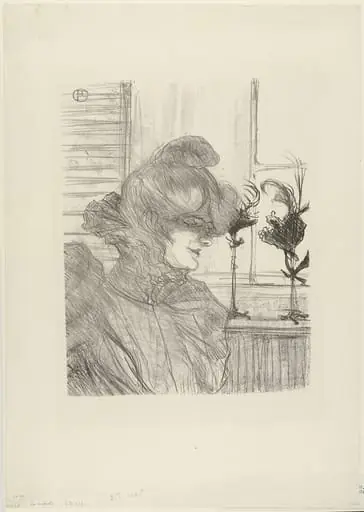
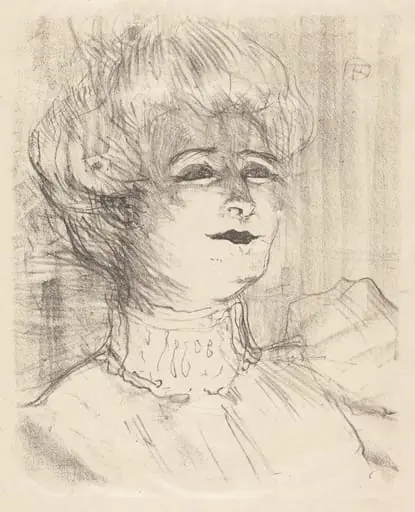
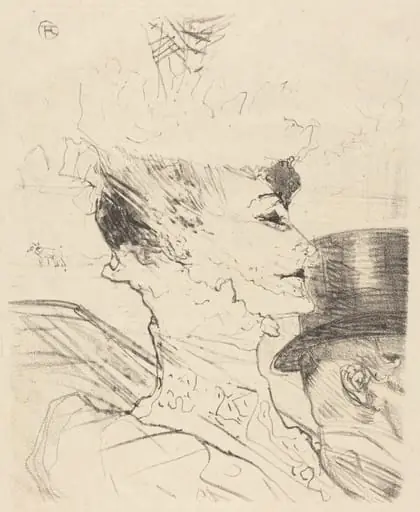
Henri de Toulouse-Lautrec produced a black lithograph of the dancer Cléo de Mérode in 1896. Executed on delicate china paper, the work captures the figure in a sideways seated pose, her head turned slightly away, and is rendered with the fluid, gestural lines characteristic of the artist’s printmaking.
Subject & Meaning
The image depicts Cléo de Mérode, a celebrated Parisian dancer of the late nineteenth century, known for her appearances in cabarets and theatrical productions. By isolating her in a simple composition, Toulouse-Lautrec emphasizes her poise and the elegance of her attire, inviting contemplation of the performer’s public persona.
Technique & Style
Created through lithography, the piece employs rapid, sketch‑like strokes that delineate the loose hair, high‑necked dress, and soft folds of fabric. The background is rendered with vague, blurred shapes, allowing the figure to emerge sharply while preserving a sense of immediacy and movement.
History & Provenance
Toulouse-Lautrec, an artist closely associated with Parisian nightlife, frequently used print media to document contemporary entertainers. This 1896 lithograph reflects his ongoing interest in theatrical subjects and was produced during a period when he was actively publishing images of cabaret performers for magazines and posters.
Artist & collection
Artist
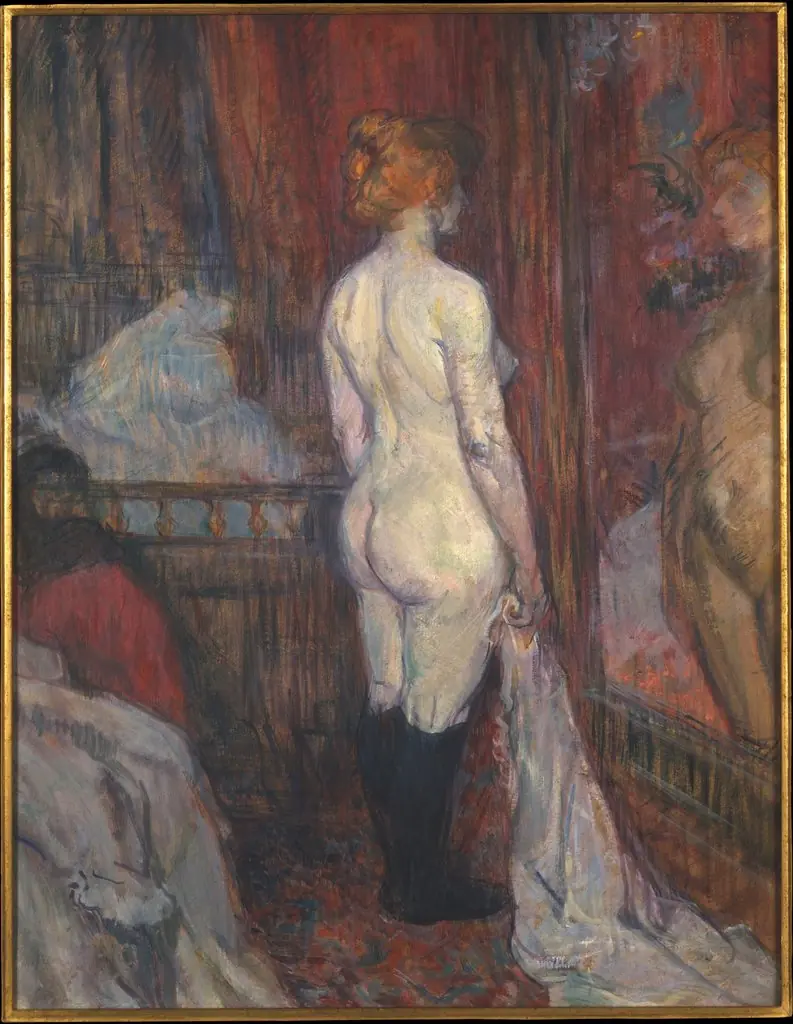
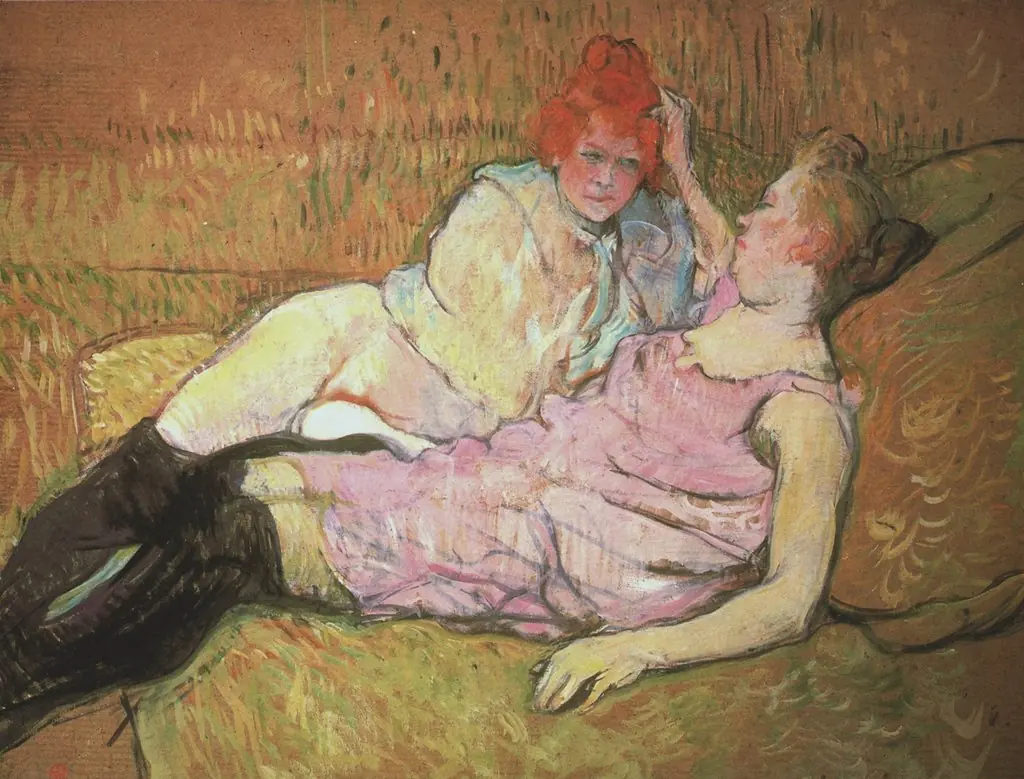
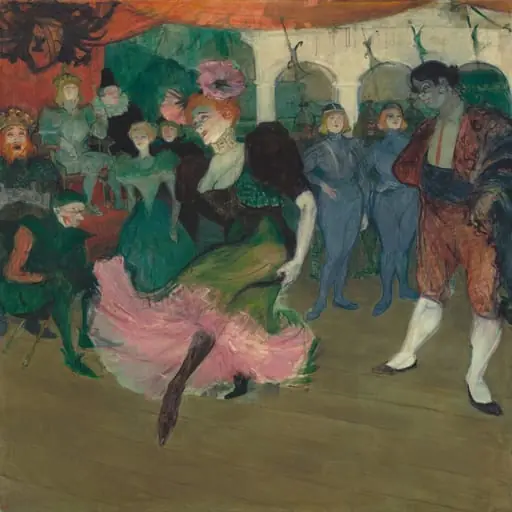
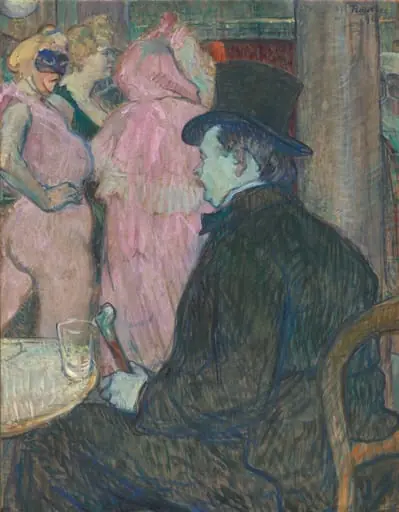
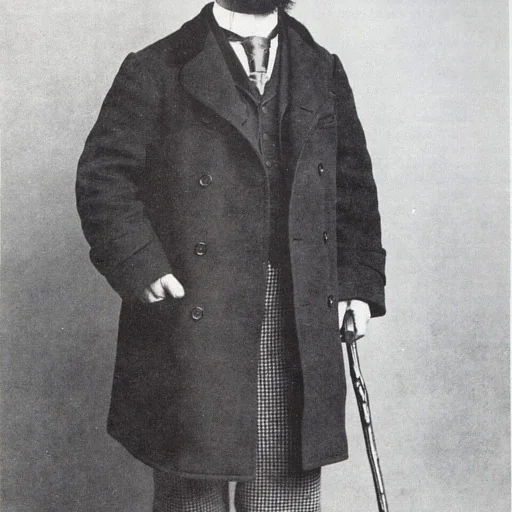
Comte Henri Marie Raymond de Toulouse-Lautrec-Montfa (24 November 1864 – 9 September 1901), known as Toulouse-Lautrec (French: ), was a French painter, printmaker, draughtsman, caricaturist, and illustrator.