Artwork
The Nativity
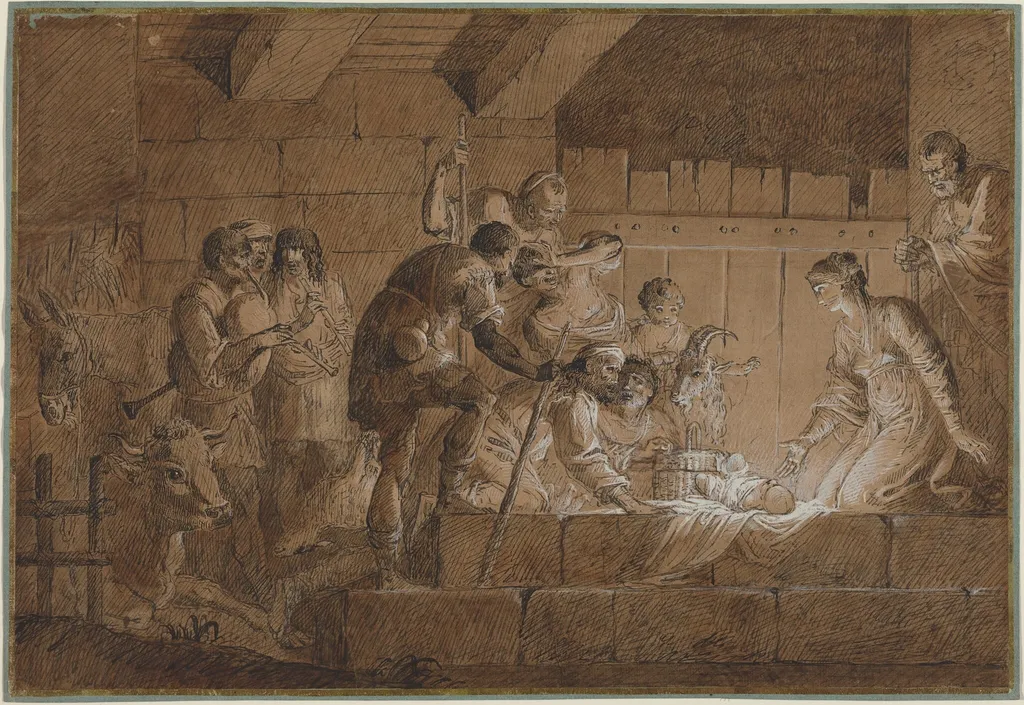
The Nativity is an ink drawing by the Baroque artist Giuliano Traballesi. It dates from 1770 and is held in the collection of the National Gallery of Art.
About this work
Overview
Its modest materials reflect a focus on expressive clarity over ornate finish, typical of late 18th-century Italian draftsmanship.
Created around 1770, this drawing by Giuliano Traballesi depicts the Nativity using pen and black ink, enhanced with brown wash and touches of white heightening on a brown paper support. The work belongs to a tradition of devotional drawings made for private contemplation rather than public display. Its modest materials reflect a focus on expressive clarity over ornate finish, typical of late 18th-century Italian draftsmanship.
Subject & Meaning
The scene portrays the birth of Christ, with the Virgin Mary, Joseph, and the infant Jesus surrounded by livestock and angels. The composition emphasizes quiet reverence, avoiding dramatic spectacle in favor of intimate stillness. The inclusion of animals underscores the humble setting of the manger, reinforcing theological themes of divine humility and earthly simplicity central to the Nativity narrative.
Technique & Style
Traballesi employed fine pen lines to define forms, layered with diluted brown ink washes to model volume and shadow. White pigment was applied selectively to suggest light falling on the figures and animals, creating a luminous contrast against the warm-toned paper. This restrained technique prioritizes tonal harmony and atmospheric depth, aligning with the Florentine draftsmanship tradition that valued precision and emotional restraint.
History & Provenance
The drawing’s early ownership is undocumented, but its condition and medium suggest it was likely kept in a private collection or religious institution in Tuscany. It remained largely unremarked upon until modern scholarly attention to minor Italian draftsmen of the late Baroque period. No record of public exhibition exists prior to the 20th century, indicating its function as a devotional or studio piece rather than a commissioned work.
Context
In the decades before the Napoleonic upheavals, religious imagery in Italy often shifted toward intimate, personal expressions as large-scale altarpieces declined in patronage. Traballesi’s work reflects this trend, aligning with contemporaries who used drawing to explore sacred themes with economy and emotional nuance. His approach contrasts with the theatricality of High Baroque painting, favoring quietude over grandeur.
Legacy
Though Traballesi was not a major public figure, his drawings like this Nativity contribute to understanding the vitality of small-scale religious art in late 18th-century Italy. They reveal how artists sustained devotional traditions through accessible media, preserving spiritual themes amid changing artistic fashions. Today, such works are valued for their quiet craftsmanship and insight into private piety of the period.
Artist & collection


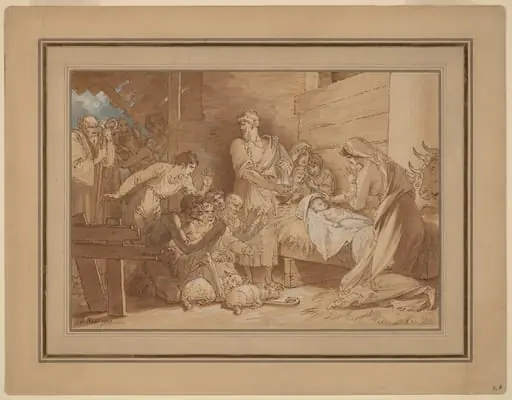 The Adoration of the Shepherds
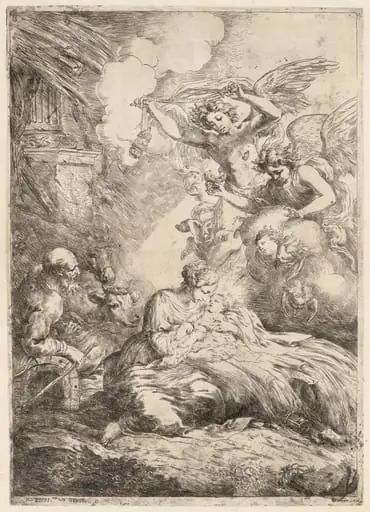 The Nativity
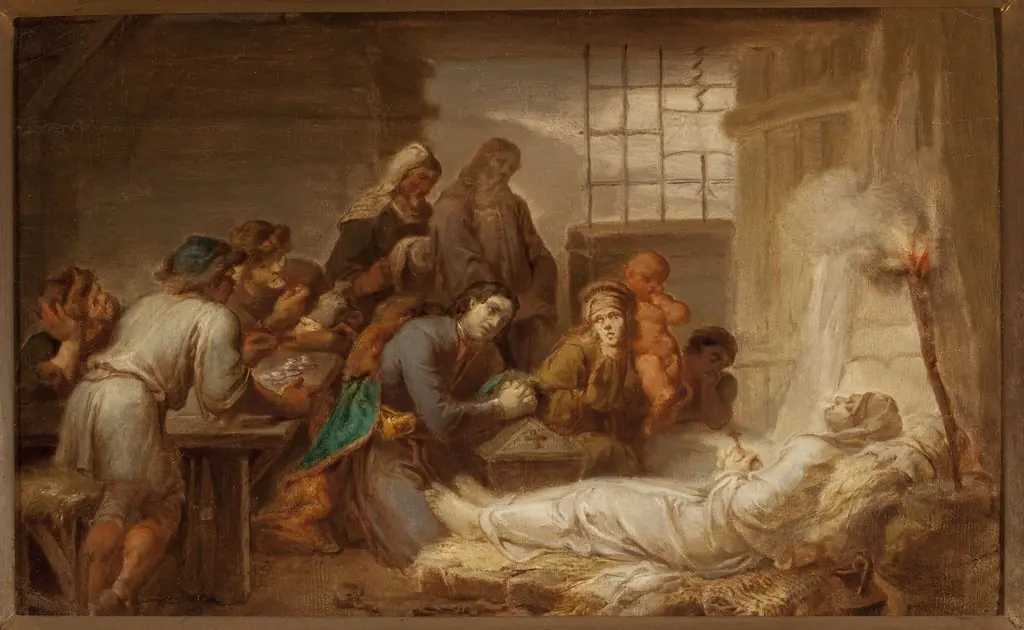 Death in exile
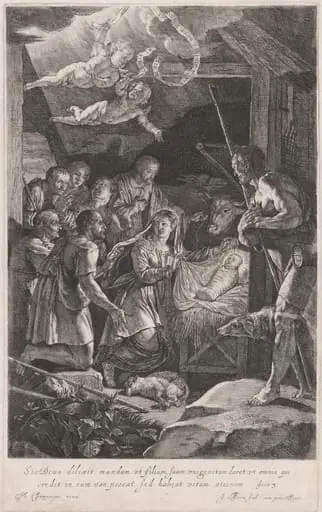 The Adoration of the Shepherds
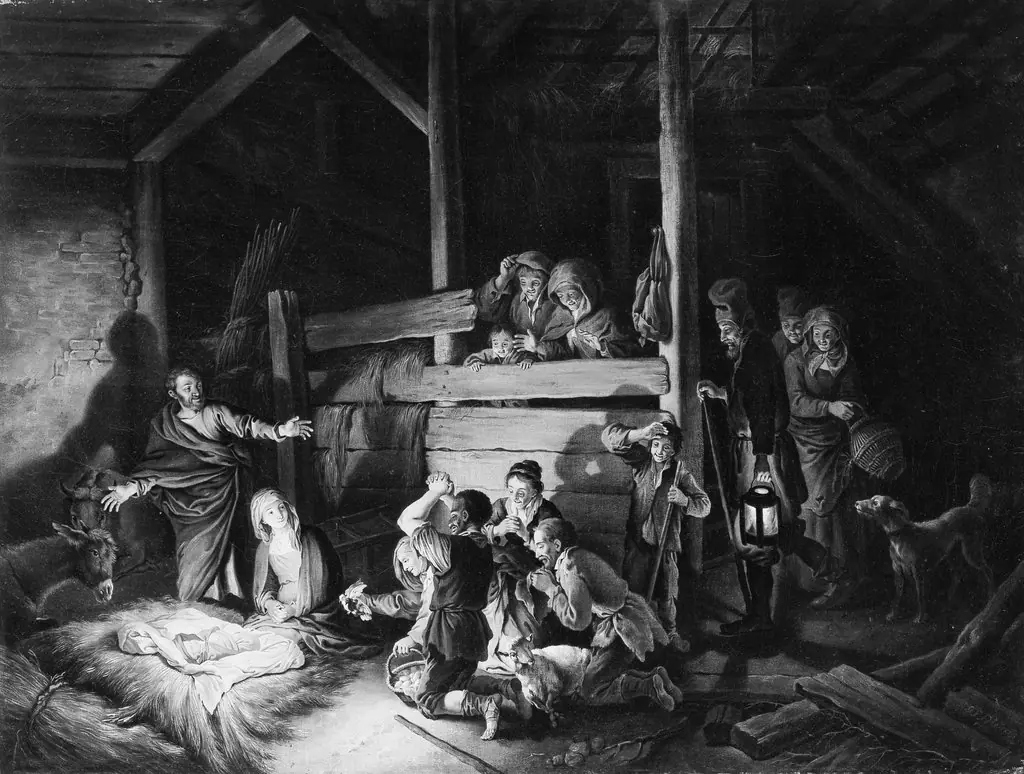 The Adoration of the Shepherds
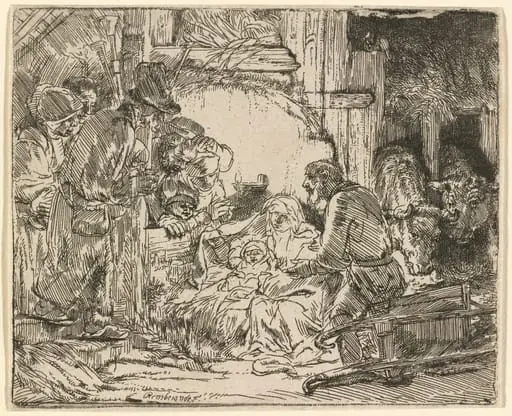 The Adoration of the Shepherds: with the Lamp
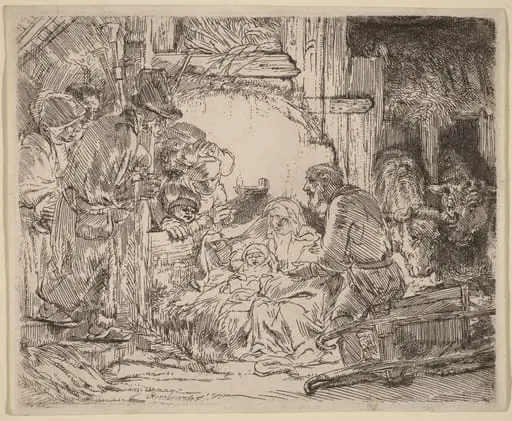 The Adoration of the Shepherds: with the Lamp
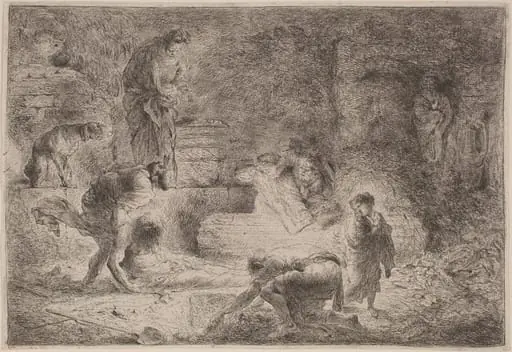 Tobit Burying the Dead
![A Young Woman Overcome by Love [recto], by Jean-Baptiste Deshays](https://artifactworldgallery.com/img/jean-baptiste-deshays--a-young-woman-overcome-by-love-recto--8f8b1d64ee16ec55-w320.webp) A Young Woman Overcome by Love [recto]
A Young Woman Overcome by Love [recto]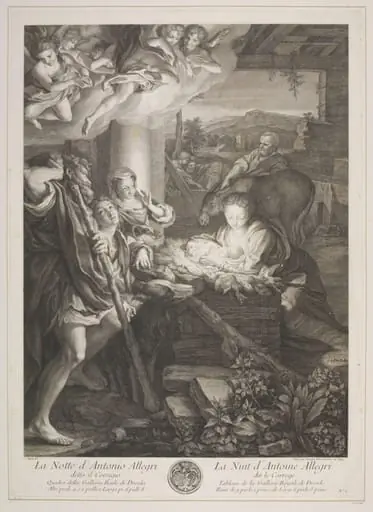 The Nativity
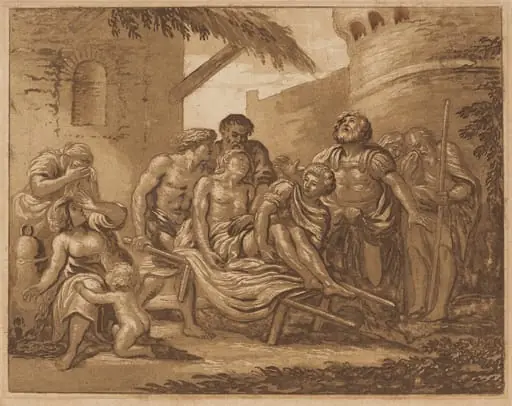 The Death of Hector on the Ramparts of Troy (recto) / Tancred and Erminia (verso)
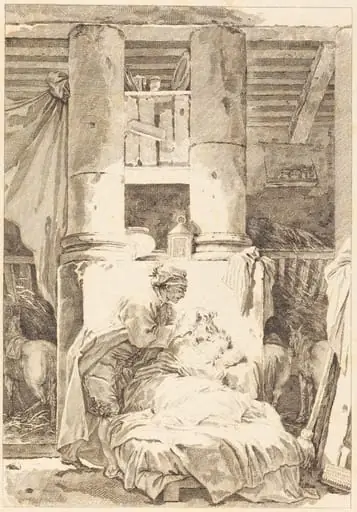 Le muletier