Artwork
Seated Woman Sewing
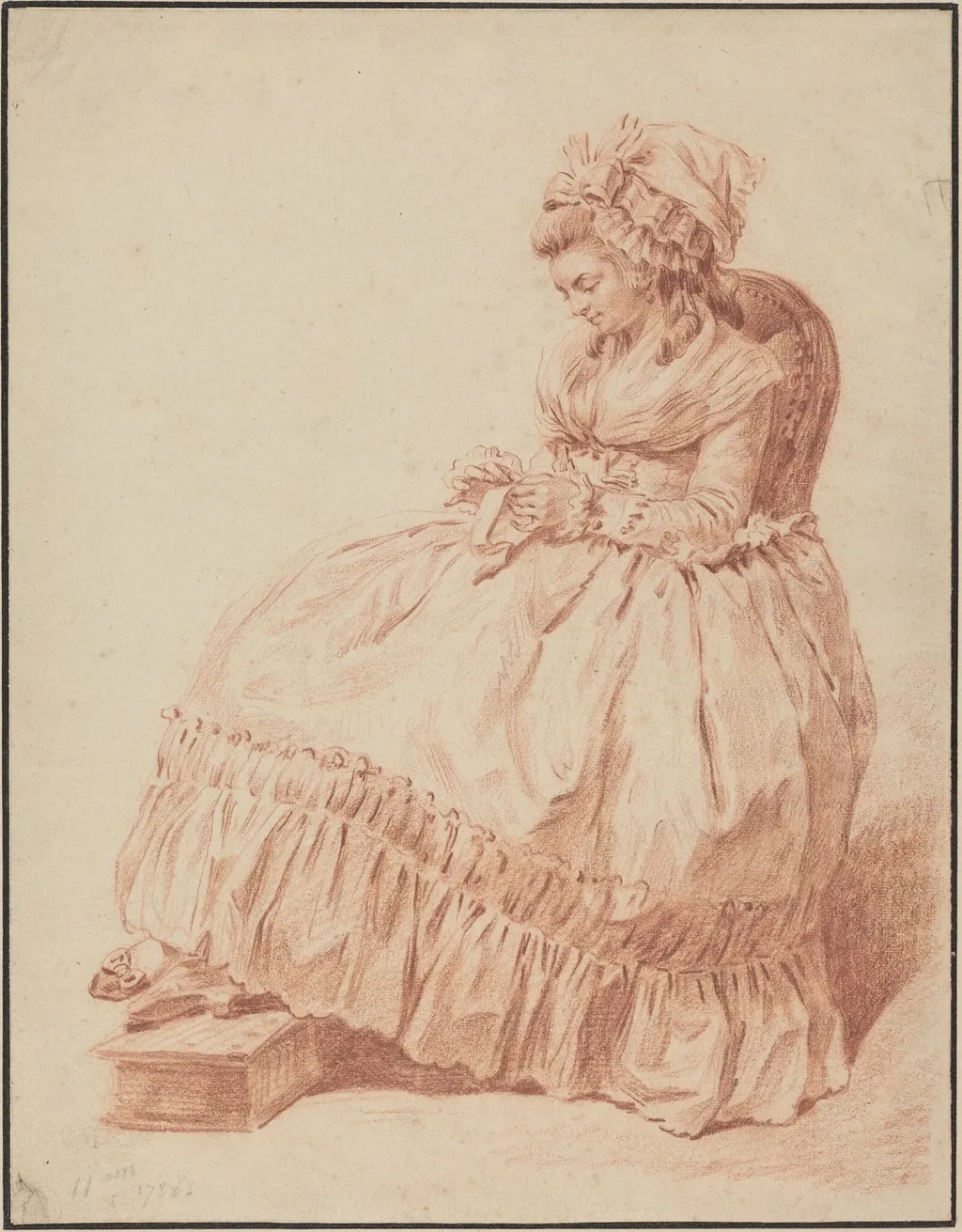
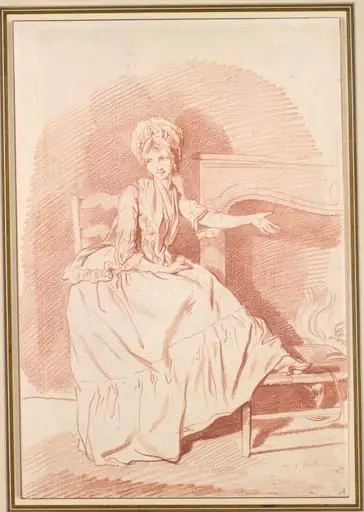
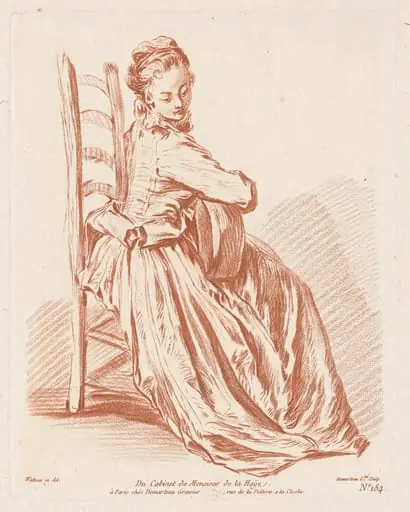
Seated Woman Sewing is a chalk drawing by the Romanticist artist Louis Rolland Trinquesse. It dates from 1788 and is held in the collection of the National Gallery of Art.
About this work
Overview
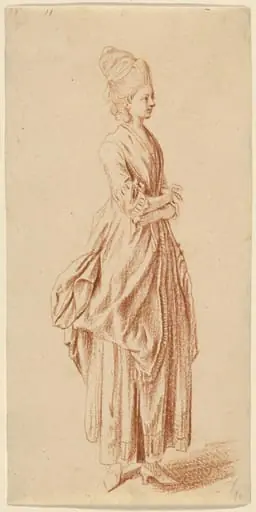
Louis Rolland Trinquesse’s drawing Seated Woman Sewing, executed in red chalk in 1788, presents a single figure captured in a moment of domestic activity. The work measures a modest size typical of preparatory sketches, and its warm, earthy tone derives from the reddish pigment that defines the entire composition.
Subject & Meaning
The drawing depicts a woman seated on a chair, engaged in sewing. She holds a length of fabric in one hand and a needle in the other, her posture suggesting concentration. Her attire—puffy sleeves, a ruffled collar, and an up‑do hairstyle with loose curls—places the figure within the fashion of late‑18th‑century bourgeois life, emphasizing everyday labor as a genteel pursuit.
Technique & Style
Trinquesse employs swift, loose lines to render the folds of the dress and the subtle movement of the woman’s hands. The red chalk medium allows for a range of tonal variation, from delicate hatching in the background to bolder strokes that define the figure’s contours. This approach creates a lively immediacy, as if the scene were captured in a fleeting glance.
History & Provenance
The piece remains documented within Trinquesse’s oeuvre, illustrating his interest in genre scenes and his skill with monochrome media.
Created in 1788, Seated Woman Sewing belongs to a period when French artists increasingly used chalk drawings as studies for larger compositions or as independent works. The piece remains documented within Trinquesse’s oeuvre, illustrating his interest in genre scenes and his skill with monochrome media. Its provenance traces through private collections before entering a museum holding of 18th‑century French drawings.
Artist & collection
Artist
Louis Rolland Trinquesse (1746–1799) was a French artist, born in Paris.