Artwork
Seated Woman with a Mandolin
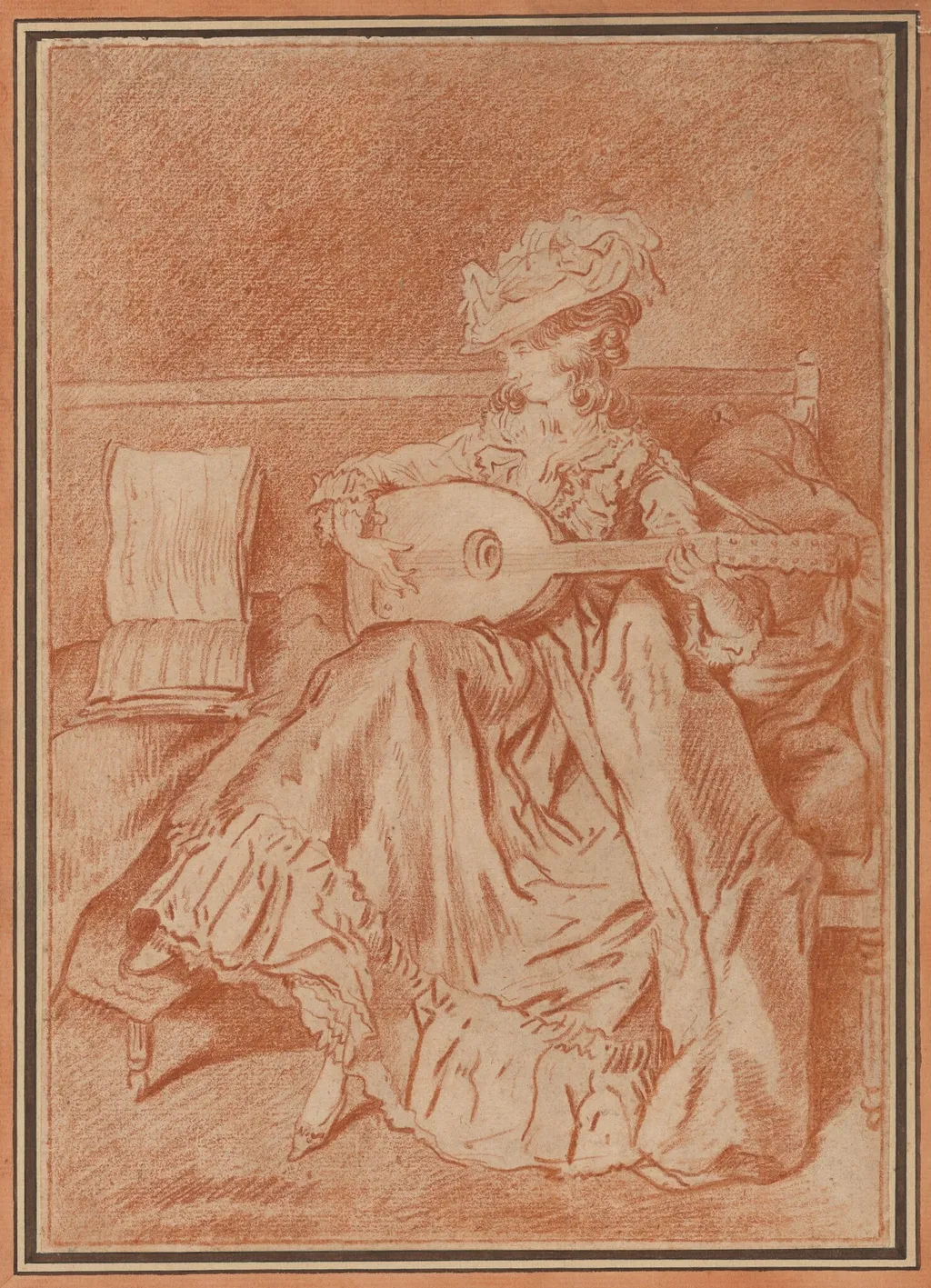
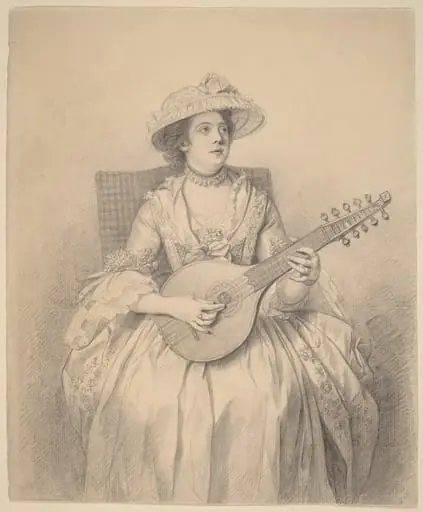
Seated Woman with a Mandolin is a chalk drawing by the Romanticist artist Louis Rolland Trinquesse. It dates from 1779 and is held in the collection of the National Gallery of Art.
About this work
Overview
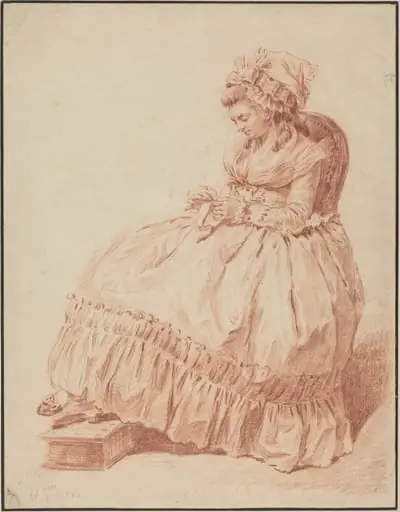
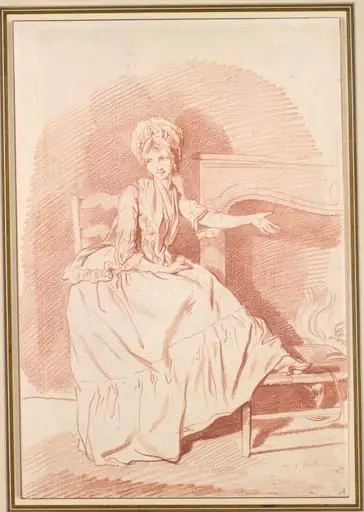
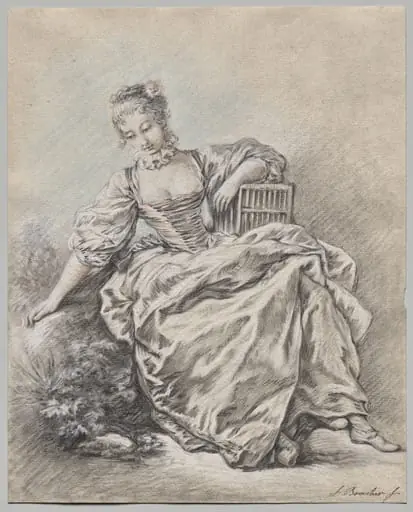
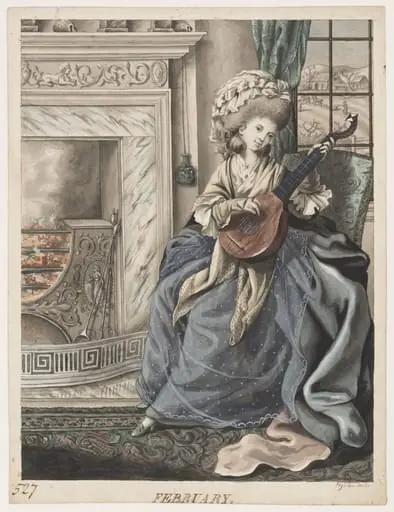
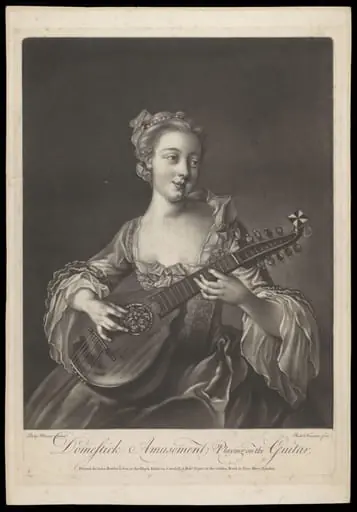
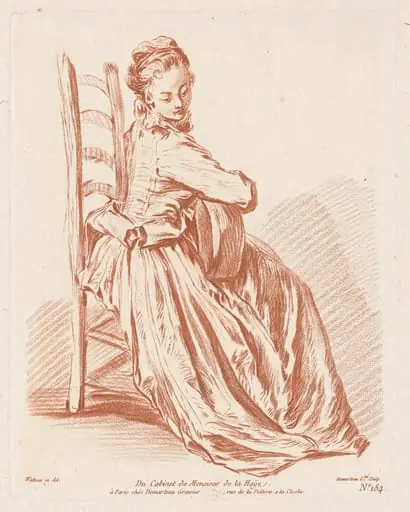
Created around 1779, this red chalk drawing by Louis Rolland Trinquesse depicts a seated woman holding a mandolin. Executed on laid paper and later mounted on an older support, the work is part of the National Gallery of Art’s collection in Washington, D.C. Its intimate scale and delicate handling reflect the artist’s interest in quiet, everyday moments rendered with sensitivity.
Subject & Meaning
The figure is portrayed in a relaxed, private posture, facing sideways as she cradles the instrument. Her piled hair and loose garment suggest informal domesticity rather than formal portraiture. The mandolin, a common parlor instrument, implies musical leisure, but the absence of narrative or symbolic elements keeps the focus on presence rather than story.
Technique & Style
Trinquesse employed red chalk with subtle gradations to model the woman’s face, hands, and drapery, using the paper’s natural tone as mid-value. Lighter strokes define contours, while darker accents suggest shadow and volume. The minimal background—just a suggestion of chair and curtain—directs attention to the figure’s form and the soft chiaroscuro that animates her silhouette.
History & Provenance
The drawing entered the National Gallery of Art’s collection through the Chester Dale bequest in 1963. Its earlier ownership history is undocumented, but its preservation on an older mount indicates it was valued as a finished work, not merely a study. The paper’s texture and mounting suggest it was handled with care since its creation.
Context
In late 18th-century France, drawings in chalk were often made as independent works, not just preparatory sketches. Trinquesse, known for genre scenes and portraits, aligned with a trend favoring intimate, unidealized figures. This piece reflects the era’s growing appreciation for private, lyrical moments over grand historical themes.
Legacy
Though not widely reproduced, the drawing exemplifies the quiet refinement of French draftsmanship in the decades before the Revolution. Its emphasis on naturalism and tactile rendering influenced later artists who sought to capture the subtleties of everyday life without theatricality.
Artist & collection
Artist
Louis Rolland Trinquesse (1746–1799) was a French artist, born in Paris.