Artwork
Beneath the Willow
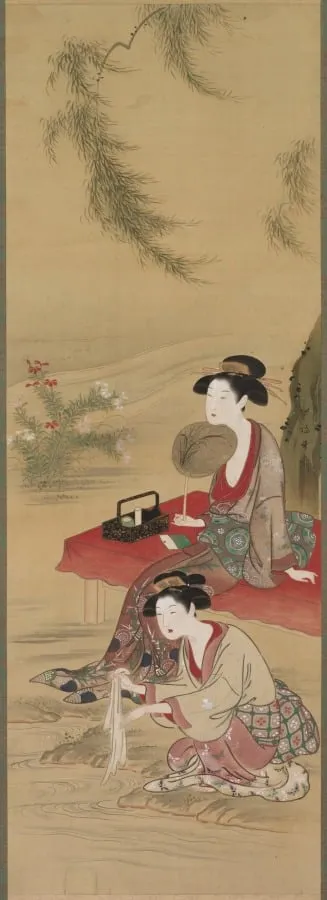
Beneath the Willow is an unspecified painting by the Romanticist artist Tsukioka Sessai. It dates from 1778 and is held in the collection of the Cleveland Museum of Art.
About this work
This quiet moment is from the Edo period, when artists in Japan often painted beautiful women in everyday scenes.
Two women relax by a river under a willow tree. One dips a towel in the water; the other fans herself, a tobacco set beside her on a shiny black tray.
This quiet moment is from the Edo period, when artists in Japan often painted beautiful women in everyday scenes. The gold flowers on the tray catch the light—small details like this were prized in ukiyo-e prints.
To see more of this style, look up *japan, edo period (1615–1868)*.
Overview
The work titled *Beneath the Willow* portrays a tranquil riverside scene where two young women pause for refreshment beneath a gently swaying willow. One figure leans forward to rinse a hand‑towel in the flowing water, while the other rests her chin on a fan, a lacquered tray bearing a gold‑embellished floral motif and a small tobacco set positioned nearby.
Subject & Meaning
The composition captures an intimate moment of leisure, emphasizing the refined customs of feminine etiquette in Edo‑period Japan. The act of cooling oneself, the presence of a fan, and the neatly arranged tobacco accessories all signal a cultivated lifestyle, while the willow’s graceful movement underscores the fleeting, serene atmosphere typical of everyday beauty.
Technique & Style
Executed in the ukiyo‑e tradition, the painting employs delicate line work and subtle colour washes to delineate the figures and surrounding foliage. The lacquer tray’s glossy black surface is highlighted by gold‑leaf floral detailing, a technique that enhances texture and reflects the period’s appreciation for ornamental precision within modest domestic scenes.
History & Provenance
Created by Osaka‑based artist Tsukioka Tessai, who earned a reputation for his bijin (beautiful woman) portrayals, the piece dates to the later Edo period. Tessai received the court rank of Bridge of the Law (hokyo) in 1778 and was later promoted to Eye of the Law (hogen), honors that attest to his standing among contemporary patrons.
Context
During the Edo era (1615–1868), ukiyo‑e artists frequently depicted scenes of ordinary life, especially those featuring elegant women in natural settings. *Beneath the Willow* exemplifies this genre, reflecting both the aesthetic values of the time and the social rituals surrounding leisure, personal grooming, and the subtle display of status through objects such as lacquerware and tobacco kits.
Artist & collection


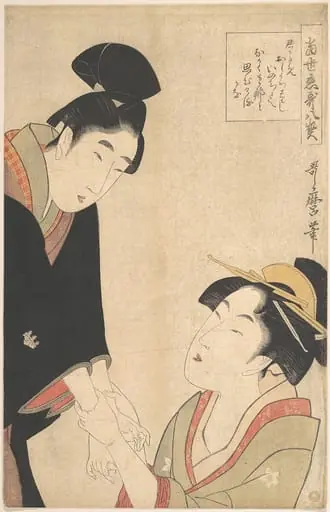 当世恋歌八契 お七と吉三郎|The Lovers Oshichi and Kichisaburo
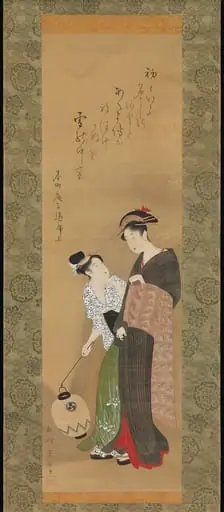 Untitled
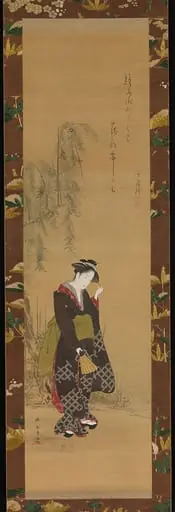 Untitled
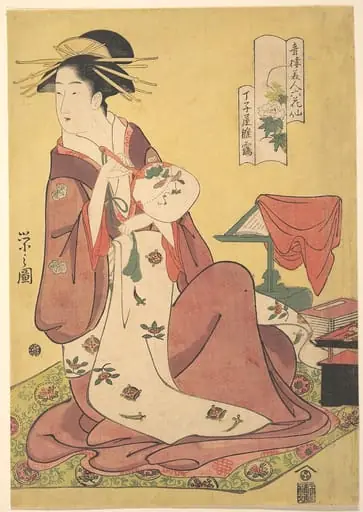 鳥文斎栄之画 「青楼美人六花仙 丁子屋雛鶴鸖」|The Courtesan Hinazuru of the Chōjiya Brothel (Chōjiya Hinazuru), from the series Beauties of the Pleasure Quarters as Six Floral Immortals (Seirō bijin rokkasen)
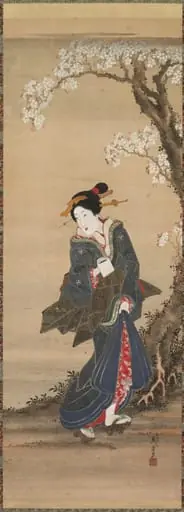 Courtesan
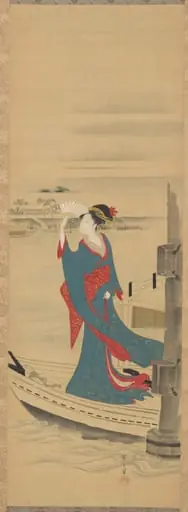 Beauty in a Boat on Sumida River
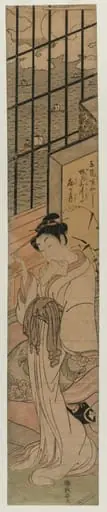 Courtesan in a Room Overlooking Edo Bay
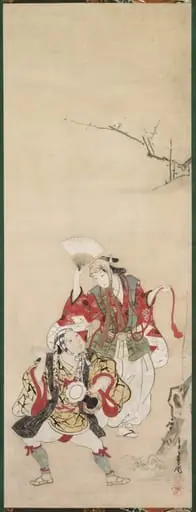 Spring Dancers (Manzai)