Artwork
仏蘭西大湊諸国交易図|Illustration of a Large French Port Trading with Many Nations (Furansukoku oominato shokoku kōeki zu)
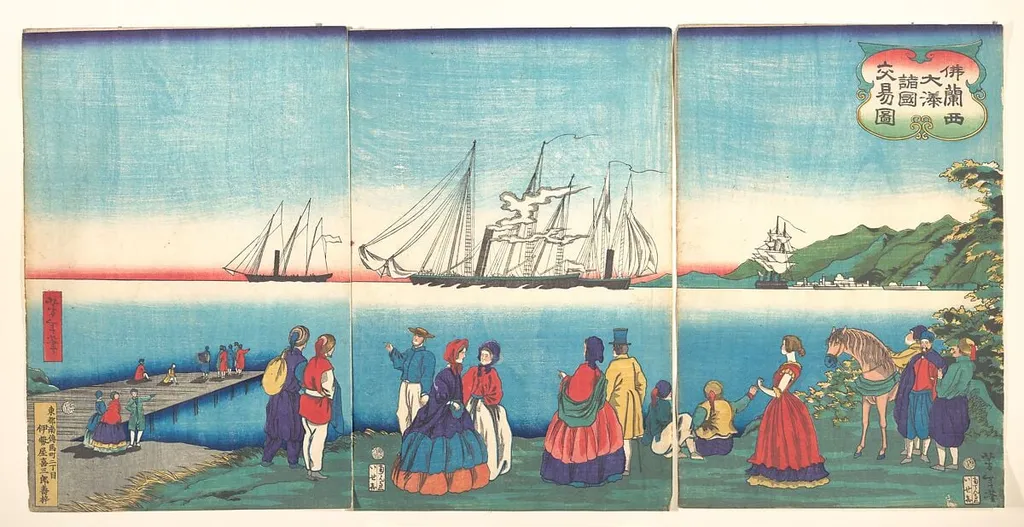
仏蘭西大湊諸国交易図|Illustration of a Large French Port Trading with Many Nations (Furansukoku oominato shokoku kōeki zu) is an ink print by the Impressionist artist Yoshitoshi. It dates from 4 and is held in the collection of the Metropolitan Museum of Art.
About this work
Overview
This triptych by Tsukioka Yoshitoshi depicts a bustling French port through three connected panels, rendered in ink and color on paper.
This triptych by Tsukioka Yoshitoshi depicts a bustling French port through three connected panels, rendered in ink and color on paper. Created in 1874, it captures maritime activity during a period of rapid global exchange. The composition divides the scene vertically, with ships dominating the upper register and figures engaged in daily life below. Though titled as French, the imagery reflects Japanese interpretations of Western ports, filtered through Edo-period visual conventions and limited direct observation.
Subject & Meaning
The print portrays a hybridized vision of international commerce, blending real and imagined elements. Three vessels—a sailing ship, a steam-powered vessel, and a warship—symbolize technological transition and naval power. Figures in mixed European and stylized attire suggest cultural encounter, while the absence of identifiable landmarks implies a generalized representation of Western ports. The scene conveys curiosity about foreign trade rather than documentary accuracy, reflecting Japan’s engagement with the wider world during the Meiji era.
Technique & Style
Yoshitoshi employs traditional ukiyo-e methods with heightened detail and bold color contrasts. Fine cross-hatching defines fabric folds and ship rigging, while flat, saturated hues outline figures and architecture. The background transitions subtly from hazy hills to open sea, creating spatial depth without linear perspective. The triptych format allows for narrative progression, with each panel offering a distinct vignette—ships at anchor, dockside activity, and distant horizon—unified by consistent tonal rhythms and compositional balance.
History & Provenance
Produced in 1874, the print emerged during Japan’s early Meiji period, when the country was opening to foreign influence after centuries of isolation. It was likely commissioned for a broad audience interested in global affairs. The work entered The Metropolitan Museum of Art’s collection through documented acquisitions in the 20th century, preserving its original condition. No earlier ownership records are publicly known, suggesting it was not part of a major private collection before institutional acquisition.
Context
This print reflects Japan’s fascination with Western technology and commerce during the 1870s, a time when woodblock prints documented foreign subjects as part of a broader cultural reassessment. While Western artists were producing realistic port scenes, Yoshitoshi synthesized observed details with traditional Japanese aesthetics. The image aligns with a genre of 'foreign scene' prints that responded to public curiosity, yet retained stylized forms and symbolic rather than literal representation of foreign places.
Legacy
Though not widely exhibited during Yoshitoshi’s lifetime, this triptych now stands as a key example of Meiji-era ukiyo-e’s engagement with global themes. It illustrates how Japanese artists interpreted foreign cultures through their own visual language, blending observation with imagination. Today, it contributes to scholarly understanding of cross-cultural representation in printmaking and remains a reference point in studies of Japan’s modernization through art.
Artist & collection
Artist
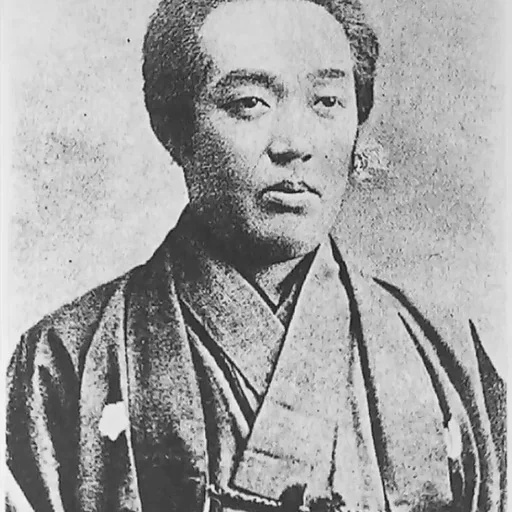
Tsukioka Yoshitoshi (Japanese: 月岡芳年; also named Taiso Yoshitoshi 大蘇芳年; 30 April 1839 – 9 June 1892) was a Japanese printmaker.

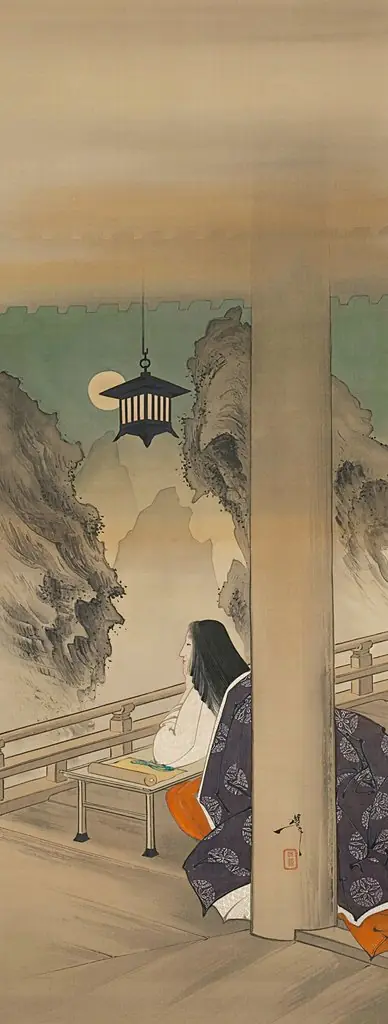 Murasaki Shikibu at Ishiyamadera Temple, based on the print “The Moon at Ishiyama,” from the series One Hundred Aspects of the Moon (Tsuki hyakushi: Ishiyama no tsuki)
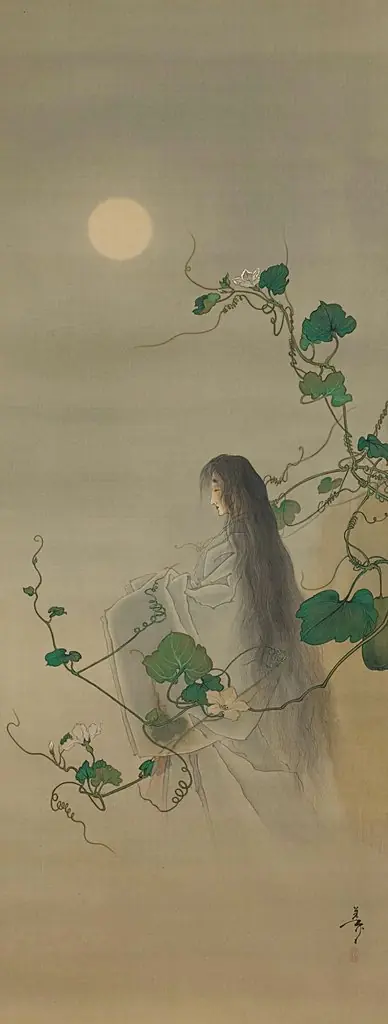 The Spirit of the Deceased Yūgao Entwined in Moonflower Vines, based on the print “The Lady of the Evening Faces,” from the series One Hundred Aspects of the Moon (Tsuki hyakushi: Genji Yūgao no maki)
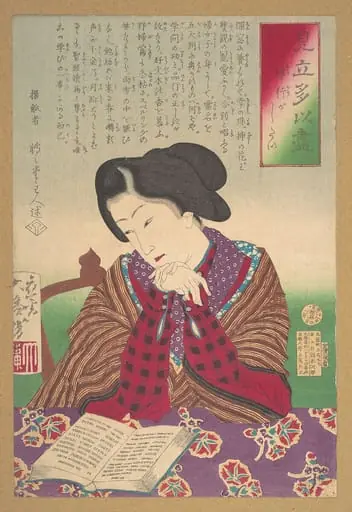 見立多以尽 - 洋行がしたい|Collection of Desires, Wish for Foreign Travel (Mitate Tai zukushi-yōkō ga shitai)
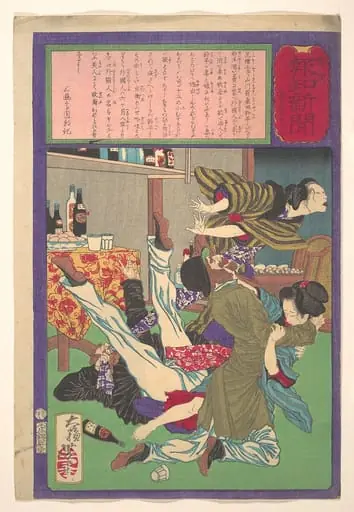 郵便報知新聞 645号|Postal Hōchi Newspaper no. 645, Englishman raping a wine shopkeeper's daughter (Yūbin Hōchi shinbun, roppyaku yonjū gogō)
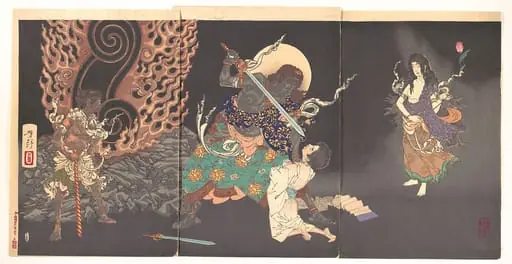 月岡芳年筆 不動明王∙祐天上人図|Fudō Myōō Threatening a Novice
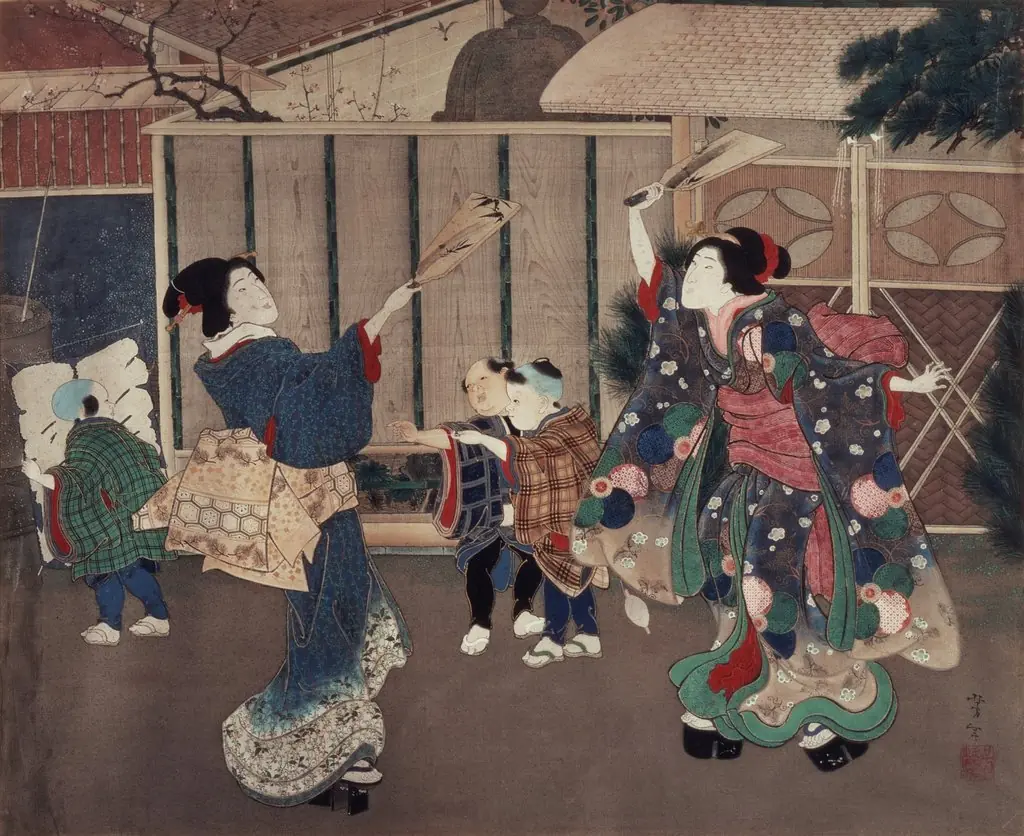 January: Celebrating the New Year
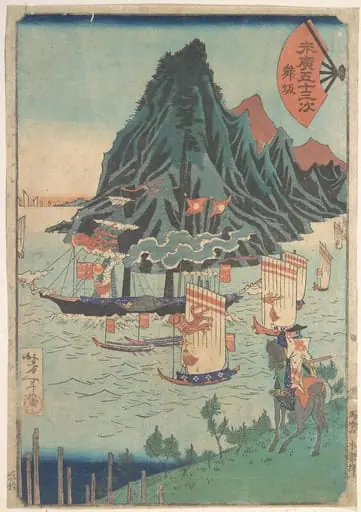 Untitled
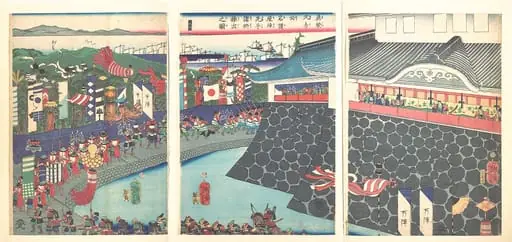 真柴秀吉公名護屋陣先手諸将繰出之図|Hideyoshi and His Troops Leaving Nagoya Camp (Mashiba Hideyoshi kō nagoya jin saki te no shoshō kuridashi no zu)
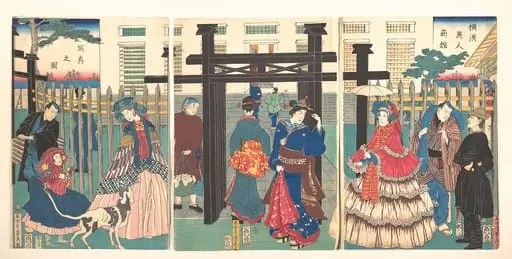 歌川五雲亭貞秀画 『横浜異人商館 写真之図』|Foreign Business Establishment in Yokohama (Yokohama ijin shōkan shashin no zu)
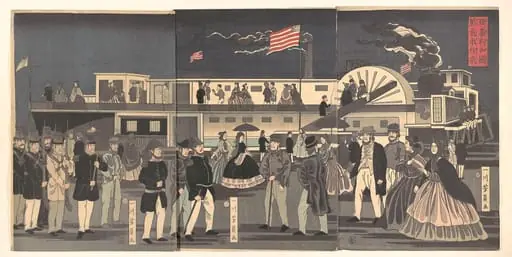 「亞墨利加國蒸氣車往来」|“America”: A Steamship in Transit
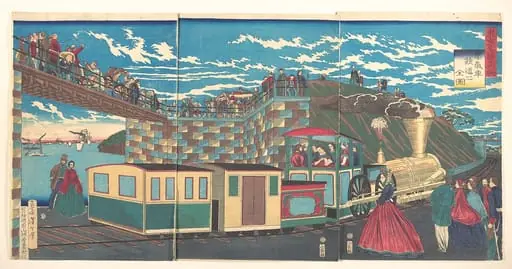 東京名勝高輪 蒸気車鉄道之全図|Illustration of Steam Locomotive Tracks at Takanawa, from the series Famous Places in Tokyo (Tōkyō meishō Takanawa-jōki kikansha no zen zu)
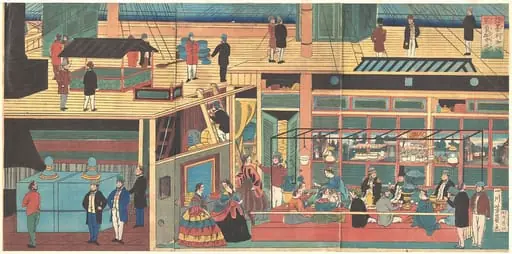 Amerika Koku Jokisen naka no zu|View Inside an American Steamship
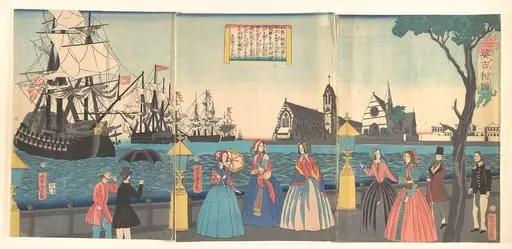 英吉利国|England (Igirisukoku)
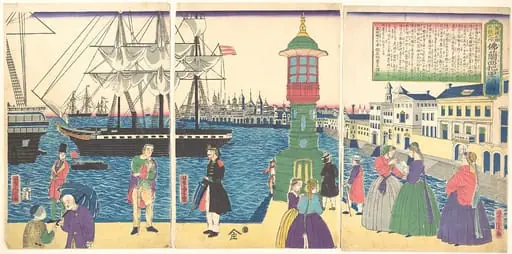 Untitled
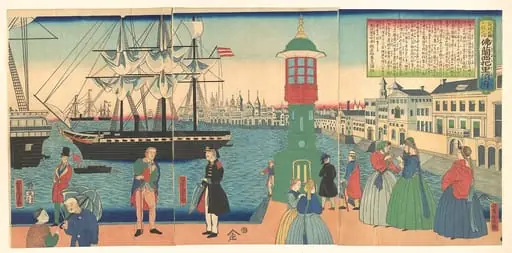 Furansu Paris no fu|Paris, France
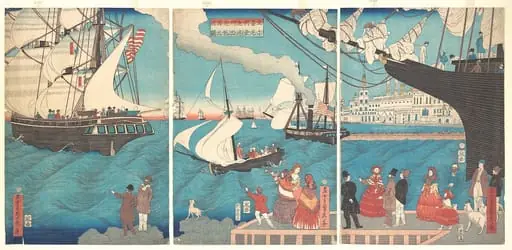 Amerika Karuhorunia Ko shuppan no zu|Sailing from a California Port
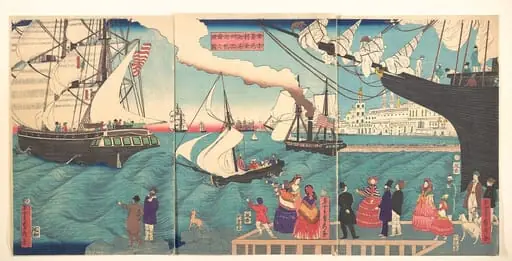 Untitled
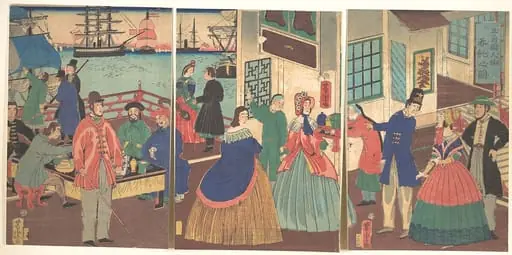 歌川芳虎画 『五箇国人物 呑飥之図』|People of the Five Nations Drinking and Eating (Gokakoku jinbutsu dontaku no zu)