Artwork
月岡芳年筆 不動明王∙祐天上人図|Fudō Myōō Threatening a Novice
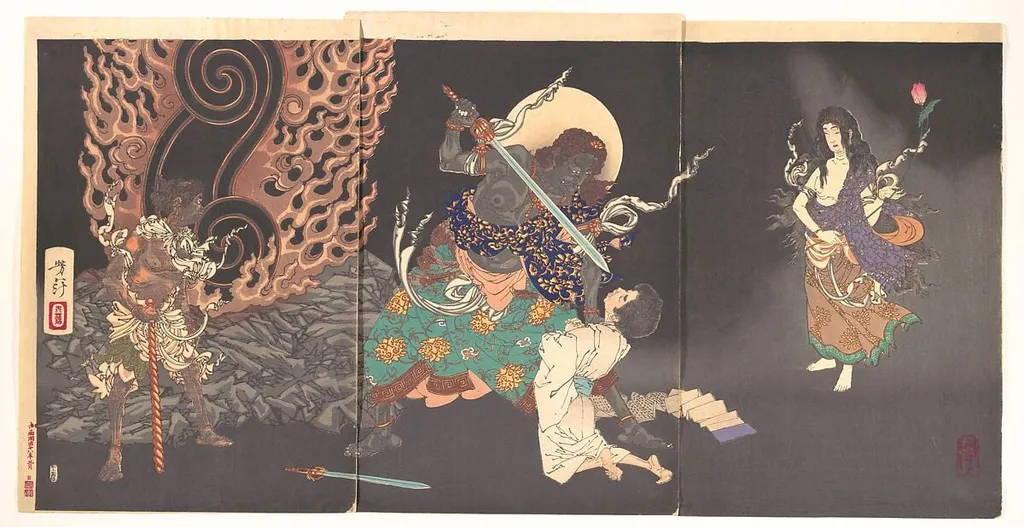
月岡芳年筆 不動明王∙祐天上人図|Fudō Myōō Threatening a Novice is an ink print by the Impressionist artist Yoshitoshi. It dates from 1885 and is held in the collection of the Metropolitan Museum of Art.
About this work
Yoshitoshi made this in 1885, when woodblock prints were shifting from old traditions to new, bolder styles.
A fierce blue-skinned deity glares from the center, flames curling behind him. He grips a sword in one hand and a rope in the other, while a young monk kneels, eyes wide. The scene is split across three tall prints, like a comic strip.
This is Fudō Myōō, a protective figure in Japanese Buddhism. Yoshitoshi made this in 1885, when woodblock prints were shifting from old traditions to new, bolder styles. The deity’s angry face contrasts with the monk’s calm—maybe a lesson about facing fear.
If you like this mix of drama and detail, look up *swords* next.
Overview
This triptych, created by Tsukioka Yoshitoshi in 1885, consists of three vertical woodblock prints on paper, rendered in ink and color. It portrays a dramatic confrontation between the Buddhist deity Fudō Myōō and a kneeling novice. The composition is divided across the three panels, each contributing to a sequential narrative that heightens tension through spatial arrangement and expressive figures.
Subject & Meaning
Fudō Myōō, depicted with a fierce blue complexion and surrounded by flames, embodies unshakable resolve in Japanese esoteric Buddhism. He holds a sword to cut through ignorance and a rope to bind delusion. The young monk, wide-eyed and kneeling, represents spiritual vulnerability. The scene suggests a moment of initiation—fear confronted, not avoided—offering a visual parable on inner strength through adversity.
Technique & Style
Yoshitoshi employs bold lines, vivid pigments, and dynamic contrasts to amplify emotional intensity. The deity’s angular form and swirling flames contrast with the monk’s stillness, enhancing psychological depth. The triptych format, traditionally used for narrative storytelling, is adapted here with theatrical pacing, reflecting Yoshitoshi’s shift from classical ukiyo-e toward more expressive, modern compositions.
History & Provenance
Created in 1885, during the Meiji era, this work emerged as Japan underwent rapid modernization and Western influence reshaped artistic conventions. Yoshitoshi, once a leading ukiyo-e artist, was experimenting with darker, more psychological themes. This print belongs to his later period, when traditional woodblock printing faced decline, yet he pushed its expressive limits through intense subject matter and compositional innovation.
Context
In late 19th-century Japan, Buddhist iconography was being reinterpreted amid secularization and cultural change. Yoshitoshi drew from classical religious imagery but infused it with contemporary emotional realism. His work responded to public interest in the supernatural and moral drama, blending folklore, Buddhist teachings, and the visual language of emerging print media to engage a changing audience.
Legacy
This triptych exemplifies Yoshitoshi’s role in bridging traditional Japanese printmaking with modern sensibilities. Though woodblock prints lost commercial dominance, his bold use of color, movement, and psychological tension influenced later illustrators and manga artists. The work remains a key reference for understanding how religious symbolism was reimagined during Japan’s transition into the modern age.
Artist & collection
Artist
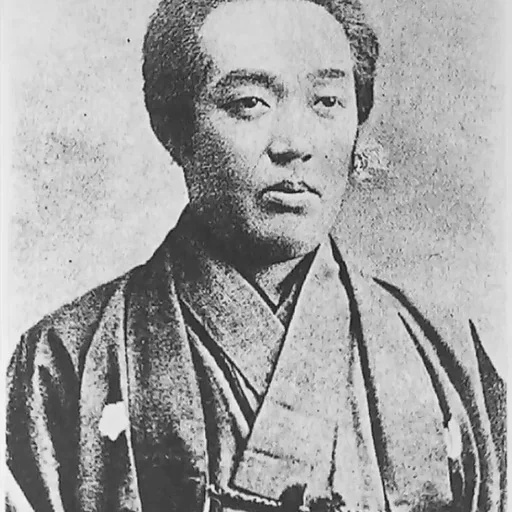
Tsukioka Yoshitoshi (Japanese: 月岡芳年; also named Taiso Yoshitoshi 大蘇芳年; 30 April 1839 – 9 June 1892) was a Japanese printmaker.

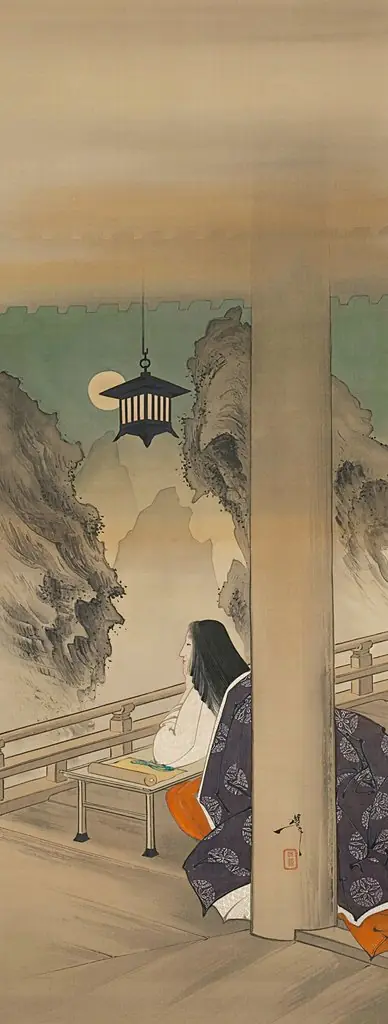 Murasaki Shikibu at Ishiyamadera Temple, based on the print “The Moon at Ishiyama,” from the series One Hundred Aspects of the Moon (Tsuki hyakushi: Ishiyama no tsuki)
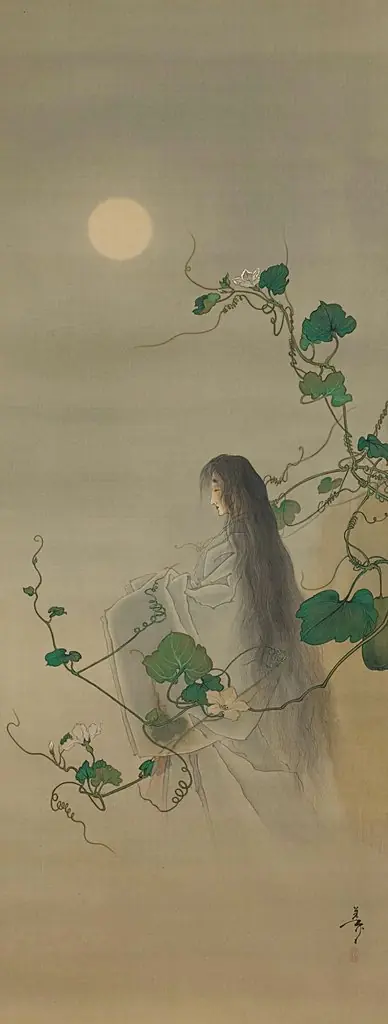 The Spirit of the Deceased Yūgao Entwined in Moonflower Vines, based on the print “The Lady of the Evening Faces,” from the series One Hundred Aspects of the Moon (Tsuki hyakushi: Genji Yūgao no maki)
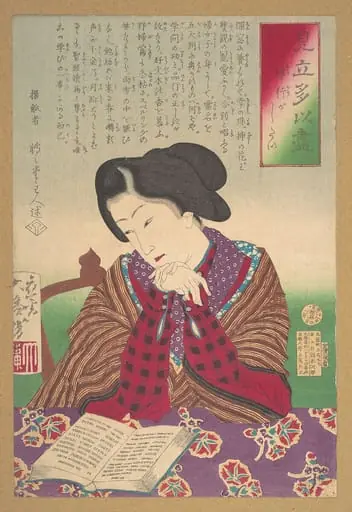 見立多以尽 - 洋行がしたい|Collection of Desires, Wish for Foreign Travel (Mitate Tai zukushi-yōkō ga shitai)
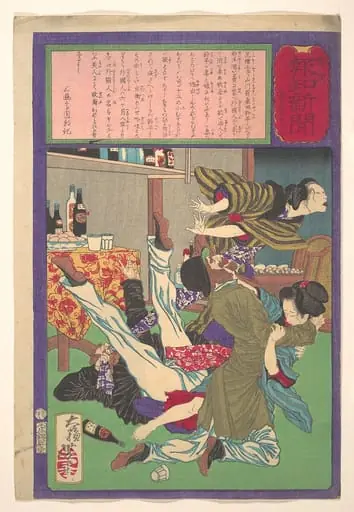 郵便報知新聞 645号|Postal Hōchi Newspaper no. 645, Englishman raping a wine shopkeeper's daughter (Yūbin Hōchi shinbun, roppyaku yonjū gogō)
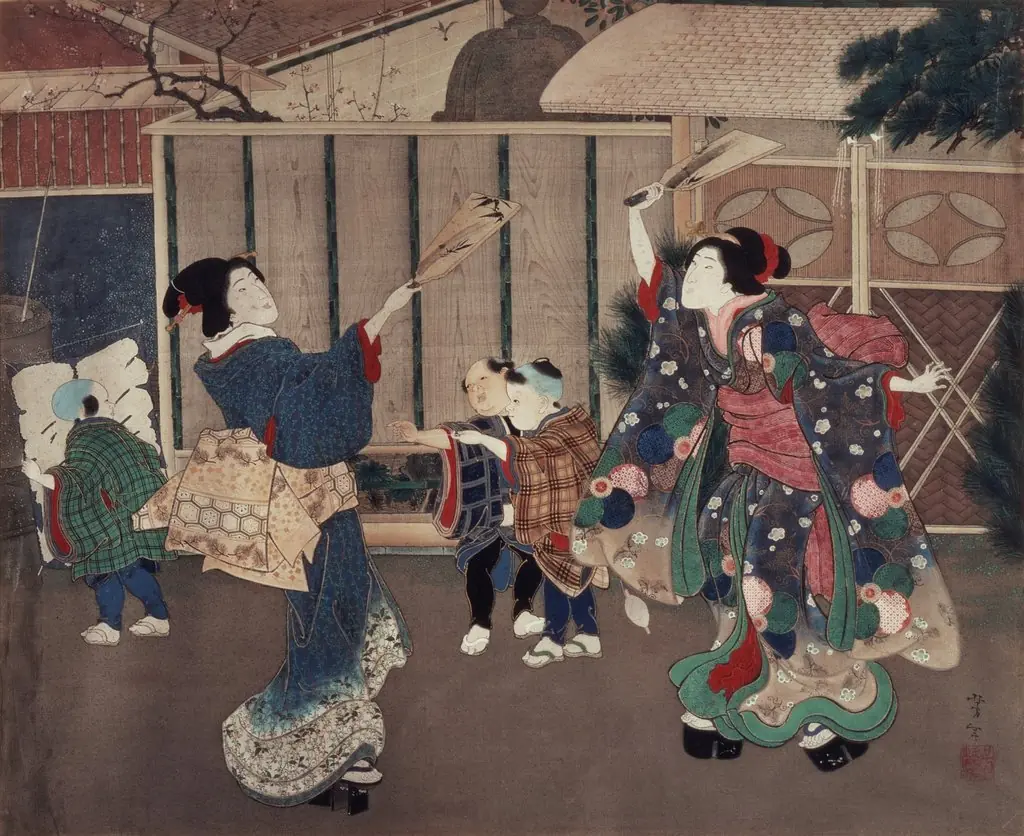 January: Celebrating the New Year
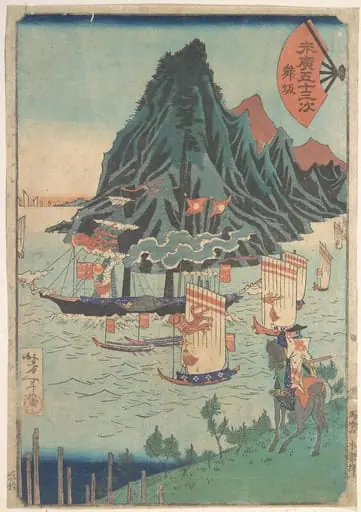 Untitled
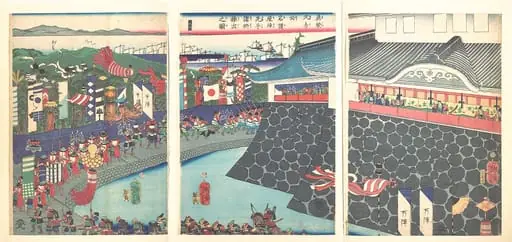 真柴秀吉公名護屋陣先手諸将繰出之図|Hideyoshi and His Troops Leaving Nagoya Camp (Mashiba Hideyoshi kō nagoya jin saki te no shoshō kuridashi no zu)
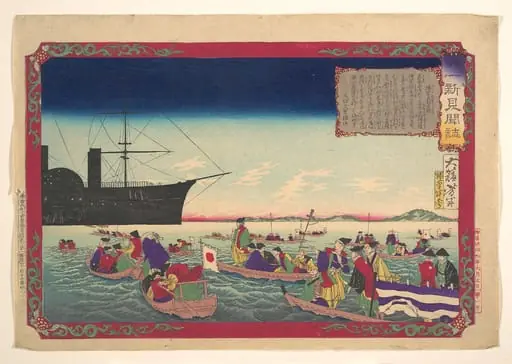 皇国一新見聞誌|Chronicle of the Imperial Restoration (Kōkoku isshin kenbunshi)
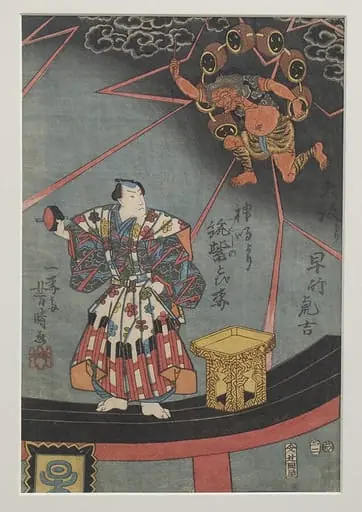 大坂下り早竹虎吉|The Plum Blossom that Flew on Lightning from Chikushino
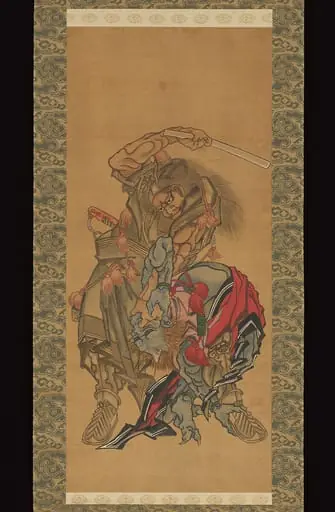 Untitled
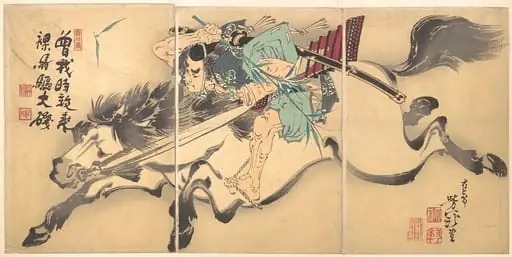 Untitled
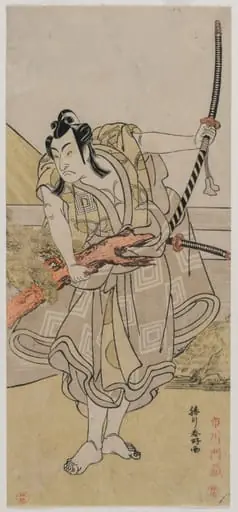 Ichikawa Monnosuke II as Soga no Gorō
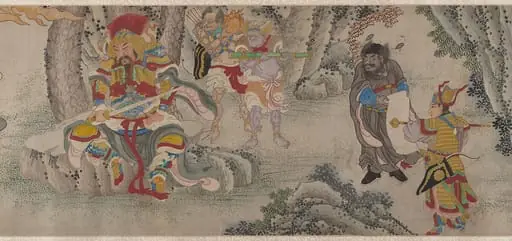 明 鄭重 搜山圖 卷|Searching the Mountains for Demons
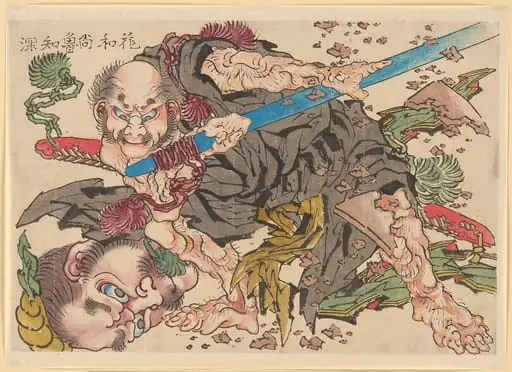 Untitled
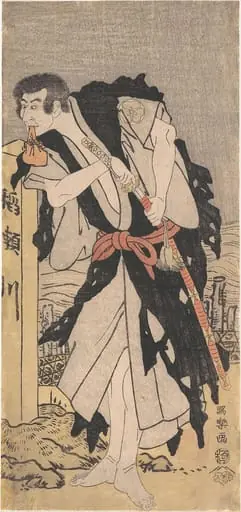 Untitled
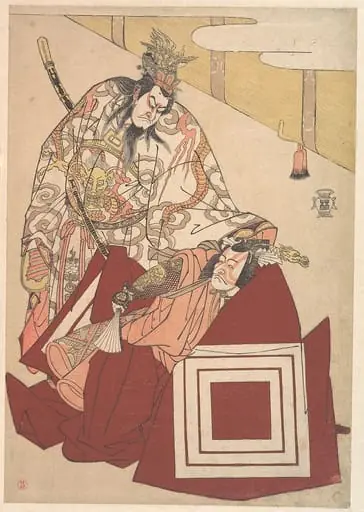 Untitled
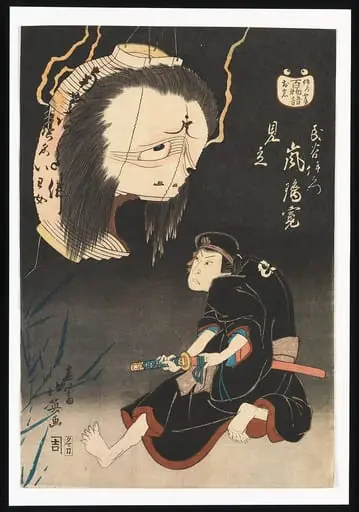 春江斎北英画 二代目嵐璃寛 見立 「百物語」|Kabuki Actor Arashi Rikan II as Iemon Confronted by an Image of His Murdered Wife, Oiwa, on a Broken Lantern, Referring to Katsushika Hokusai’s Hyaku monogatari (One Hundred Ghost Stories)
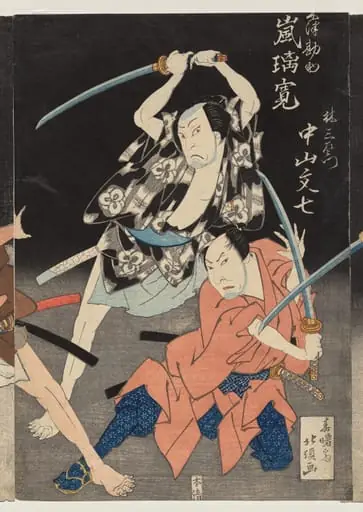 Arashi Rikan II as Kizu Kansuke and Nakayama Bunshichi III as Hayashi Sanzemon from the Kabuki Play "Eight Views of the Kizu River by Boating Song"
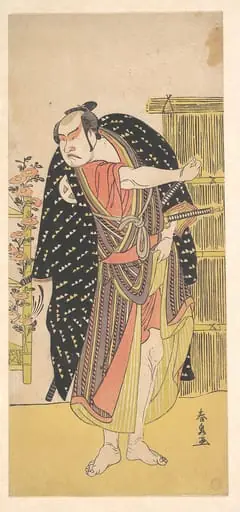 勝川春泉画 三代目大谷廣次|Kabuki Actor Ōtani Hiroji III
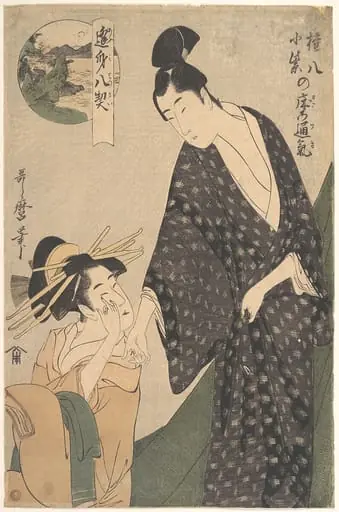 逢身八契 権八小紫の床の通気|Gonpachi ni Komurasaki no Toko no Tsuki