Artwork
Italian town
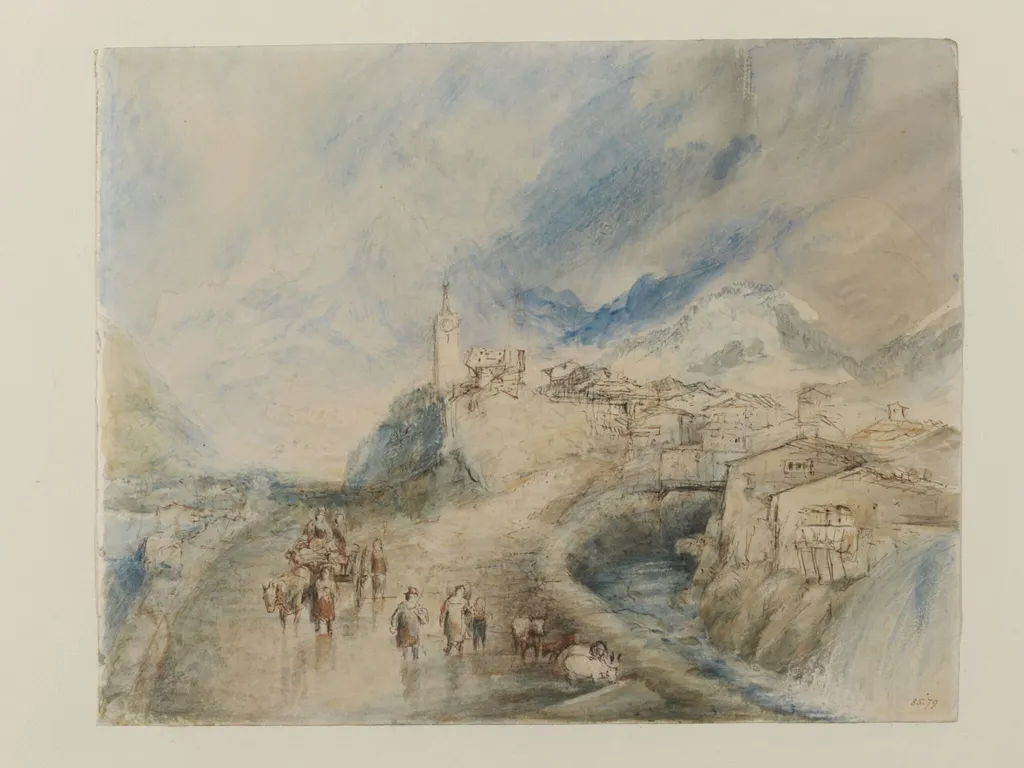
Italian town is a watercolor work on paper by the Romanticist artist Joseph Mallord William Turner. It dates from 1846 and is held in the collection of the Victoria and Albert Museum. Painted in 1846, this watercolour by J.
About this work
Overview
Painted in 1846, this watercolour by J.M.W. Turner captures a quiet Italian hillside settlement. Executed on Whatman paper stamped with a 1841 watermark, the work reflects Turner’s practice of sketching on location during his travels. The composition is spare, focused on the interplay of terrain, architecture, and atmosphere, rendered with minimal pigment and rapid brushwork.
Subject & Meaning
The scene depicts a modest Italian village nestled among rolling hills, centered on a church with a slender steeple. Stone dwellings cluster around it, while a winding path below carries figures and animals, suggesting daily life. The bridge spanning a deep ravine connects the foreground to the distant landscape, implying movement and continuity without narrative detail.
Technique & Style
Turner employed loose, fluid washes to suggest form and light rather than define it. Delicate blue tones in the sky blend into soft gradients for the mountains, while shadows are implied with faint strokes. The absence of sharp outlines and the transparency of the medium create an ethereal quality, characteristic of his late watercolour style.
History & Provenance
The work was made during Turner’s travels in Italy, part of a broader series of sketches he produced in the 1840s. It was executed on paper manufactured in 1841, indicating he carried materials for spontaneous recording. The piece entered the Victoria and Albert Museum’s collection through posthumous bequests, preserving its connection to his observational practice.
Context
In the 1840s, Turner increasingly turned to watercolour as a medium for personal exploration rather than public exhibition. His Italian sketches, made during multiple trips, were not intended as finished works but as studies of light, topography, and mood—records of perception shaped by memory and atmosphere.
Legacy
This watercolour exemplifies Turner’s late approach to landscape: evocative, transient, and emotionally resonant without literal detail. It influenced later artists who valued suggestion over precision, helping redefine watercolour as a vehicle for expressive observation rather than mere documentation.
Own this work as a print
Artist & collection
Artist
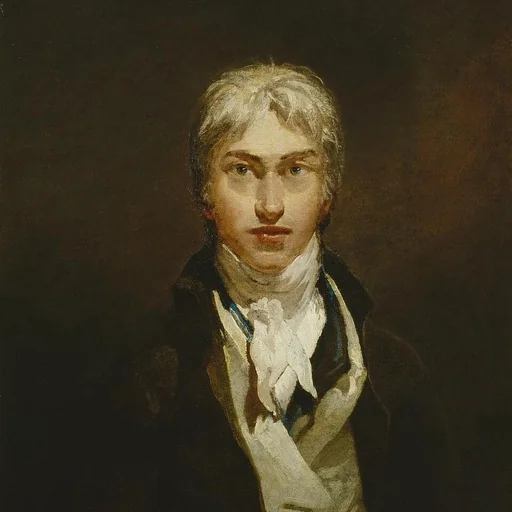
Joseph Mallord William Turner was born in 1775 at Maiden Lane, Covent Garden, where his father kept a barber and wig-making shop.

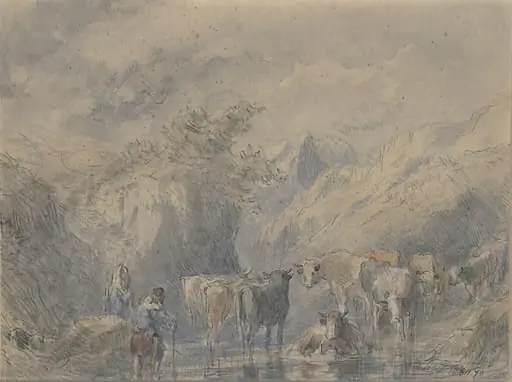 Cattle at a Pool
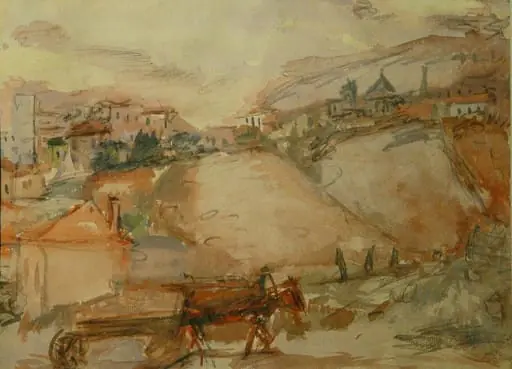 Drum cu căruță
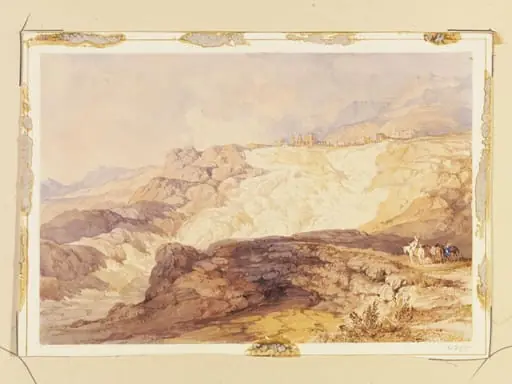 The Ruins of Hierapolis
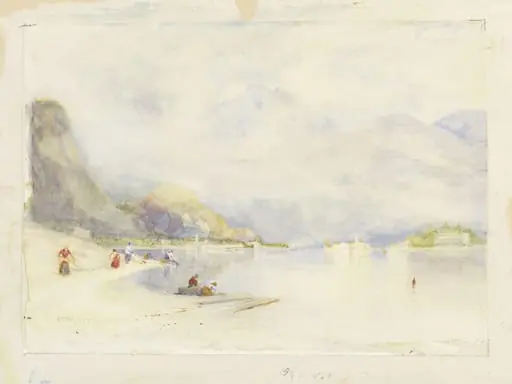 Lago Maggiore from Stresa
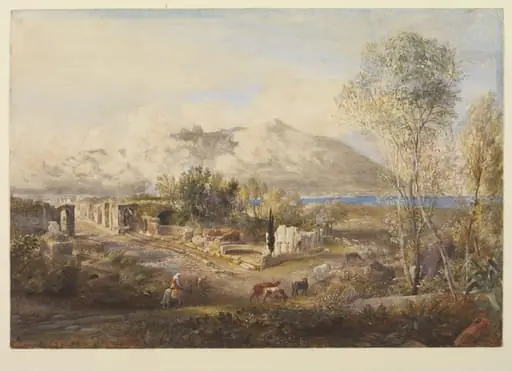 Street of the Tombs, Pompeii
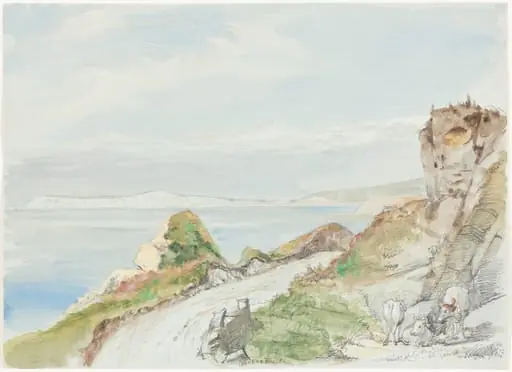 Freshwater Bay, Isle of Wight
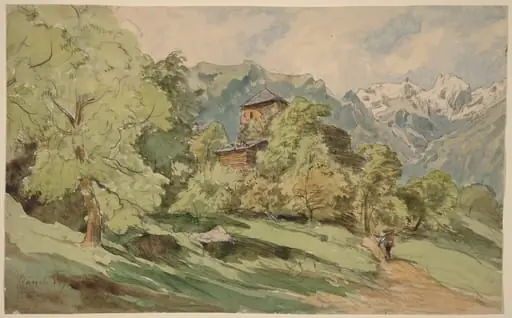 The Castle of Bürglen with the Alps Beyond
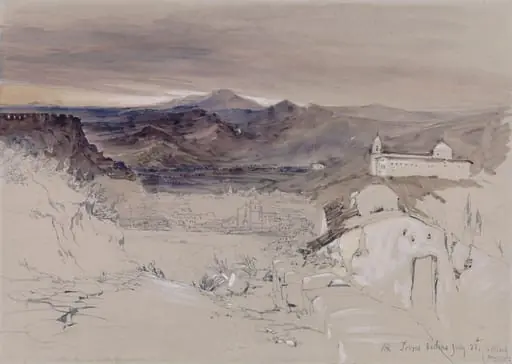 Torres Vedras
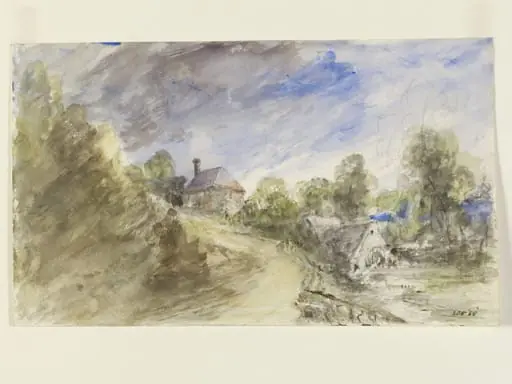 A cottage and water-mill at Bignor
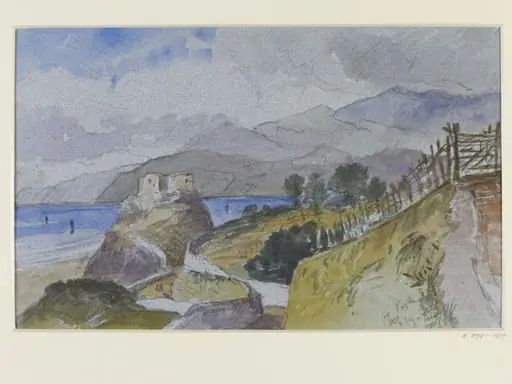 Untitled
 Hampstead Heath, from near Well Walk
 Hornby Castle, Lancashire, from Tatham Church