Artwork
Hagia Sophia, Constantinople
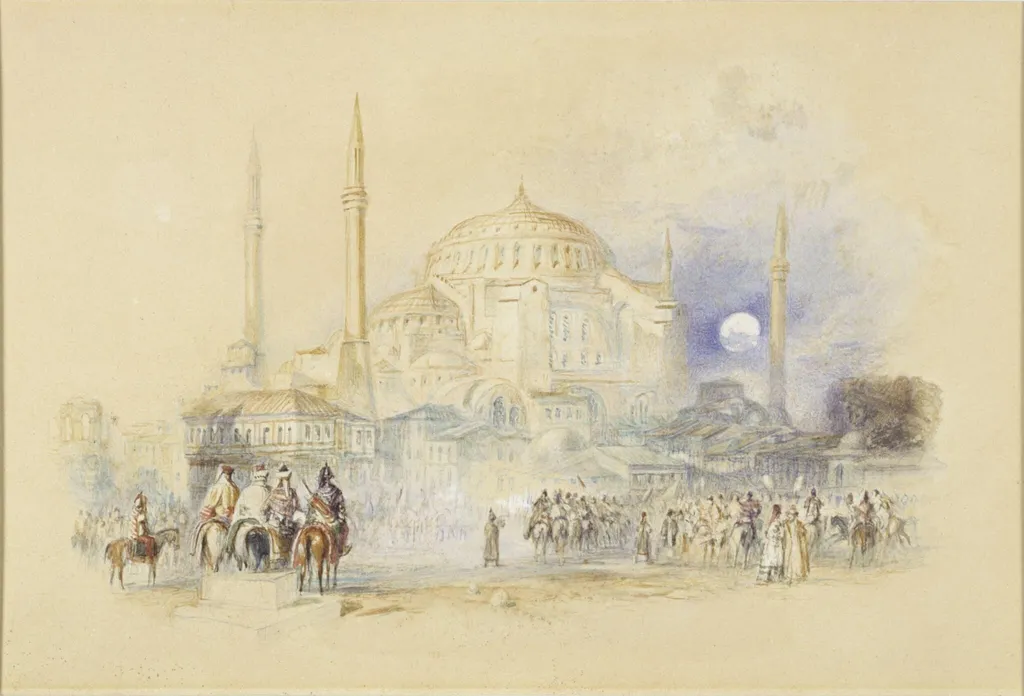
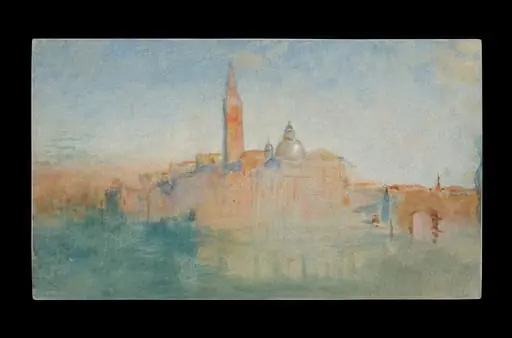
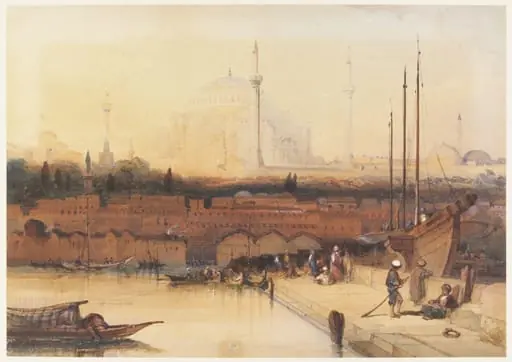
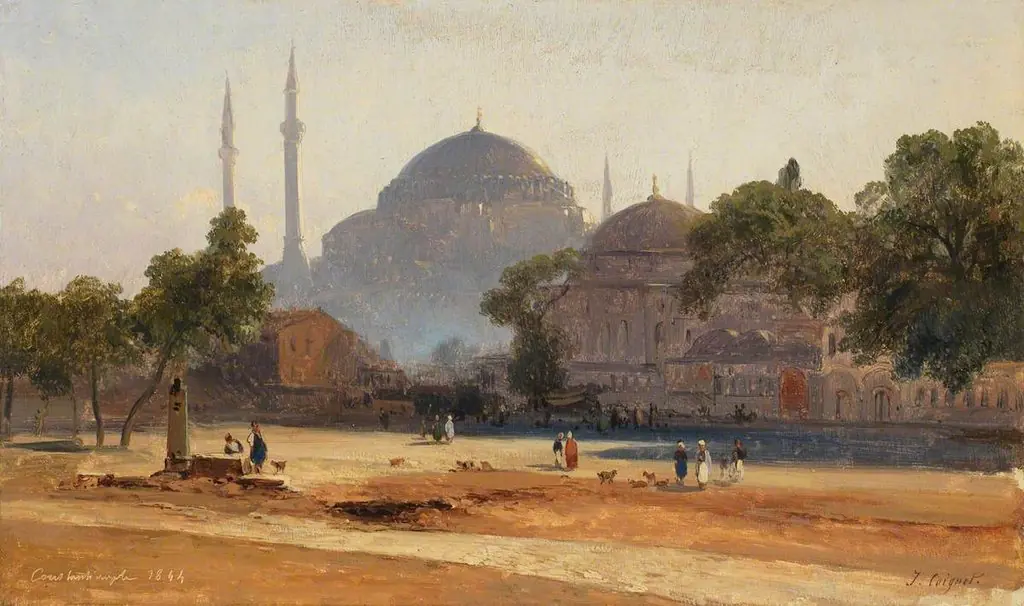
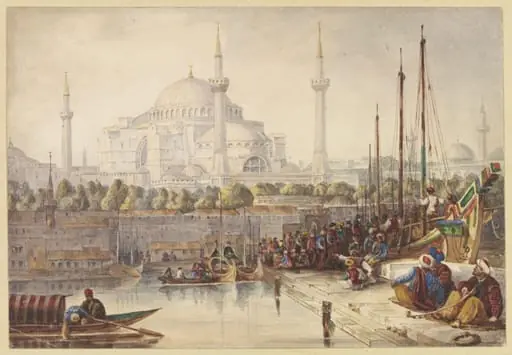
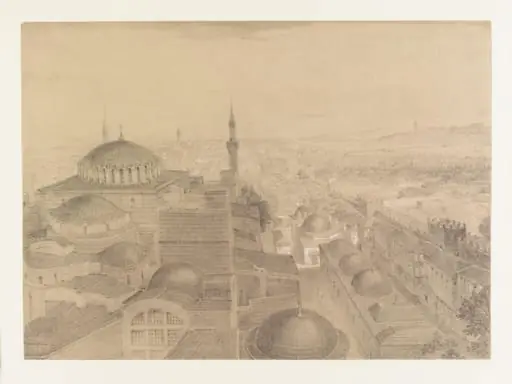
Hagia Sophia, Constantinople is a watercolor work on paper by the Romanticist artist Turner. It dates from 1800 and is held in the collection of the Victoria and Albert Museum. This watercolour, created by J.
About this work
Overview
This watercolour, created by J.M.W. Turner in 1800, captures the Hagia Sophia in Constantinople during a quiet evening. The scene is rendered with delicate washes and airy brushwork, emphasizing atmospheric light over architectural precision. Turner’s focus lies in the interplay of moonlight and architecture, evoking a contemplative mood rather than documenting structural detail.
Subject & Meaning
The composition centers on Hagia Sophia’s monumental dome and slender minarets, framed by a bustling foreground of pedestrians and riders. The presence of figures suggests daily life unfolding around a sacred site, hinting at the building’s layered identity as both religious monument and civic space. The pale moon casts a serene glow, reinforcing a sense of timelessness amid human activity.
Technique & Style
Turner employed thin, translucent layers of watercolour to suggest diffuse illumination and soft shadows. Loose, fluid strokes define forms without rigid outline, allowing the paper’s white to suggest light. This approach aligns with Romantic sensibilities, prioritizing emotional resonance and the ephemeral qualities of light over topographical accuracy.
History & Provenance
Painted during Turner’s early career, this work stems from his travels in Europe and the Near East, which expanded his visual vocabulary. The watercolour entered the Victoria and Albert Museum’s collection through later acquisitions, preserving it as part of his experimental phase before his more abstract later works.
Context
In 1800, Constantinople remained a symbol of imperial legacy, its architecture a blend of Byzantine and Ottoman influences. Turner’s depiction reflects European fascination with the East, yet avoids exoticism by focusing on quiet, universal elements—light, scale, and human presence—rather than cultural spectacle.
Legacy
This watercolour exemplifies Turner’s early mastery of atmosphere in watercolour, influencing later landscape traditions. Its understated treatment of a globally significant site anticipates his lifelong interest in how light transforms architecture, setting a precedent for modern approaches to place and perception.
Artist & collection
Artist
Turner loved storms so much he once tied himself to a ship’s mast just to feel one, and he painted the light like no one else—even blurring his watercolors with his fingers to make the air shimmer.