Artwork
Classical vignette
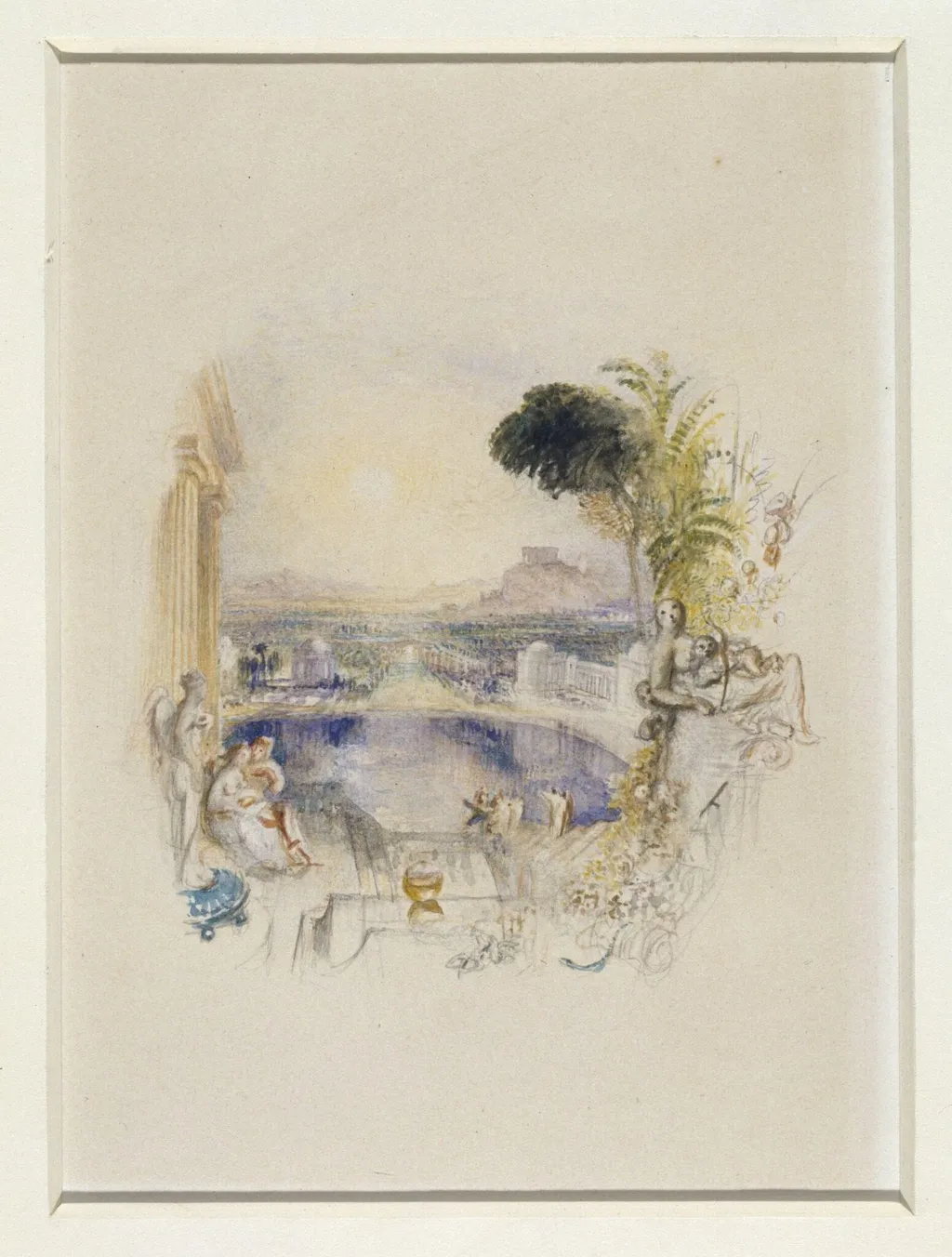
Classical vignette is a watercolor work on paper by the British Romanticist artist Turner. It dates from 1800 and is held in the collection of the Victoria and Albert Museum. J.
About this work
Overview
J. M. W. Turner executed this watercolour in 1800, presenting a loosely rendered classical scene. The composition centers on a tranquil pool or fountain surrounded by figures at leisure, while a distant cityscape and a solitary, dark‑leaved tree frame the background. The work exemplifies Turner’s early interest in atmospheric effects rather than precise narrative detail.
Subject & Meaning
The picture depicts a group of figures—some seated, others reclining—enjoying a leisurely moment beside water. A child is shown playing with a small dog, adding a touch of domestic intimacy. The setting, with its idealised architecture and natural elements, evokes a timeless, almost mythic leisure space that invites contemplation of calm and repose.
Technique & Style
Turner employs a delicate, watery wash, allowing pigments to merge and soften edges. Brushwork remains light and gestural, giving the figures the appearance of fleeting sketches. This approach creates a luminous atmosphere, emphasizing mood and the play of light over precise anatomical or architectural rendering, a hallmark of his early watercolour practice.
Context
Created at the turn of the 19th century, the work aligns with the emerging Romantic sensibility that valued emotional resonance and the sublime qualities of nature. Turner’s emphasis on atmospheric suggestion over detailed representation reflects the broader shift among artists of the period toward expressing inner feeling through landscape and figure.
Artist & collection
Artist
Turner loved storms so much he once tied himself to a ship’s mast just to feel one, and he painted the light like no one else—even blurring his watercolors with his fingers to make the air shimmer.

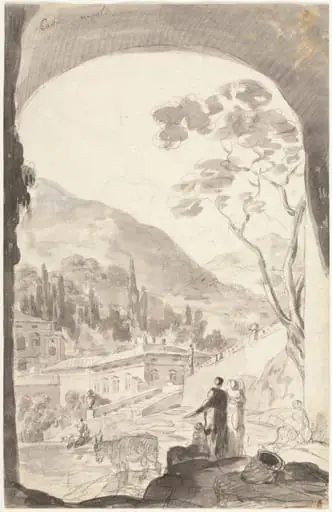 Cava Napoli
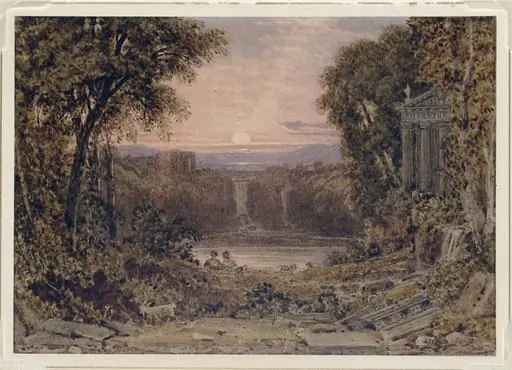 Tivoli - Sunset
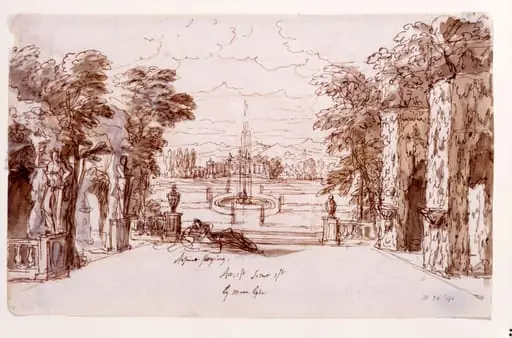 Design for a stage set for Arsinoe, Queen of Cyprus at the Theatre Royal, London for Act I, scene 1, Arsinoe sleeping in a garden at night
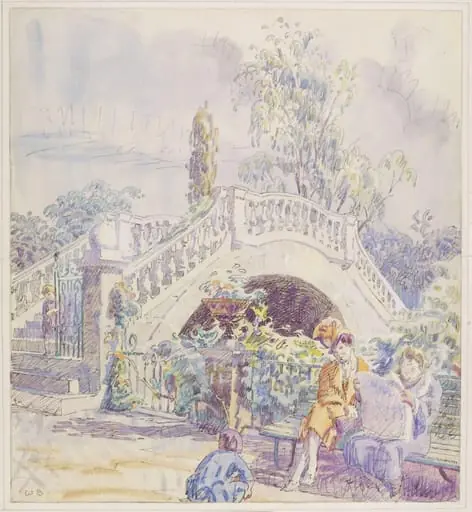 The Garden, York House, Twickenham
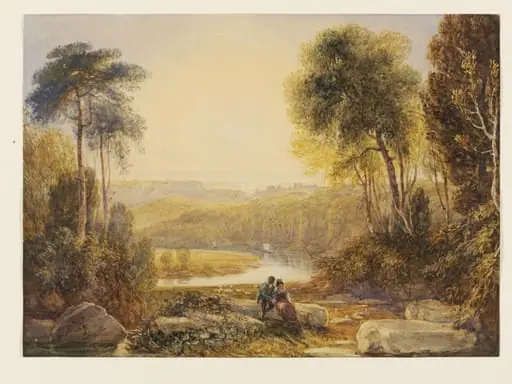 Wyndcliffe on the Wye
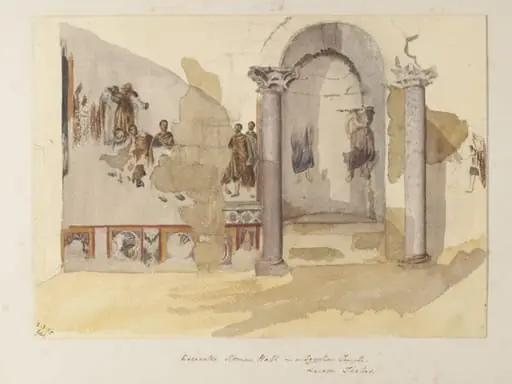 `Excavated Roman Hall in an Egyptian Temple - Luxor. Thebes'
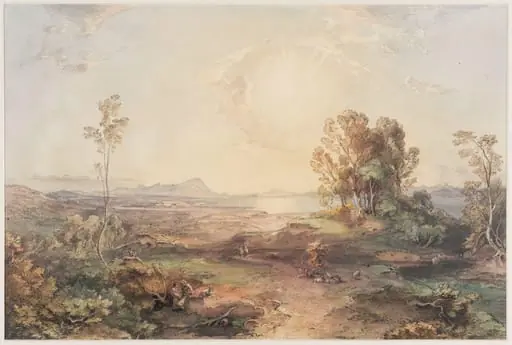 Landscape with figures, sheep and goats
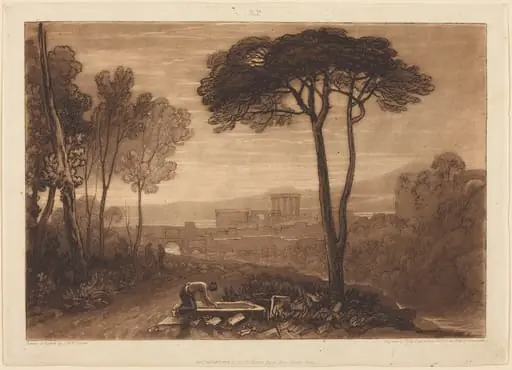 Scene in the Campagna
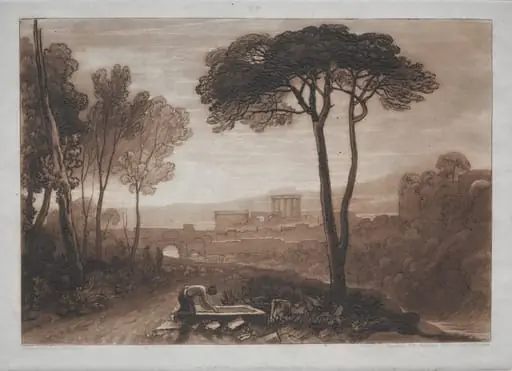 Liber Studiorum: Scene in the Campagna