Artwork
長崎港図|Chinese Ships at Nagasaki
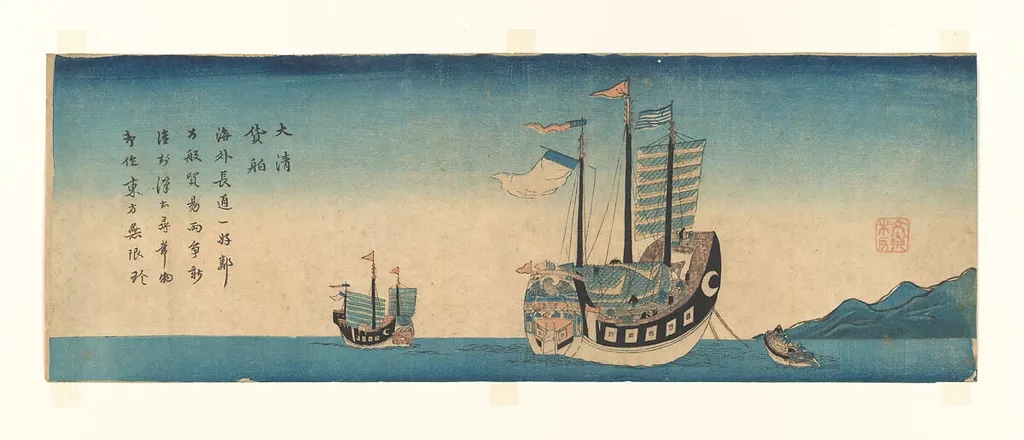
長崎港図|Chinese Ships at Nagasaki is an ink print by the Romanticist artist Unknown. It dates from 1840 and is held in the collection of the Metropolitan Museum of Art.
About this work
Overview
Bold outlines and unmodulated hues reflect standard practices in Edo-period Japanese printmaking, while the format, known as nagaban, suits panoramic views.
This horizontal woodblock print depicts Chinese vessels anchored in Nagasaki Harbor, rendered in the nishiki-e style with ink and color on paper. The composition emphasizes calm waters and a distant shoreline, with three ships of varying size arranged across the scene. Bold outlines and unmodulated hues reflect standard practices in Edo-period Japanese printmaking, while the format, known as nagaban, suits panoramic views.
Subject & Meaning
The print records the presence of Chinese merchant ships in Nagasaki, a port officially open to limited foreign trade during Japan’s period of isolation. The largest vessel, with tall sails and a curved stern, likely represents a typical Chinese trading junk. The inclusion of smaller boats and the absence of Japanese ships suggest a focus on foreign commerce under strict Tokugawa regulations.
Technique & Style
Executed in nishiki-e, the print uses multiple carved woodblocks to apply flat, opaque colors with precise outlines. The sky is lightly tinted, and water is rendered with minimal texture, relying on color gradation rather than shading. This restrained approach prioritizes clarity and decorative harmony, typical of commercial prints produced for a broad audience in the late Edo period.
History & Provenance
Created during the 19th century, the print likely originated from a Nagasaki-based publisher catering to local interest in foreign trade. As Nagasaki was Japan’s sole conduit for Chinese and Dutch commerce, such images served both documentary and souvenir functions. No specific artist is recorded, consistent with the collaborative nature of woodblock production at the time.
Context
During the Tokugawa shogunate, Nagasaki was the only port permitted to host Chinese and Dutch traders. Chinese ships arrived annually under regulated conditions, and their presence was a subject of public fascination. Prints like this documented these arrivals, offering civilians a visual connection to the outside world while reinforcing the state’s control over foreign interaction.
Legacy
This print contributes to a genre of Japanese woodblock art that recorded foreign ships and port life during Japan’s isolation. Though not widely known outside Japan, such works provide insight into how ordinary citizens perceived international trade. Today, they serve as historical records of maritime exchange and the visual culture of Edo-period urban life.
Artist & collection

 Domestic Scene
 Giacomo and Cardinal Marco, investing Andrea, Abbot of San Zeno, with his Benefice
 The Nymph of Fontainebleau
 Portrait of a Woman
 Madonna and Child with Saints in the Enclosed Garden
 Venus and Minerva
 Family Group of Four on Sofa
 Wall painting from Room H of the Villa of P. Fannius Synistor at Boscoreale
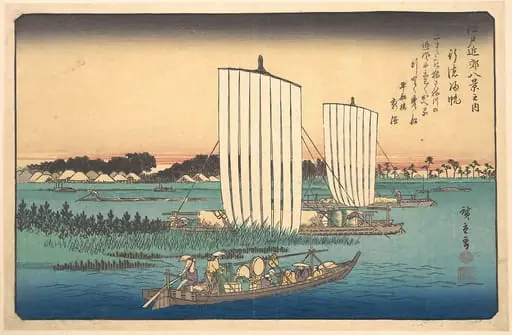 江戸近郊八景之内 行徳帰帆|Boats Returning to Gyotoku
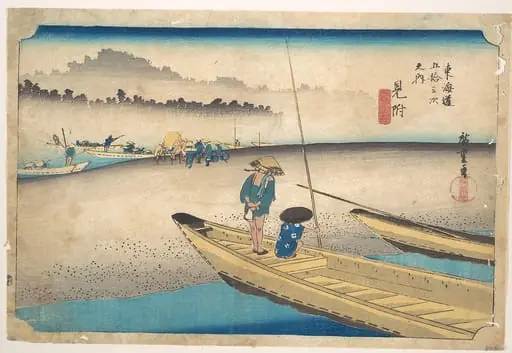 東海道五十三次 見附 天竜川図|Mitsuke; Tenryugawa Ferry, Station No. 29
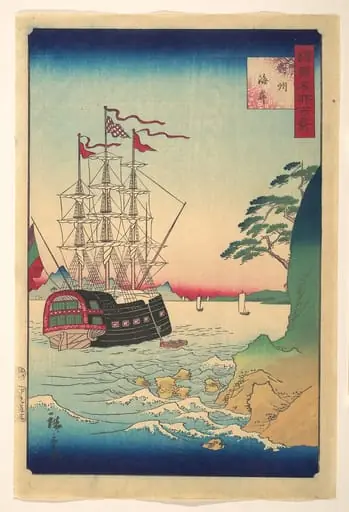 諸国名所百景 對州海岸|Dutch Ship at Anchor off the Coast of Tsushima
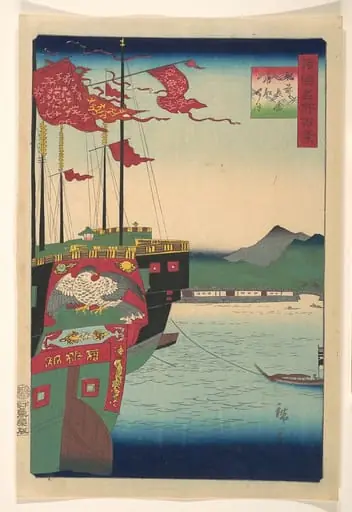 諸国名所百景 肥前長崎唐船の津|Dutch and Chinese Ships in the Harbor at Nagasaki in Hizen Province
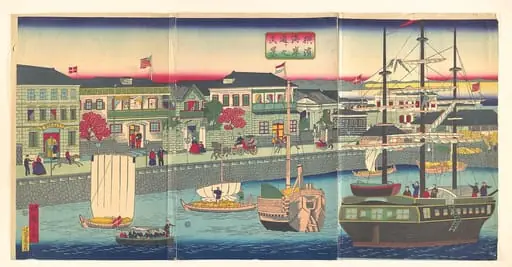 横浜海岸通り之風景|View of the Seafront in Yokohama (Yokohama Kagandori no fūkei)
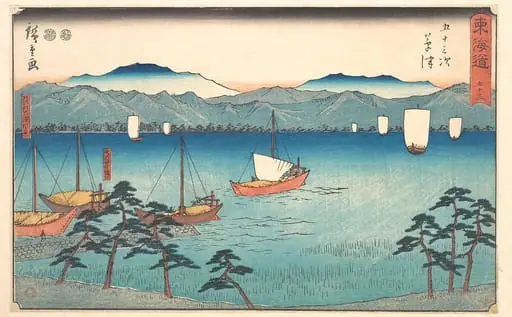 東海道五十三次 草津 矢ばせの渡口 琵琶湖風景|Kusatsu
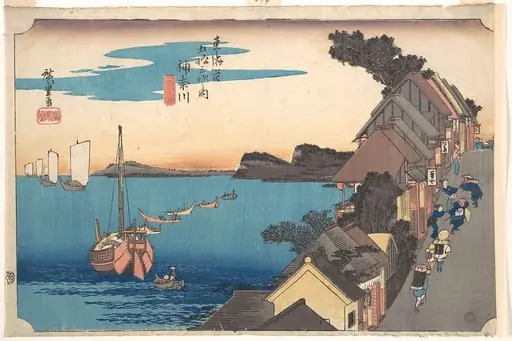 東海道五十三次之内 神奈川 宿台之景|View of the Kanagawa station at sunset