Artwork
諸国名所百景 對州海岸|Dutch Ship at Anchor off the Coast of Tsushima
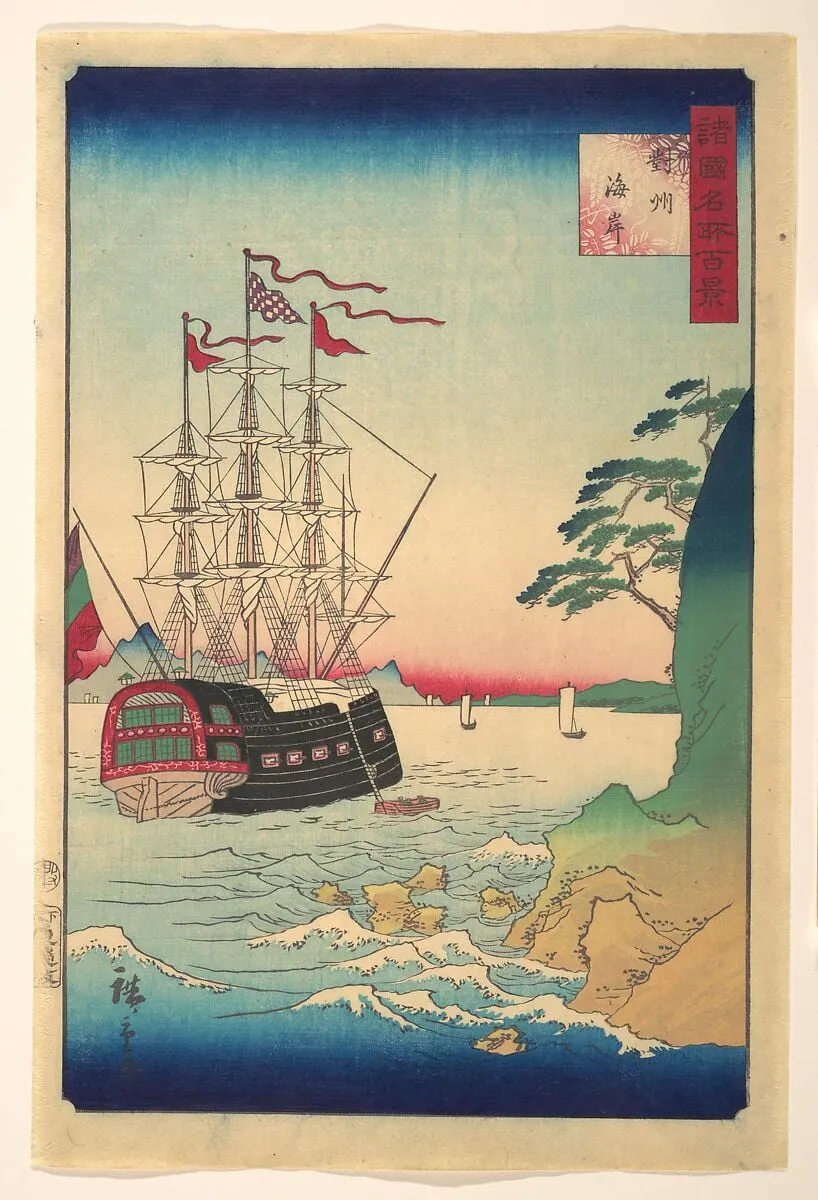
諸国名所百景 對州海岸|Dutch Ship at Anchor off the Coast of Tsushima is an ink print by the Impressionist artist Utagawa Hiroshige II. It dates from 3 and is held in the collection of the Metropolitan Museum of Art.
About this work
Overview
Created in the mid-19th century, it combines traditional Japanese printmaking with observations of foreign maritime presence.
This woodblock print is part of Utagawa Hiroshige II’s series 'One Hundred Famous Views of the Provinces,' depicting a Dutch merchant vessel anchored off Tsushima Island. Created in the mid-19th century, it combines traditional Japanese printmaking with observations of foreign maritime presence. The composition balances natural elements with human-made structures, reflecting Japan’s limited but growing engagement with Western ships during the Edo period.
Subject & Meaning
The print centers on a Western-style ship, its three masts rising above the rocky coastline of Tsushima, a strategic island between Japan and the Korean Peninsula. A smaller local boat, marked by red flags, approaches the vessel, suggesting interaction between cultures. The scene conveys quiet observation rather than confrontation, hinting at the cautious curiosity Japan maintained toward foreign trade despite its isolationist policies.
Technique & Style
Hiroshige II employed fine woodblock carving to render crisp outlines and layered washes of color. Soft blues and grays dominate the sea and sky, while bold reds and greens in the flags and rigging create focal contrast. Subtle cross-hatching defines shadow and texture on the ship’s hull and rocks, demonstrating mastery of tonal gradation. The print’s spatial depth is achieved through atmospheric perspective, with distant mountains rendered in pale hues.
History & Provenance
Produced around 1856–1858, the print was issued as part of a popular series commissioned by publisher Hoeidō. It entered The Metropolitan Museum of Art’s collection through the Rogers Fund in 1912, among a group of Japanese prints acquired during early Western interest in ukiyo-e. Its preservation reflects its status as a documented artifact of Japan’s transitional encounter with global maritime trade in the late Edo era.
Context
During the 1850s, Japan’s sakoku policy was beginning to unravel under pressure from Western powers. Tsushima, a key diplomatic outpost, regularly hosted foreign vessels, including Dutch ships from Nagasaki’s Dejima trading post. This print captures a moment of quiet exchange, illustrating how Japanese artists documented foreign presence not as threat, but as part of the evolving landscape of their nation’s periphery.
Legacy
The print contributes to a broader visual record of Japan’s engagement with the outside world before full opening in the 1860s. It influenced later Western artists drawn to ukiyo-e’s compositional clarity and color harmony. Today, it remains a primary source for understanding how Japanese printmakers interpreted foreign subjects within traditional aesthetic frameworks, preserving historical nuance without overt commentary.
Artist & collection

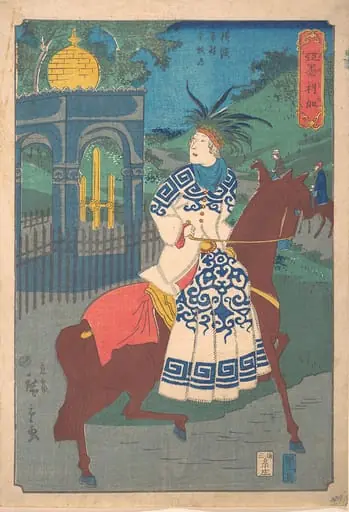 二代歌川広重画 『亜墨利加 横浜本村本牧道』|American Woman Riding Side-Saddle on the Road at Honmoku, Motomura, Yokohama (America Yokohama Motomura Honmoku michi)
 Untitled
 Untitled
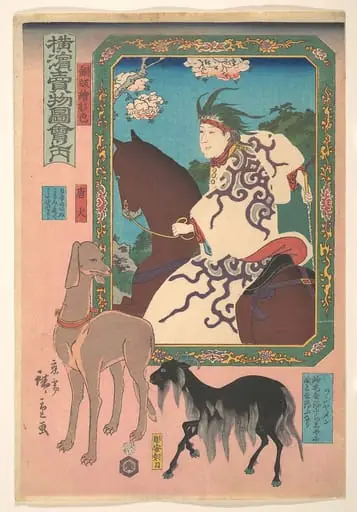 横浜賣物図会の内 唐犬|Copper Plate Engraving of a Woman Riding a Horse, a Goat and a Dog
 Untitled
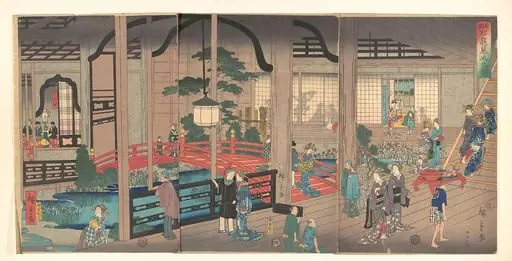 Yokohama Gankirō no zu|View of the Interior of the Gankirō Tea House in Yokohama
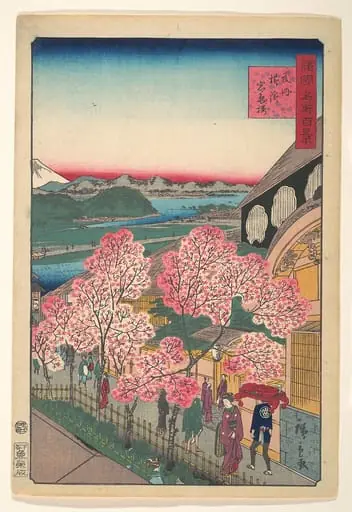 Bushu Yokohama Gankirō|諸国名所百景 武州横浜岩亀楼|Entrance to the Gankirō Tea House in the Miyozaki District, Yokohama, Bushu
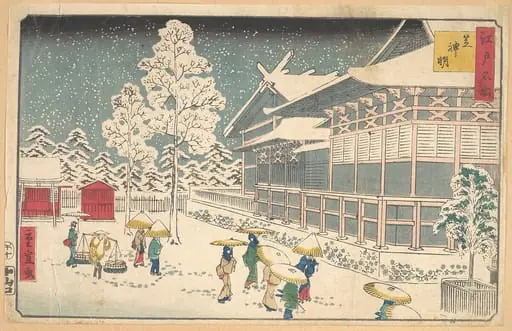 江戸名所 芝神明|Famous Places of Edo: Shiba Shinmei
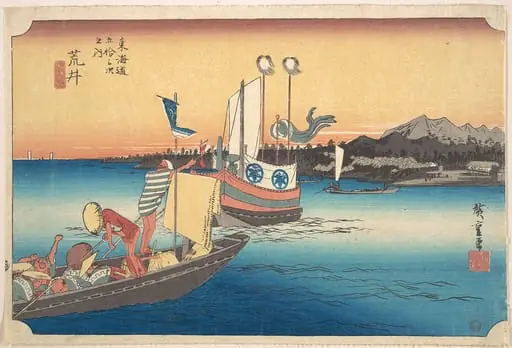 東海道五十三次之内 荒井 渡舟の図|Arai, Tosen
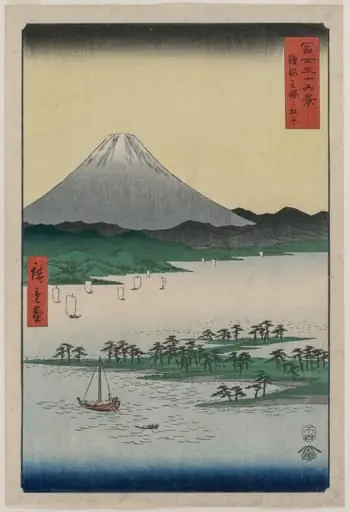 Pine Groves of Miho in Suruga, from the series Thirty-six Views of Mount Fuji
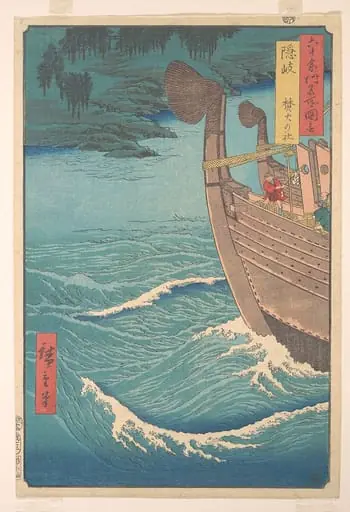 六十余州名所図会 隠岐 焚火の社|The Takihi Shrine, Oki Province, from the series Views of Famous Places in the Sixty-Odd Provinces
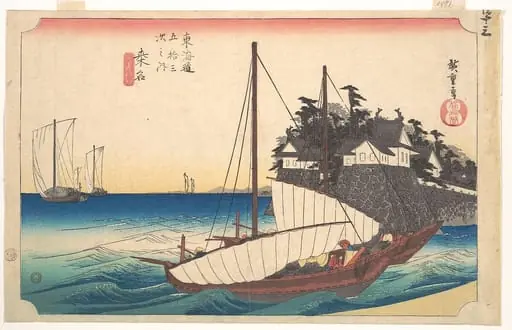 東海道五十三次之内 桑名 七里渡口|Station Forty-Three: Kuwana, Seven-Ri Ferry at the Port, from the Fifty-Three Stations of the Tokaido
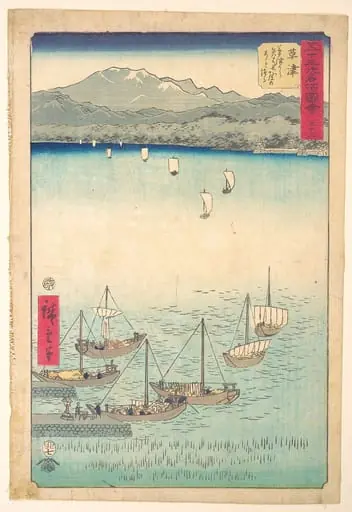 五十三次名所図会 草津|Kusatsu
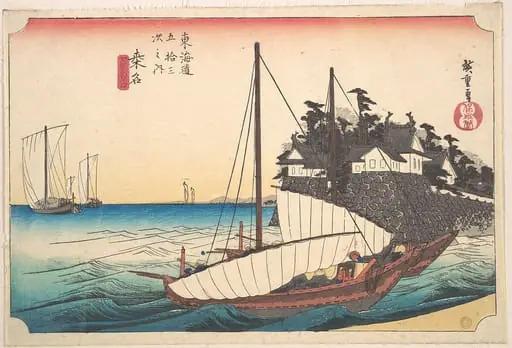 東海道五十三次之内 桑名 七里渡口|Kuwana, Shichi-Ri Watashi Guchi
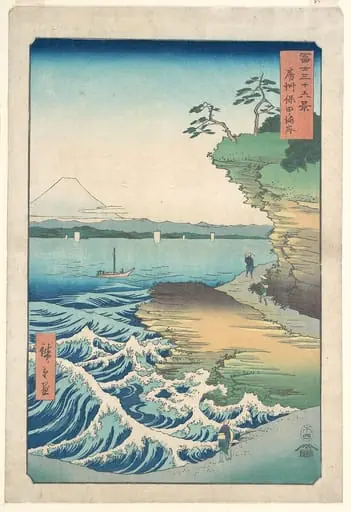 富士三十六景 房州保田の海岸|Seashore at Hoda, Province of Awa
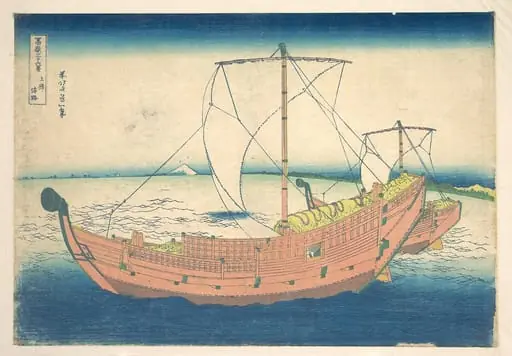 冨嶽三十六景 上総の海路|At Sea off Kazusa (Kazusa no kairo), from the series Thirty-six Views of Mount Fuji (Fugaku sanjūrokkei)
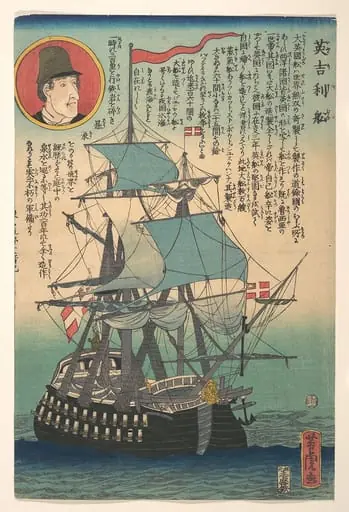 Igirisu fune|English Ship