Artwork
横浜海岸通り之風景|View of the Seafront in Yokohama (Yokohama Kagandori no fūkei)
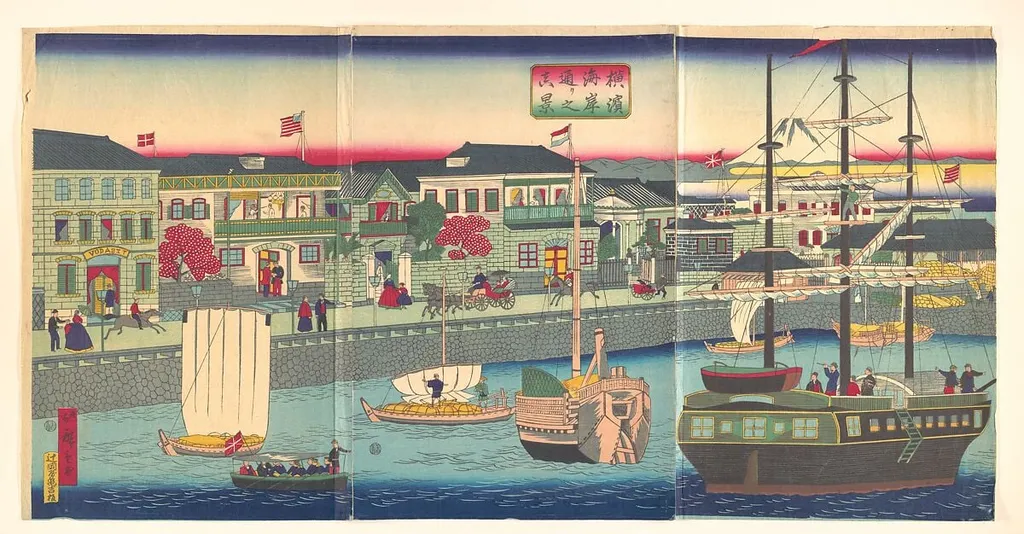
横浜海岸通り之風景|View of the Seafront in Yokohama (Yokohama Kagandori no fūkei) is an ink print by the Impressionist artist Utagawa Hiroshige III. It dates from 5 and is held in the collection of the Metropolitan Museum of Art.
About this work
Overview
View of the Seafront in Yokohama is a three‑panel woodblock print by Utagawa Hiroshige III. Executed in ink and color on paper, the work depicts a bustling harbor scene along Yokohama’s waterfront. The Metropolitan Museum of Art holds the piece in its collection.
Subject & Meaning
The triptych presents a lively port where Japanese and foreign vessels converge. Small riverboats ferry passengers past shore‑line buildings, while a larger boat with a green canopy rests near a dock. A three‑masted Western sailing ship anchors beside a crowded pier, underscoring Yokohama’s role as an international gateway in the Meiji era.
Technique & Style
Hiroshige III employed traditional ukiyo‑e woodblock methods, using bold outlines and vivid pigments to render architectural forms and foliage. The composition balances flat color fields with delicate details such as cherry‑blossom clusters and fluttering flags, merging Japanese aesthetic conventions with the depiction of Western‑style ships.
History & Provenance
Created in the late nineteenth century, the print reflects the rapid modernization of Yokohama after the opening of Japan’s ports to foreign trade. It entered the Metropolitan Museum of Art’s holdings through a mid‑twentieth‑century acquisition, where it remains on view as part of the museum’s Japanese prints collection.
Context
During the Meiji period, Yokohama transformed into a bustling hub for diplomatic and commercial exchange. Hiroshige III’s work captures this transitional moment, juxtaposing familiar Japanese urban scenery with the novel presence of Western maritime technology, illustrating the cultural hybridity of the era.
Artist & collection

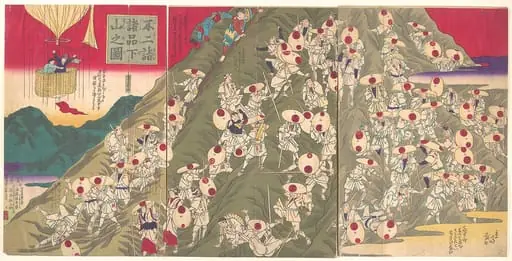 不二詣諸品下山之図|View of the Descent from a Mountain by Many from Pilgrimage to Mt. Fuji (Fuji mōde shoshina gesan no zu)
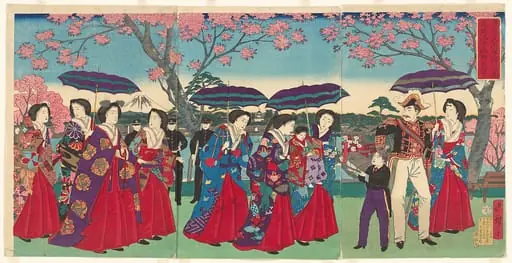 三代歌川広重画 『東京名所 従上野公園 不忍池中嶋弁天之景』|View of Benten Shrine on Nakanoshima Island in Shinobazu Pond, Ueno Park, from the series Famous Views of Tokyo (Tōkyō Tokyo meisho yori Ueno kōen Shinobazu no ike Nakanoshima Benten no kei)
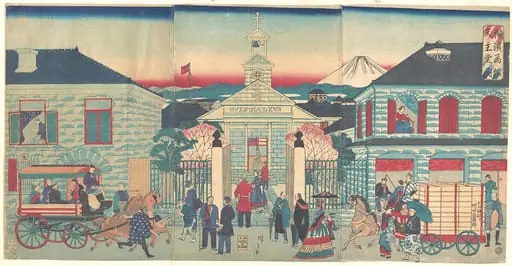 横浜商館天主堂ノ図|Illustration of Foreign Residences and the Catholic Church in Yokohama (Yokohama shōkan tenshudō no zu)
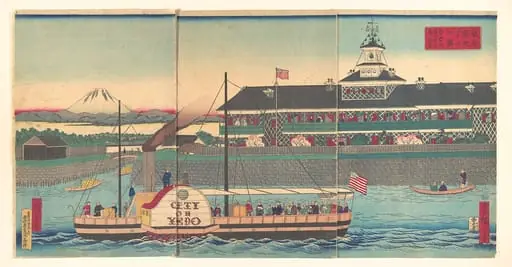 東京築地ホテル館|The Tsukiji Hotel in Tokyo (Tokyo Tsukiji hoteru kan)
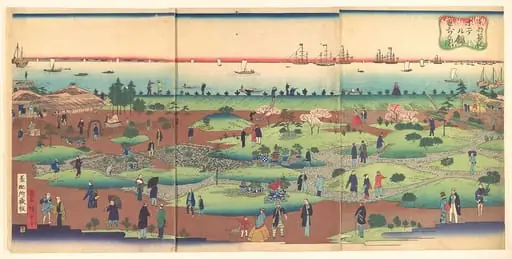 東都築地ホテル館庭前の図|Illustration of the Front Garden of the Tsukiji Hotel in the Eastern Capital (Tōto Tsukiji hoteru kan niwa mae no zu)
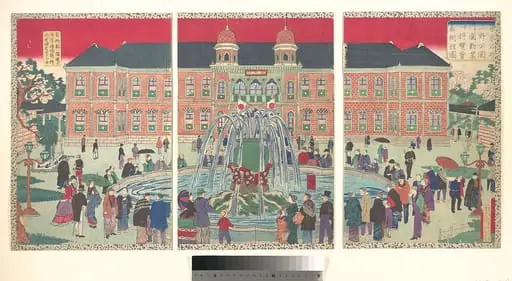 東京名所 上野公園内国勧業第二博覧会美術館図|Illustration of the Museum at the Second National Industrial Exhibition in Ueno, from the series Famous Places in Tokyo (Tokyo meisho-Ueno kōen naikoku kangyō daini hakurankai bijutsukan zu)
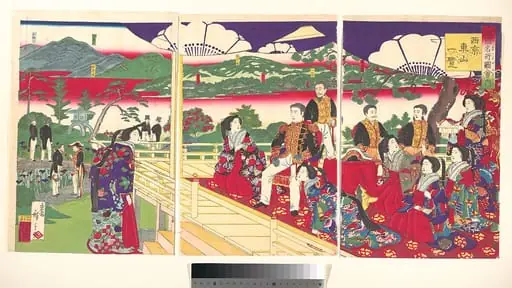 諸国名所図会内 西京東山一覧|A Glimpse of Higayashiyama the Western Capital, from the series Famous Places in the Nation (Shokoku meisho zukai no uchi-Saikyō Higashiyama ichiran)
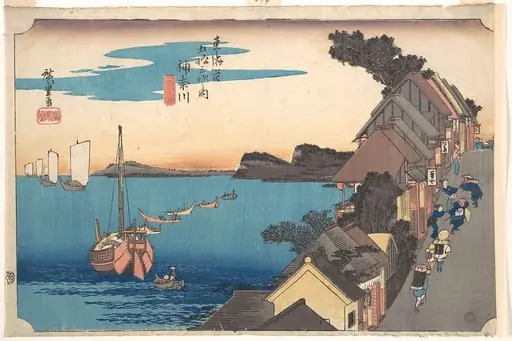 東海道五十三次之内 神奈川 宿台之景|View of the Kanagawa station at sunset
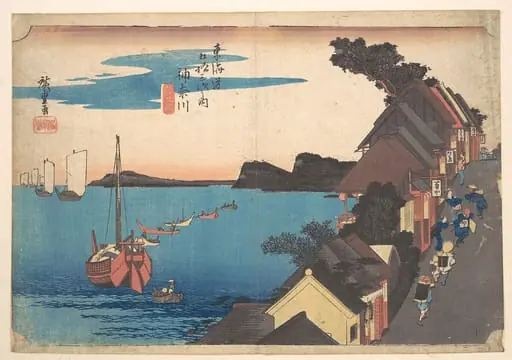 東海道五十三次之内 神奈川 台之景|View of Kangawa at Sunset
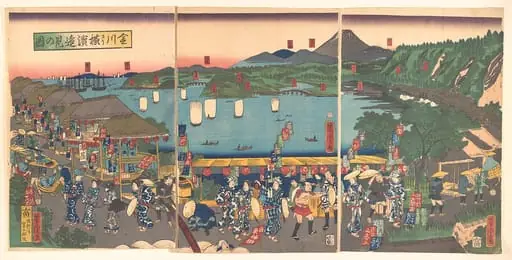 Kanagawa yōri Yokohama...ken no zu|A Distant View of Yokohama from Kanagawa
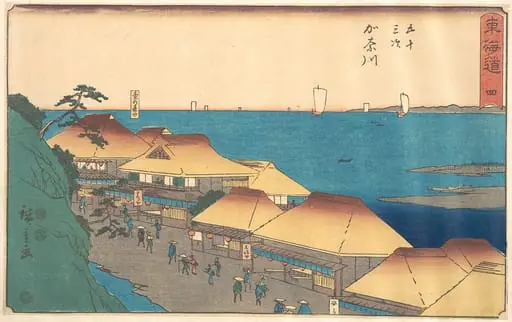 東海道五十三次 神奈川 台の茶や|Kanagawa
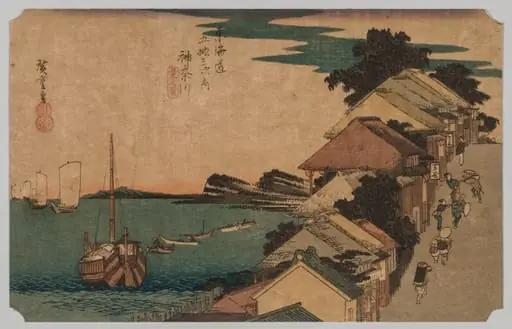 Kanagawa, Inland Sea: Top of the Street
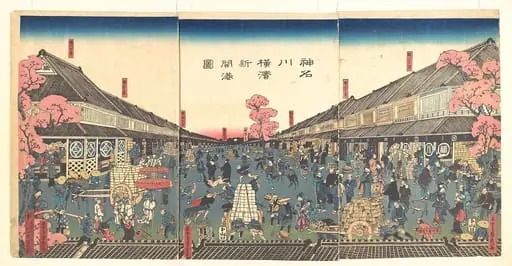 歌川五雲亭貞秀画 『神名川横浜新開港圖』|The Newly Opened Port of Yokohama in Kanagawa Prefecture (Kanagawa Yokohama shinkaikōzu)
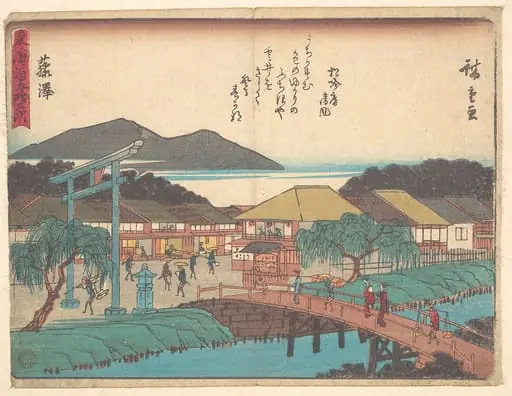 東海道五十三次 藤沢|Fujisawa
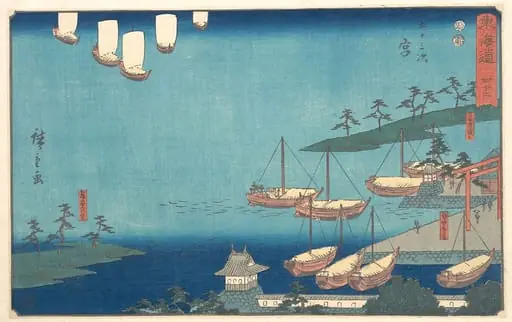 東海道五十三次 宮 七里の渡し 熱田鳥居 寝覚の里|Miya