Artwork
Betrothal of Princess Elizabeth and Frederic V, Elector Palatine
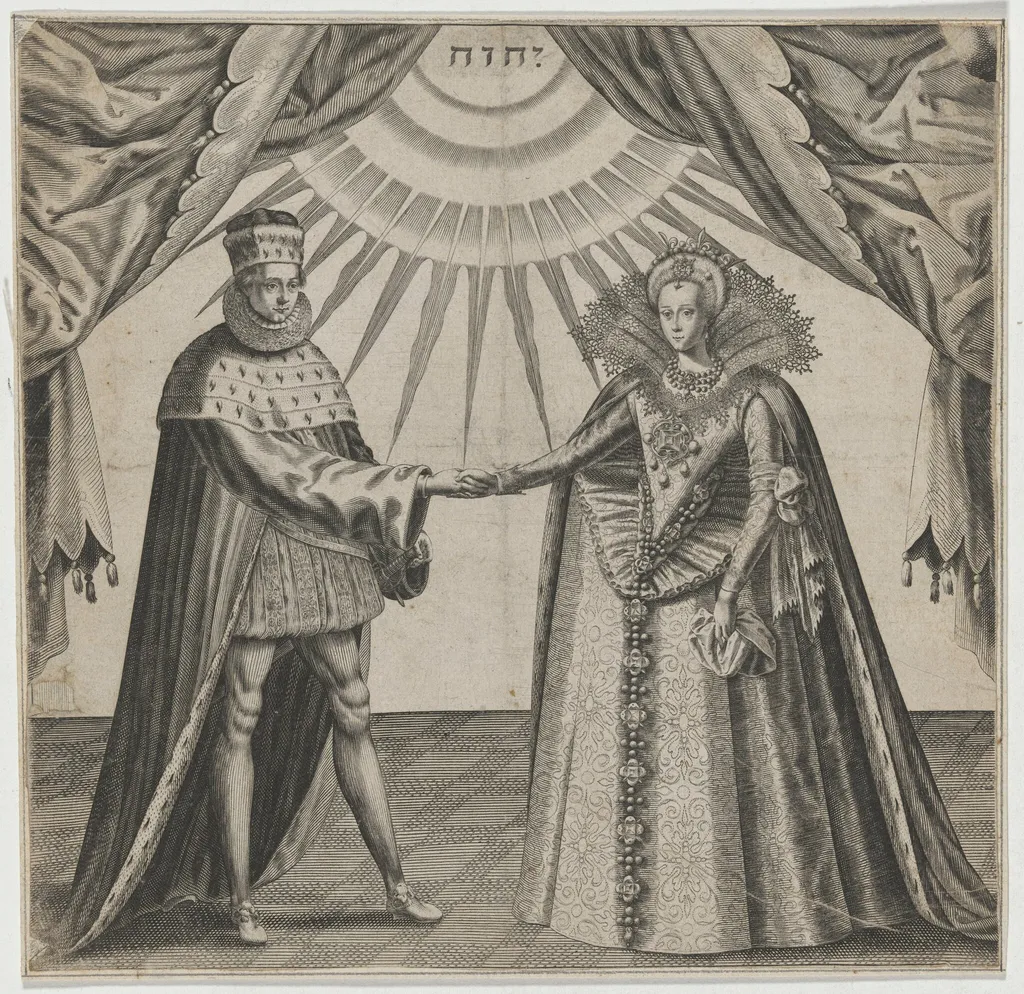
Betrothal of Princess Elizabeth and Frederic V, Elector Palatine is an ink print by the Romanticist artist Unknown 19th Century. It dates from 1850 and is held in the collection of the National Gallery of Art. The print depicts a man and a woman standing side by side, hands clasped.
About this work
The woman has a big, fancy dress with ruffles at the neck and sleeves, plus a long necklace and a flower in her hair.
This engraving shows a man and woman holding hands. The man wears a tall hat, a padded jacket with stripes, and a sword at his side. The woman has a big, fancy dress with ruffles at the neck and sleeves, plus a long necklace and a flower in her hair. Behind them, a rocky archway frames their scene, with light streaming down like rays.
The woman’s dress has tiny patterns stitched into it, and both figures look calm but formal. The date "1777" is carved above them in Hebrew letters.
This is an example of engraving, where lines are carved into metal to print the image.
Overview
The print depicts a man and a woman standing side by side, hands clasped. The male figure wears a tall hat, a striped padded jacket and carries a sword; the female figure is dressed in an elaborate gown with ruffled neck and sleeves, a long necklace and a flower tucked in her hair. A rocky arch frames the couple, through which light falls in a radiating manner. The date 1777 appears above the scene in Hebrew characters.
Subject & Meaning
The composition represents the betrothal of Princess Elizabeth and Frederick V, Elector Palatine, presenting the couple in a formal, composed pose that emphasizes their union. The decorative attire and the architectural setting convey the ceremonial importance of the marriage, while the calm expressions suggest a dignified, contractual agreement rather than an emotional encounter.
Technique & Style
Executed as an engraving, the image was created by incising lines into a metal plate, allowing for fine detail such as the tiny stitched patterns on the woman's dress and the texture of the striped jacket. The linear quality of the medium produces a clear, crisp rendering of the figures and the surrounding arch, with light suggested by varying line density.
History & Provenance
The work bears the date 1777, indicating its production in the late eighteenth century. The use of Hebrew lettering for the date is an unusual decorative element for a European print of this period, though no further information about the artist or original ownership is provided in the available data.
Artist & collection

Artist

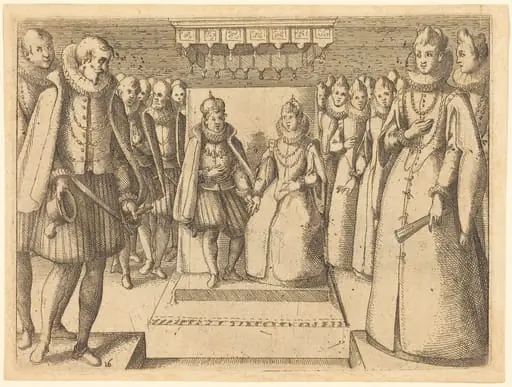 Meeting of Margaret of Austria and Philip III
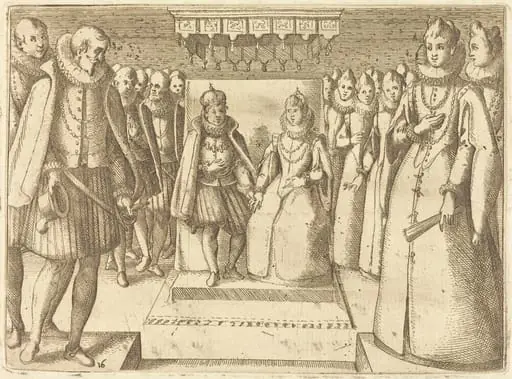 Meeting of Margaret of Austria and Philip III
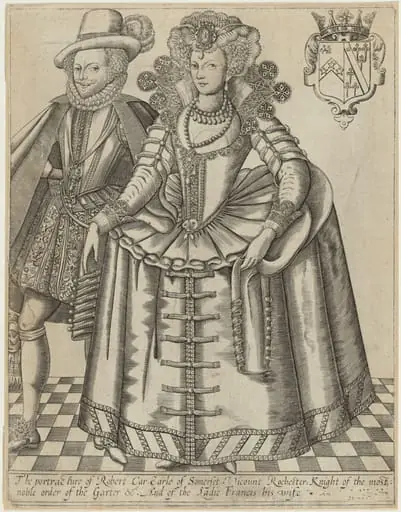 Robert Carr, Earl of Somerset and His Countess
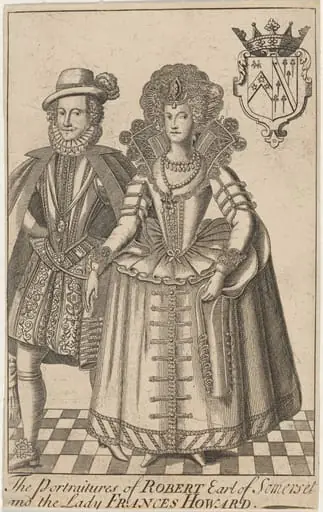 The Portraitures of Robert, Earl of Somerset and Lady Frances Howard
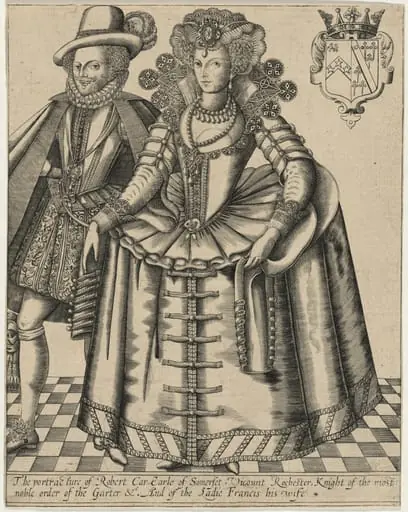 Robert Carr, Earl of Somerset and His Countess
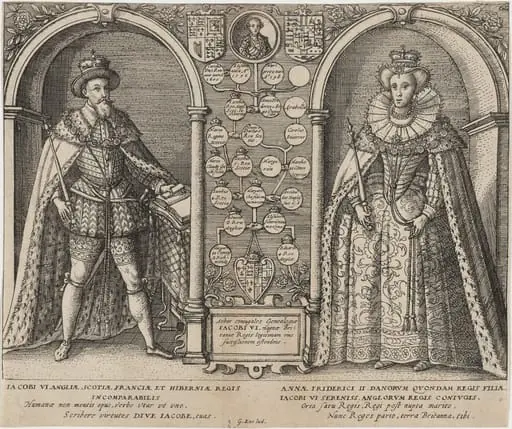 James I and Anne of Denmark with GeneologicalTree
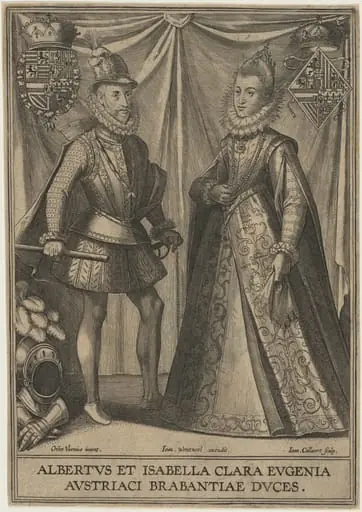 Archduke Albert and Isabella Clara Eugenie of Austria
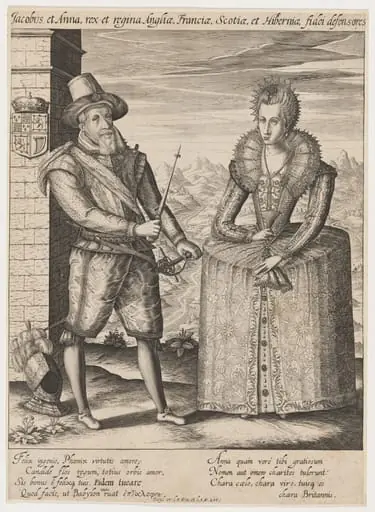 James I and Anne of Denmark
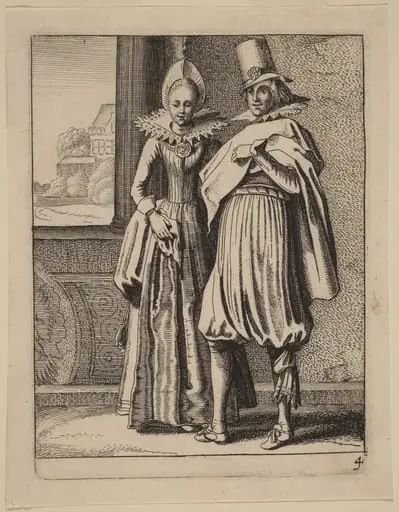 Two Figures in Costume
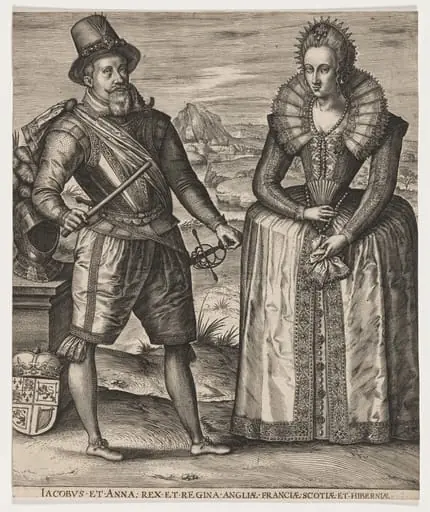 James I and Anne of Denmark