Artwork
The Portraitures of Robert, Earl of Somerset and Lady Frances Howard
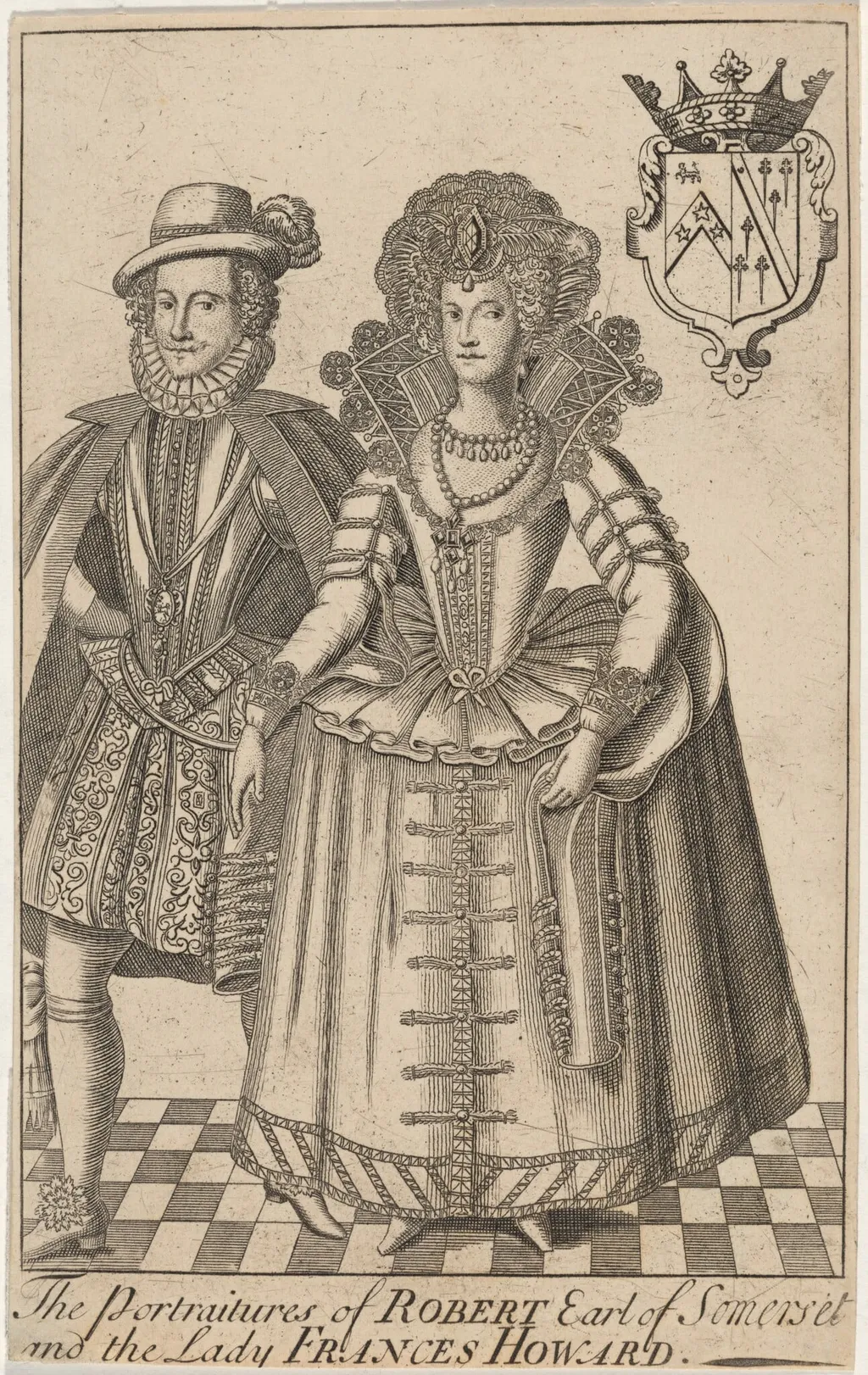
The Portraitures of Robert, Earl of Somerset and Lady Frances Howard is an ink print by the Baroque artist Renold Elstrack. It dates from 1618 and is held in the collection of the National Gallery of Art.
About this work
Overview
An engraving from 1618 by Renold Elstrack depicts Robert, Earl of Somerset, and Lady Frances Howard as a paired portrait.
An engraving from 1618 by Renold Elstrack depicts Robert, Earl of Somerset, and Lady Frances Howard as a paired portrait. Rendered in monochrome, the print captures the couple standing side by side, their hands joined. The composition emphasizes their social status through detailed clothing and formal posture. The work was produced using the intaglio technique, where fine lines incised into a metal plate hold ink for printing.
Subject & Meaning
The portrait presents Robert and Frances as a united pair, their clasped hands suggesting alliance and shared status. Both figures are dressed in the height of early 17th-century aristocratic fashion, signaling their prominence at court. The direct gaze and symmetrical positioning convey dignity and composure, aligning with the conventions of elite portraiture meant to assert identity and authority.
Technique & Style
Elstrack employed fine, controlled lines to model form and texture, particularly in the intricate lace, chains, and fabric folds of Frances’s attire. The shading is achieved through hatching and cross-hatching, typical of engraving’s precision. The man’s hat and coat are rendered with broader strokes, contrasting the woman’s densely worked garments. The flat background focuses attention entirely on the figures and their attire.
History & Provenance
Created in 1618, the engraving emerged during a period of intense public interest in the couple following their involvement in the murder of Sir Thomas Overbury. Though the portrait predates their trial, it was likely produced to affirm their standing amid scandal. Its survival suggests it was circulated among court circles or collected as a record of notable figures of the Jacobean era.
Context
In early 17th-century England, engraved portraits served as affordable reproductions of elite likenesses, often distributed to reinforce social connections. Elstrack, a prominent engraver, frequently worked for the court and nobility. This print reflects the period’s fascination with aristocratic identity and the use of visual media to shape public perception, even amid political turmoil.
Legacy
The engraving remains a documented artifact of Jacobean portraiture and the intersection of art and scandal. It provides insight into how nobility presented themselves visually during a time of moral and political crisis. Though not widely known today, it contributes to the historical record of how images were used to negotiate reputation and status in early modern England.
Artist & collection

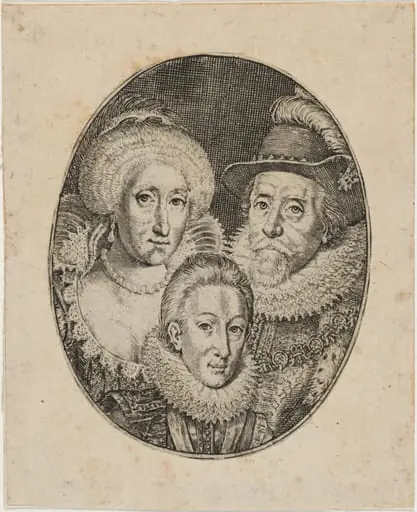 James I, Anne of Denmark, and Prince Charles
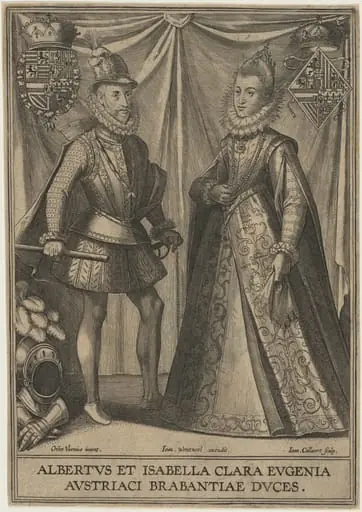 Archduke Albert and Isabella Clara Eugenie of Austria
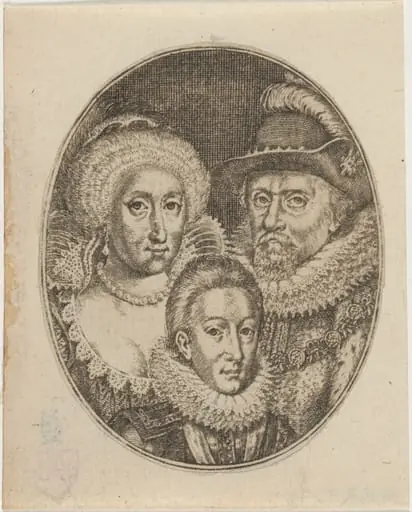 James I, Anne of Denmark, and Prince Charles
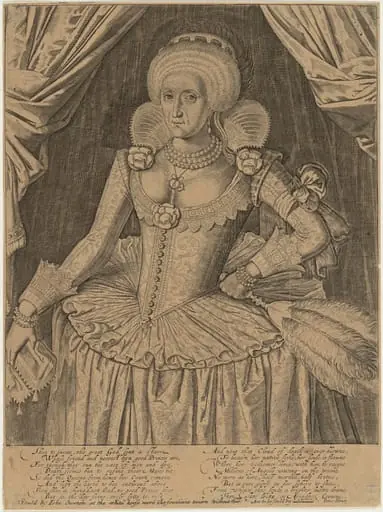 Anne of Denmark
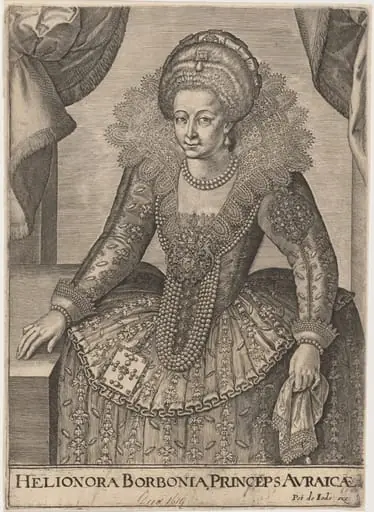 Eleanora, Princess of Orange
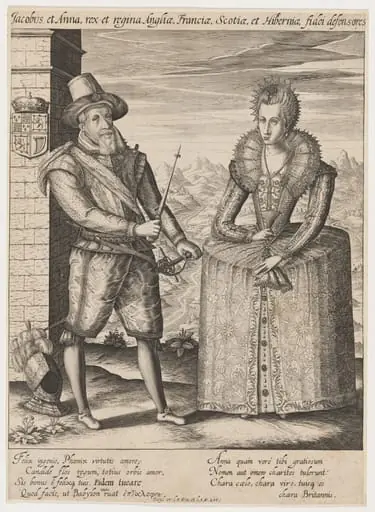 James I and Anne of Denmark
 Two Figures in Costume
 Two Figures in Costume
 James I and Anne of Denmark with GeneologicalTree
 Mary, Queen of Scots