Artwork
Christopher Columbus
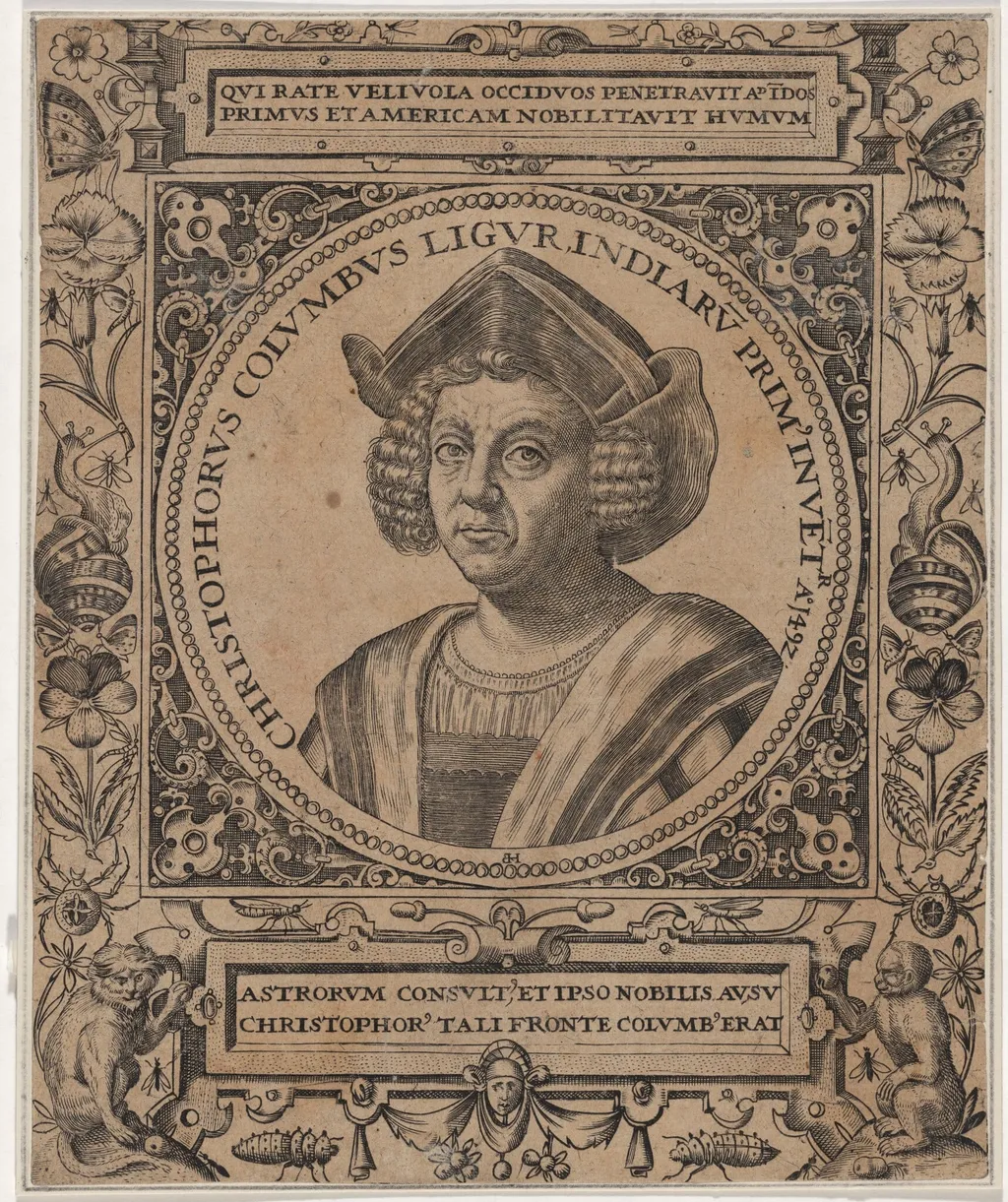
Christopher Columbus is an ink print by the Romanticist artist Unknown 19th Century. It dates from 1850 and is held in the collection of the National Gallery of Art.
About this work
Overview
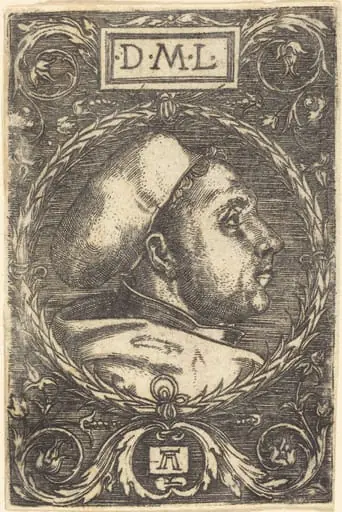
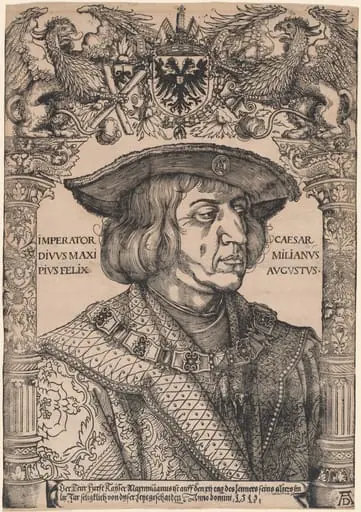
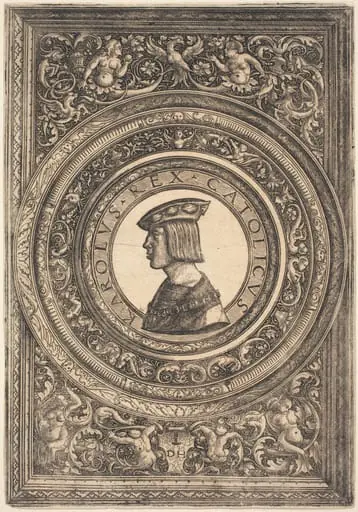
The portrait is framed by ornate decorative elements—floral motifs, swirling patterns, and chain-like borders—surrounding Latin inscriptions identifying him.
This engraving depicts Christopher Columbus in profile, rendered with fine linear detail and tonal shading to suggest volume. The portrait is framed by ornate decorative elements—floral motifs, swirling patterns, and chain-like borders—surrounding Latin inscriptions identifying him. Though the style evokes early modern portraiture, the work was produced in a later period, reflecting retrospective admiration rather than contemporary documentation.
Subject & Meaning
Columbus is portrayed with solemnity, his gaze fixed forward, emphasizing resolve and gravitas. The chain around his neck may allude to honor or status, while the elaborate border and Latin text elevate his image to that of a historical figure worthy of commemoration. The composition avoids narrative context, focusing instead on individual dignity and symbolic recognition.
Technique & Style
The image was created using engraving, a printmaking method involving incised lines on a metal plate. Fine, controlled strokes model the face with subtle gradations of light and shadow, producing a three-dimensional effect. The background patterns are meticulously rendered, contrasting with the restrained realism of the portrait to frame the subject within a decorative, almost heraldic setting.
History & Provenance
Though styled to resemble early modern portraiture, the engraving was likely produced in the 18th or 19th century, during a period of renewed interest in Columbus’s legacy. No specific artist or original commission is documented, suggesting it may have been part of a broader circulation of printed images meant to reinforce national or imperial narratives of exploration.
Context
In the centuries after Columbus’s death, his image was frequently reproduced in prints to serve political, educational, or patriotic ends. This engraving reflects a trend of idealizing explorers through formal, dignified portraiture, often detached from historical accuracy. The Latin text and ornamental frame align with traditions of scholarly and noble portraiture common in early modern Europe.
Legacy
The image contributes to a visual tradition that shaped public perception of Columbus as a solitary, heroic figure. Its stylistic anachronism reveals how later generations projected contemporary ideals onto historical subjects. As a printed artifact, it exemplifies how print media disseminated and stabilized symbolic representations of exploration across Europe and the Americas.
Artist & collection

Artist