Artwork
Emperor Maximilian I
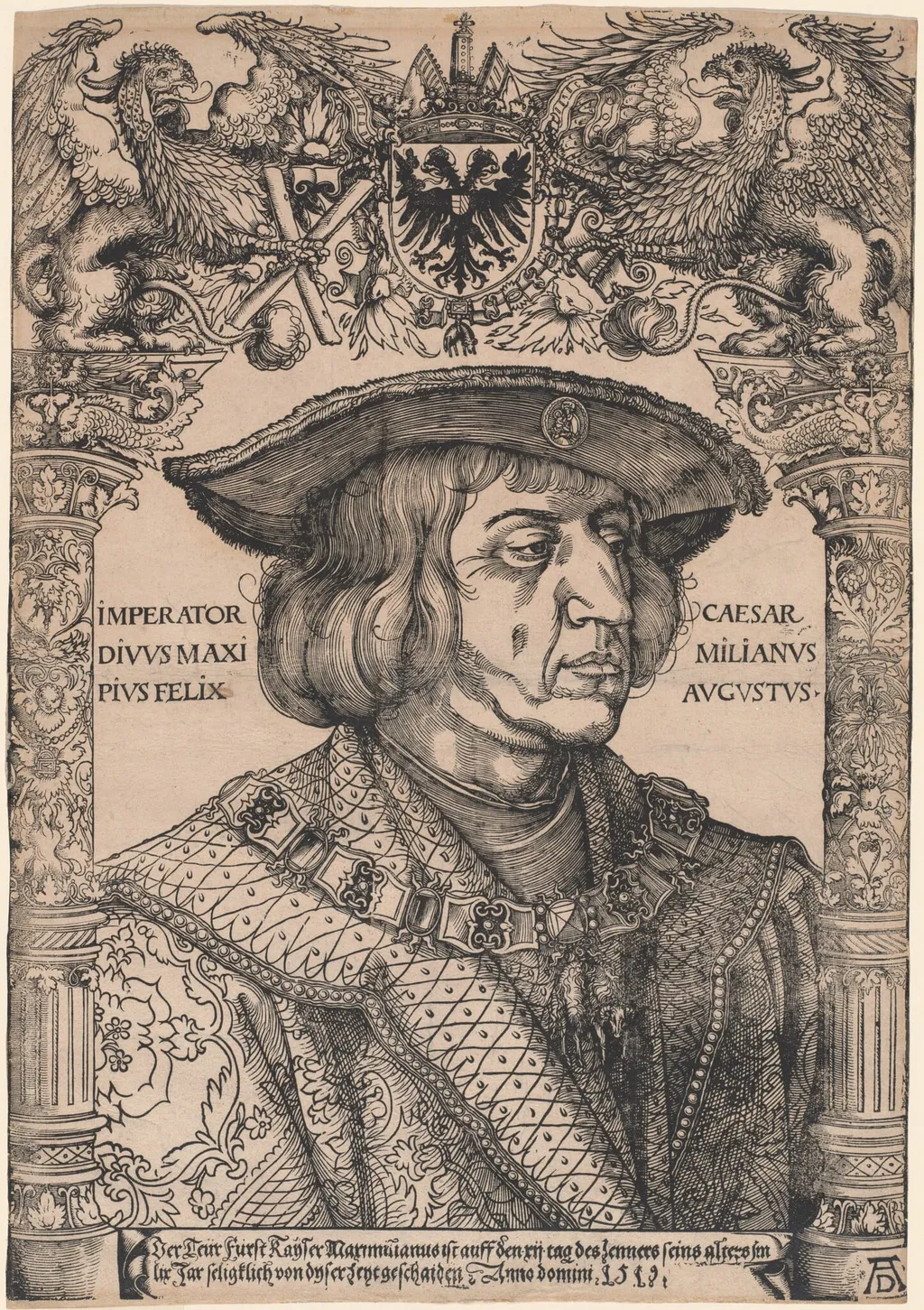
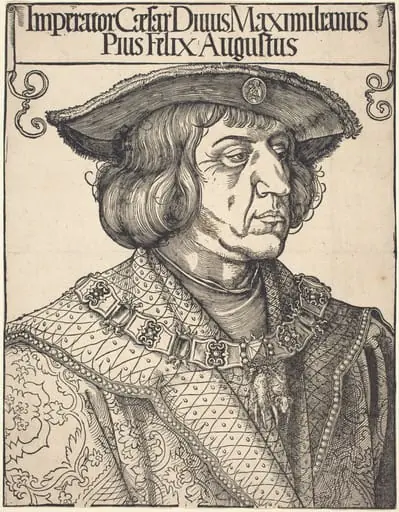
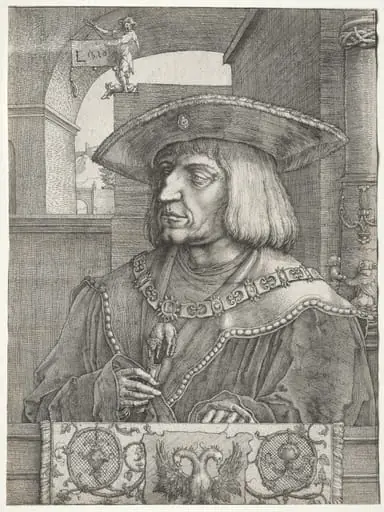
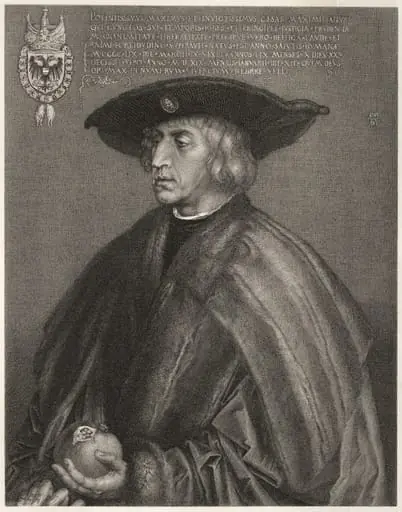
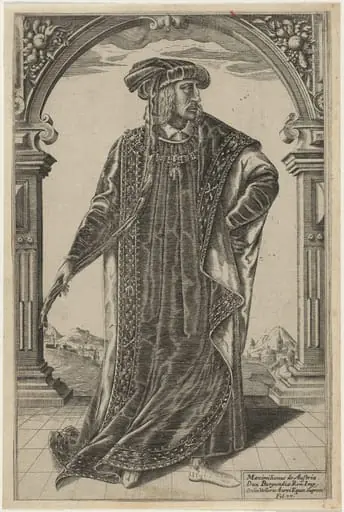
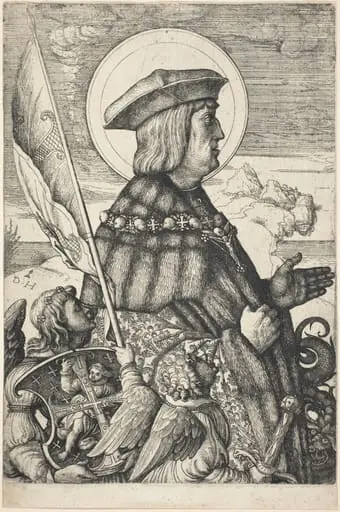
Emperor Maximilian I is an ink print by the Renaissance artist Weiditz, II, Hans. It dates from 1519 and is held in the collection of the National Gallery of Art.
About this work
Overview
Rendered in black ink on handmade laid paper, the portrait presents the ruler in full armor beneath an ornate, cluttered border.
This 1519 woodcut depicts Emperor Maximilian I, produced by Hans Weiditz II. Rendered in black ink on handmade laid paper, the portrait presents the ruler in full armor beneath an ornate, cluttered border. The image is not a naturalistic likeness but a symbolic representation, combining realistic facial features with elaborate decorative elements that elevate his status through visual hierarchy and textual affirmation.
Subject & Meaning
Maximilian is shown wearing elaborate plate armor and a tall, feathered hat, symbols of his imperial authority. Above his head, inscriptions invoke ancient Roman titles—Caesar and Augustus—to align him with the legacy of classical emperors. The surrounding motifs—crowns, foliage, and mythical creatures—function as heraldic embellishments, reinforcing his divine right and dynastic ambition rather than documenting his physical appearance.
Technique & Style
Executed as a woodcut, the image relies on carved lines and block-printed ink to create contrast and texture. The armor’s metallic surfaces are suggested through dense, parallel hatching, while the background’s intricate patterns are rendered with fine, flowing incisions. The paper’s natural grain and slight irregularities enhance the handmade quality, grounding the imperial imagery in the tactile reality of early printmaking.
History & Provenance
Created shortly before Maximilian’s death in 1519, the print was likely part of a broader campaign to cement his legacy through visual propaganda. Produced in the Holy Roman Empire, it circulated among nobility and imperial officials. Surviving examples are rare, with most held in institutional collections, reflecting its original function as a tool of political commemoration rather than mass distribution.
Context
In early 16th-century Europe, woodcuts served as affordable yet potent vehicles for projecting power. Maximilian, a patron of the arts, commissioned numerous prints to shape his public image. This work aligns with a trend of blending classical allusion with contemporary heraldry, reflecting the era’s fascination with reviving Roman imperial ideals to legitimize emerging monarchies.
Legacy
The portrait stands as a key example of how print technology transformed political imagery in the Renaissance. Its fusion of realism and symbolism influenced later imperial portraiture across Europe. Though not widely reproduced in its time, its compositional strategy—tying ruler to myth and title—became a template for subsequent dynastic representations in print.
Artist & collection