Artwork
Frederick VI, Duke of Wurtenberg
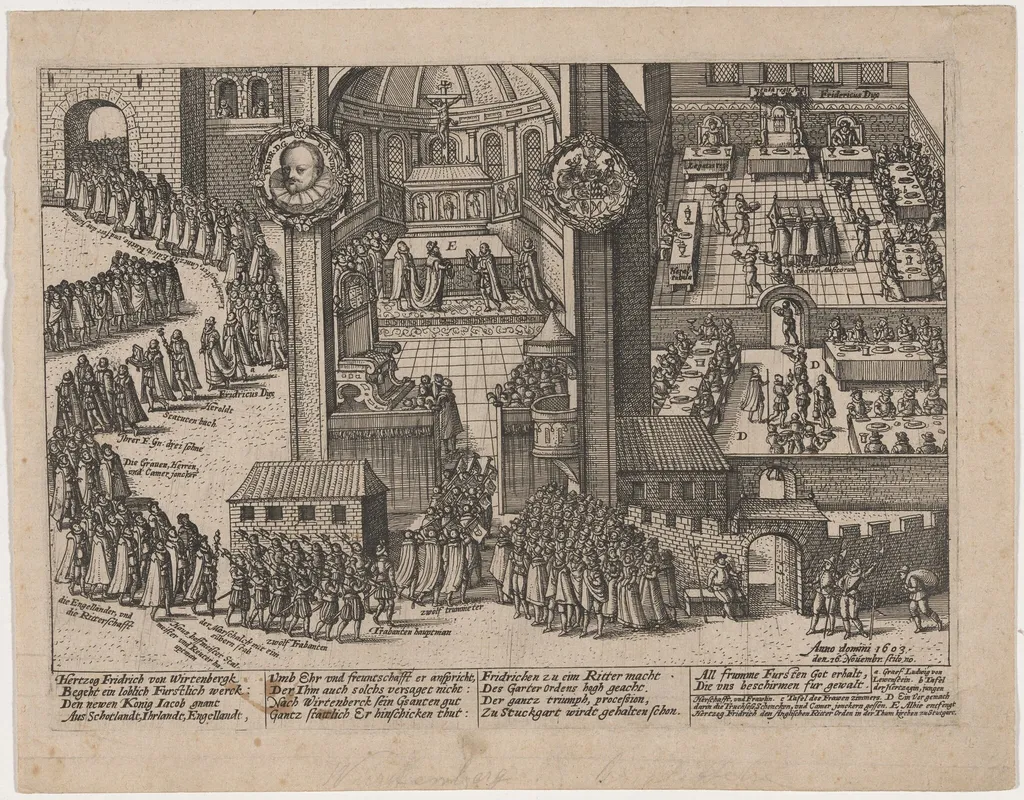
Frederick VI, Duke of Wurtenberg is an ink print by the Romanticist artist Unknown 19th Century. It dates from 1850 and is held in the collection of the National Gallery of Art. This engraving depicts the life of Frederick VI, Duke of Württemberg, through a series of small, labeled scenes arranged in a grid.
About this work
Overview
The intricate detailing suggests a purposeful narrative structure, likely intended for educational or commemorative use rather than pure decoration.
This engraving depicts the life of Frederick VI, Duke of Württemberg, through a series of small, labeled scenes arranged in a grid. Executed in fine black-and-white lines, the composition integrates multiple moments from his life into a single cohesive image. The intricate detailing suggests a purposeful narrative structure, likely intended for educational or commemorative use rather than pure decoration.
Subject & Meaning
Each panel illustrates key events in Frederick VI’s life: his presence at a castle, ceremonial gatherings in a grand hall, acts of knighthood, and public processions. The inclusion of labeled text anchors each scene to documented historical moments, transforming the print into a visual chronicle. The arrangement implies a structured legacy, emphasizing his authority, piety, and civic role within his duchy.
Technique & Style
The artist employed fine-line engraving, using a burin to incise precise grooves into a metal plate, then inked and pressed the image onto paper. The dense cross-hatching and controlled shading create a sense of volume and spatial depth despite the monochrome palette. The uniform scale of scenes and meticulous line work reflect the technical discipline typical of 17th-century German printmaking.
History & Provenance
Produced likely in the early 17th century, the engraving was probably commissioned to honor Frederick VI’s rule or commemorate a significant event in his reign. Such prints circulated among nobility and civic institutions as symbols of legitimacy and continuity. Its survival suggests it was valued as a historical record, though its original publisher and exact date remain undocumented.
Context
In early modern Germany, engraved portraits and life narratives were common tools for reinforcing the status of ruling families. This piece aligns with a tradition of visual biography, where rulers were depicted in ceremonial, religious, and martial roles to affirm their divine right and civic duty. The grid format echoes earlier medieval manuscripts and heraldic panels, adapting them to the print medium.
Legacy
The engraving stands as an example of how print technology extended the reach of dynastic imagery beyond painted portraits. While not widely known today, it reflects the broader cultural practice of using detailed, narrative prints to shape public perception of leadership. Its survival offers insight into how early modern elites curated their public image through visual storytelling.
Artist & collection

Artist

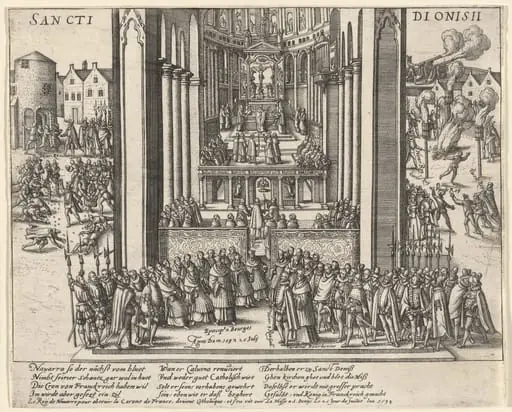 Composite Image Depicting Actions of Henri IV, King of France, upon His Abjuration of the Protestant Faith
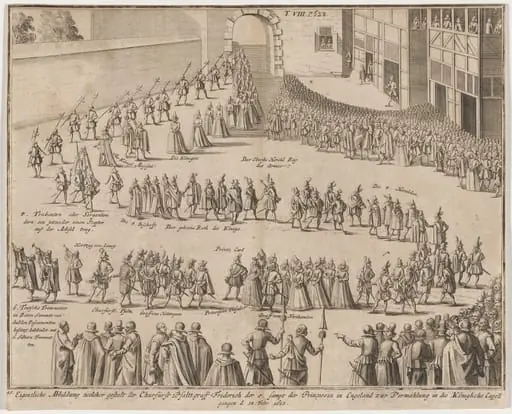 Marriage of Elizabeth to Frederick V of Bohemia, February 14, 1613
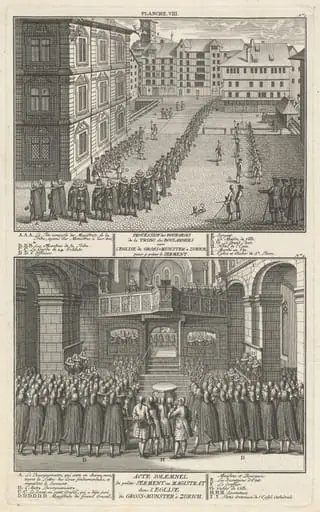 Procession des Bourgeois de la Tribu des Boulangers vers l’Eglise du Grossmunster à Zurich, pour y prêter le Serment; Acte Solemnel de prêter Serment au Magistrat dans l’eglise du Grossmunster à Zurich (Procession and Sermon at the Grossmunster)
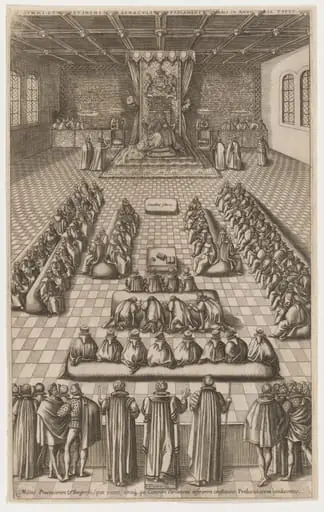 Queen Elizabeth in Parliament
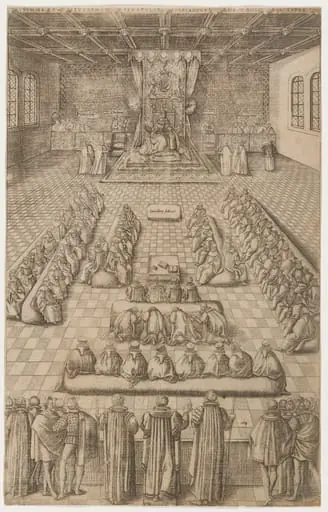 James I in Parliament
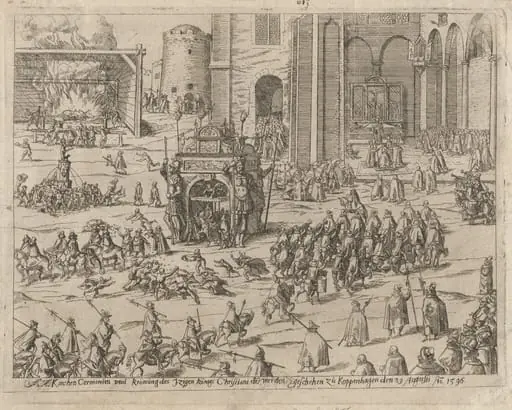 Kirchen Cermonien und Krönung des Zweigen Königs Christiani der Vierden... (Church Ceremonies and Coronation of the Eternal King Christian IV in Copenhagen on August 29, 1596
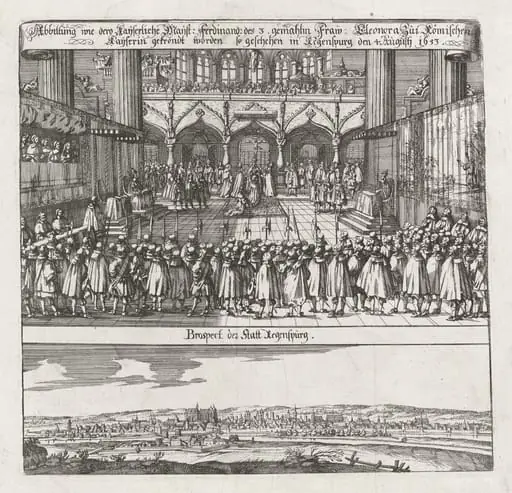 Krönung von Eleonora von Gonzaga, Gemahlin Kaiser Ferdinands III., zur Römisch-Deutschen Kaiserin ; Ansicht von Regensburg (Coronation of Eleonora von Gonzaga, wife of Emperor Ferdinand II, as Empress, with a View of Regensburg)
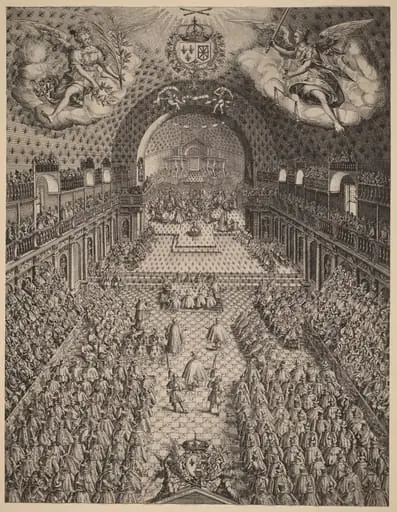 The States General of France (Les Etats Generaux de France)
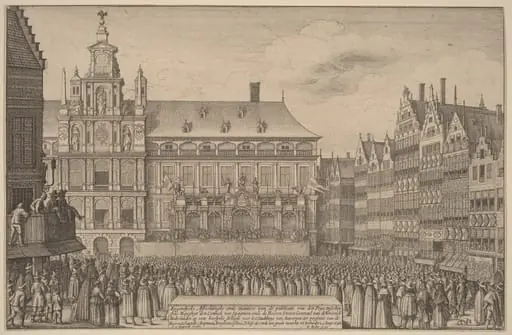 The Peace of Munster
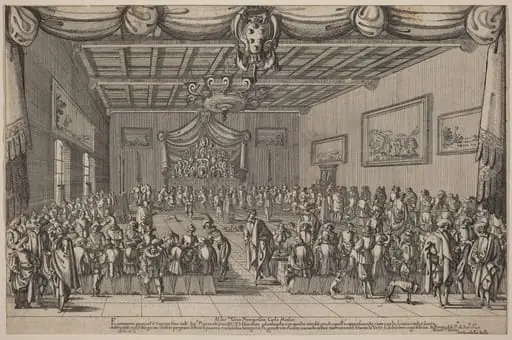 The Banquet of the Piacevoli
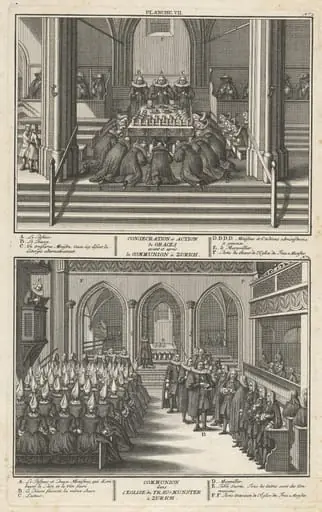 Consecration et Action de Graces avant et après la Communion à Zurich; Communion dans l’Eglise du Fraumunster à Zurich (Consecration and Communion at the Fraumunster, Zurich)
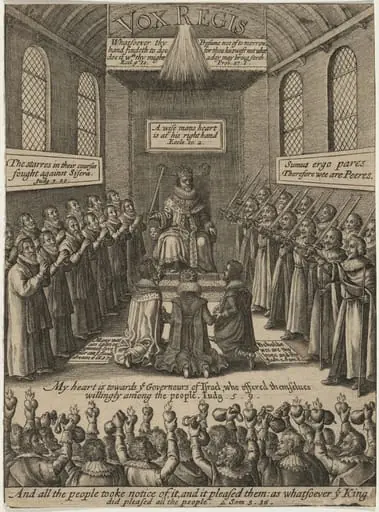 Vox Regis, by Thomas Scott