Artwork
Henry de Vere, 18th Earl of Oxford and Henry Wriothsly, 3rd Earl of Southampton
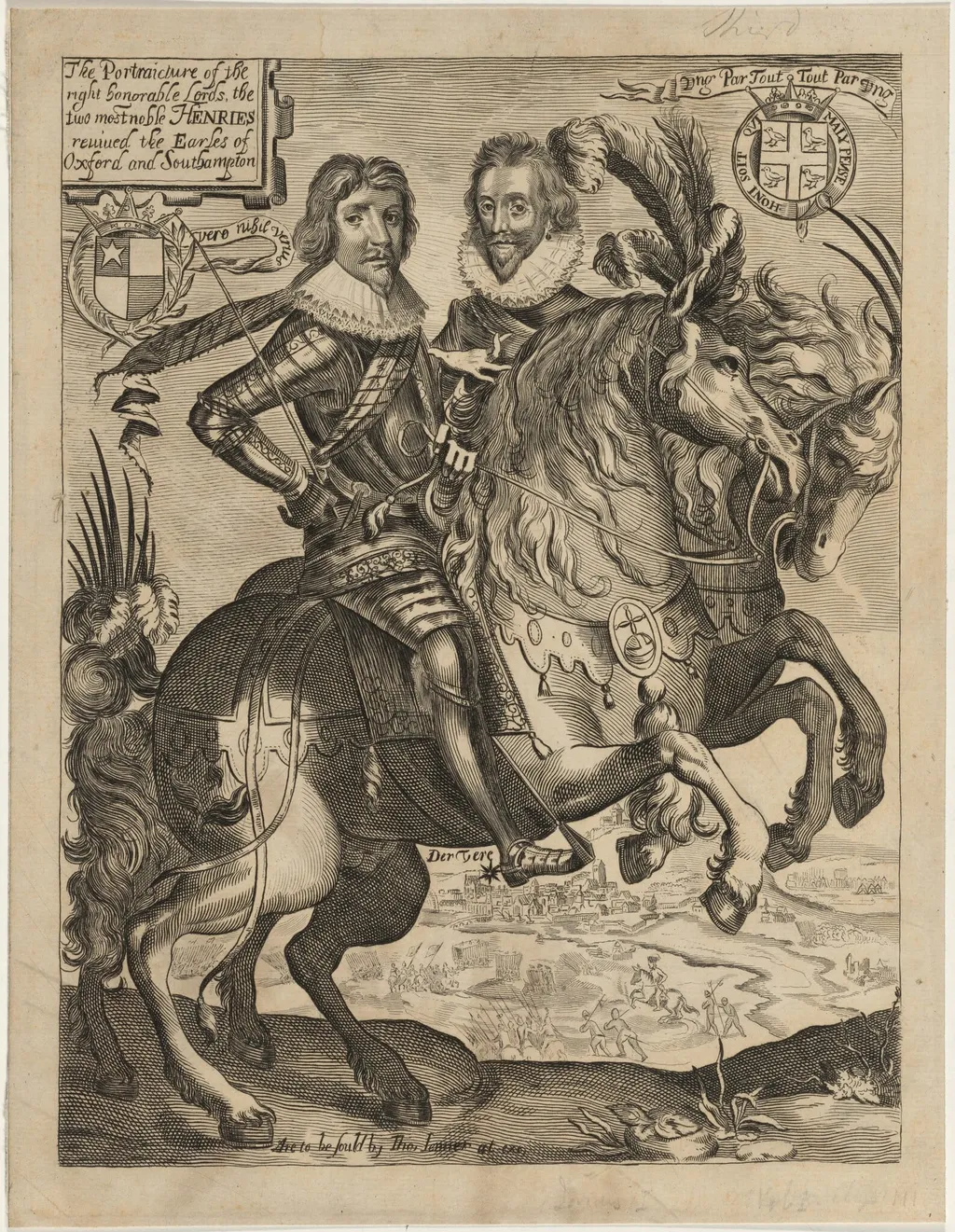
Henry de Vere, 18th Earl of Oxford and Henry Wriothsly, 3rd Earl of Southampton is an ink print by the Romanticist artist Unknown 19th Century. It dates from 1850 and is held in the collection of the National Gallery of Art.
About this work
Overview
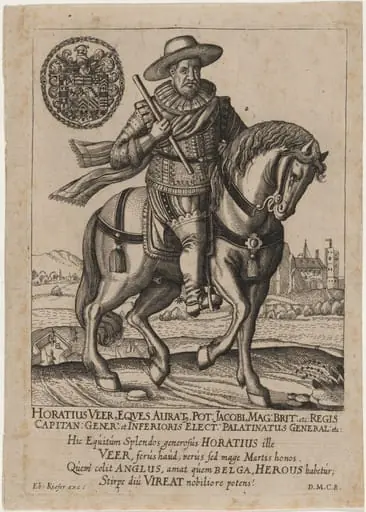
This engraving depicts Henry de Vere, 18th Earl of Oxford, and Henry Wriothesley, 3rd Earl of Southampton, portrayed in formal 17th-century attire.
This engraving depicts Henry de Vere, 18th Earl of Oxford, and Henry Wriothesley, 3rd Earl of Southampton, portrayed in formal 17th-century attire. Rendered in fine linear detail, the composition presents the two noblemen side by side against a richly layered background featuring heraldic symbols, architectural elements, and a miniature town map. The work belongs to the print tradition of the period, emphasizing lineage and status through intricate draftsmanship and symbolic ornamentation.
Subject & Meaning
The two earls, both prominent figures in Elizabethan and Jacobean England, are presented as equals in dignity, despite differing social roles. Their paired representation suggests a connection—perhaps political, familial, or cultural—between their houses. The inclusion of coats of arms and a town map reinforces their territorial influence and noble identity, while the title 'the two most noble Henries' elevates their collective stature within the aristocratic hierarchy.
Technique & Style
The engraving employs precise cross-hatching and fine line work to model form and texture, particularly in the fabric of their garments and the atmospheric background. Sharp, controlled strokes define the contours of their clothing, swords, and feathered hats, while the swirling decorative elements around them are rendered with rhythmic precision. The technique reflects the skill of a master printmaker aiming for clarity and ornamental richness rather than painterly effects.
History & Provenance
Created in the early 17th century, the print likely served as a portrait for aristocratic circulation or as part of a genealogical record. Its detailed heraldry and inscribed titles suggest it was commissioned or produced for private or institutional use, possibly by a family ally or a publisher of noble portraiture. No definitive record of its original publisher survives, but its style aligns with English engraving practices of the Jacobean era.
Context
During the reigns of Elizabeth I and James I, portraiture in print became a tool for asserting noble identity beyond the court. Engravings like this one circulated among the gentry, reinforcing social hierarchies through visual symbolism. The fusion of natural and urban elements in the background reflects contemporary ideals of landed authority—where estate, lineage, and civic presence intertwined in the aristocratic imagination.
Legacy
Though not widely reproduced today, this engraving remains a valuable example of early modern English print culture. It preserves the visual language of aristocratic self-representation, offering insight into how noble families curated their public image through controlled imagery. Its technical precision and symbolic density continue to inform studies of portraiture, heraldry, and the material culture of early Stuart England.
Artist & collection

Artist

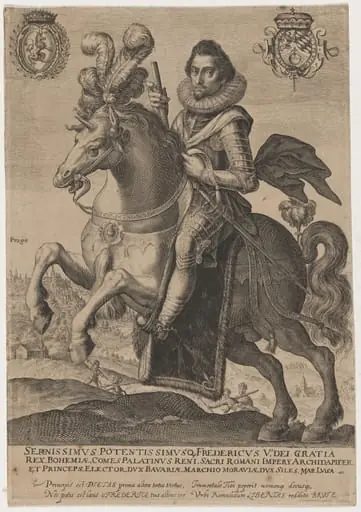 Frederick, King of Bohemia
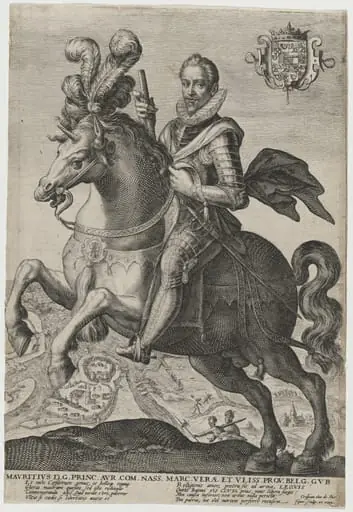 Maurice of Nassau, Prince of Orange
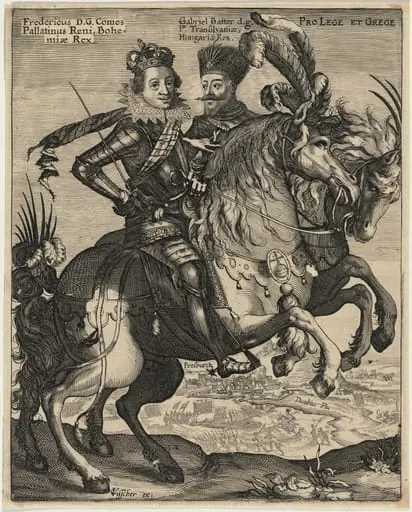 Frederick V, King of Bohemia and Gabriel II, Prince of Transylvania
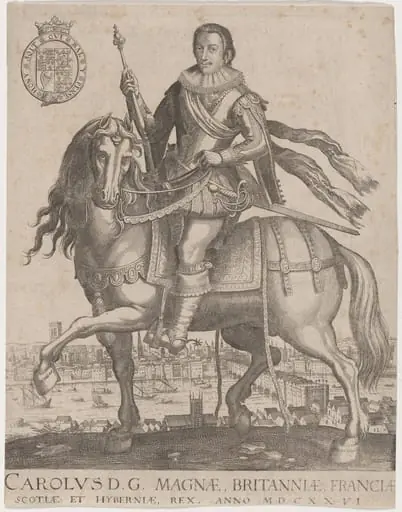 Charles I
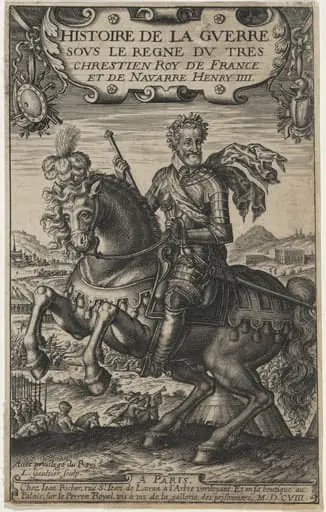 Henry IV
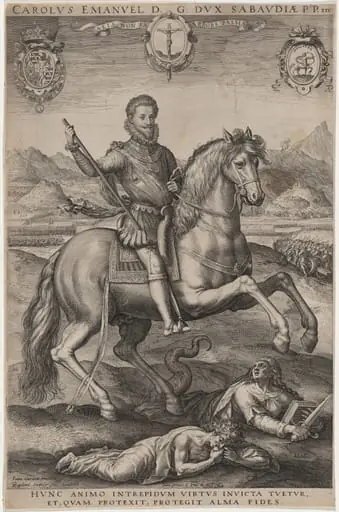 Charles Emmanuel, Prince of Piedmont
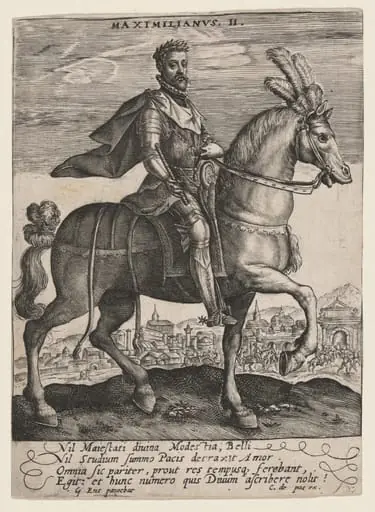 Maximilianus II
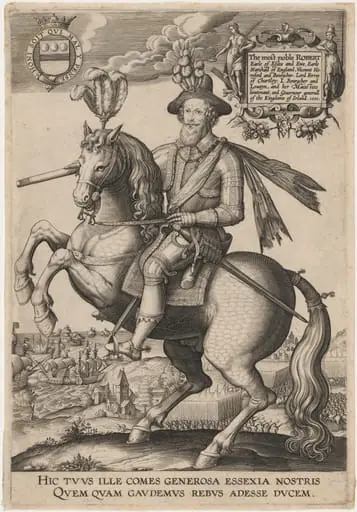 Robert Devereux, Second Earl of Essex
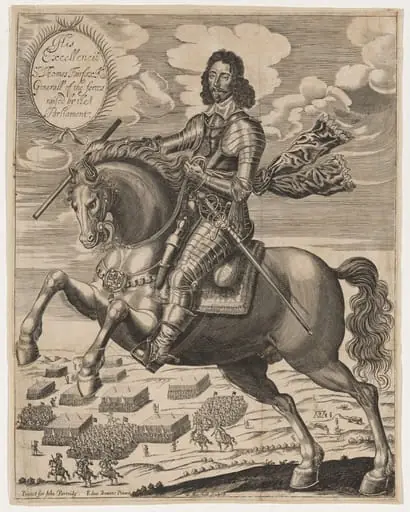 Sir Thomas Fairfax, General of the Forces Raised by Parliament
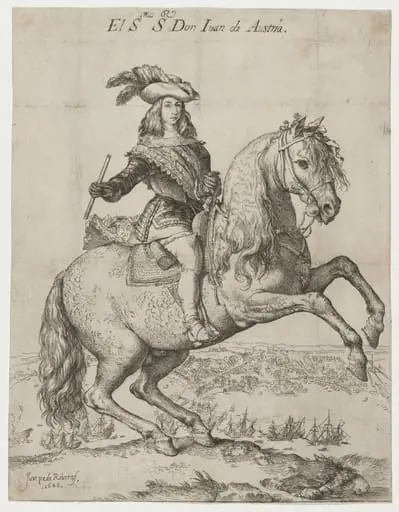 Equestrian Portrait of Don Juan de Austria
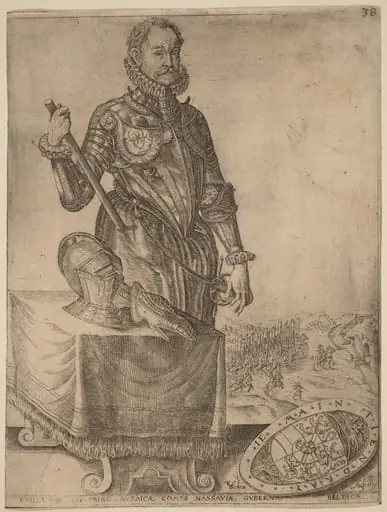 William of Nassau, Prince of Orange
 Horace Vere, Baron Vere of Tilbury