Artwork
Henry VII
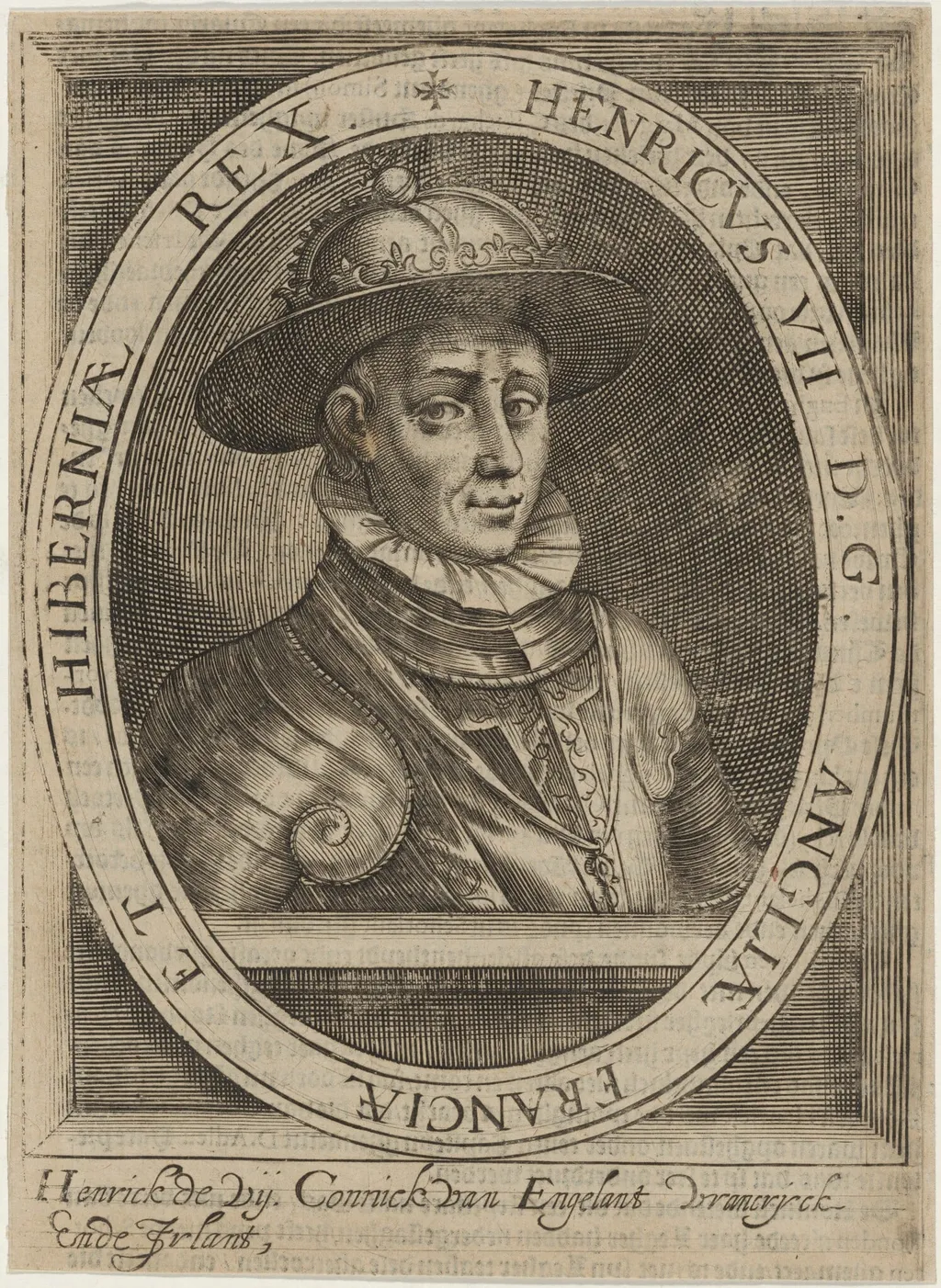
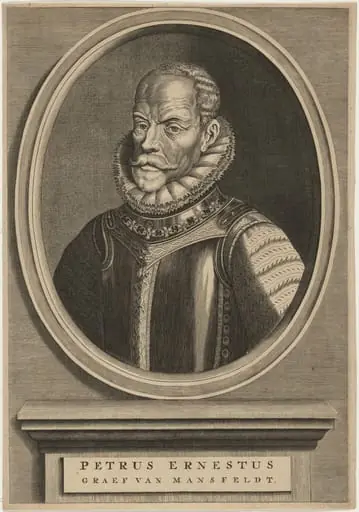
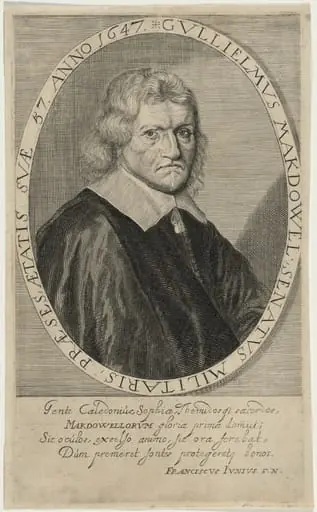
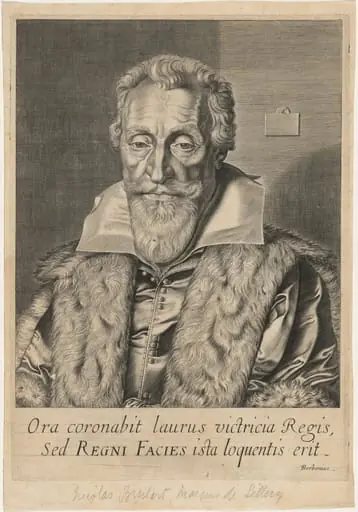
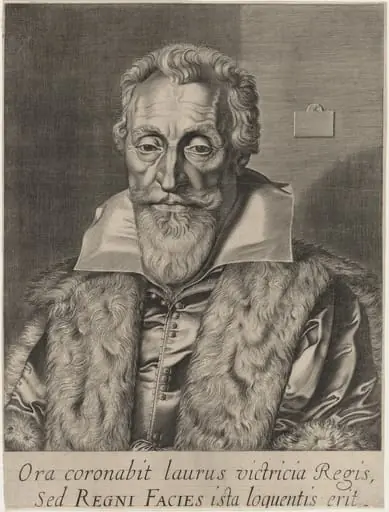
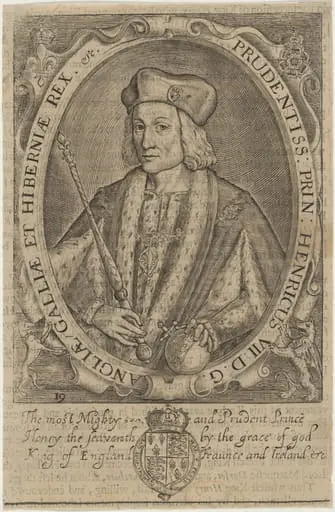
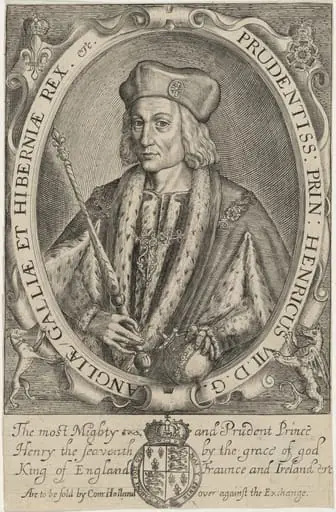
Henry VII is an ink print by the Baroque artist Unknown 19th Century. It dates from 1618 and is held in the collection of the National Gallery of Art. The print is a black‑and‑white engraving depicting a dignified male figure.
About this work
Overview
The print is a black‑and‑white engraving depicting a dignified male figure. He is shown with a solemn expression, a broad‑collared shirt, a dark hat adorned with a feather, and a decorative chain around his neck. The composition is set against an unadorned backdrop, while the margins contain ornamental script that identifies the sitter’s titles.
Subject & Meaning
The figure is identified as Henry VII, styled as King of England and Duke of Ireland, as indicated by the surrounding legend. The portrait emphasizes regal authority through the sitter’s composed demeanor, formal attire, and the inclusion of heraldic titles, reflecting the early Tudor emphasis on consolidating monarchical legitimacy after the Wars of the Roses.
Technique & Style
Executed as an engraving, the image relies on incised lines of varying density to model light and shadow, creating a textured surface that suggests depth. Fine cross‑hatching renders the folds of clothing and the feathered hat, while broader strokes define the facial features, demonstrating the precision typical of early 16th‑century printmaking.
History & Provenance
The print belongs to the early modern period when portrait engravings served both as political propaganda and as a means of disseminating the monarch’s likeness beyond the court. Its survival in collections suggests it was reproduced for a wider audience, likely distributed among courtiers and foreign dignitaries to reinforce Henry VII’s sovereign image.
Artist & collection

Artist