Artwork
James I
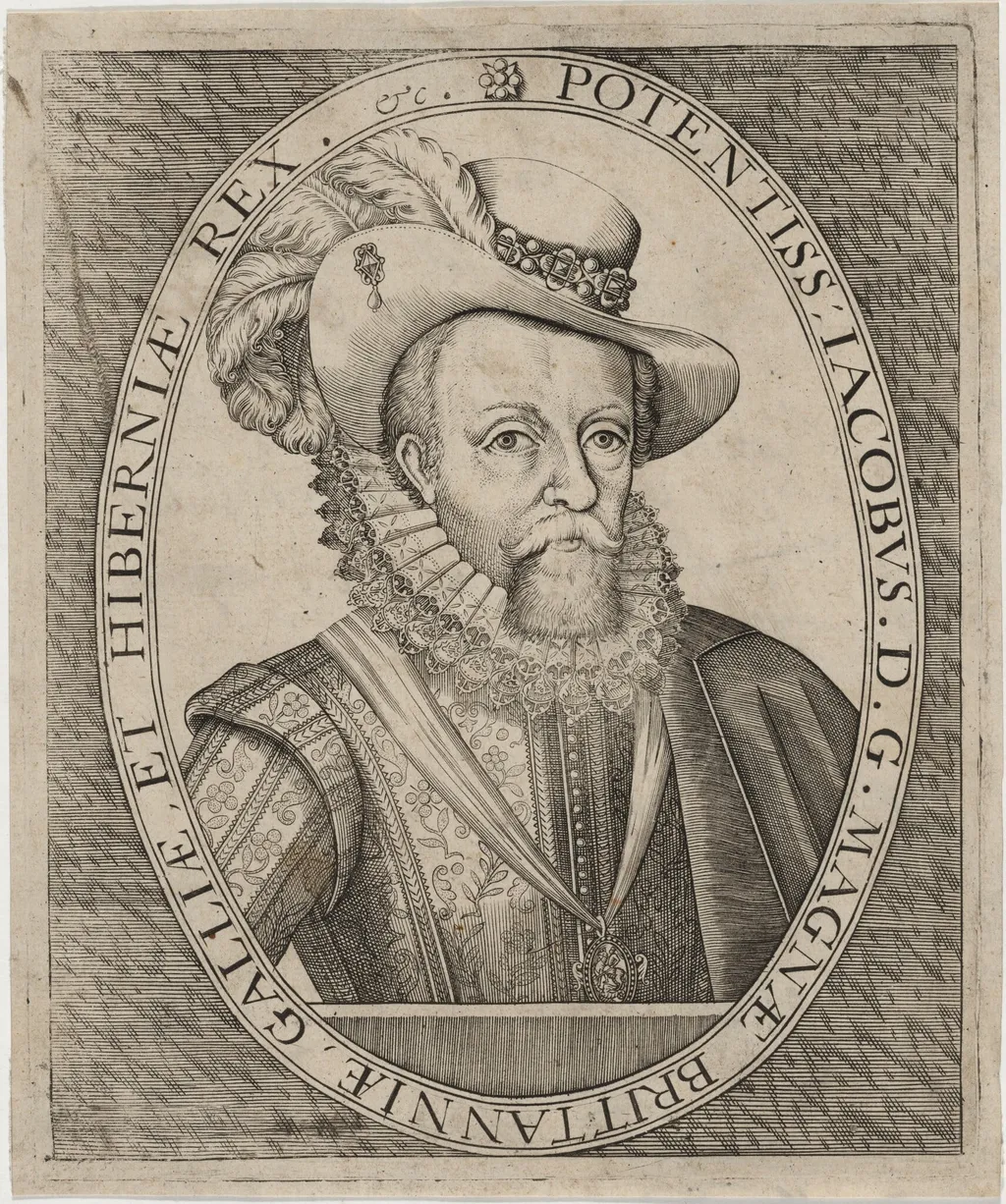
James I is an ink print by the Romanticist artist Unknown 19th Century. It dates from 1850 and is held in the collection of the National Gallery of Art.
About this work
Overview
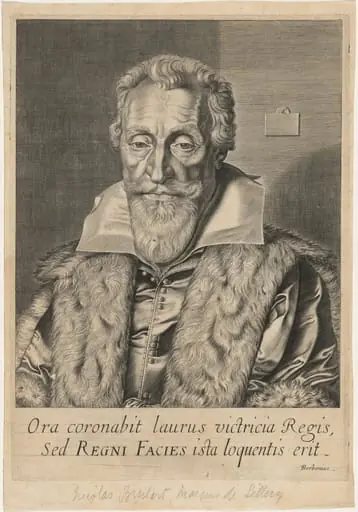
The artist employs cross-hatching—layered, intersecting lines—to model form and texture, creating a sense of volume without color.
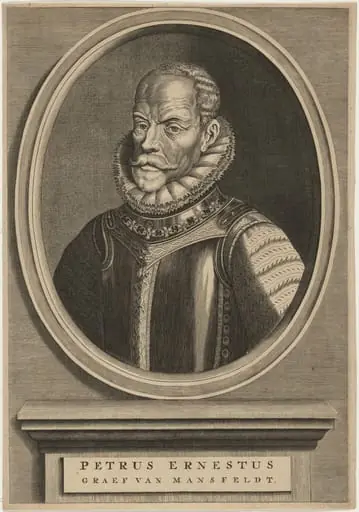
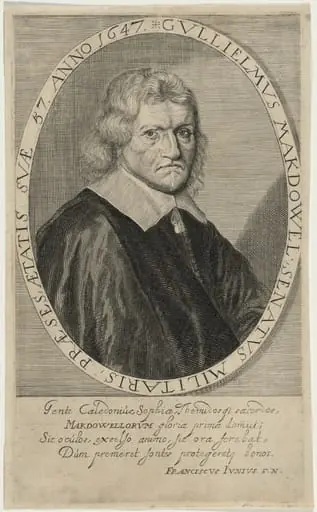
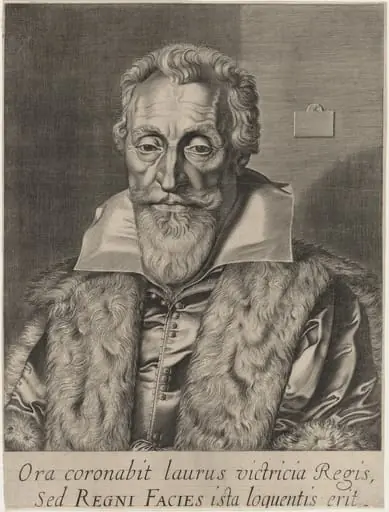
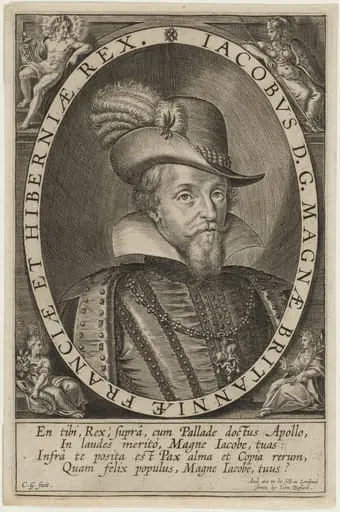
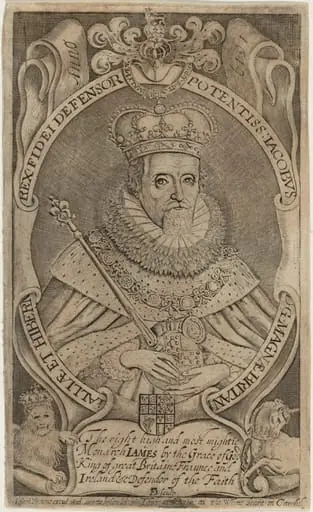
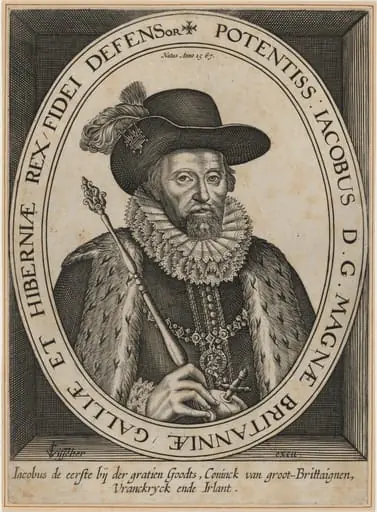
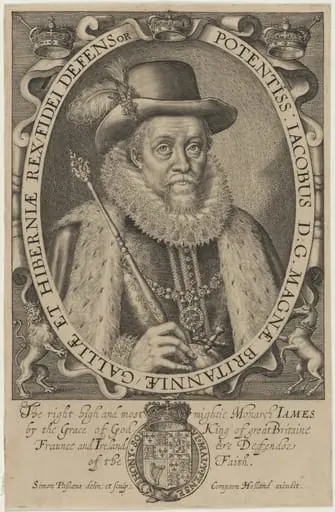
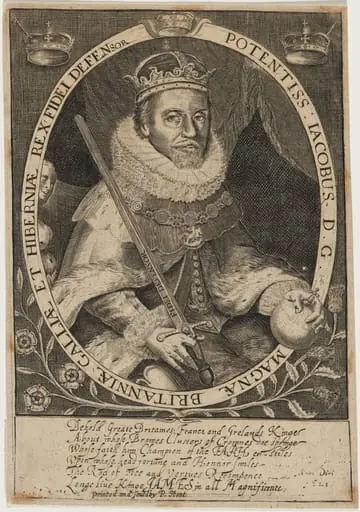
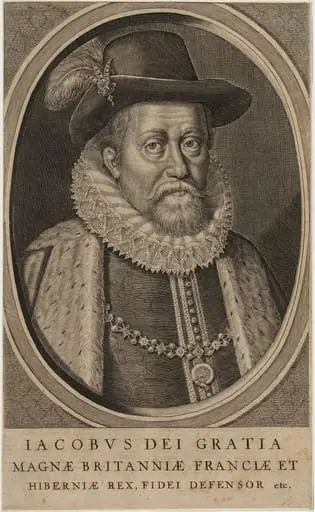
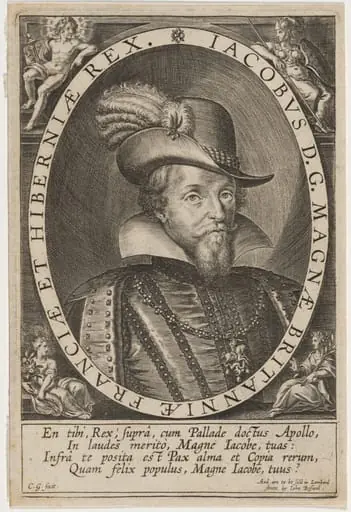
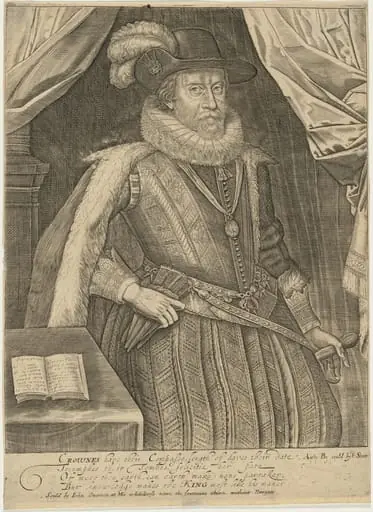
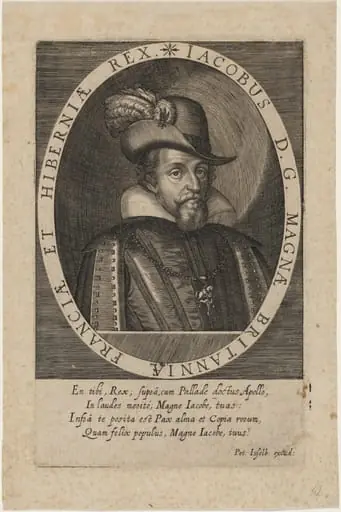
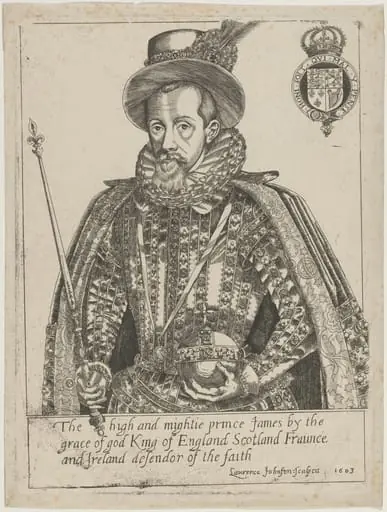
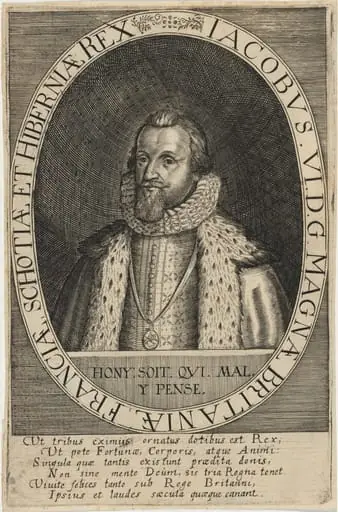
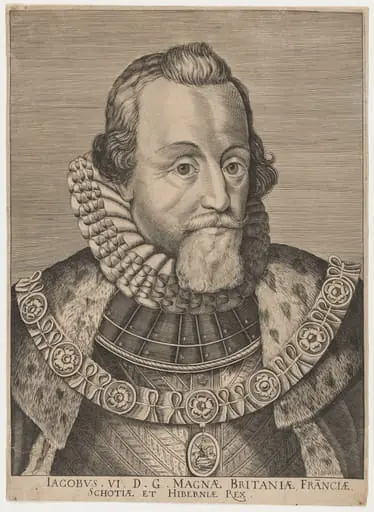
This black-and-white engraving depicts James I of England, rendered in fine linear detail. The portrait is framed within an ornate oval border inscribed with text, isolating the figure against a plain background. The artist employs cross-hatching—layered, intersecting lines—to model form and texture, creating a sense of volume without color. The technique highlights the precision typical of early 17th-century printmaking.
Subject & Meaning
The portrait presents James I in royal attire, emphasizing his status through elaborate clothing: a ruffled collar, a dark, richly textured coat, and a broad-brimmed hat adorned with feathers. The framing and inscription reinforce his authority, positioning him as a figure of state rather than a private individual. The composition reflects the conventions of monarchical portraiture, where visual form supports political identity.
Technique & Style
The image is executed in engraving, a method involving incised lines on a metal plate. The artist uses dense cross-hatching to build tonal gradations, particularly in the folds of fabric and the contours of the face. This meticulous approach creates depth and texture, mimicking the play of light on silk and beard. The sharp, controlled lines reflect the technical discipline demanded by printmaking at the time.
History & Provenance
Created during James I’s reign, the engraving likely served as a reproductive image to disseminate his likeness across England and beyond. Such prints were circulated among elites and institutions to affirm royal presence in the absence of photography. While the specific engraver remains unconfirmed, the style aligns with London-based printmakers active in the early 1600s.
Context
In the early 17th century, engraved portraits were vital tools for projecting royal authority. With limited access to live likenesses, the public relied on prints to recognize their monarch. The oval frame and textual inscription echo earlier traditions of medallions and coin portraiture, linking James I to historical models of rulership while adapting to the growing print culture of the period.
Legacy
This engraving exemplifies the role of print in shaping public perception of monarchy before the age of mass media. Its technical precision influenced later portrait engravers, and its format became a template for official royal imagery. Though not widely known today, it remains a tangible artifact of how visual culture reinforced political power in early modern Britain.
Artist & collection

Artist