Artwork
James I
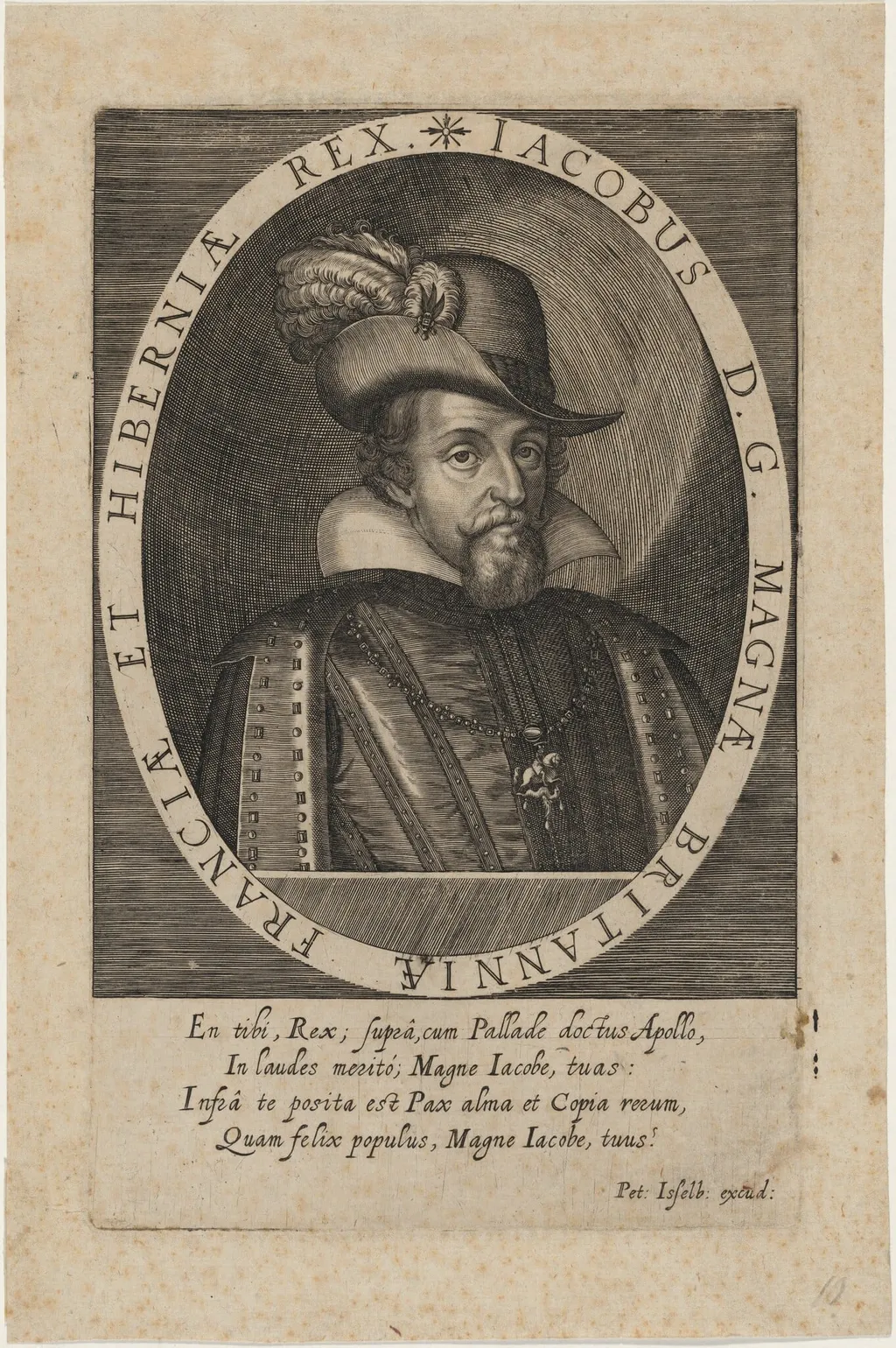
James I is an ink print by the Romanticist artist Unknown 19th Century. It dates from 1850 and is held in the collection of the National Gallery of Art.
About this work
Overview
The work belongs to the tradition of portrait prints produced in the early 17th century, intended for dissemination among the elite.
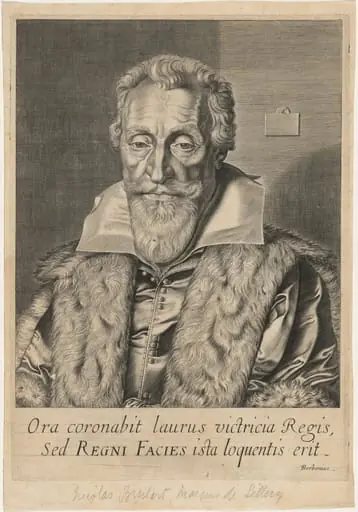
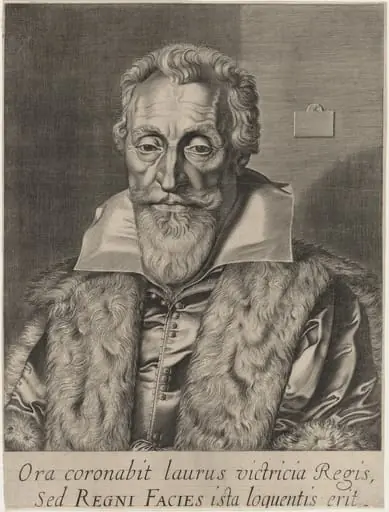
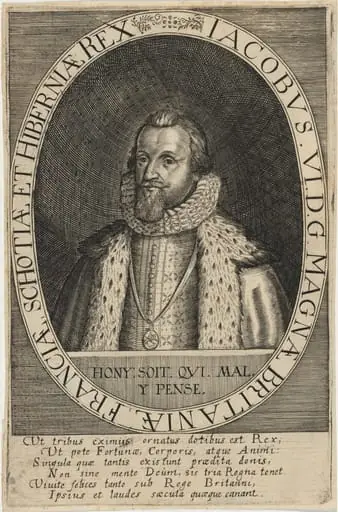
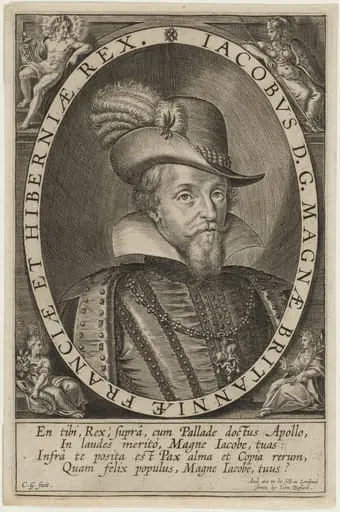
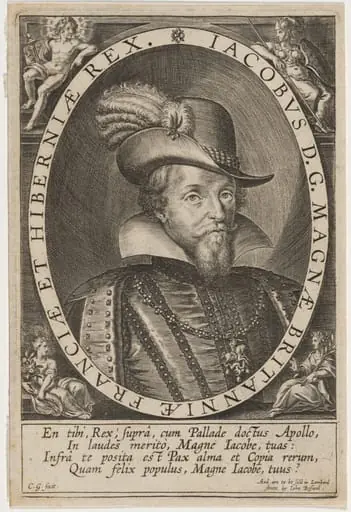
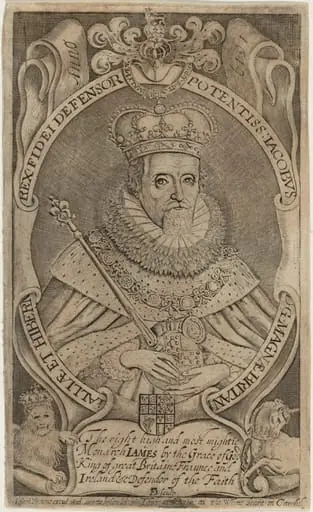
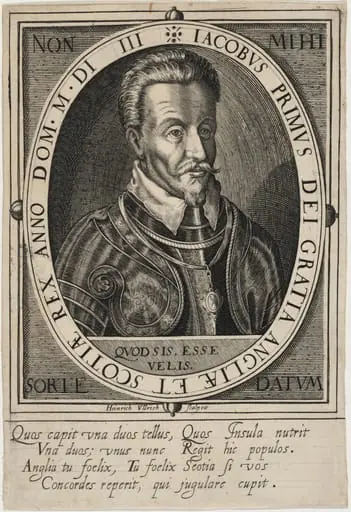
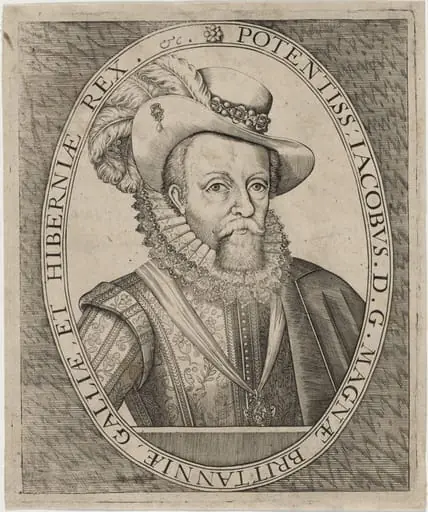
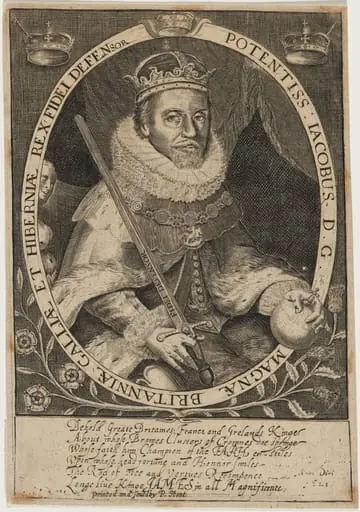
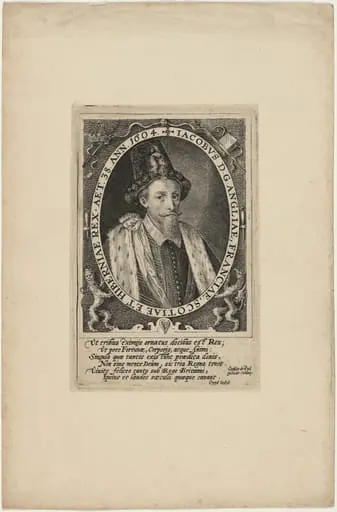
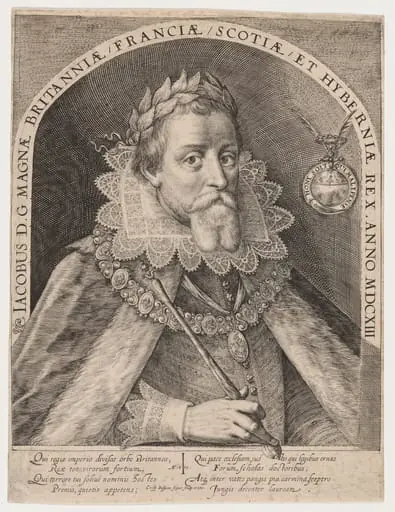
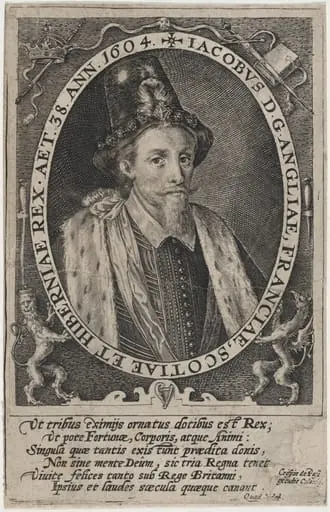
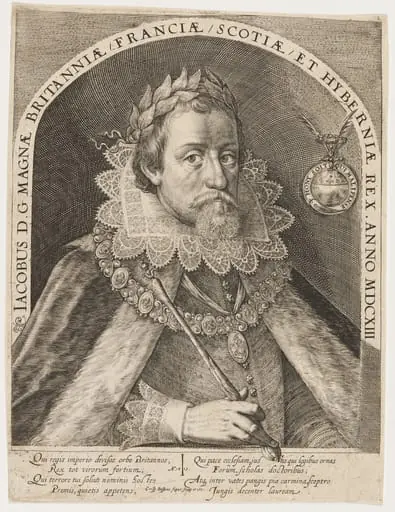
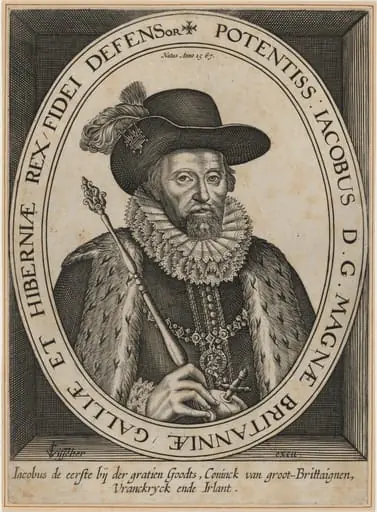
This engraving depicts James I of England, rendered in fine linear detail using cross-hatching to model form and texture. The dark background isolates the figure, emphasizing his presence. The work belongs to the tradition of portrait prints produced in the early 17th century, intended for dissemination among the elite. Its precision reflects the technical standards of engraving as a medium for royal representation.
Subject & Meaning
The portrait presents James I in regal attire, with elaborate embroidery, a ruff collar, and a feathered hat, signaling his status as monarch. The detailed rendering of his facial hair and expression conveys authority and gravitas. The image functions as a visual assertion of sovereignty, designed to project legitimacy and dignity to viewers who may never have seen the king in person.
Technique & Style
The artist employed cross-hatching to build tonal gradations and simulate the textures of silk, lace, and skin. Fine, controlled lines define the contours of the face and clothing, avoiding broad washes or tonal areas. This method was standard in reproductive engraving, prioritizing clarity and detail over expressive brushwork. The style aligns with Northern European print traditions of the period.
History & Provenance
Created during James I’s reign, the engraving likely served as a state portrait, possibly commissioned for distribution to nobles or foreign courts. Such prints were often made by skilled engravers working from painted portraits by court artists. While the specific engraver is unrecorded here, similar works circulated widely in England and continental Europe during the early 1600s.
Context
This print emerged in a period when portraiture was used to reinforce political power, especially under the Stuart monarchy. Engravings allowed monarchs to project their image beyond the court, reaching a broader literate audience. Unlike later Romanticism, which emphasized emotion and individualism, this work adheres to the formal conventions of early modern state portraiture.
Legacy
The engraving contributes to a broader corpus of early Stuart visual propaganda, influencing later royal portraiture in print form. While not widely known today, it exemplifies how engraving functioned as a tool of political communication before photography. Its technical discipline reflects the era’s emphasis on order and hierarchy in both art and governance.
Artist & collection

Artist