Artwork
Edward VI
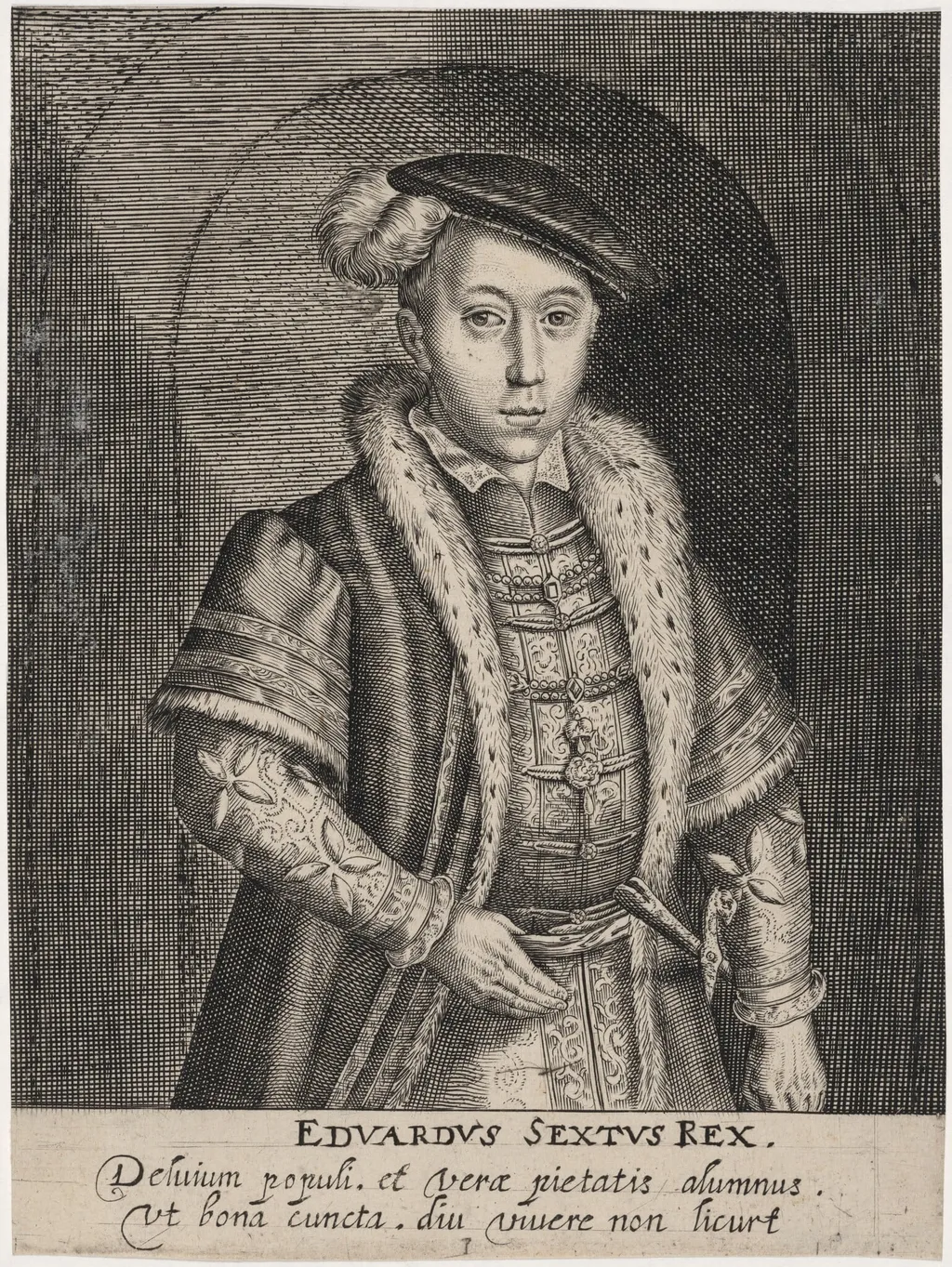
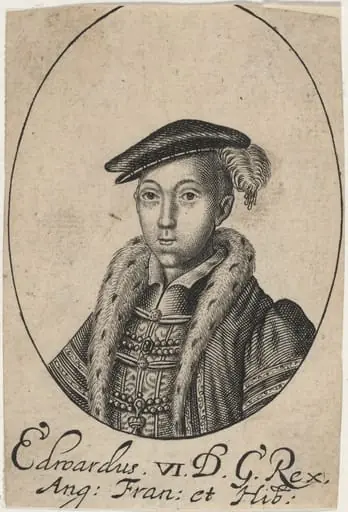
Edward VI is an ink print by the Baroque artist Willem de Passe. It dates from 1620 and is held in the collection of the National Gallery of Art.
About this work
Overview
This black‑and‑white print presents a portrait of a youthful figure dressed in a fur‑trimmed collar and a ruffled shirt, his hands joined before him. The background consists of a plain, textured wall that offers no narrative detail, focusing attention on the sitter’s attire and expression. The work is an engraving dated to 1620, attributed to the Dutch‑born printmaker Willem de Passe.
Subject & Meaning
The figure is identified as Edward VI, the short‑reigned son of Henry VIII, depicted here in the regalia of a noble youth. The solemn pose and formal dress convey the conventions of royal portraiture, emphasizing lineage and authority despite the sitter’s early death. The absence of symbolic objects suggests a straightforward commemorative intent rather than allegorical interpretation.
Technique & Style
Executed with fine, cross‑hatching lines, the engraving renders the folds of fabric and subtle shadows, creating a sense of depth on a flat surface. The meticulous line work reflects the Baroque period’s attention to detail and texture, while the restrained composition aligns with early‑17th‑century portrait conventions in printmaking.
History & Provenance
Willem de Passe, a member of the prolific de Passe family of engravers, produced this image in 1620, several decades after Edward VI’s death. The print circulated among collectors of royal portraiture, and surviving copies are found in European print collections, indicating its distribution as a commemorative image during the early modern period.
Artist & collection