Artwork
A bishop between donors
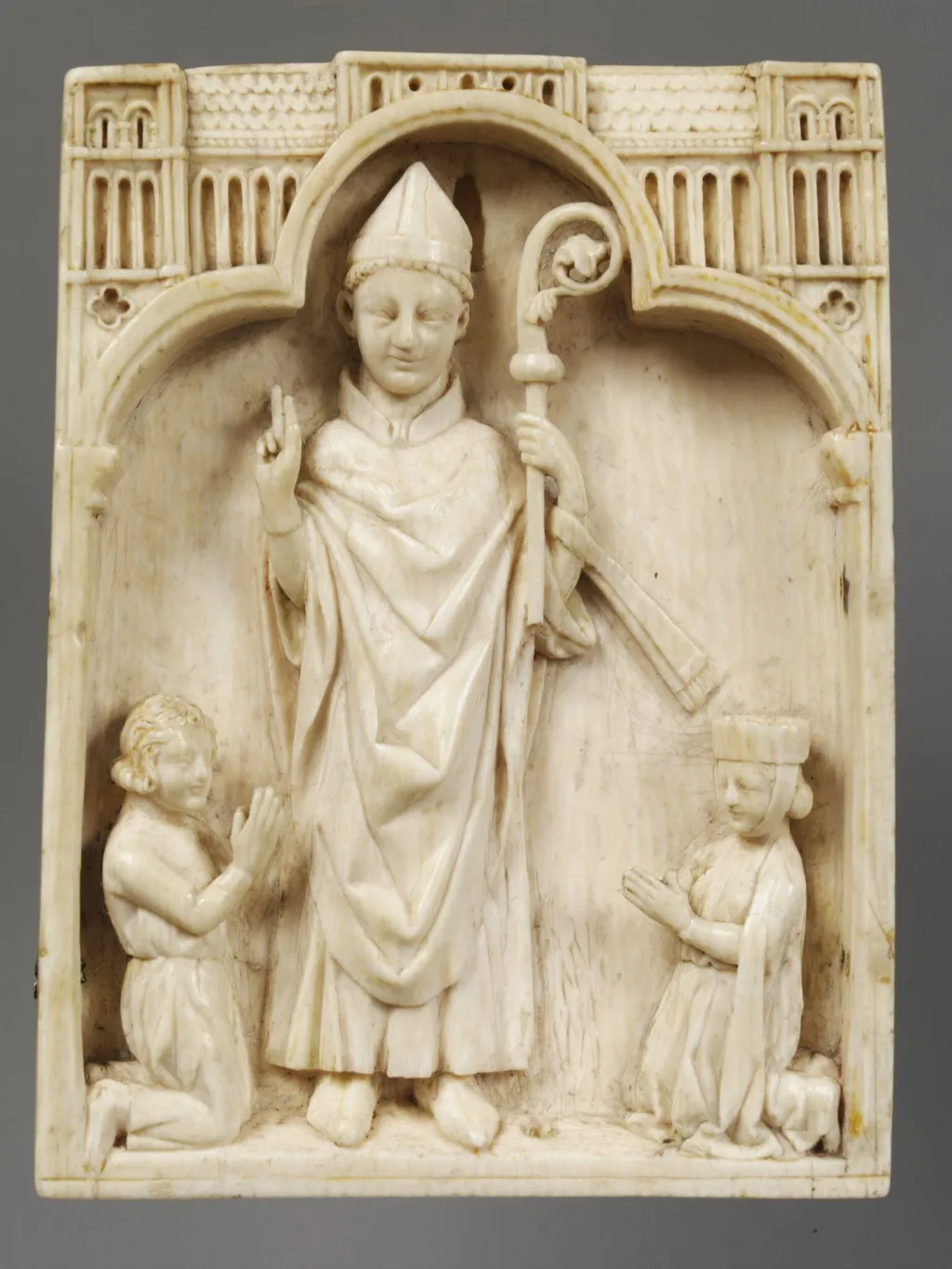
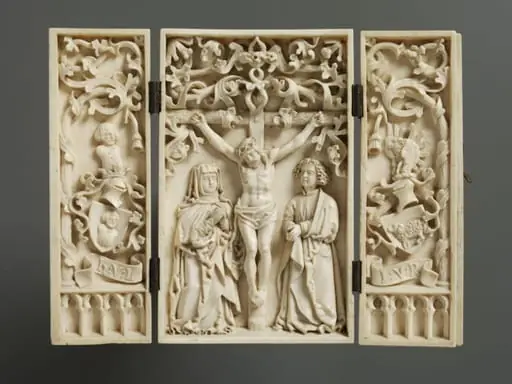
A bishop between donors is a work on paper by Unknown. It dates from 1250 and is held in the collection of the Victoria and Albert Museum. This small ivory triptych, dating to around 1250, presents a bishop in red vestments seated between two kneeling donors.
About this work
A bishop in red robes sits between two donors in a carved ivory triptych from 1250.
A bishop in red robes sits between two donors in a carved ivory triptych from 1250. The central panel is shallow with two hinged wings that fold in. It’s small—about as wide as a paperback book open.
This work shows Gothic ivory carving at its finest. The bishop’s face has soft, almost lifelike folds. The donors kneel stiffly, their clothes carved in delicate patterns.
Look closely at the craft. The artist cut tiny lines to suggest folds in the fabric. See one like it at the Victoria and Albert Museum.
Overview
This small ivory triptych, dating to around 1250, presents a bishop in red vestments seated between two kneeling donors. The central panel is shallow, flanked by two hinged wings that close over it, giving the piece a compact size comparable to an open paperback book.
Subject & Meaning
The central figure, a bishop, likely represents a specific ecclesiastical patron, while the donors on either side are portrayed in a posture of devotion, emphasizing their piety and connection to the church hierarchy. The composition reflects the medieval practice of commemorating benefactors within sacred imagery.
Technique & Style
Carved from a single block of ivory, the work exhibits the refined Gothic style characteristic of the period. The bishop’s facial features are rendered with subtle, lifelike modeling, while the donors’ garments display intricate incised lines that suggest fabric folds and delicate patterns, showcasing the carver’s skill in rendering texture on a hard medium.
History & Provenance
Ivory carving flourished in the 13th and 14th centuries, with Paris serving as the principal workshop hub, though similar centers existed in Italy and Germany. Artisans often blended French and local motifs, indicating possible training in Paris for this piece’s creator. Portable triptychs such as this were intended for personal devotion and could be transported in protective leather cases.
Artist & collection

 Domestic Scene
 Giacomo and Cardinal Marco, investing Andrea, Abbot of San Zeno, with his Benefice
 The Nymph of Fontainebleau
 Portrait of a Woman
 Madonna and Child with Saints in the Enclosed Garden
 Venus and Minerva
 Family Group of Four on Sofa
 Wall painting from Room H of the Villa of P. Fannius Synistor at Boscoreale
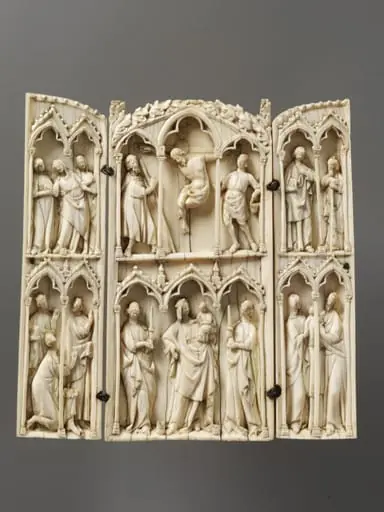 The Crucifixion, the Virgin and Child and Scenes from the Life of Christ
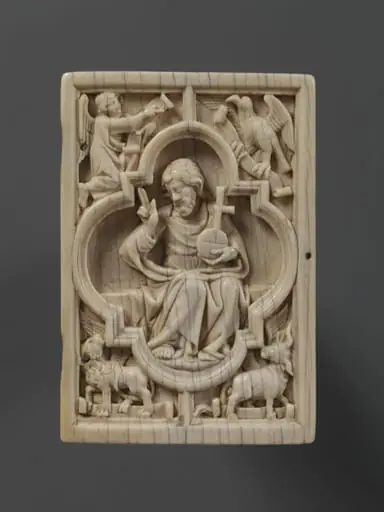 Christ in Majesty and the Coronation of the Virgin
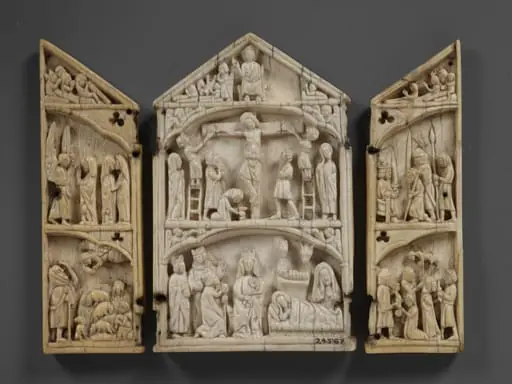 The Nativity with the Adoration of the Magi, the Crucifixion and the Last Judgement
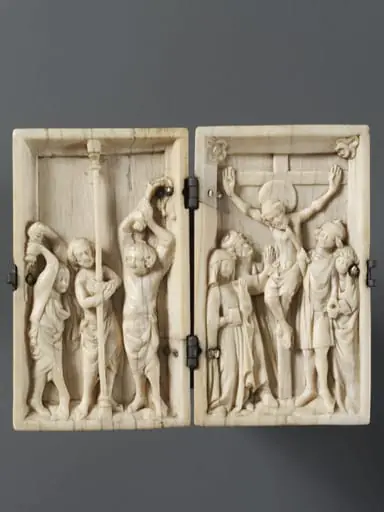 Scourging of Christ and the Crucifixion
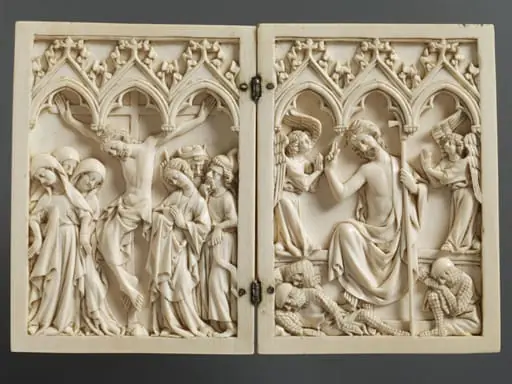 Diptych
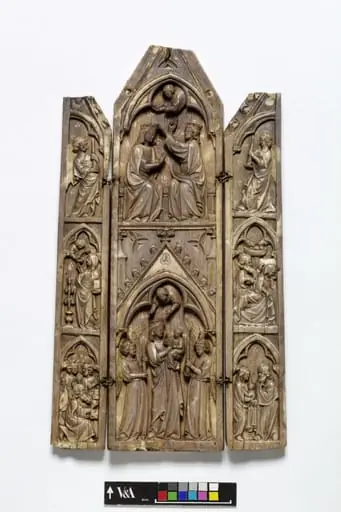 Virgin and Child, the Coronation of the Virgin and scenes from the Nativity
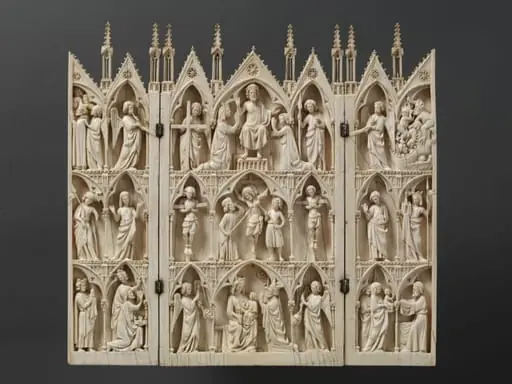 The Virgin and Child, the Crucifixion and the Last Judgement
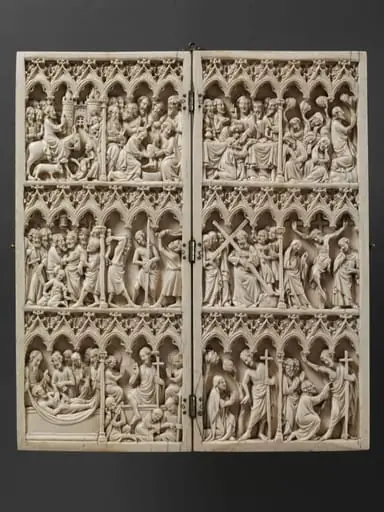 Scenes from the Passion of Christ
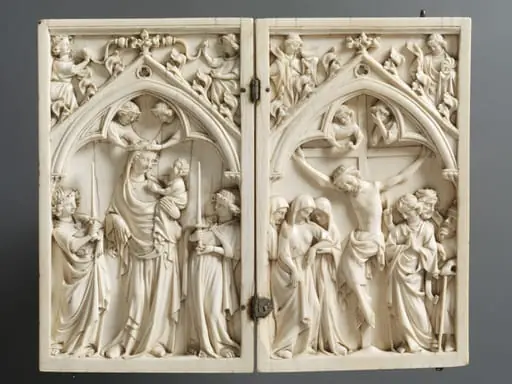 The Virgin and Child and the Crucifixion
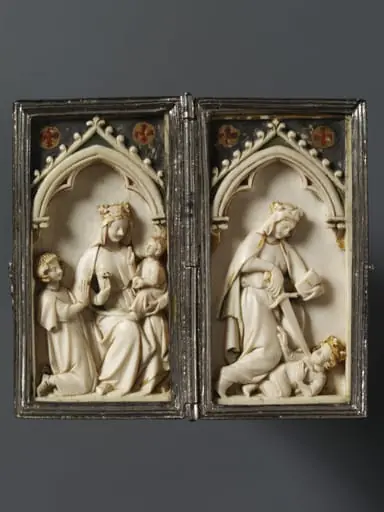 The Virgin and Child and St Catherine with the Emperor Maxentius
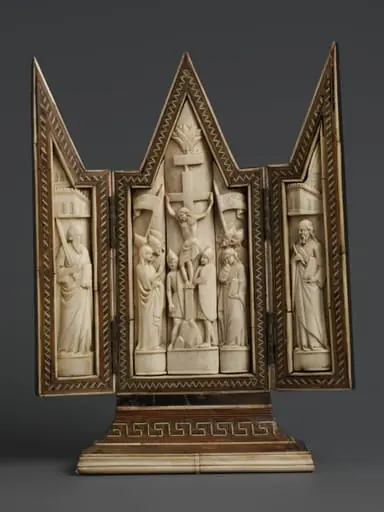 The Crucifixion
 The Crucifixion