Artwork
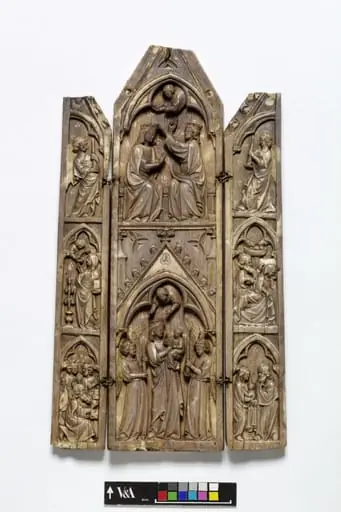
Christ in Majesty and the Coronation of the Virgin
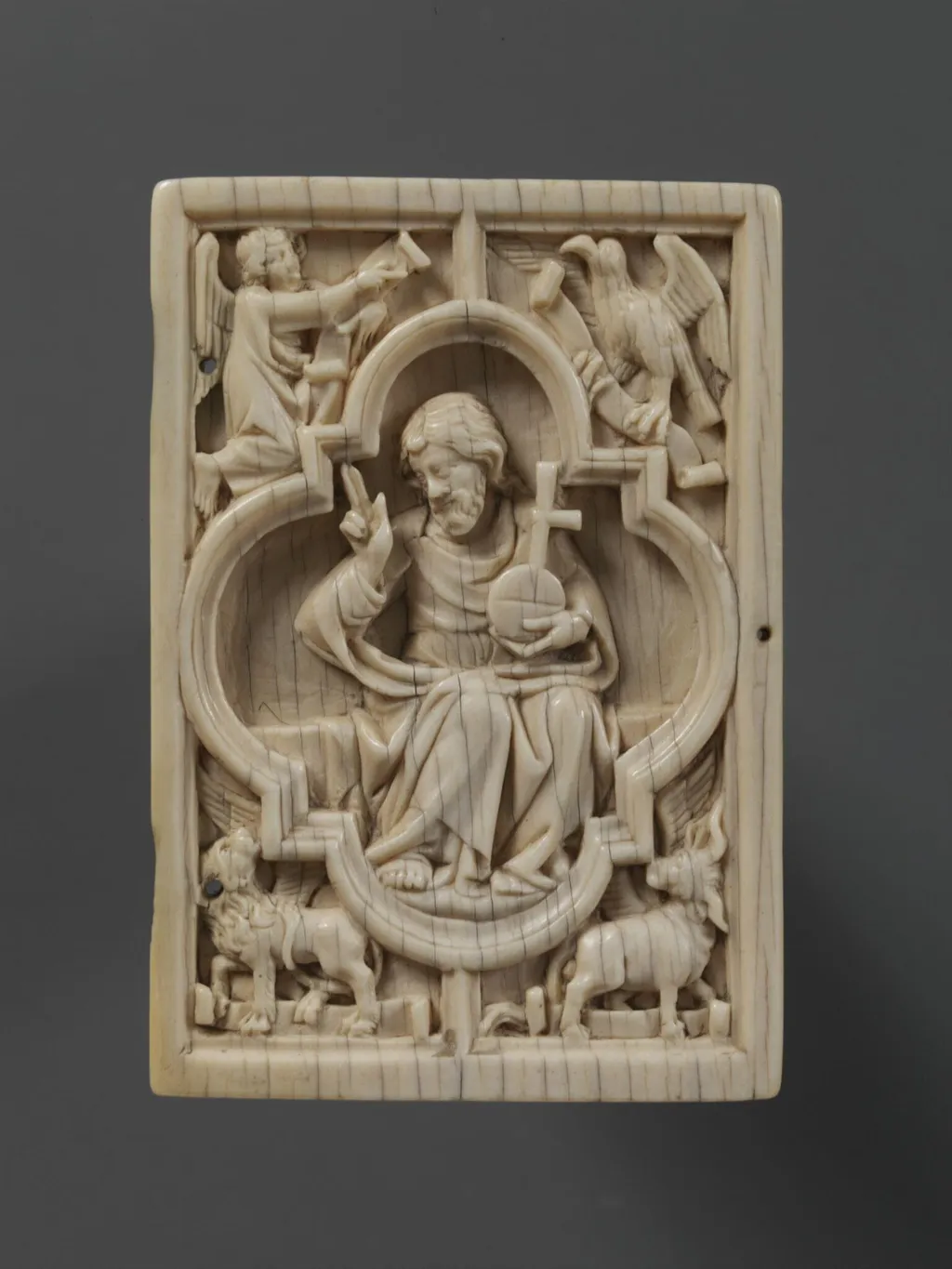
Christ in Majesty and the Coronation of the Virgin is a work on paper by Unknown. It dates from 1330 and is held in the collection of the Victoria and Albert Museum.
About this work
Overview
Ivory was favored for its fine grain, enabling intricate carving, and such diptychs were among the most characteristic objects of Gothic ivory production.
This ivory diptych, crafted in Paris between 1320 and 1340, consists of two hinged panels depicting Christ in Majesty and the Coronation of the Virgin. Small enough to be held and opened like a book, it reflects the intimate devotional practices of the period. Ivory was favored for its fine grain, enabling intricate carving, and such diptychs were among the most characteristic objects of Gothic ivory production.
Subject & Meaning
The two scenes together affirm Christ’s divine authority and the Virgin Mary’s exalted role in salvation. Christ, seated in majesty, is surrounded by symbols of the Evangelists, while the Coronation shows him placing a crown upon Mary’s head. These images functioned not as narrative sequences but as focal points for contemplation, reinforcing theological ideas central to late medieval piety.
Technique & Style
The carving exhibits exceptional precision, with delicate drapery folds, finely rendered facial features, and subtle depth achieved through low relief. The surface retains traces of original polychromy, suggesting the figures were once brightly painted. The composition balances symmetry and hierarchy, typical of Gothic ivory work, where clarity and spiritual emphasis outweigh naturalistic detail.
History & Provenance
Ivory diptychs of this type were commissioned by wealthy lay patrons, often including donor portraits within the scenes. Though the original owner of this piece is unknown, similar works appear in ecclesiastical and private collections across Europe. Their portability suggests use in personal prayer, possibly carried or displayed on a small altar in domestic settings.
Context
Produced during a peak in Parisian ivory carving, this diptych aligns with a broader trend of devotional objects designed for private use. While large altarpieces adorned churches, smaller ivory panels catered to individual spirituality. The format drew from manuscript illumination and panel painting, reflecting shared visual languages among medieval artistic media.
Legacy
This diptych exemplifies the sophistication of 14th-century French ivory work, influencing later devotional objects in both form and iconography. Though production declined after the Black Death, surviving examples remain key to understanding how medieval Christians engaged with sacred imagery on a personal, tactile level.
Artist & collection

 Domestic Scene
 Giacomo and Cardinal Marco, investing Andrea, Abbot of San Zeno, with his Benefice
 The Nymph of Fontainebleau
 Portrait of a Woman
 Madonna and Child with Saints in the Enclosed Garden
 Venus and Minerva
 Family Group of Four on Sofa
 Wall painting from Room H of the Villa of P. Fannius Synistor at Boscoreale
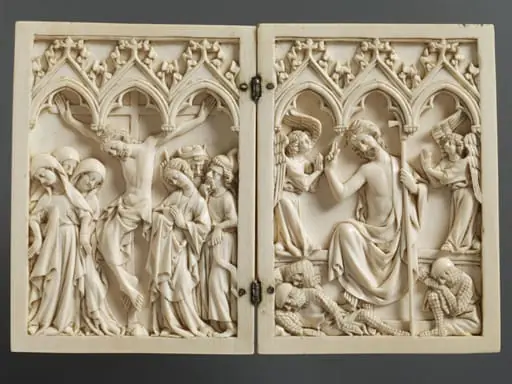 Diptych
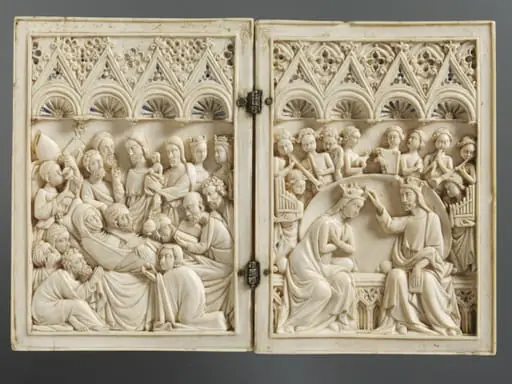 Death and the Coronation of the Virgin
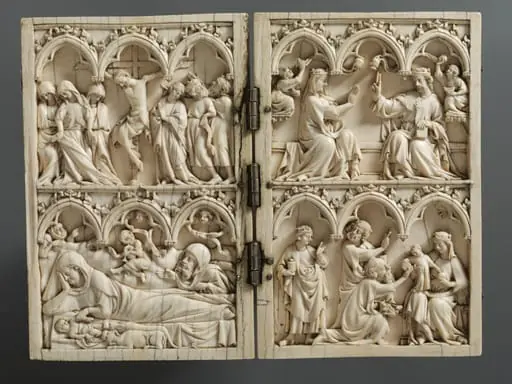 The Nativity, the Adoration of the Magi, the Crucifixion and the Coronation of the Virgin
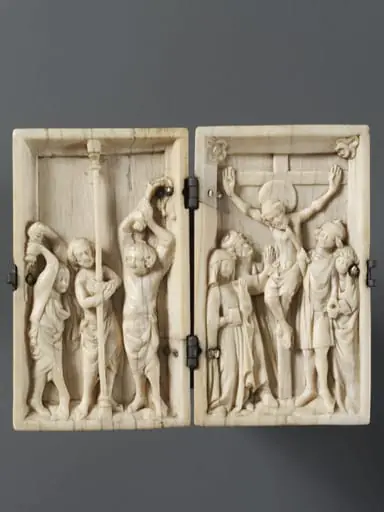 Scourging of Christ and the Crucifixion
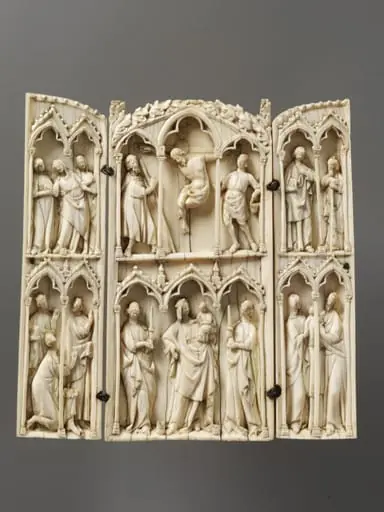 The Crucifixion, the Virgin and Child and Scenes from the Life of Christ
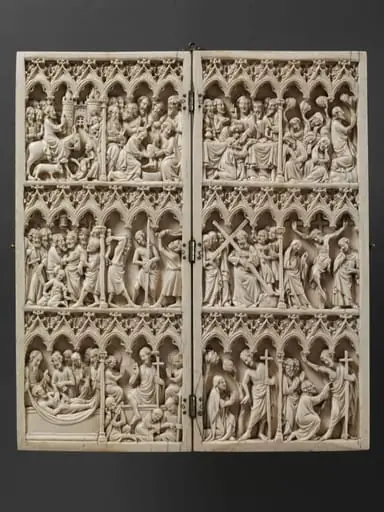 Scenes from the Passion of Christ
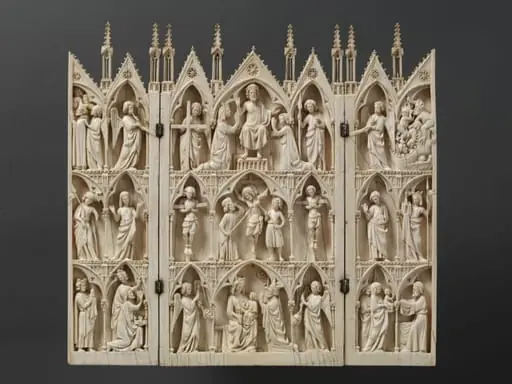 The Virgin and Child, the Crucifixion and the Last Judgement
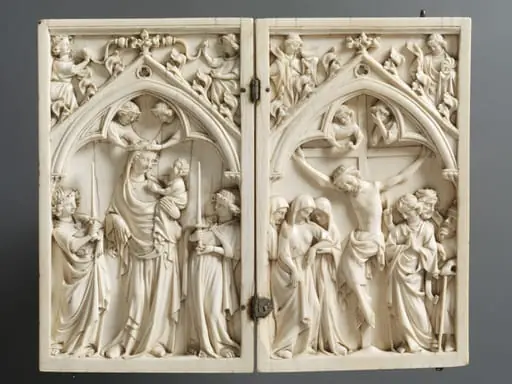 The Virgin and Child and the Crucifixion
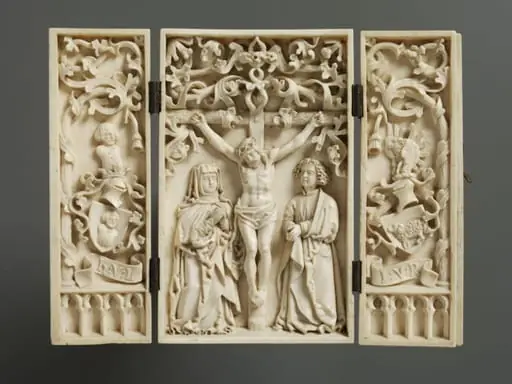 The Crucifixion
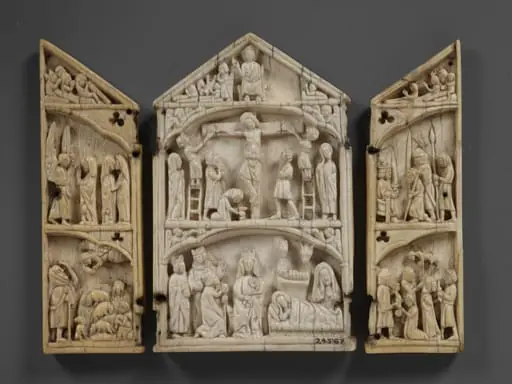 The Nativity with the Adoration of the Magi, the Crucifixion and the Last Judgement
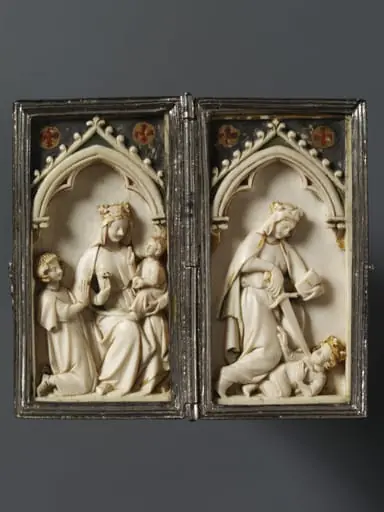 The Virgin and Child and St Catherine with the Emperor Maxentius
 Virgin and Child, the Coronation of the Virgin and scenes from the Nativity