Artwork
A Family of Tartars
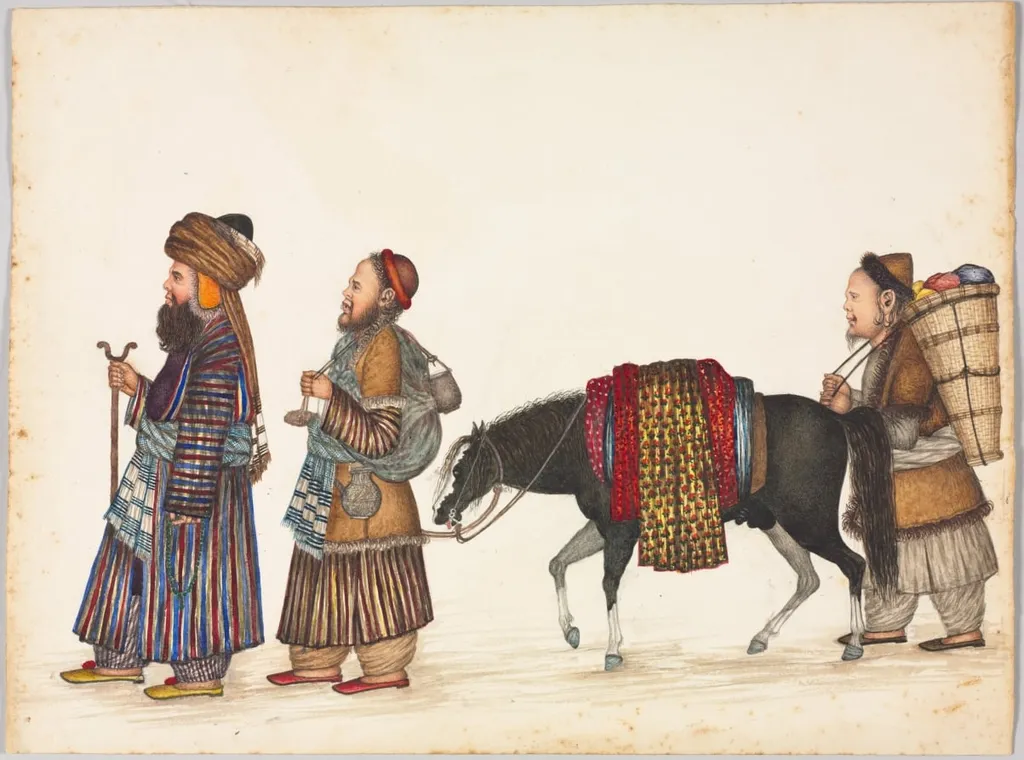
A Family of Tartars is an unspecified painting by the Patna School of Painting artist Unknown. It dates from 1885 and is held in the collection of the Cleveland Museum of Art. The work presents three Turkic men on horseback accompanied by two camels, rendered with precise detail against an unadorned backdrop.
About this work
The artist was likely local, working in what’s called the Company School—a style that mixed Indian detail with British demands.
You see three men on horseback, their faces sharp and tired, leading two camels across empty space.
This was made for British officials in India who wanted to document the people they ruled. The plain background makes the figures feel like specimens, not stories. The artist was likely local, working in what’s called the Company School—a style that mixed Indian detail with British demands.
Look up “Company School, 19th century” to see more works like this.
Overview
The work presents three Turkic men on horseback accompanied by two camels, rendered with precise detail against an unadorned backdrop. Their expressions are weary, suggesting a long journey, while the empty space isolates the figures, emphasizing their physical presence over narrative context. The composition functions as a visual record rather than a narrative scene.
Subject & Meaning
The figures represent migrants of Turkic origin moving from western Asia toward the Indian subcontinent. Unlike earlier Turko‑Mongol conquerors such as Timur or Babur, these individuals are portrayed as settlers seeking new territory. The painting thus documents a demographic shift, highlighting immigration rather than military ambition.
Technique & Style
Executed in the Company School tradition, the piece combines meticulous Indian draftsmanship with the British colonial demand for scientific illustration. Fine line work and careful modeling convey texture and anatomy, while the neutral background strips away contextual cues, positioning the subjects as specimens for comparative study.
History & Provenance
Created in the mid‑19th century for British officials stationed in India, the painting served the colonial administration’s interest in cataloguing the empire’s peoples, flora, and fauna. The artist was likely an Indian painter employed by the East India Company, producing works that satisfied European expectations for accuracy and objectivity.
Context
During the period following the 1858 transfer of power to the British Crown, colonial authorities commissioned visual surveys of the subcontinent’s diverse populations. This painting fits within that broader project of ethnographic documentation, reflecting both the imperial agenda and the hybrid artistic practices of Indian artists adapting to European patronage.
Artist & collection

 Domestic Scene
 Giacomo and Cardinal Marco, investing Andrea, Abbot of San Zeno, with his Benefice
 The Nymph of Fontainebleau
 Portrait of a Woman
 Madonna and Child with Saints in the Enclosed Garden
 Venus and Minerva
 Family Group of Four on Sofa
 Wall painting from Room H of the Villa of P. Fannius Synistor at Boscoreale
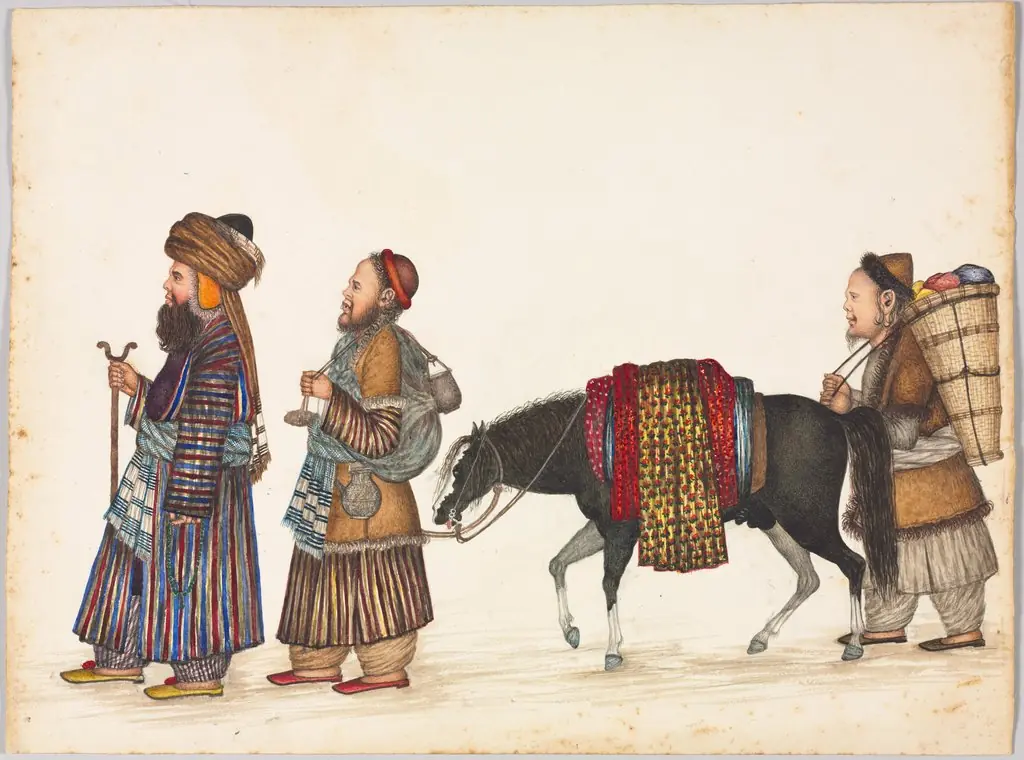 A Family of Tartars
![A Shaykh with his Son[?] on Mules, with their Sais [groom], by S. Bossi](https://artifactworldgallery.com/img/s-bossi--a-shaykh-with-his-son-on-mules-with-their-sais-groom--240d85ba529e2bf3-w320.webp) A Shaykh with his Son[?] on Mules, with their Sais [groom]
A Shaykh with his Son[?] on Mules, with their Sais [groom]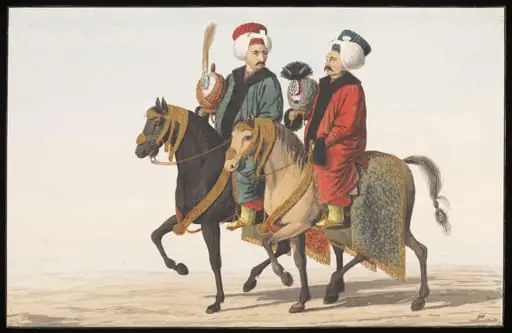 Two Royal Turban-Bearers on horseback
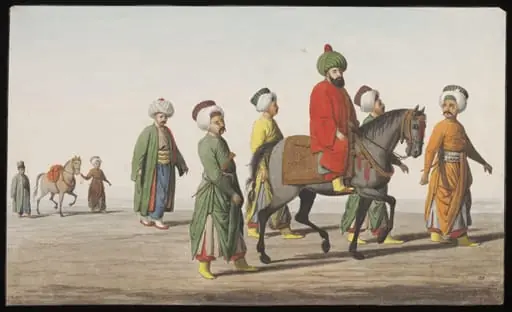 Kaymakam, or Govenor of Istanbul
![Mounted crusader [?] holding discussion with standing man, by Unknown](https://artifactworldgallery.com/img/unknown--mounted-crusader-holding-discussion-with-standing-man--9b99697bca24a72f-w320.webp) Mounted crusader [?] holding discussion with standing man
Mounted crusader [?] holding discussion with standing man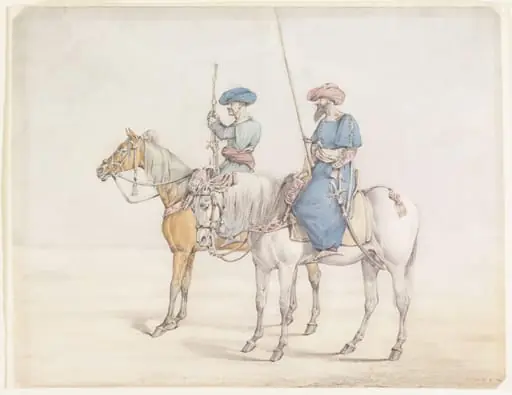 Two armed figures on horseback, probably Mamluks
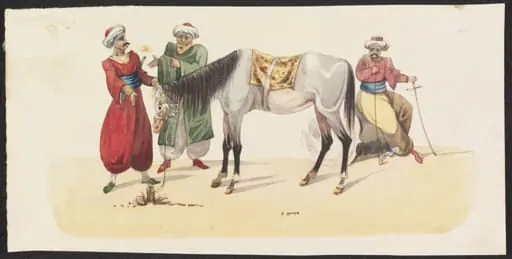 The hard Bargain
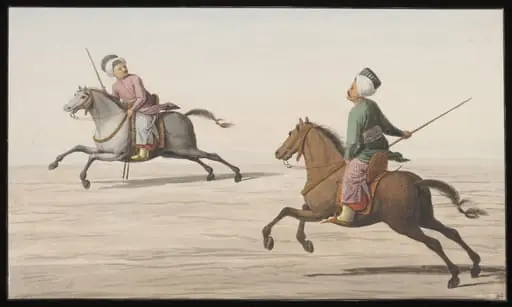 Two men playing the game of Cirid
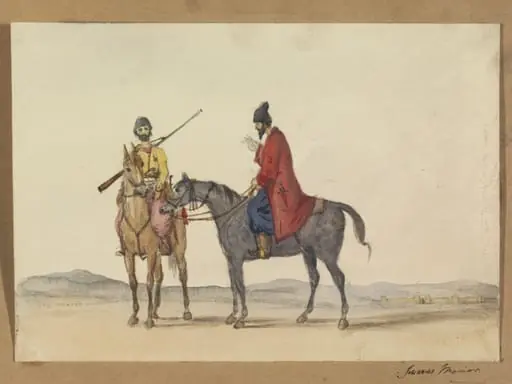 Two Persian Horsemen
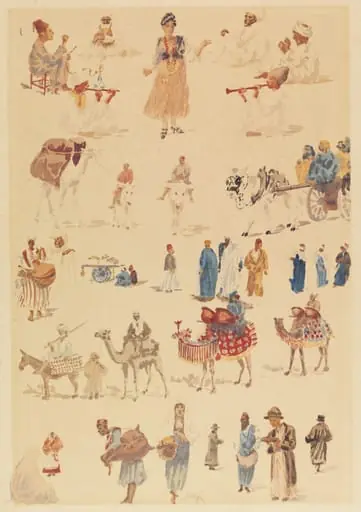 Egyptian Types
![A Mounted Mamluk with his Sais [Groom], by S. Bossi](https://artifactworldgallery.com/img/s-bossi--a-mounted-mamluk-with-his-sais-groom--93e3f53d48765120-w320.webp) A Mounted Mamluk with his Sais [Groom]
A Mounted Mamluk with his Sais [Groom]![A Pasha travelling with his escort[?], by Anonymous Greek artist](https://artifactworldgallery.com/img/anonymous-greek-artist--a-pasha-travelling-with-his-escort--01de32b8fcf30843-w320.webp) A Pasha travelling with his escort[?]
A Pasha travelling with his escort[?]